
Southeast Asia Program
Einaudi Dissertation Proposal Development Program

Details
Develop your dissertation on global issues with a toolkit of resources. Over the course of the year, you’ll participate in seminars, workshops, and mentoring sessions and receive up to $5,000 for summer research.
DPD supports 12 PhD students annually. Applicants’ research projects must focus on global issues, but the proposed research setting may be international or domestic.
Funding for Summer 2025
This DPD cycle will begin immediately, with seminars during the spring 2025 semester and funding for research in summer 2025. In addition to six weeks of summer research, the program includes these community-building and mentoring events:
- Seminars: Up to three sessions on topics including proposal writing, research methods, and interdisciplinary international studies.
- Spring workshop: Three-day workshop in May to help you refine your proposal and plan your summer pre-dissertation research.
- Fall workshop: Three-day workshop in September to support you as you finalize your dissertation proposal.
Applicants must commit to attending the entire spring and fall workshops and agree to conduct at least six weeks of summer research away from Cornell between the workshops.
Amount
Up to $5,000 for summer research. The award can cover the following research expenses:
- International travel (economy airfare, visa fees)
- Local travel
- Accommodation and living expenses
- Research expenses (permits, translation costs, internet, archive access, etc.)
We encourage you to apply for other Cornell grants and external grants to complement your DPD funding. You must apply for the Graduate School's research travel grants; you are not eligible to apply for Einaudi's travel grants.
Please note that you may only bill for a research expense once. If an expense is already covered by your DPD award or Graduate School travel grant, you may not use other Cornell or external grants to pay the same expense.
Eligibility
- Students who are currently enrolled full-time in PhD programs at Cornell University are eligible.
- Both U.S. citizens and noncitizens are eligible.
- Progress within graduate program:
- Applicants must have completed at least two full years of graduate study (MA and/or PhD) by the end of the spring workshop. First-year graduate students who have completed master’s degrees and fourth-year students who have not yet undertaken dissertation research may be eligible.
- Applicants must be on track to obtain approval of their dissertation proposals after the fall workshop but before the end of the upcoming academic year.
- Students who have already submitted dissertation research proposals to their departments for approval or to funding agencies for dissertation research support are not eligible to apply.
Questions?
Please email our academic programming staff if you have questions about the program.
Additional Information
Funding Type
- Fellowship
Role
- Student
Program
Resources for Educators
We work with New York State educators to educate the next generation of global citizens. Get involved with our professional development offerings, teaching materials, cultural opportunities, and more for K–12 teachers and faculty at community colleges in our region.
Space, Power, and Histories of Highland Southeast Asia
March 5, 2020
12:00 pm
Kahin Center
Part of the Ronald and Janette Gatty series
Christian C. Lentz, Associate Professor, Department of Geography, University of North Carolina-Chapel Hill
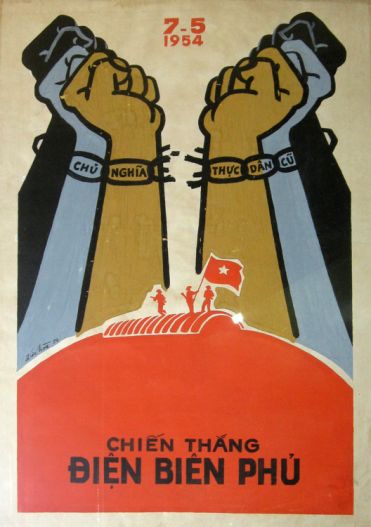
Điện Biên Phủ is a place often invoked but poorly understood. On 7 May 1955, a year to the day after Vietnam’s great victory over France, a ceremony on its hallowed ground established the Thái-Mèo Autonomous Zone and celebrated national ethnic unity under revolutionary socialism. Yet local critics decried the Zone’s resemblance to the colonial Tai Federation and called for a revolutionary alternative to regional autonomy. Escalating resource claims turned simmering discontent among Hmong, Khmu, and Dao swidden cultivators into a boil. Intensive engagement with revolutionary ideals and participation in anti-colonial struggle had changed the region’s peoples, destabilizing its elevationally-layered social formation. Largely unknown to scholars, the countermovement in and around Điện Biên spread across the Black River region between 1955 and 1957, even inspiring activities in Laos and China, before being crushed by Vietnamese security forces in 1958. Exploring its history through newly available archival sources and oral histories enriches a geographic concept of territory as an uncertain outcome of grounded struggles. In the wake of the First Indochina War (1946-54), midland and upland peoples joined forces, protested state resource claims, and appealed to a supernatural sovereign to deliver justice, topple an ethnicized hierarchy, and unite kin across borders. Its leaders held high-level positions in the Democratic Republic of Vietnam, demonstrating how political movements rose not in spite of but alongside and within the new national state. Moreover, the millenarian movement built on and amplified tensions embedded in postcolonial territory. Its political vision—a highland geobody ruled by a divine king—challenges how scholars conceptualize hegemonic spaces of nation-state rule. Excavating its history offers novel approaches to how power works in the spaces of highland Southeast Asia.
Co-sponsored by the Department of History
Additional Information
Program
Southeast Asia Program
Southeast Asia Program
The Southeast Asia Program (SEAP) was founded in 1950 to promote the acquisition and dissemination of knowledge about countries, cultures, and languages of the region. Since 1958, the U.S. Department of Education has continuously recognized SEAP as a Title VI National Resource Center. It is one of the world’s greatest concentrations of expertise on Southeast Asia.