
Southeast Asia Program
Laidlaw Scholars Q+A Webinar with Pachaysana
November 6, 2025
5:00 pm
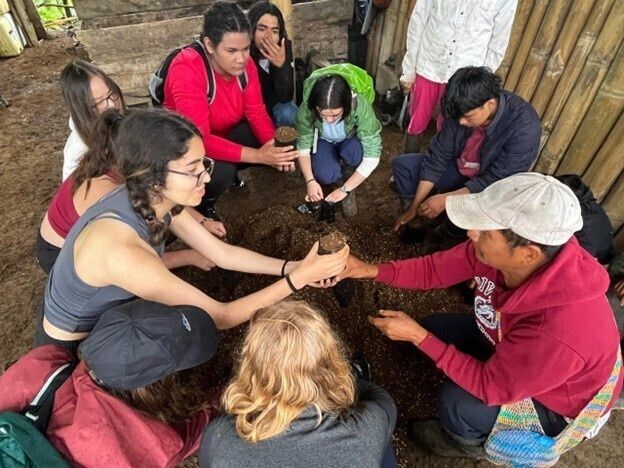
For the summer 2026 Leadership in Action experience, students will be placed with the Pachaysana Foundation exploring what it means to be an intercultural leader in today’s complex, fractured world. Please attend this Q+A webinar with Pachaysana Foundation to learn more about their work and how the Laidlaw Scholars explore leadership as something we live—grown in relationship and rooted in the wisdom of agrarian, Indigenous, and activist communities.
Attendance and participation in the Q+A are highly recommended for Laidlaw Scholars applicants. Applications are due January 12, 2026.
Register here. Can’t attend? Another Q+A webinar is scheduled for November 5.
Contact programs@einaudi.cornell.edu with questions.
***
The Mario Einaudi Center for International Studies hosts info sessions for graduate and for undergraduate students to learn more about funding opportunities, international travel, research, and internships. View the full calendar of fall semester sessions.
Additional Information
Program
Einaudi Center for International Studies
Reppy Institute for Peace and Conflict Studies
East Asia Program
Southeast Asia Program
Latin American and Caribbean Studies
Institute for African Development
Institute for European Studies
South Asia Program
Migrations Program
Stoikov Lecture on Asian Art: Thasnai Sethaseree
October 30, 2025
5:15 pm
Johnson Museum of Art, Robinson Lecture Hall
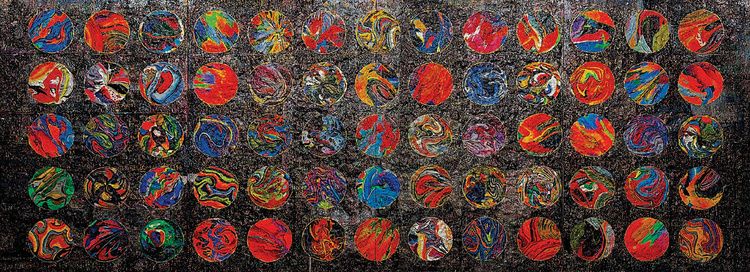
Thasnai Sethaseree will discuss his work in conversation with Dr. Tamara Loos in conjunction with the exhibition Cold War: The Mysterious.
An artist and professor of media arts and design at Chiang Mai University, Sethaseree holds a master’s degree in visual arts from the University of Chicago and a PhD in social sciences from Chiang Mai University. In the series Cold War: The Mysterious (2019–22), Sethaseree focuses on specific authoritarian actors, freedom-fighters, political uprisings, and violent crackdowns, but also those that draw more generally from the press and popular culture to convey the complications and chaos of this period.
All are encouraged to visit the exhibition (in the Gold Gallery, also on Floor 2L) prior to the program. The exhibition will also be open after the talk during a public reception, free and open to all.
The annual Stoikov Lecture on Asian Art at the Johnson Museum is funded by a generous gift from Judith Stoikov, Class of 1963, and is cosponsored this year by the Southeast Asia Program.
Additional Information
Program
Einaudi Center for International Studies
Southeast Asia Program
Laidlaw Scholars Q+A Webinar with Pachaysana
November 5, 2025
12:00 pm
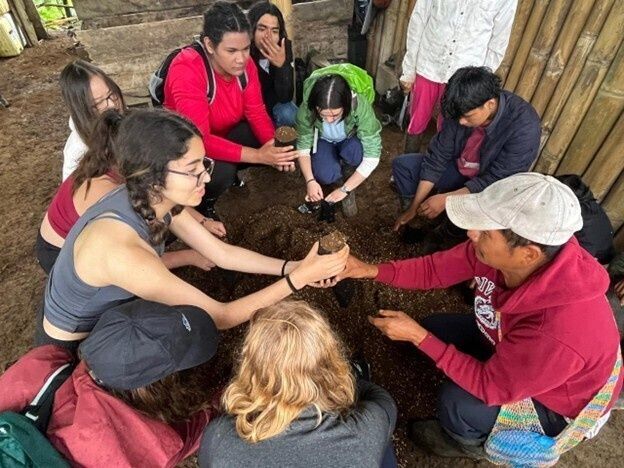
For the summer 2026 Leadership in Action experience, students will be placed with the Pachaysana Foundation exploring what it means to be an intercultural leader in today’s complex, fractured world. Please attend this Q+A webinar with Pachaysana Foundation to learn more about their work and how the Laidlaw Scholars explore leadership as something we live—grown in relationship and rooted in the wisdom of agrarian, Indigenous, and activist communities.
Attendance and participation in the Q+A are highly recommended for Laidlaw Scholars applicants. Applications are due January 12, 2026.
Register here. Can’t attend? Another Q+A webinar is scheduled for November 6.
Contact programs@einaudi.cornell.edu with questions.
***
The Mario Einaudi Center for International Studies hosts info sessions for graduate and for undergraduate students to learn more about funding opportunities, international travel, research, and internships. View the full calendar of fall semester sessions.
Additional Information
Program
Einaudi Center for International Studies
Reppy Institute for Peace and Conflict Studies
East Asia Program
Southeast Asia Program
Latin American and Caribbean Studies
Institute for African Development
Institute for European Studies
South Asia Program
Migrations Program
World in Focus: Venezuelan Drug Boat Strikes

October 7, 2025
4:00 pm
Uris Hall, G08
Join Einaudi Center experts for World in Focus Talks on global events in the news and on your mind. Our faculty's research and policy insights put the world in focus.
This year we’re hosting informal campus discussions on many Tuesday afternoons. This week’s topic:
Following a military buildup in the Caribbean, the U.S. government has confirmed multiple airstrikes on Venezuelan boats suspected of drug smuggling—killing at least 17 in September. The U.S. claims these actions are “armed conflict” against narcoterrorist organizations. The Venezuelan government condemns the attacks as illegal.
Is the U.S. violating international law? What may happen if tensions continue to escalate?
***
Featured Faculty
Oumar Ba (PACS) | Government Pedro M. R. Barbosa (LACS) | Visiting ScholarKen Roberts (LACS) | GovernmentDavid Bateman | GovernmentAleida Sandoval | Visiting Scholar
***
Conversations Matter at Einaudi
This conversation is hosted by the Mario Einaudi Center for International Studies and its regional and thematic programs. Find out what's in store for students at Einaudi!
Additional Information
Program
Einaudi Center for International Studies
Reppy Institute for Peace and Conflict Studies
East Asia Program
Southeast Asia Program
Latin American and Caribbean Studies
Institute for African Development
Institute for European Studies
South Asia Program
Migrations Program
Southwest Asia and North Africa Program
The Enduring Business Case for Sustainability
Sarosh Kuruvilla, SEAP
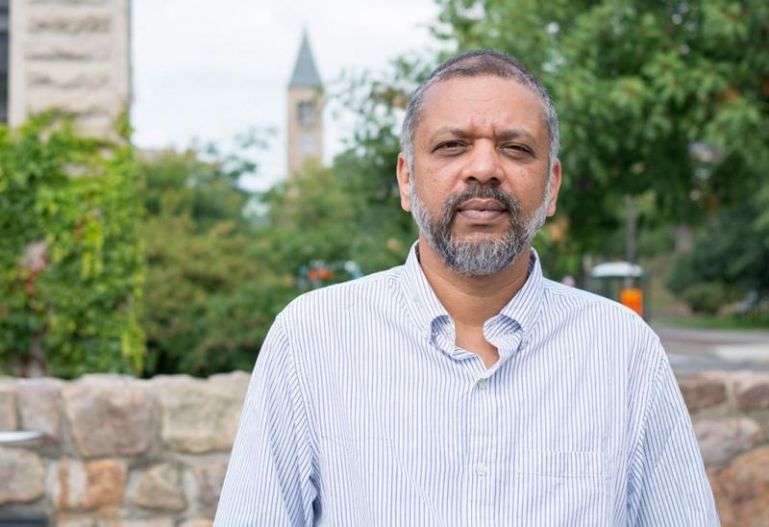
Sarosh Kuruvilla on sustainability in the textile industry.
Additional Information
Cornell Undergraduate Wins 2nd Place SEADL Paper Award

Jonathan Lam, Legacies of War: Unhealed Wounds and the Deportation of Southeast Asian Refugees
Congratulations to Jonathan Lam!
The Southeast Asia Digital Library is pleased to announce the winners of the fifth annual SEADL Undergraduate Paper Award!
Congratulations to Courtine Bui of Yale University for her first-place winning paper, The Nationhood of Vietnamese America: Cultural Identity as Understood in the Diasporic Imagination
And to Jonathan Lam of Cornell University for his second-place winning paper, Legacies of War: Unhealed Wounds and the Deportation of Southeast Asian Refugees
Thank you to Cornell University Press for their generous sponsorship of this competition. Thank you also to every librarian and instructor who encouraged their students to submit their work. This award would not be possible without your support of SEADL and undergraduate research. Winners from previous award cycles can also be read on SEADL.
Additional Information
Program
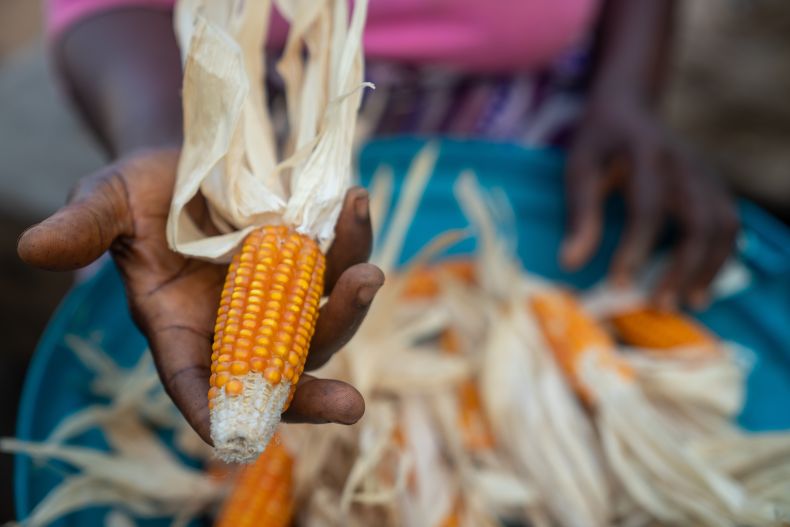
Warming Climate is Biggest Threat to Rangelands
Lund Debater Chris Barrett in World in Focus
Chris Barrett (Dyson/Brooks) analyzes climate impacts on Mongolian rangeland this month in Science. He joins Muna Ndulo (Law) on October 22 to debate the future of international aid.
Is (Cutting) International Aid Good?
This year's Lund Critical Debate explores the impact of aid on global communities, what makes aid effective—and how to move forward.
“It’s always struck me as puzzling, why people in suits and ties in capital cities seem to think that the pastoralists don’t understand very well how to manage these lands. And yet, there’s this common belief that you have to get them to reduce their herd sizes. That just hurts the herders.”
Overgrazing is commonly blamed as a key cause of rangeland degradation—yet policy measures designed to limit grazing damage, like herd-size restrictions and livestock taxes, can have devastating consequences on herders' livelihoods.
In Mongolia—where 70 percent of the land area is rangeland—the government revived a national livestock head tax in 2021 in response to perceived overgrazing impacts.
New research from Chris Barrett (IAD/SEAP) identifies a more significant factor: climate change.
Barrett's team analyzed longitudinal data on vegetation conditions and livestock population, collected annually by the Mongolian government across 40 years. They found that larger herds can slightly reduce rangeland productivity over the short term, but climate and weather have a much larger effect. The team published the findings on September 18 in Science.
“When we look really carefully at the equivalent of county scale over the whole country, over 41 years, we find that the longer-run changes in rangeland conditions are entirely attributable to changes in the climate,” said Barrett.
“Mongolian rangelands are affected more by the collective greenhouse gas–emitting behaviors around the globe than by local herders,” he wrote in the Science article. “Policymakers might therefore usefully focus attention on global mitigation and on international compensation for climate damages and less on taxing herders who … appear responsible for little if any of the change in Mongolia’s rangeland primary productivity over the past 40 years.”
The project began among Barrett's graduate students, including one who grew up on the Mongolian rangelands. Coauthors include two alumni from Mongolia—Tumenkhusel Avirmed ’21, MS ’23, now a research data analyst at Stanford University, and Avralt-Od Purevjav, PhD ’20, a consultant at the World Bank.
Chris Barrett is the Stephen B. and Janice G. Ashley Professor of Applied Economics and Management in the Dyson School of Applied Economics and Management and a professor in the Cornell Brooks School of Public Policy. He is a frequent commentator and policy advisor on food security and agricultural economics.
Featured in World in Focus Briefs
Additional Information
You've Never Heard Climate Change Like This Before
Wendy Erb, SEAP/Migrations
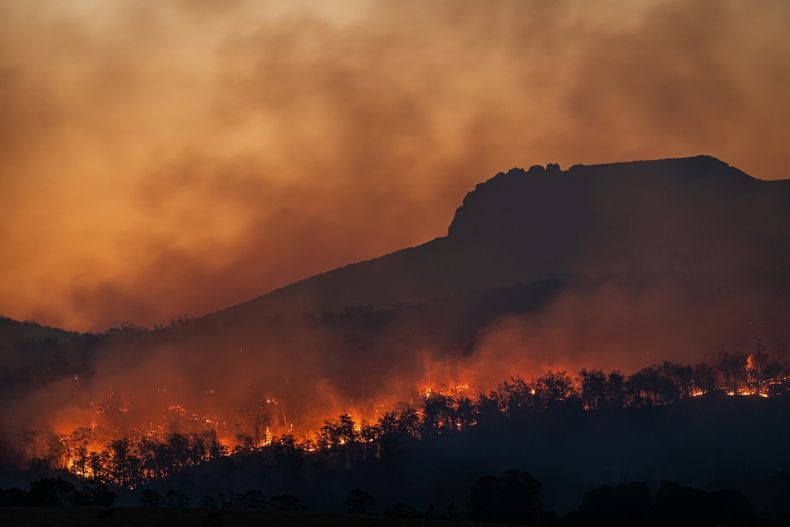
Wendy Erb, a Cornell Lab of Ornithology researcher, studies the effects of tropical peatland fires on orangutan vocalizations, revealing how climate-driven changes impact animal communication and health.
Additional Information
Funding
Overview
SEAP offers a range of funding opportunities to support students in their studies, travel, language, and research related to Southeast Asia. SEAP students are also eligible and encouraged to apply for all Einaudi Center funding opportunities.
A Community Book Read with Adam Bobbette
October 16, 2025
3:00 pm
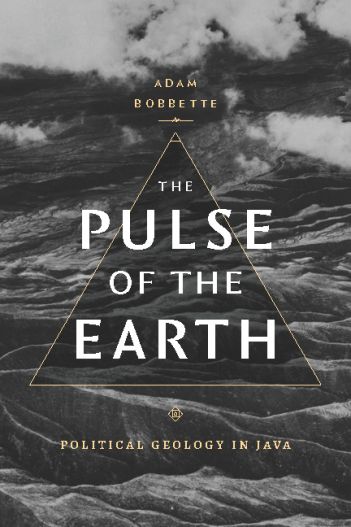
Join us for a virtual discussion with Adam Bobbette, author of The Pulse of the Earth: Political Geology in Java and winner of the 2025 Benda Prize. This virtual conversation is open to the broader public, and is hosted by GETSEA.
All participants should read the Preface and Chapter 1. Those interested in reading more should also consider Chapter 3.
The Pulse of the Earth is a highly innovative and compelling account of the intersections between geology, colonial history, and spiritual cosmologies. Adam Bobbette reframes Java as a pivotal site for the development of geological knowledge, challenging the conventional Western-centric narratives of scientific history. By delving into Javanese spiritual practices and their influence on geological thought, he unveils how volcanology not only transformed but was also shaped by local cosmologies. Through riveting accounts of political struggles, colonial ambitions, and indigenous epistemologies, the book illuminates the deep geosocial tectonics that continue to influence how humans and landscapes interact. Particularly striking are Bobbette’s insights into the coexistence and tensions between scientific and spiritual epistemologies, revealing how each seeks to understand the rhythms of the earth.
The Pulse of the Earth offers fresh perspectives on human and more-than-human entanglements that help rethink the Anthropocene. The book is a monumental contribution to environmental humanities and political geology, an emerging field that blurs the boundary between science and social history. It eloquently appeals to scholars across disciplines, and is a timely read, not least in offering a refreshing perspective on how climate crises have been addressed in the past and the present.
Additional Information
Program
Einaudi Center for International Studies
Southeast Asia Program