
Southeast Asia Program
Forum on Burmese Democracy
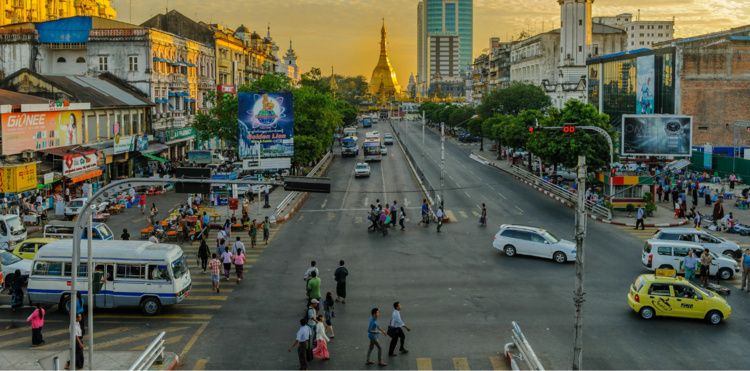
October 9, 2025
4:30 pm
Physical Science Building 120
With an introduction by Ambassador Derek Mitchell
Myanmar stands at a critical crossroads. Nearly five years after the coup, the country faces humanitarian catastrophe, economic collapse, and ongoing violence. During this Forum on Burmese Democracy, leading voices will share their perspectives on the crisis: Sean Turnell, economic advisor and former political prisoner, Miemie Wynn Byrd, security and civil-military relations expert, and Tom Andrews, UN Special Rapporteur on Human Rights in Myanmar. The panel will examine Myanmar’s current trajectory, the challenges to democratic recovery, and the role of international engagement and diaspora communities. Kim Aris, Son of Nobel Peace Prize Laureate Aung San Suu Kyi, will join the presenters via video to provide an update on humanitarian relief efforts.
About the Speakers
Sean Turnell - Economic Advisor and Former Political Prisoner
Miemie Winn Byrd - Security and Civil-Military Relations Expert
Tom Andrews - UN Special Rapporteur on Human Rights in Myanmar
This is a hybrid event. To join the livestream, please register here: https://cornell.zoom.us/meeting/register/4VrtIZVtSJ-wVDzsD_9QlA
Additional Information
Program
Einaudi Center for International Studies
Southeast Asia Program
13th Frank H. Golay Memorial Lecture: Restitution in the Making of Southeast Asia Today
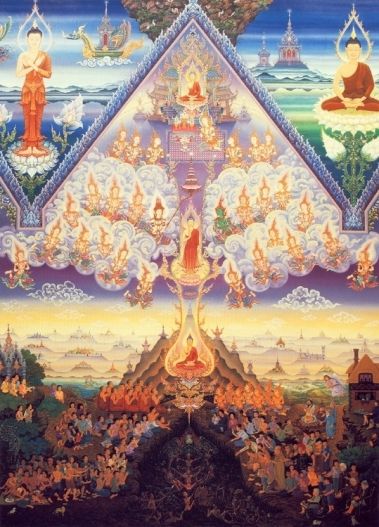
November 6, 2025
4:30 pm
Physical Sciences Building 120
Join us for a talk by Ashley Thompson, Hiram W Woodward Chair of Southeast Asian Art at SOAS University of London.
This lecture will take place at The Physical Sciences Building 120 with light reception to follow in Baker Portico. For questions, contact seap@cornell.edu. To attend via Zoom, please register here.
Established in 1992–93 to honor economist and Southeast Asia scholar Frank H. Golay, the Memorial Lecture reflects his enduring legacy of interdisciplinary research and commitment to the vitality of Cornell’s Southeast Asia Program.
Abstract
There is a revealing episode in the Buddha’s life story, one that, like many others is about the revelation that the vision of the Buddha entails, but which is also about the dubious virtuosity of replication, the revelatory power of return and techniques for expanding territorial dominion – and, that these are all of a piece. Following the successful show of the Twin Miracle at Savatthi, where the Buddha has beaten off rivals by proving his special powers to shoot water and fire from his body aloft in the sky, illuminating the cosmos for the gathered crowds, and twinning this brilliant self to provide at once questions and answers…, he travels to the heavens to teach his mother. The Buddha is missed dearly on earth. Some traditions have it that during his time away a replica was made of him – the first Buddha statue – to soothe a king grieving his absence. Entreated to return, the Buddha is supplied a red ruby ladder flanked by a gold and a silver one for his entourages. As beings watch, expectantly, the progress of the brilliant body down the rungs reveals the cosmos again: all of space and time is there for all to see. This vision is only fleeting, and the Buddha’s return bolsters a certain socio-political order organised around the dissemination of his image.
This talk will contemplate restitution in Southeast Asia today in the shadow of this story and with an anxious eye on our times. What affects does absence evoke, and how? What expectations arise in the progress of return, on whose part and why? What transformations take place in the comings and goings? How, when and where? Why and how do these processes constitute identifications at shifting scales, from the individual to the communal to the national to the regional to the international to the global to the cosmic, at once closing down histories and borders and carrying the potential for visionary unification? Do they reproduce Hindu-Buddhist hegemonies made as much in the ‘Sanskrit-Pali cosmopolis’ as in colonial knowledge production? Are we witnessing the reconsolidation of the commercial wing of an ever-expanding global conglomerate surveying borders between subject and object? Or are we catching glimpses of another time and space, where ‘animism’ might win the day?
About the Speaker
Ashley Thompson is Hiram W Woodward Chair of Southeast Asian Art at SOAS University of London. She maintains a sustained research focus on premodern Cambodian arts and literatures, and complements this with more punctual work on the contemporary period and the arts of the larger Southeast Asian region. Her research revolves around questions of memory, political and cultural transition, embodiment, sexual difference and subjectivity. She leads Circumambulating Objects: Paradigms of Restitution of Southeast Asian Art, and is the editor of a special issue of Art History on decoloniality in Southeast Asian arts fields, forthcoming 2025.
Additional Information
Program
Einaudi Center for International Studies
Southeast Asia Program
Anthropology Colloquium: Connor Rechtzigel
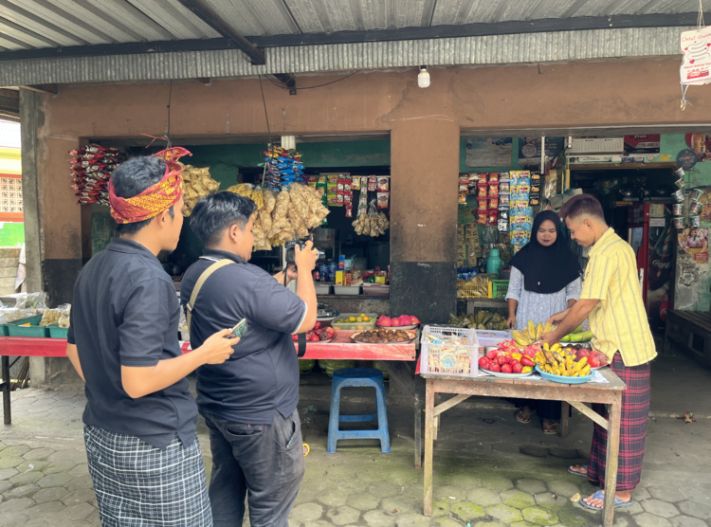
October 17, 2025
3:00 pm
120 Mary Ann Wood Drive, B21
The State as Surrogate Tourist: Tourism Competitions and State Recognition in Indonesia
ABSTRACT: In the wake of the COVID-19 pandemic, Indonesia’s Ministry of Tourism launched the Tourism Village Award (ADWI), which expanded from 1,200 villages in 2021 to over 6,000 in 2024. Drawing on fieldwork in Lombok villages competing in the 2023 round, this talk examines how state recognition circulates as a resource in the absence of tourists. I trace the work of “local champions,” unpaid volunteers who craft narratives of village potential through filmmaking, coordination, and relationship-building. I then turn to a Lombok village that received a visit from Minister Sandiaga Uno, who briefly embodies the absent tourist’s gaze. Although the state promotes inclusive tourism aesthetics, local leaders must tirelessly demonstrate readiness for investment as they navigate opaque bureaucratic channels with uncertain results. If headlines warn of overtourism, this talk instead highlights tourism development in Indonesia as aspirational and precarious, where the state itself stands in for the absent tourist.
Connor is a PhD Candidate in Anthropology at Cornell University whose research examines how value circulates in Indonesian state tourism initiatives. His dissertation, Tourism without Tourists: State Performance and Regional Development in Indonesia, draws on extended ethnographic fieldwork in Jakarta and on Lombok, a Muslim-majority island located between Bali and Sumbawa.
Additional Information
Program
Southeast Asia Program
Information Session: Fulbright U.S. Student Program
November 17, 2025
4:45 pm
The Fulbright U.S. Student Program supports U.S. citizens to study, conduct research in any field, or teach English in more than 150 countries. The program is open to graduate students, recent graduates, and young professionals. Undergraduate students who wish to begin the program immediately after graduation are encouraged to start the process in their junior year. Recent graduates are welcome to apply through Cornell.
The Fulbright program at Cornell is administered by the Mario Einaudi Center for International studies. Applicants are supported through all stages of the application and are encouraged to start early by contacting fulbright@einaudi.cornell.edu.
Register for the virtual session.
Can’t attend? Contact fulbright@einaudi.cornell.edu.
Additional Information
Program
Einaudi Center for International Studies
Reppy Institute for Peace and Conflict Studies
East Asia Program
Southeast Asia Program
Latin American and Caribbean Studies
Institute for European Studies
South Asia Program
Migrations Program
Institute for African Development
Southwest Asia and North Africa Program
Shaoling Ma, "Integrated Rural Circuits: A Scalar History of Southeast Asia’s Computational Environments"
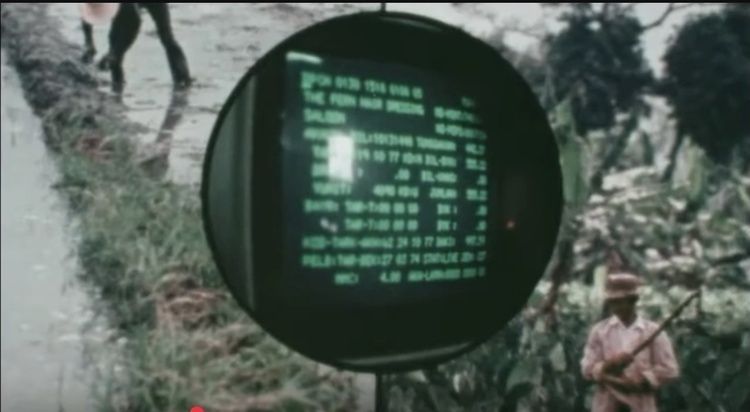
November 13, 2025
4:45 pm
A.D. White House, Guerlac Room
Fall 2025
ICM New Conversations
The Institute for Comparative Modernities is pleased to host Prof. Shaoling Ma (Department of Asian Studies; Fellow, Society for the Humanities, Cornell University) for a new conversation about her current research, "Integrated Rural Circuits: A Scalar History of Southeast Asia's Computational Environments."
Abstract
Postwar advances in information processing and communication networks increasingly automated calculable relations between natures, peoples, and things to the point of appearing to be the cause of their interconnections. My talk chips away at the veneers of such computational environments by expansively recentering rurality as the ground and figure, the object and agentive subject of Southeast Asia’s computing history. Far from attempting a systematic overview, I share several intertwined case studies of computer-aided rural-focused applications from the Philippines, Vietnam, and Malaysia between the late 1950s and 1980s that expose computerization’s less publicized roots in postcolonial elite land ownership, bureaucratic modernization, and race politics; the Cold War circuit of securitization and activism; pre-digital histories of self-contained interchangeability in agricultural production; and agrarian-rural labor restructuring. It is thus the concrete social relations of rural (dis)integration and circuitry that helped to scale Southeast Asia’s computational environments—and their attendant epistemologies—across local, national, regional, and transnational levels. Computational scalar techniques on the other hand often downplayed rurality’s network effect, but in doing so inadvertently ripen it for analysis.
Bio
Shaoling Ma is an interdisciplinary scholar and critical theorist of global Chinese literature, cultural history, and media. Her teaching and research interests include critical theory and late nineteenth-century to contemporary Chinese and Southeast Asian studies.
Prof. Ma's first book, The Stone and the Wireless: Mediating China, 1861-1906 (Duke UP, 2021) asks what media studies can gain conceptually from the last few decades of the Manchu Qing dynasty (1644-1912), and what this politicized and semicolonial phase of Chinese history looks like when reviewed from the new and mostly foreign communicative technologies of its time such as telegraphy, telephony, phonography, and photography. The Stone and the Wireless argues that when Chinese intellectuals, writers, and revolutionaries wrote and illustrated their encounters with these devices, they inadvertently challenged existing notions of politics, tradition, and science, and thus reconfigured new sites of ideological struggle.
Prof. Ma is currently working on a second book, tentatively titled Asia in Loops, a cultural history and critical theorization of how computational techniques aiding East and Southeast Asian capitalist accumulation feed on the region's larger geopolitical tensions to produce seemingly self-referential and self-regenerating loops to which culture and criticism risk capitulating.
F
Additional Information
Program
Southeast Asia Program
Is (Cutting) International Aid Good?
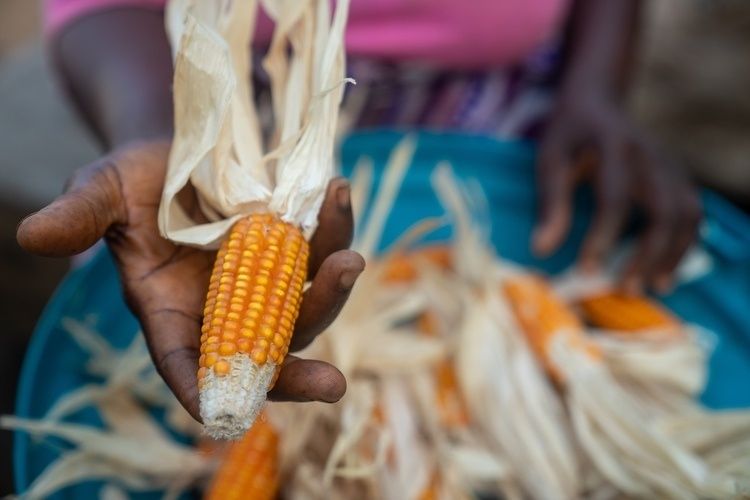
October 22, 2025
5:00 pm
Goldwin Smith Hall, G76, Lewis Auditorium
Lund Critical Debate
Since January 2025, the United States has slashed billions in international aid—and effectively dismantled the U.S. Agency for International Development (USAID), responsible for administering U.S. development and humanitarian aid around the world. In what has become the largest restructuring of aid in the nation’s history, thousands of UN-administered programs have also lost funding, disrupting critical programs and services, breaking supply chains, and leading to widespread closures and layoffs.
These sweeping cuts affect food security, global health, democratic governance, and more—and the stakes have never been higher. As the landscape of international aid evolves, the world faces new questions about the impact of aid on communities, what makes international aid effective—and how to move forward.
This year's Lund debate from the Mario Einaudi Center for International Studies brings together policy and practice experts for an unfiltered look at the future of international aid. Join Einaudi Center faculty Chris Barrett (Dyson/Brooks) and Muna Ndulo (Law) as they tackle these questions: Who benefits from aid? Do some types of aid work better than others? Should we pursue new approaches to international development? What are the best ways to take strategic action in the world while investing in America’s security, economy, and global position?
***
Interested in attending? Complete this RSVP.
***
Panelists
Chris Barrett is the Stephen B. and Janice G. Ashley Professor of Applied Economics and Management in the Dyson School of Applied Economics and Management and a professor in the Cornell Brooks School of Public Policy. He is coeditor-in-chief of the journal Food Policy and a frequent commentator and policy advisor on food security and agricultural economics. Barrett won the USAID Science and Technology Pioneers Prize (2013), among many other awards for research, teaching, and public outreach. Read recent Chronicle coverage of Barrett's research.
Muna Ndulo is the William Nelson Cromwell Professor of International and Comparative Law at Cornell Law School and an internationally recognized scholar in the fields of constitution making, governance and institution building, international criminal law, African legal systems, and human rights. Ndulo has served as consultant to the African Development Bank, World Bank, Economic Commission for Africa, United Nations Development Program, and other international organizations. He led the Einaudi Center's Institute for African Development from 2001 to 2020.
Moderator
Paul Kaiser is the Einaudi Center's practitioner in residence in fall 2025. Kaiser has extensive experience in international development, with a focus on sub-Saharan Africa, South Asia, and the Pacific Islands. His career spans roles at USAID, the Millennium Challenge Corporation, and World Bank. Previously, Kaiser taught political science and African studies at Mississippi State University and the University of Pennsylvania.
***
About the Debate
The Lund Critical Debate is a signature event of the Mario Einaudi Center for International Studies. Established in 2008, Einaudi's Lund Debate series is made possible by the generosity of Judith Lund Biggs '57.
Additional Information
Program
Einaudi Center for International Studies
Reppy Institute for Peace and Conflict Studies
East Asia Program
Southeast Asia Program
Latin American and Caribbean Studies
Institute for African Development
Institute for European Studies
South Asia Program
Migrations Program
Southwest Asia and North Africa Program
Ethnomusicologist Martin Hatch Dies at 83
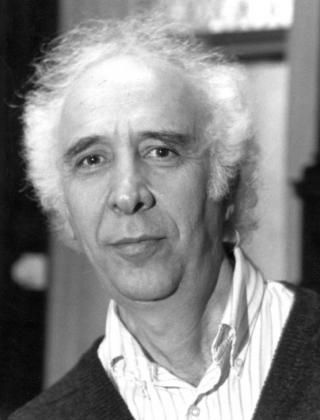
SEAP mourns his passing
Martin F. Hatch Jr., Ph.D. ’80, professor of music emeritus in the College of Arts and Sciences (A&S), died Aug. 23 in Ithaca, New York. He was 83.
Additional Information
Research at Risk: Cultural and Language Fluency
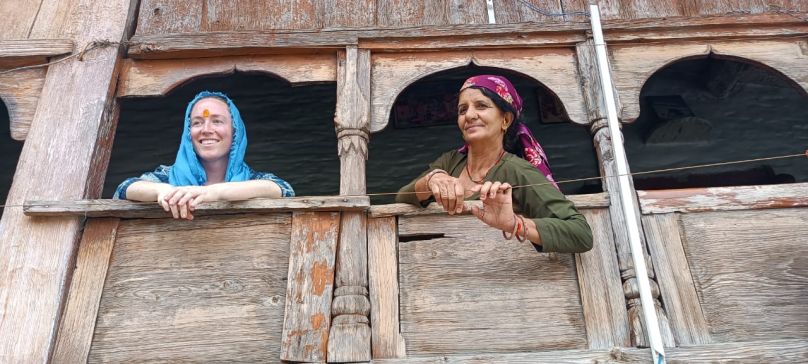
SEAP and SAP lose funding, seek solutions
The federal government has announced the end of National Resource Center and FLAS funding, which have supported area studies training for decades.
Additional Information
Raisa Sakamoto
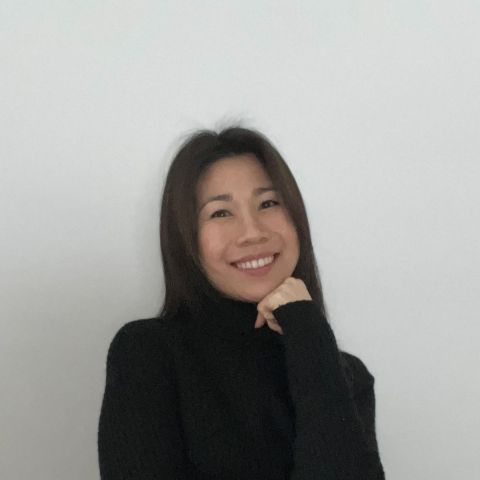
Program Assistant
Additional Information
Faculty Research Seed Grants: Global Hubs Info Session

October 1, 2025
12:00 pm
Join this info session to learn about 2026 Global Hubs Faculty Research Seed Grants offered by Global Cornell as part of our Global Hubs initiative. Info session attendees will learn about the grant opportunity and application tips through a short presentation and Q&A.
Through these seed grants, Cornell faculty from across the university are invited to apply for research funds to work with collaborators at Hubs partner institutions. Funded projects should lead to tangible outcomes, including the submission of at least one co-authored peer-reviewed publication and at least one application for external grant funding.
Up to 20 applications for research with a Global Hubs collaborator will be funded.
Successful proposals will receive up to $5,000 from Cornell, with the potential for matching funds from some Global Hubs partner universities.
Application deadline: October 15, 2025, 4:00 p.m. ET
Project duration: January 1–December 31, 2026
Virtual information sessions:
September 18, 2025, 12:00–1:00 p.m. ET (register)
October 1, 2025, 12:00–1:00 p.m. ET (register)
Learn more and apply for a Global Hubs joint seed grant.
Additional Information
Program
Einaudi Center for International Studies
Latin American and Caribbean Studies
Reppy Institute for Peace and Conflict Studies
East Asia Program
Southeast Asia Program
Institute for African Development
Institute for European Studies
South Asia Program
Migrations Program
Southwest Asia and North Africa Program