
Southeast Asia Program
Commodification and Revival of Kalinga Tattoos in Northern Philippines

October 30, 2025
12:15 pm
Kahin Center
Gatty Lecture Series
Join us for a talk by Analyn Salvador-Amores from the University of the Philippines Baguio.
This Gatty Lecture will take place at the The Kahin Center, 640 Stewart Ave. Lunch will be served. For questions, contact seapgatty@cornell.edu.
Abstract
Tattoos, or batok was once a place-based practice accorded to the members of Kalinga, an ethnolinguistic group in northern Luzon, Philippines. Batok served as badges of honor for the men who successfully participated in tribal warfare in the past; and as a form of aesthetics for the women, both of whom reflects the relevant social position they occupy in the community: religious, political association, and economic status. During the American colonial period at the turn of the century, the traditional tattoos were abhorred due to its association to “savages and criminality” and waned in the next century.
Today, there is a strong wave of revival of traditional tattoos in the contemporary period. Foremost inspired by Apo Whang-ud, a 90-year old elderly woman and a tattoo practitioner from a remote village in Buscalan, Tinglayan in Kalinga. It has generated a growing interest on Kalinga tattoos from the local and international market. The wave of revival of traditional tattoos among the younger Kalinga has been accompanied by a steady influx of urban and diasporic Filipinos of non-Kalinga origin visiting Buscalan to get tattooed. It is here that the most dynamic process of the transformation of tattooing can be observed. In what seems to be an ongoing revival or reinvention of traditional tattoos in the contemporary times, the tattoos now are also commodified due to the advent of tourism.
The popularity of Kalinga tattoos has opened new arenas for both traditional and contemporary forms of expression dissociated from the symbolic meanings – tattoos as graphic designs devoid of ritual acts. Due to the influx of tourists to the village of Buscalan since 2014, which burgeoned in 2015 and continues to grow even until now. Initially, Whang-ud started with an apprentice of her niece Grace Palikas; today there are two hundred fourteen (214) other young female and male tattoo artists in the village who tattoo tourists from their homes, and have travelled to the cities to tattoo outside of the village.
With the vibrant economy bolstered through the quest for authentic tattoos by Apo Whang-ud, a significant new phenomenon developed, of local people patronizing the younger tattoo artists in the village and getting inked by the same tattoos that they abhorred forty years ago. The pain, perforation of the skin, and permanence (embodied) that one experiences to construct individual and social identities through appropriation of the batok resulted in the re-contextualization of the tattoos in the present.
About the Speaker
Analyn Salvador-Amores is Professor of Anthropology and former Director of the Museo Kordilyera at the University of the Philippines Baguio. Her research interests include anthropology of the body, non-Western aesthetics, material culture, endangered cultures, ethnographic museums, Indigenous peoples and colonial photography in the Philippine Cordillera. She studied for her PhD in Social and Cultural Anthropology at Oxford University. In addition to her award-winning book, Tapping Ink, Tattooing Identities: Tradition and Modernity in Contemporary Kalinga Society (University of the Philippines Press, 2013), she is the author of many scholarly articles published in various books and journals.
As a public service professor, she continues to engage Indigenous communities in her work, and promoting Indigenous knowledge in different platforms. She actively carries out anthropological fieldwork among the Indigenous communities in Northern Luzon, and have published extensively on this subject. Recently, she is involved in the research on Northern Luzon Philippine collections in the archives and museums in the US and Europe, reconnecting historical documents, archival photographs and material culture to communities of origin in Northern Luzon, through digital repatriation and rematriation. The culmination of this collaborative work with German museums is the book, Hunting for Artifacts: 19th Century German Travelers in the Luzon Cordillera (2025) published by the Cordillera Studies Center, University of the Philippines Baguio.
Additional Information
Program
Einaudi Center for International Studies
Southeast Asia Program
CANCELED: Intimate Frontiers: Sex, Migration, and the Circulation of Global Capital

October 16, 2025
12:15 pm
Kahin Center
Update: This lecture has been canceled.
Gatty Lecture Series
Join us for a talk by Maria Hwang, Assistant Professor of East Asian Studies from McGill University.
This Gatty Lecture will take place at the The Kahin Center, 640 Stewart Ave. Lunch will be served. For questions, contact seapgatty@cornell.edu.
Additional Information
Program
Einaudi Center for International Studies
Southeast Asia Program
How Ethnic Rebellion Begins: Theory and Evidence from Myanmar

November 20, 2025
12:15 pm
Kahin Center
Gatty Lecture Series
Join us for a talk by Jangai Jap, Assistant Professor from the Department of International Affairs at the University of Georgia.
This Gatty Lecture will take place at the The Kahin Center, 640 Stewart Ave. Lunch will be served. For questions, contact seapgatty@cornell.edu.
Abstract
Since independence, most of the ethnic minority groups in Myanmar—though not all—have rebelled against the central government, making it home to the most simultaneous and longest ongoing armed conflict in the world. In this talk, I track the origins of armed ethnic organizations in Myanmar and argue that political exclusion—a primary grievance widely thought to motivate ethnic rebellion—played a rather minimal role in the onset of ethnic rebellions. Instead, what distinguishes ethnic groups in rebellion from other ethnic minority groups is the claim of having an ethnic “homeland” within Myanmar. Individuals from such ethnic groups form nascent armed groups, which are then fostered and supported by more established ethnic armed organizations. I illustrate this dynamic through the role of the Karen National Union and the Kachin Independence Organization in the proliferation of robust ethnic armed organizations in Myanmar.
About the Speaker
Jangai Jap is an Assistant Professor in the Department of International Affairs at the University of Georgia’s School of Public and International Affairs. She researches ethnic politics, nationalism, minority-state relations, and Burma/Myanmar politics. Her ongoing work examines interethnic relations, bureaucratic experiences, and ethnic rebellion. Previously, she was an Early Career Provost Fellow in the Department of Government at the University of Texas at Austin and a Postdoctoral Fellow in the Politics of Race and Ethnicity Lab. She holds a Ph.D. in Political Science from George Washington University and a B.A. in Judaic Studies and Political Science from Yale University.
Additional Information
Program
Einaudi Center for International Studies
Southeast Asia Program
Sleepless Dreams: Fictional Narrative as a Form of Resistance in Thailand

October 23, 2025
12:15 pm
Kahin Center
Gatty Lecture Series
Join us for a talk by Anocha Suwichakornpong, Associate Professor of Film from Columbia University.
This Gatty Lecture will take place at the The Kahin Center, 640 Stewart Ave. Lunch will be served. For questions, contact seapgatty@cornell.edu.
Abstract
In this talk, I will explore how fictional narrative filmmaking can serve as a form of resistance under authoritarian regimes, focusing on my own practice as a filmmaker and artist working in Thailand. Through a discussion of my recent works, I will reflect on how storytelling, symbolism, and cinematic language become tools to navigate censorship, challenge dominant narratives, and imagine alternative political realities. This talk invites the audience to consider the power of fiction—not as escapism, but as a means of speaking truth in a landscape where direct expression is often suppressed.
About the Speaker
Anocha Suwichakornpong is a filmmaker whose work is informed by the socio-political history of Thailand. Her films have been the subject of special focus screenings at the Museum of the Moving Image, New York; TIFF Cinematheque, Toronto; and Harvard Film Archive. Anocha’s thesis film, GRACELAND became the first Thai short film to be officially screened at Cannes Film Festival. MUNDANE HISTORY, her first feature film, won numerous awards, including the Tiger Award at the International Film Festival Rotterdam. BY THE TIME IT GETS DARK, Anocha’s second feature, which centers around a student massacre that took place in 1976 by Thai state forces in Bangkok has been screened in festivals such as Locarno, Toronto, BFI London, and Rotterdam. The film won Best Picture and Best Director at Thailand National Film Awards and was chosen as Thailand’s Oscar entry for Best Foreign Language Film.
Anocha founded the Bangkok-based production house, Electric Eel Films, and co-founded the non-profit Purin Pictures. Through these organizations, she supports emerging voices in independent Southeast Asian Cinema.
Anocha is a Prince Claus Laureate, DAAD Artists-in-Berlin Residency, and the Rockefeller Foundation Bellagio Residency recipient. She was a visiting lecturer at Harvard University from 2018-2020. Her fourth feature film, COME HERE, premiered at Berlinale 2021. In 2022, Anocha directed her first live performance, FREETIME, commissioned by the Walker Art Center. She received the Creative Capital Award instead 2024 for her upcoming film, FICTION. Anocha is an Associate Professor in the MFA Film Program at Columbia University and splits her time between New York and Bangkok, where she’s currently working on her next film, FICTION.
Additional Information
Program
Einaudi Center for International Studies
Southeast Asia Program
Exploring Chemical Ubiquity: Agrochemical Production Networks and Regulatory Landscapes in Malaysia and Southeast Asia
October 2, 2025
12:15 pm
Warren Hall, B75
Gatty Lecture Series
Join us for a talk by Caitlyn Sears, an incoming postdoctoral associate at Cornell University's Southeast Asia Program.
This Gatty Lecture will take place at Warren Hall, B75. Lunch will be served. For questions, contact seapgatty@cornell.edu.
Abstract
In this talk, I examine how recent production and regulation dynamics in Malaysia exemplify transformations in global chemical geographies. A recent resurgence of academic interest in pesticides has shifted focus from an analysis of a ‘circle of poison’ to recent conceptualizations of a ‘global pesticide complex.’ Whereas pesticide production was once concentrated in the global north for use on global south export crops, a new multipolarity of production has emerged, with significant increases in production in the global south. These changes in production are fundamentally intertwined with alterations in pesticide regulatory landscapes, from global frameworks established in the early 2000s to more recent national level initiatives.
My research examines how the production and regulatory shifts associated with a new global pesticide complex unfold in Malaysia. In terms of production, a combination of colonial legacies, regional private investment flows, and national development plans transformed the country into a top ten global herbicide exporter for almost two decades beginning in the early 2000s. This emergence as a major producer was both a cause and consequence of significant regulatory change. Motivated by stalled international agreements, unwelcome western regulatory impositions, and growing mobilizations by a more informed citizenry, Malaysia has recently pursued more assertive state-level action on pesticides. Through this research on pesticide production and regulation trends, I hope to contribute to better public knowledge and government policy at the intersection of public health, environmental protection, and economic development.
About the Speaker
Caitlyn Sears was the recipient of the National Science Foundation (NSF) Social, Behavioral and Economic Sciences fellowship in 2023 for her work on the Malaysian pesticide industry and its role in global agrochemical production networks. Her work combines economic and development geography to examine the flow of agrochemicals across national borders, regulatory systems and ecosystems. Her most recent research fits within broader literature on environmental governance and new geographies of south-south development and examines the scalar mismatch between global regulatory conventions, national regulations and domestic and international agribusiness capital. She is an incoming postdoctoral associate at Cornell University's Southeast Asia Program.
Additional Information
Program
Einaudi Center for International Studies
Southeast Asia Program
Deities of Diet and Design: Hindu Gods and the Aestheticization of Thai-American Restaurant Art
September 25, 2025
12:15 pm
Kahin Center
Gatty Lecture Series
Join us for a talk by Aditya Bhattacharjee, Mellon Postdoctoral Fellow from Asian Studies at Cornell University.
This Gatty Lecture will take place at the The Kahin Center, 640 Stewart Ave. Lunch will be served. For questions, contact seapgatty@cornell.edu.
About the Talk
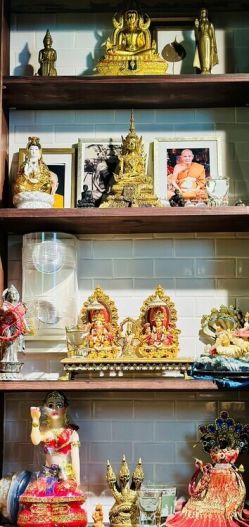
My presentation shares ethnographic vignettes from an ongoing investigation of the religious lives of Thai-American restaurateurs in different locations across New York state. More specifically, I center this population’s interactions with the rising popularity and worship of Hindu gods in their predominantly Buddhist homeland. Drawing on interviews with Thai-American restaurant owners and observations of the artwork that decorates their businesses, I explore how new trends in popular Thai religion have influenced the beliefs and business practices of residents in the Empire State’s primary Thai enclaves.
By taking note of the frequency with which paintings and icons of Hindu figures like Ganesha, Brahma, and Lakshmi are grouped with Southeast Asian and Chinese deities like Nang Kwak, Thao Wetsuwan, Guan Yin Pu Sa, and charismatic Buddhist monks on the Thai restaurant altar setting, my talk uses a material analysis of such design-work to raise three related questions: (1) Are Thai-Americans performing Thai-ness by incorporating Indian deities within their religious repertoires?; (2) What kind of experience does the Thai-American restaurateur wish to convey to clients by creating a dining aesthetic inflected by Hindu iconography?; and (3) How might we re-think notions of cultural appropriation in contemporary times by engaging with case studies, like those considered in this talk, that are curated by Asian Americans following patterns of emerging religious syncretism in their homelands?
Additional Information
Program
Einaudi Center for International Studies
Southeast Asia Program
South Asia Program
Global Internships
Details
Gain valuable international experience with a Global Internship! As an intern, you'll meet mentors and colleagues working in the international arena and advance your career goals.
Our Global Internships span the globe with placements at Cornell Global Hubs partner universities, community nonprofits and NGOs, and global practitioners partnering with Einaudi's regional and thematic programs. We offer internships specializing in global development, climate and sustainability, international relations, communication, business, governance, and more.
Many opportunities have several openings, giving you a chance to intern abroad next summer with fellow Cornellians.
What You'll Learn
How to Be a Global Citizen
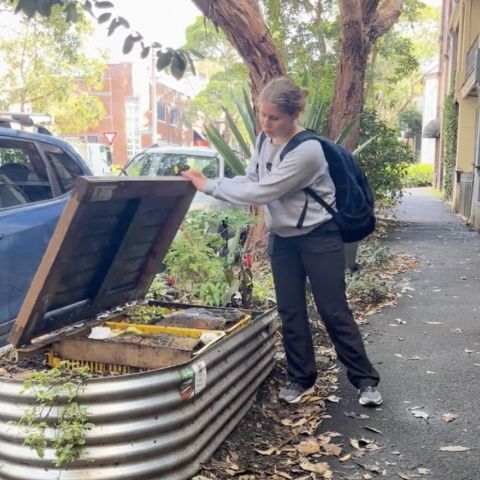
"My internship helped me to strengthen my sense of cultural awareness, intercultural communication, and empathy."—Haruna Floate '26
How to Think Internationally
"In university, we are often taught U.S.-centric views, which can be limiting as environmental problems are global."—Hadley Flanagan '26
How to Adapt in New Places
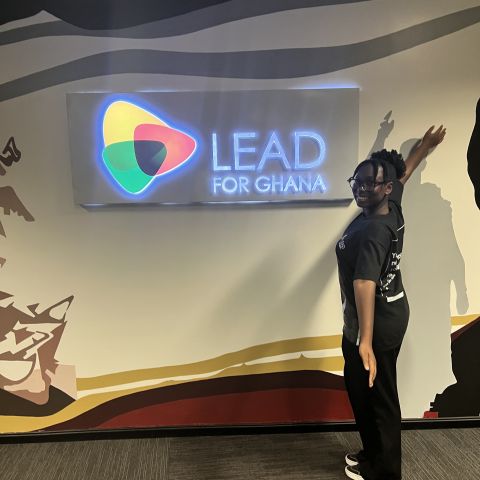
"The number one lesson I got from the experience was the importance of being teachable. I had to go outside of my comfort zone."—Eliana Amoh '26
Funding Amount
All Global Interns receive an award to cover the estimated costs for airfare, transportation, and living expenses. A portion of the stipend may be paid directly to the in-country host to support housing, food, and local transportation. Find specific funding information under the "cost" tab on each internship’s Experience page.
How to Apply
Find out how to apply then continue exploring internship options and start your application on Experience.
Deadline and Decision
The application deadline for this opportunity has passed.
Questions?
Joshua Kennedy is the Global Internships advisor. Select "Global Internships" in Cornell Chatter to schedule an appointment. You can also reach out by email with questions.
Meet Past Global Interns
Hear from our past interns on the Global Cornell YouTube channel.
Additional Information
Funding Type
- Internship
Role
- Student
Program
A Postcolonial Theory of Free Speech
December 4, 2025
12:15 pm
Kahin Center
Gatty Lecture Series
Join us for a talk by Kevin D. Pham from the University of Amsterdam, who will discuss theories of free speech among Vietnamese revolutionaries.
This Gatty Lecture will take place at the The Kahin Center, 640 Stewart Ave. Lunch will be served. For questions, contact seapgatty@cornell.edu.
Abstract
In this presentation, Kevin D. Pham shows how revolutionaries in Vietnam debated the value of free speech. Drawing on the writings of the Nhân Văn-Giai Phẩm (NVGP), a movement of intellectuals who proclaimed support for free speech and communist revolution in North Vietnam in the late 1950s, Pham shows how the NVGP defend free speech as a collective, rather than individual, right and as something that can invigorate the Party so that it can more effectively guide the people towards socialism. They argue that free speech can: 1) help the Party redress their mistakes, 2) identify what is good and bad for the people, and 3) create a socialism that celebrates human diversity. Departing from theories of free speech that emphasize the individual, the NVGP’s theory overlaps with theories that emphasize free speech’s benefits for society. But whereas John Stuart Mill—the eminent defender of free speech—was concerned with conformity, the NVGP was concerned with declining trust between the Party and the people. And whereas Marxist theories of free speech tend to focus on how free speech can help the oppressed win power, the NVGP focuses on how free speech can help socialist transition after winning power. Ultimately, the NVGP offer us a postcolonial theory of free speech, one that presents freedom of speech as the key to long lasting freedom after achieving independence from colonialism.
About the Speaker
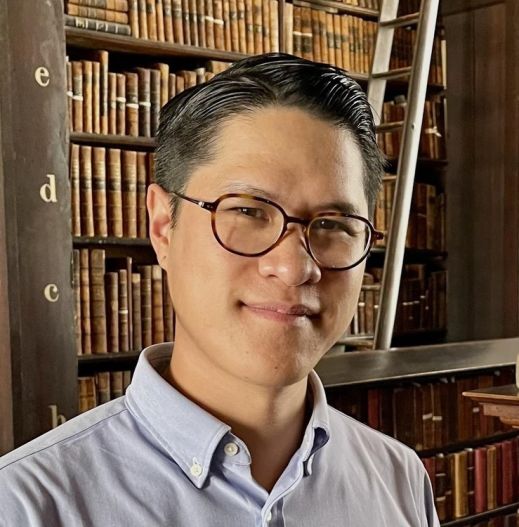
Kevin D. Pham is Assistant Professor of Political Theory at the University of Amsterdam. His research explores how theories of democracy, freedom, and revolution travel across cultures and are adapted by activists and intellectuals responding to colonialism and postcolonial nation building. His book, The Architects of Dignity: Vietnamese Visions of Decolonization (Oxford University Press, 2024), is the first to introduce Vietnamese political thought to the field of political theory. His articles appear in journals such as Theory & Event, European Journal of Political Theory, Review of Politics, Polity, and Philosophy and Global Affairs, among others. He co-hosts two podcasts (Nam Phong Dialogues and Viet History Makers) that make Vietnamese history accessible to a broad public.
Additional Information
Program
Einaudi Center for International Studies
Southeast Asia Program
10,000 Years of Versatility: Exploring the Diversity and Legacy of the Bottle Gourd

November 13, 2025
12:15 pm
Kahin Center
Gatty Lecture Series
Join us for a talk by Marlie Lukach, PhD student in Plant Breeding and Genetics, who will discuss lagenaria siceraria, the bottle gourd.
This Gatty Lecture will take place at the The Kahin Center, 640 Stewart Ave. Lunch will be served. For questions, contact seapgatty@cornell.edu.
Abstract
Lagenaria siceraria, commonly known as bottle gourd, is a crop of immense historical significance, as one of the first domesticated crops, with its use dating back over 10,000 years. Its journey across almost every continent, adapting to a diverse range of climates and overcoming abiotic and biotic stressors, is a testament to its remarkable adaptability and diversity. The early interest in bottle gourd may have stemmed from its versatility: the immature fruits, leaves, stems, and flowers are edible, while the mature fruit’s hard rind can be used for storage vessels, tools, musical instruments, amulets, or art. Despite this adaptability and importance for early humans, there is a pressing need for further research to better understand the adaptability, diversity, and cultural importance of bottle gourds. This study employs a three-part approach to provide resources for advancing discovery, investigating global diversity, and preserving bottle gourds. Objective 1 focuses on understanding the cultural importance of bottle gourds. In collaboration with Cornell University’s Southeast Asia Program and Kasetsart University in Thailand, we explore the cultural significance of bottle gourds in Southeast Asian countries. Objective 2 aims to improve the sharing of scientific knowledge of bottle gourd by creating a crop ontology to help standardize data collection. This collaborative effort includes researchers from the US, Thailand, and Turkey working on bottle gourds. Lastly, Objective 3 centers on enhancing our understanding of the phenotypic and genotypic diversity of bottle gourds globally using bottle gourd germplasm from 19 countries held in the USDA National Plant Germplasm System
About the Speaker
Marlie Lukach is a 6th-year PhD student in the Plant Breeding and Genetics Program working in the Jean-Luc Jannink Lab. She grew up not far from Ithaca in Endicott, NY. While she lived in a rural area, she went to school in town. Growing up in both settings, Marlie learned how disconnected these worlds can be and worked on reconnecting them with her involvement in 4H at the local, state, and national levels. Marlie completed her Bachelor's degrees at Cornell University in Agricultural Science and International Agriculture and Rural Development in 2020.
From these two programs, she developed a passion for underutilized crops across the globe.
During Marlie’s time in the Plant Breeding and Genetics Program, she has worked on a variety of projects such as heavy metal accumulation in winter squash for baby food markets, carbohydrate accumulation of winter squash, and building models using handheld near-infrared (NIR) spectrometers to predict quality traits in winter squash. But, her passion has driven her to pursue an overarching objective of how to make underutilized crops more accessible while helping to preserve biodiversity. Marlie has worked in partnership with the USDA to trial a variety of underutilized cucurbits, which include squashes, cucumbers, melons, watermelons, and, of course, gourds, to better understand how they perform in temperate climates, as well as traveling to Thailand to explore the cultural connections and diversity of gourds present in Southeast Asia.
Outside of research, Marlie is an active member of SEAP, serving as a committee member for the planning of the 2025 SEAP Grad Conference and as the building coordinator for the Kahin Center. And, in her free time is an avid equestrian and goat farmer.
Additional Information
Program
Einaudi Center for International Studies
Southeast Asia Program
Champassak Royalty and Sovereignty: Within and Between Nation States in Mainland Southeast Asia

September 18, 2025
12:15 pm
Kahin Center
Gatty Lecture Series
Join us for a talk by Ian Baird from the University of Wisconsin-Madison, who will discuss the nuances of sovereignty as constructed by Champassak royals.
This Gatty Lecture will take place at the The Kahin Center, 640 Stewart Ave. Lunch will be served. For questions, contact seapgatty@cornell.edu.
Abstract
The House of Champassak was established, in 1713, by an important Buddhist monk from Vientiane named Phra Khou Phonsamek, who supported Chao Nokasat (Chao Soyisamouth), an estranged Vientiane royal, to become the first king of Champassak. However, Champassak only remained an independent sovereign power until 1778, when it was forced to become a vassal of Siam. Since then, the House of Champassak has always had to maneuver and negotiate to maintain varying degrees of sovereign power, whether it be with the Thais, Cambodians, French, the Royal Lao government, or others. In my new book, Champassak Royalty and Sovereignty (University of Wisconsin Press, 2025), I consider the ways that the House of Champassak has both asserted different sovereign claims and achieved diverse kinds of sovereign power—both formally and informally—and has developed different practices that have helped them obtain varying degrees of sovereign power. The book is not bounded by modern nation states, and therefore considers Champassak royals in Champassak-proper, in present-day southern Laos, but also in northeastern Thailand, northeastern Cambodia, and in Europe and North America, where most of the family has settled since the communist takeover of Laos in 1975. Crucially, I argue that sovereignty is fundamentally contingent and always in flux, thus requiring constant efforts—either explicit or more subtle—to reinforce, construct and reproduce various fields of sovereignty.
About the Speaker
Ian G. Baird is a Professor of Geography and Southeast Asian Studies at the University of Wisconsin-Madison. He has various interests and mainly conducts research in Laos, Thailand and northeastern Cambodia. His recent books include Champassak Royalty and Sovereignty: Within and Between Nation-States in mainland Southeast Asia (University of Wisconsin Press, 2025), Thailand’s Volunteer Hill Tribe Militia (1970-1983): An Under- Recognized Anti-Communist Force (White Lotus Press, 2024), and Rise of the Brao: Ethnic Minorities in Northeastern Cambodia during Vietnamese Occupation (University of Wisconsin Press, 2020).
Additional Information
Program
Einaudi Center for International Studies
Southeast Asia Program