
Southeast Asia Program
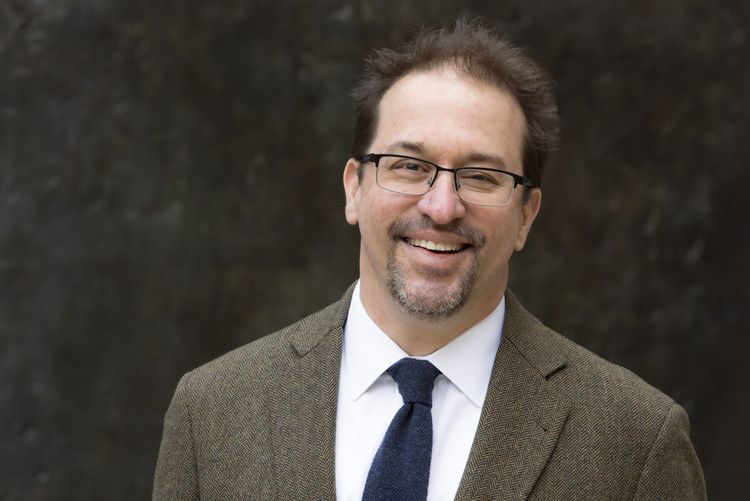
Bad Lieutenants: The Khmer Rouge, United Front, and Class Struggle, 1970–1997
April 24, 2025
12:15 pm
Kahin Center
Gatty Lecture Series
Join us for a talk by Dr. Andrew Mertha from Johns Hopkins School of Advanced International Studies, who will discuss Khmer Rouge, revolution, and leadership struggles. Dr. Andrew Mertha is the George and Sadie Hyman Professor of China Studies at Johns Hopkins School of Advanced International Studies.
This Gatty Lecture will take place at the The Kahin Center, 640 Stewart Ave. Lunch will be served. For questions, contact seapgatty@cornell.edu.
About the Talk
In 1979, the Vietnamese army seized Phnom Penh, toppling Pol Pot's notoriously brutal regime. Yet the Khmer Rouge did not disintegrate. Instead, the movement continued to rule over swathes of Cambodia for almost another two decades even as it failed to become a legitimate governing organization. In this talk, I argue that the Khmer Rouge's successes and failures were both driven by a refusal to dilute its revolutionary vision. Rather than take the moderate tack required for viable governance, it pivoted between only two political strategies: united front and class struggle. Through the stories of three key leaders—Ieng Sary, Son Sen, and Ta Mok—I track the movement's shifting from one strategy to the other until its dissolution in the 1990s.
About the Speaker
Andrew Mertha is the George and Sadie Hyman Professor of China Studies, Director of the China Studies Program, and Director of the SAIS China Research Center at the Johns Hopkins University School of Advanced International Studies (SAIS). From 2019 to 2021, Mertha served as the Vice Dean for Faculty Affairs and International Research Cooperation at SAIS. He is formerly a professor of Government at Cornell University and an assistant professor of Political Science at Washington University in St. Louis. Mertha is the author of Brothers in Arms: Chinese Aid to the Khmer Rouge, 1975-1979 (Cornell University Press, 2014) and the editor of May Ebihara’s Svay: A Cambodian Village, with an Introduction by Judy Ledgerwood (Cornell University Press/Cornell Southeast Asia Program Press, 2018). His forthcoming book, Bad Lieutenants: The Khmer Rouge, United Front, and Class Struggle, 1970–1997, will be published by Cornell University Press in May 2025. Mertha is on the Editorial Committee for the Journal of Comparative Politics, The China Quarterly, and Asian Survey. He is vice president of the Center for Khmer Studies (CKS), a member of the National Committee on U.S.-China Relations, and an alumnus of the NCUSCR Public Intellectuals Program, 2008-2010. He received his PhD from the University of Michigan and is originally from New York City.
Additional Information
Program
Einaudi Center for International Studies
Southeast Asia Program
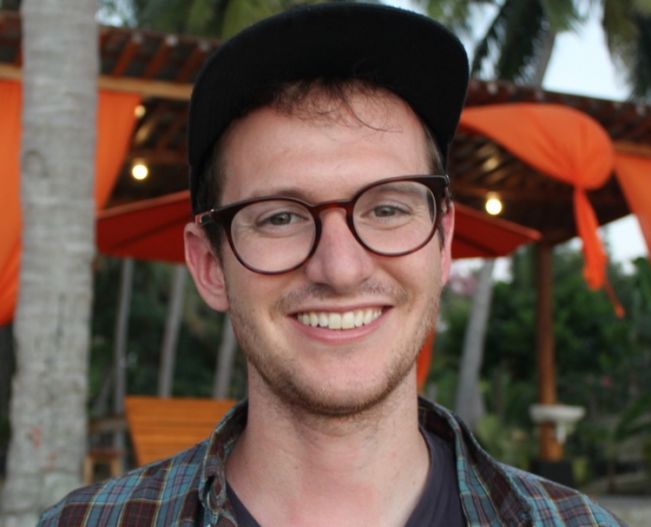
"Very strong but also extremely fair”: Masculinity and Football in the Dutch East Indies, 1870-1942
April 17, 2025
12:15 pm
Kahin Center
Gatty Lecture Series
Join us for a talk by Michael Kirkpatrick Miller from Cornell University, who will discuss Ambonese masculinity and colonialism. Michael Kirkpatrick Miller is a PhD candidate in the Department of History at Cornell University.
This Gatty Lecture will take place at the The Kahin Center, 640 Stewart Ave. Lunch will be served. For questions, contact seapgatty@cornell.edu.
About the Talk
In the East Indies, Dutch colonial culture mythologized and racialized the men of the Spice Islands, namely the men from Ambon, as a “martial race.” According to the Dutch colonial state, the Ambonese needed to be cultivated as loyal colonial subjects, collaborating soldiers. During the late nineteenth century, and especially during and after the Aceh War, Christian Ambonese men were actively recruited into the Dutch colonial army, aiding the Dutch in deepening their empire through conquest and the quelling of unrest across the Indonesian archipelago. This talk attempts to unravel the discourse of martialness placed upon these indigenous soldiers in order to understand how this ideology of Ambonese masculinity was experienced by the Ambonese outside of their home island in the early twentieth century. Through an analysis of Dutch-language sporting magazines and the Malay-language popular press in cities with a major colonial army presence, I argue that Ambonese loyalty, and indeed Ambonese “martialness” was never fully accepted by Ambonese soldiers, and instead was contingent on the Dutch colonial state’s economic support of the soldiers and their families. While Dutch reporters constantly praised the fitness, athleticism, and fierceness of Ambonese football teams in Dutch-language magazines, Ambonese men in Malay-language newspapers complained about their station within the Dutch army, keeping one foot placed on the side of the nationalist revolutionaries in Ambon. Further, stadium-wide brawls between Ambonese teams and European teams in colonial Batavia undergirded Dutch anxieties that these soldiers would become revolutionaries fighting against, not with, the colonial state. Indeed, as one Dutch sporting magazine put it, the Ambonese footballers needed to be “under constant and good leadership” from a European coach. Finally, I also consider what non-Ambonese Indonesians wrote about their experiences living near Ambonese barracks on the islands of Java and Sumatra and what they thought of Ambonese footballers and Ambonese football teams. The discourse of the fierce, martial, Ambonese footballer was a critical site of debate about empire and revolution in colonial Indonesia. This racialized discourse of the Ambonese as more fit and more athletic than other Indonesian ethnic groups continues in Indonesia today.
About the Speaker
Michael Kirkpatrick Miller is a PhD Candidate in the Department of History at Cornell University, where he studies histories of masculinity, empire, and animals in Southeast Asia and the Pacific. At Cornell, he teaches courses on the global history of food, the history of animals, and the history of masculinity. His research has been funded by the US Department of State, the American Institute for Indonesian Studies (AIFIS), and the Library of Congress.
Additional Information
Program
Einaudi Center for International Studies
Southeast Asia Program
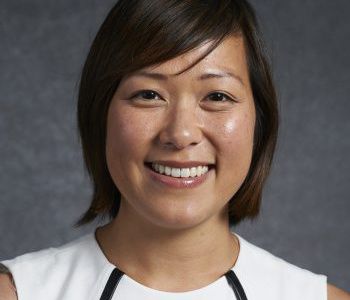
Writing in Drag: Nguyễn Văn Vĩnh, Gender, Patriarchy, and Speaking for Vietnamese Women, 1907-1917
April 10, 2025
12:15 pm
Kahin Center
Gatty Lecture Series
Join us for a talk by Martina Thucnhi Nguyen from Baruch College at City University of New York, who will discuss Nguyễn Văn Vĩnh's gendered writing strategy. Dr. Nguyen obtained PhD from the University of California, Berkeley. Currently, Dr. Nguyen serves as Associate Professor of History at Baruch College at City University of New York.
This Gatty Lecture will take place at the The Kahin Center, 640 Stewart Ave. Lunch will be served. For questions, contact seapgatty@cornell.edu.
About the Talk
In 1907, a series of articles titled “Women’s words” (Nhời Đàn Bà) appeared in Đăng Cổ Tùng Báo (Old Lantern Miscellany) under the name Đaò Thị Loan. Loan was arguably one of the earliest female voices in the modern Vietnamese vernacular press, covering a wide range of women’s issues such as concubinage, childbirth, hygiene, etiquette, and parenting. As it turns out, Đào Thị Loan was not a woman, but in fact, a man writing under a female pseudonym. And not just any man, but Nguyễn Văn Vĩnh, one of the most illustrious Vietnamese intellectuals of the early 20th century. Vĩnh would go on to write this column under the same pseudonym in two subsequent journals he founded, Đông Dương Tạp Chí (Indochina Journal, 1913-14) and Trung Bắc Tân Văn (Central and Northern News, 1915-17). In this 10 year period, Vĩnh penned over 100 articles on women’s issues, one of his most sustained bodies of writing. This paper delves into the column’s content and context to argue that Vĩnh’s adoption of a female persona–that is, writing betwixt and between genders–can be read as both a political and creative act, one which projected an idealized vision of modern Vietnamese gender relations that ultimately benefited men.
About the Speaker
Martina Thucnhi Nguyen is Associate Professor in the Department of History at Baruch College, City University of New York. An historian of modern Southeast Asia, her research focuses on colonialism, intellectual life, social and political reform, and gender in twentieth century Vietnam. Her first book, On Our Own Strength: The Self-Reliant Literary Group (Tu Luc Văn Đoàn) and Cosmopolitan Nationalism in Late Colonial Vietnam, was published in 2021 by University of Hawai’i Press as part of Columbia University’s Weatherhead East Asian Studies Institute book series. She is currently working on her second book, a gender history of patriarchy, examining how Vietnamese during the late colonial period actively constructed ideologies of sexual difference and wove these gendered categories into the very fabric of Vietnamese national identity.
Additional Information
Program
Einaudi Center for International Studies
Southeast Asia Program
Do You Copy? The Racialized Masquerade of K-pop and Filipino Variety Show Cover Dance

March 27, 2025
12:15 pm
Rockefeller Hall, 374
Gatty Lecture Series
Join us for a talk by Elissa “E” Domingo Badiqué from Cornell University, who will discuss Filipinx mimicry and queer self-fashioning through dance. Elissa is a PhD candidate in the Department of Performing and Media Arts at Cornell University.
This Gatty Lecture will take place in Rockefeller Hall 374, NOT the Kahin Center. It will also be available in a hybrid format here. Lunch will be served. For questions, contact seapgatty@cornell.edu.
About the Talk
For Filipinx, there is a strange familiarity in the practice of the Korean pop (K-pop) dance cover which can be traced to Philippine variety show dance crazes of the 1990s. Recreating the choreography of Filipino variety show dance crews has long been a national pastime for the Philippines and its diaspora. However, in looking beyond the country’s reputation as the “land of the great imitators” we can instead examine Filipinx mimicry as a powerful myth-making medium. In reproducing racialized masculine iconography through the “splendid dancing” of aspirational Asian male figures, Filipinx have established a decades-long repertoire of playful queer self-fashioning.
About the Speaker
Elissa “E” Domingo Badiqué (they/she) is a 6th year PhD candidate at Cornell University’s Department of Performing and Media Arts. Their project explores race, gender, and fandom with a particular interest in racialized performances of Asianness within short form popular dance on New Media platforms such as TikTok and YouTube. They are a Deans Scholar and a FLAS (Foreign Language and Area Studies) Fellow. You can find them performing on stage with Cornell Filipino Association’s traditional and Sinigang dance troupes, exhibiting Filipino martial arts with Kali Club at Cornell, and creating content on New Media platforms in the form of dance, animation, and comedy shorts. E’s research has been supported by the Dean’s Excellence and Martin F. Hatch Dissertation Research Fellowships.
Additional Information
Program
Einaudi Center for International Studies
Southeast Asia Program
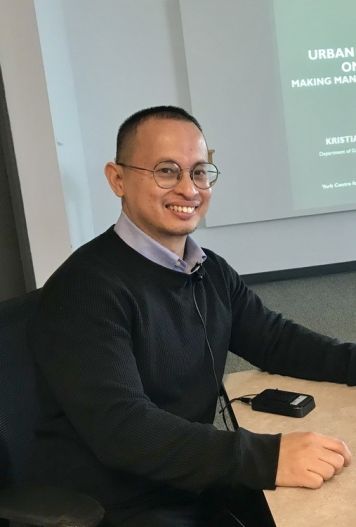
Urban Ecologies on the Edge: Making Manila's Resource Frontier
March 20, 2025
12:15 pm
Kahin Center
Gatty Lecture Series
Join us for a talk by Dr. Kristian Saguin from the University of the Philippines Diliman, who will discuss urbanization and resource flows in Metro Manila. Currently, Dr. Saguin serves as Associate Professor of Geography at the University of the Philippines Diliman.
This Gatty Lecture will take place at the The Kahin Center, 640 Stewart Ave. Lunch will be served. For questions, contact seapgatty@cornell.edu.
About the Talk
In this presentation, I examine urbanization as a frontier-making process through stories from Metro Manila in the Philippines and its convenient resource frontier, Laguna Lake. Drawing from ethnographic and historical accounts in and beyond the city, I track two particular resource flows - fish and floodwaters - that have shaped Manila’s twentieth century urban development and environmental trajectory. Making visible the constellation of actors, practices, desires and materialities brought together to deliver these vital resource flows for the city underscores the shifting assemblages and politics that sustain life in the city and produce imaginaries for possible urban futures.
About the Speaker
Kristian Karlo Saguin is an Associate Professor of Geography at the University of the Philippines Diliman who has engaged with various political ecological dimensions of urban and environmental change in the Philippines. He is the author of the Urban Ecologies on the Edge: Making Manila's Resource Frontier (University of California Press, 2022), which received the Harry J. Benda Prize from the Association for Asian Studies and the American Association of Geographers Meridian Book Award for Outstanding Scholarly Work in Geography.
Additional Information
Program
Einaudi Center for International Studies
Southeast Asia Program
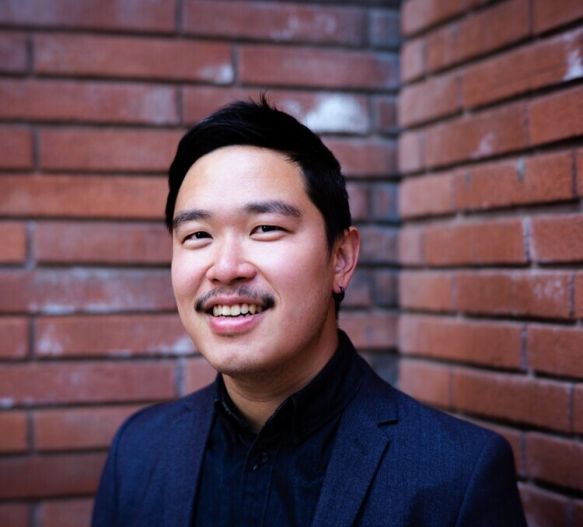
Tuning to Colonial Approval: Anxieties for Musical Knowledge Production in Siam
February 27, 2025
12:15 pm
Kahin Center
Gatty Lecture Series
Join us for a talk by Dr. Parkorn Wangpaiboonkit from Washington University in St. Louis, who will discuss Siamese responses to European colonial music theory. Dr. Wangpaiboonkit obtained PhD from the University of California, Berkeley. Currently, Dr. Wangpaiboonkit serves as Assistant Professor in the Department of Music at Washington University in St. Louis.
This Gatty Lecture will take place at the The Kahin Center, 640 Stewart Ave. Lunch will be served. For questions, contact seapgatty@cornell.edu.
About the Talk
My talk examines how Siamese thinkers worried over the European study of Siamese music as a measure of racial-civilizational worth, and how they sought to harness the perceived prestige of European comparativism rather than counter its inconsistencies with local forms of knowledge production.
I begin with a focus on the British theorist Alexander J. Ellis in a quintessential moment of colonial encounter: his 1885 examination of Siamese court musicians, where Ellis declared that Siamese music utilized seven-tone equidistant tuning, regulating its non-harmonic character to the racial-developmental equivalent of Europe’s past. I am not ultimately interested, however, in understanding Ellis’s project on his own terms, nor in exposing the inconsistencies in his methods to uncover what Siamese tuning really was. The fantasy of the European intellectual’s control of knowledge over the colonial world, whether it involved careful ethnography or mere guesswork, has been extensively scrutinized in music studies. I am interested in following, rather, what the aftereffects of European colonial knowledge production meant for its subjects of research: the anxious reception and lineage of theorizing about Siamese music as it took hold within Siam itself. Tracing the anxiety-ridden history of musical knowledge production about “seven-tone tuning” through the court of Chulalongkorn and the regime of Phibunsongkram, I show how musical tuning shifted from an embodied practice of pedagogy and performance into an extraneous object of knowledge entangled in the construction of race and nationhood. The racial science of music comparison – the idea that quantifiable knowledge about a people’s musical organization reveals essential value about their race – was not a one-sided concern of European intellectuals. It was also localized in Thai musical thought as a matter of reflexive self-fashioning.
About the Speaker
Parkorn Wangpaiboonkit is Assistant Professor of Musicology at Washington University in St. Louis. His research focuses on music, race, and imperialism in nineteenth-century Siam. He is interested in issues of aesthetic commensurability, comparativism and the production of knowledge about non-European musics, and opera as a racializing global-colonial form. Parkorn’s book project, Race and Sovereignty in the Imperial Music of Siam, examines the localization of European music and sound practices at the Siamese court as a means of negotiating new conceptions of sovereign personhood in colonial contest. His Opera Quarterly article “Voice, Race, and Imperial Ethnology in Colonial Siam” received the 2023 Alfred Einstein Award from the American Musicological Society. His other writings have appeared in Cambridge Opera Journal and Journal of Musicology. As a recipient of an ACLS Fellowship, Parkorn is spending this academic year at the Heyman Center for the Humanities, Columbia University. He is thrilled to be joining the Department of Music at Cornell University in Fall 2025.
Additional Information
Program
Einaudi Center for International Studies
Southeast Asia Program
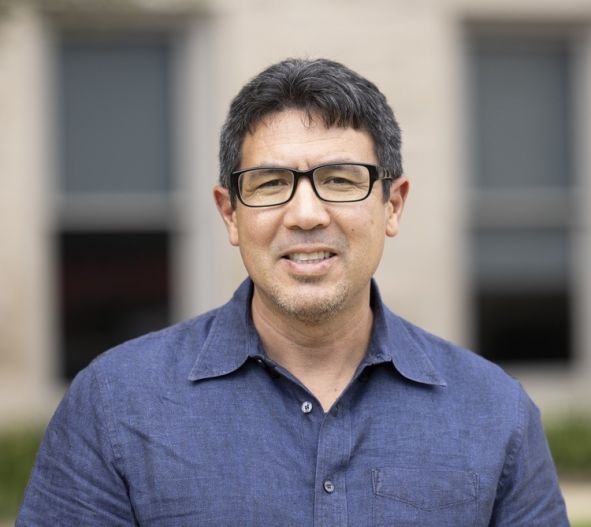
Worlding Ethno-burbs: 50 Years of Southeast Asian American (dis)placemaking
February 20, 2025
12:15 pm
Kahin Center
Gatty Lecture Series
Join us for a talk by Dr. Ivan V. Small from Northern Illinois University, who will discuss Vietnamese American migration and community formation across regions. Dr. Small obtained PhD from the Cornell University. Currently, Dr. Small serves as Professor of Anthropology at Northern Illinois University.
This Gatty Lecture will take place at the The Kahin Center, 640 Stewart Ave. Lunch will be served. For questions, contact seapgatty@cornell.edu.
About the Talk
This talk focuses on Vietnamese migration experiences within the United States over the last half century since 1975, triangulating the experiences of refugees and migrants shaping their lives and communities across four distinct yet interconnected regions in New England, the Midwest, California, and the sunbelt South. It examines transnational financial, migratory and material flows among Vietnamese Americans, and how and why they have contributed to first, secondary and third wave migration patterns. Southeast Asian refugees resettled in the U.S. after the Vietnam War were scattered as part of a dispersion policy intended to culturally assimilate newcomers. By the 1980s, catalyzed by auto-mobile affordances, many had moved to warmer climes with established Asian population nodes – in particular California. Since the 2000s, a third wave of migration has been fueled by new international migration as well as interstate migrants who feel pushed out of California’s expensive housing market. Many are moving to new “ethno-burb” nodes of Asian settlements in the sunbelt South. I examine transportation, real estate, investment, and entrepreneurship patterns within and across these migrant-scapes and settlements linked and worlded by mobile pasts and futures. Introducing the concept of (dis)place-making, the talk proposes that Southeast Asian American subjectivities are subconsciously shaped by longer histories of repeated displacement(s). Community formations are therefore modeled in part upon the specters and traces of remembered and anticipated places, while concurrently longing to establish roots and presence. This unmoored lens offers insight into the complex and comparative trajectories of migrant aspirations and adaptations that contrast with the emplaced nuclear family centered assimilation models once envisioned by refugee resettlement policy makers.
About the Speaker
Ivan V. Small is Professor of Anthropology and Director of the Center for Southeast Asian Studies at Northern Illinois University. He is author of Currencies of Imagination: Channeling Money and Chasing Mobility in Vietnam (Cornell University Press 2019) and co-editor of Money at the Margins: Global Perspectives on Technology, Financial Inclusion and Design (Berghahn Press 2018). He has written numerous peer reviewed journal articles, book chapters, op-eds and other publications examining connections between financial, bodily and material mobilities in and between Southeast Asia and the United States. He has recently held senior visiting research fellow positions at Fulbright University Vietnam and the Yusof Ishak Institute for Southeast Asian Studies in Singapore. He holds a Ph.D. in Anthropology and Southeast Asian Studies from Cornell University, and a Masters in International Affairs from Columbia University.
Additional Information
Program
Einaudi Center for International Studies
Southeast Asia Program
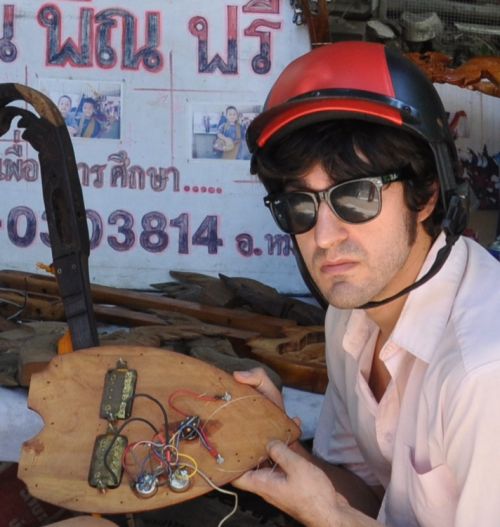
Heading Into Bangkok: Transnational Dialectics of Queerness and Race in Cold War Thailand
February 13, 2025
12:15 pm
Kahin Center
Gatty Lecture Series
Join us for a talk by Dr. Benjamin Tausig from SUNY-Stony Brook University, who will discuss racial and gender identity shifts in 1960s Thailand. Dr. Tausig obtained PhD from New York University. Currently, Dr. Tausig serves as Associate Professor of Critical Music Studies at SUNY-Stony Brook University.
This Gatty Lecture will take place at the The Kahin Center, 640 Stewart Ave. Lunch will be served. For questions, contact seapgatty@cornell.edu.
About the Talk
In Thailand during the period of the American war in Vietnam, local categories of identity were upended by transnational encounter. Hundreds of thousands of foreigners from a multitude of countries, perhaps most markedly the United States, moved through Thailand in those years, transforming the country, including the scope of its legible identifications. Blackness, for example, was new to Thailand, as was the identity category called “gay,” which did not exist until 1965. Within spaces of transnational intimacy, new conceptions of selfhood emerged. Drawing on substantial archival evidence, and refracted through the case study of one Black American ex-patriot musician, this talk details how race and sex/gender were negotiated in a dialectic between existing conceptions of skin tone and desire in Thailand and new conceptions brought (and to some extent imposed) by foreign soldiers and capitalists.
About the Speaker
Benjamin Tausig is associate professor of critical music studies at SUNY-Stony Brook University in New York. His work centers on sound and politics, with a focus on Southeast Asia/Thailand. His first monograph, Bangkok Is Ringing (Oxford University Press, 2019), is an ethnography of the sound environment of the Red Shirt antigovernment protest movement in 2010-11. His second monograph, Bangkok After Dark (Duke, 2025), is a history of Thai-American nightlife relationships during the Cold War.
Additional Information
Program
Einaudi Center for International Studies
Southeast Asia Program
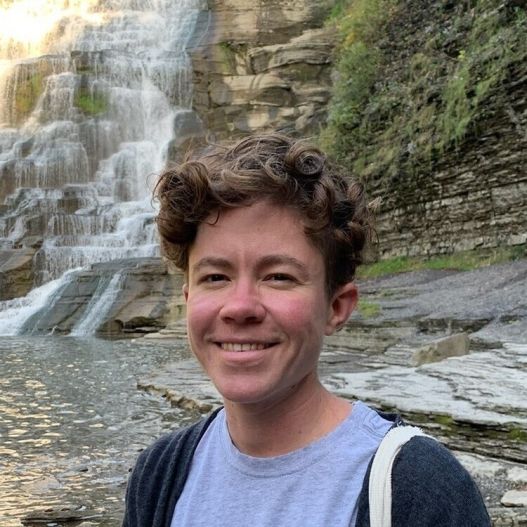
Bodies that (Un)Bind: The Production of Tomboy and Transgender Knowledge in Thailand
February 6, 2025
12:15 pm
Kahin Center
Gatty Lecture Series
Join us for a talk by Emi Donald from Cornell University, who will discuss the distinction between tomboy and transman identities in Thailand. Emi Donald is a PhD candidate in History Department at Cornell University.
This Gatty Lecture will take place at the The Kahin Center, 640 Stewart Ave. Lunch will be served. For questions, contact seapgatty@cornell.edu.
About the Talk
This talk will explore and analyze how tomboy (thom in Thai) and transman came to constitute two distinct but bounded modes of embodiment in contemporary Thailand. From the mid-2000s onwards, Thai transmen gained wider social recognition, partly, I argue, by publicly distinguishing themselves from the older idea of thom. For many outspoken transmen celebrities and activists in Thailand, thom was too closely associated with women who “dress as men” but do not desire or strive for the kinds of bodily and social transitions that these high-profile transmen pursued. The distinction hinged upon the body and an individual’s desire or capacity to put the body through changes, particularly hormonal and surgical changes. Produced and circulated through different kinds of knowledge, such as memoir, guidebooks, activist and public health literature, celebrity interviews, as well as academic scholarship, thom and transman were newly defined in the 2010s as not just distinct identities or philosophies of self, but as fundamentally different bodies, different material modes of inhabiting and knowing the body. As distinct as these bodies were and remain, however, they often travel together, bound up in the narratives of life and discovery that people tell about themselves. I describe this conceptual copresence as the (un)binding relationship between thom and trans bodies; thom and transman are bound to each other in experience and personal history but also repel each other according to newly founded modes of knowing the body.
About the Speaker
Emi Donald is a PhD candidate in the Department of History at Cornell University. Their dissertation traces the historical foundations of Thailand’s contemporary LGBTQ+ movement by focusing on the public representation, activist agendas, and life stories of Thai thom (tomboys), women-loving-women feminists, and transmen. Donald also writes and teaches on topics related to colonial and nationalist regimes of gender and sexuality, feminist and LGBTQ+ movements in Asia, and public history and archival praxis in the Global South.
Additional Information
Program
Einaudi Center for International Studies
Southeast Asia Program
How scientists are using behavioral studies to help solve elephant-human conflict in Thailand

Joshua Plotnik featured on CBS 60 Minutes
CBS’s “60 Minutes” Profiles Work of Elephant Researcher Joshua Plotnik, who gave a Gatty several years ago and studied with our own Thak Chaloemtiarana!
View the full segment here: https://www.cbsnews.com/news/scientists-using-behavioral-studies-to-help-solve-thailand-elephant-human-conflict-60-minutes-transcript/