
Southeast Asia Program
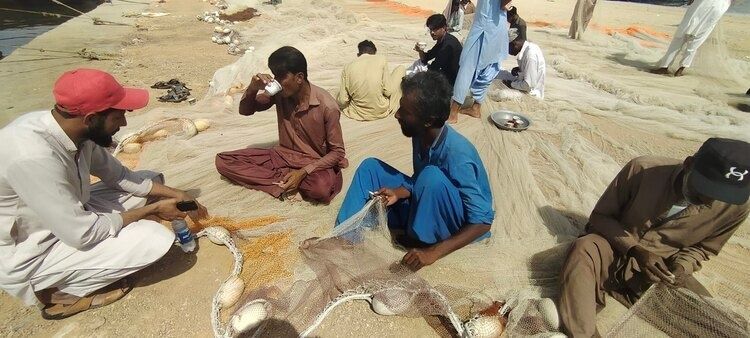
Environmental Exception and Martyrdom in Sindh, Pakistan
March 10, 2025
12:15 pm
Uris Hall, G08
Talk by Abdul Haque Chang (Social Sciences, Institute of Business Administration, Karachi)
This talk shows how in Sindh, the state of environmental exception has become the norm for governance (as in Agamben's formulation regarding the suspension of law). Specifically, this state of exception refers to a situation where necessity takes precedence over the law, resulting in a gap in the legal system. As a result, a zone of indistinction exists where environmental exception has become Pakistan's governance paradigm in Sindh. Through ethnographic experiences from the Indus Delta, coastal areas of Sindh, urban housing projects, and the land acquisition of Indigenous inhabitants by housing tycoons, this study illustrates how ecological martyrdom is occurring in Sindh due to environmental exception. This study demonstrates how the debates surrounding man-made and nature-based climate change should be located within the broader context of state governance policies in Pakistan, particularly regarding their effects on Sindh. The discussion highlights how the experiences and histories of local communities, along with the processes of urban development in Karachi and Sindh, have impacted specific populations in the pursuit of creating a utopian urban infrastructure that benefits other populations in Pakistan.
Abdul Haque Chang is an Assistant Professor of Anthropology at the Institute of Business Administration (IBA) in Karachi, Pakistan. His ethnographic research focuses on religion, Sufism, music, and environmental anthropology in Sindh, Pakistan, and Java, Indonesia. He is currently working on a book manuscript that explores the concept of "environmental exception" in Sindh, specifically regarding the practice of sacrifice in the context of environmental degradation. Chang has conducted ethnographic research on Sufi music in Sindh, particularly on Shah Jo Raag, a Sufi musical tradition. He studies Javanese Sufism in Indonesia through his project "Jathilan: Performativity and the (Re)Production of Javanese Sacrality." This project highlights how Javanese performance art challenges gender norms and serves as a form of cultural resistance.
Additional Information
Program
Einaudi Center for International Studies
Southeast Asia Program
South Asia Program
Funding Research-Related Travel
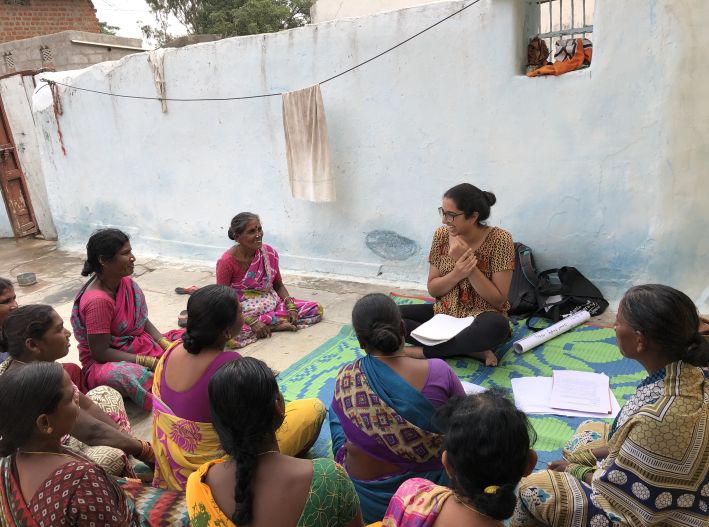
Tips from the Graduate School
Grad students: The Einaudi Center offers a range of global funding opportunities to support you—from your first year to your final semester.
Additional Information
Information Session: Latin American Studies Undergraduate Minor

January 28, 2025
5:00 pm
The undergraduate minor in Latin American Studies spans across disciplines and allows you to explore the history, culture, government, politics, economy and languages of Latin America and the Caribbean. Qualifying courses can be found in many of the colleges.
Register here. Can’t attend? Contact lacs@cornell.edu.
Additional Information
Program
Einaudi Center for International Studies
East Asia Program
Southeast Asia Program
Latin American and Caribbean Studies
Institute for African Development
Institute for European Studies
Migrations Program
Information Session: Fulbright U.S. Student Program for Undergraduates

February 24, 2025
4:45 pm
The Fulbright U.S. Student Program supports U.S. citizens to study, conduct research in any field, or teach English in more than 150 countries. Students who wish to begin the program immediately after graduation are encouraged to start the process in their junior year. Recent graduates are welcome to apply through Cornell.
The Fulbright program at Cornell is administered by the Einaudi Center for International studies. Applicants are supported through all stages of the application and are encouraged to start early by contacting fulbright@einaudi.cornell.edu.
Register here. Can't attend? Contact fulbright@einaudi.cornell.edu.
Additional Information
Program
Einaudi Center for International Studies
Reppy Institute for Peace and Conflict Studies
East Asia Program
Southeast Asia Program
Latin American and Caribbean Studies
Institute for African Development
Institute for European Studies
South Asia Program
Migrations Program
Information Session: Global PhD Research Awards and Dissertation Proposal Development Program

February 20, 2025
5:00 pm
The Amit Bhatia ’01 Global PhD Research Awards fund international fieldwork to help Cornell students complete their dissertations. Through a generous gift from Amit Bhatia, this funding opportunity annually supports at least six PhD students who have passed the A exam. Recipients hold the title of Amit Bhatia ’01 Global PhD Research Scholars. All disciplines and research topics are welcome. The award provides $10,000 to be used by the end of the sixth PhD year for international travel, living expenses, and research expenses. Applications are due March 7, 2025.
The Einaudi Dissertation Proposal Development Program supports 12 students over the course of a year to participate in seminars, workshops, and mentoring sessions and receive up to $5,000 for summer research. Applicants’ research projects must focus on global issues, but the proposed research setting may be international or domestic. In addition to six weeks of summer research, the program includes community-building and mentoring events. Applications are due by March 2, 2025.
Register here. Can't attend? Contact programs@einaudi.cornell.edu.
Additional Information
Program
Einaudi Center for International Studies
Reppy Institute for Peace and Conflict Studies
East Asia Program
Southeast Asia Program
Latin American and Caribbean Studies
Institute for African Development
Institute for European Studies
South Asia Program
Migrations Program
South Korea’s Democracy Held After a 6-hour Power Play. What Does it Say for Democracies Elsewhere?

Tom Pepinsky, SEAP
“President Yoon’s attempt to declare martial law reveals the fragility of the rule of law in divided societies, especially those with governments in which the chief executive cannot be easily dismissed by the legislature,” says Tom Pepinsky, professor of government.
Additional Information
Gatty Lecture Recordings Available

Check out our YouTube presence!
Several recordings of SEAP events, including recent Gattys, are now available on our YouTube channel!
Additional Information
Financial and Community Hurdles Slow Geothermal Energy Development in Southeast Asia
Timothy Ravis, SEAP
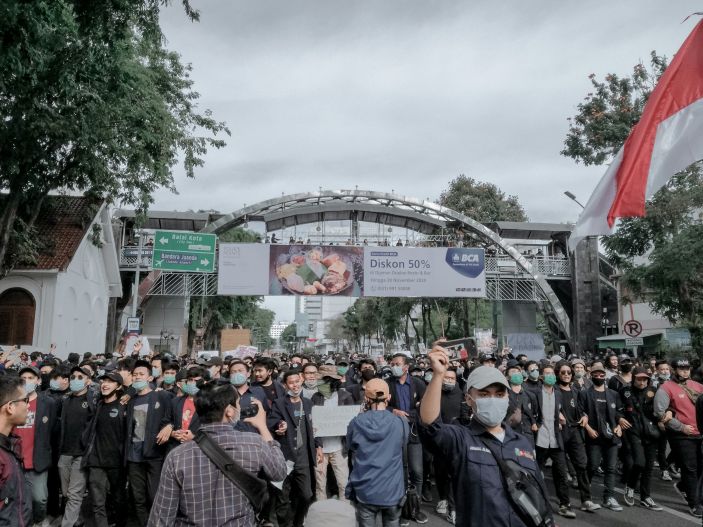
Timothy Ravis, a doctoral student in global development, says some Indonesian communities don’t understand what geothermal energy is and how they could benefit from its development.
Additional Information
Food Streets as Catalysts for Urban Development: Insights from Bangkok

December 9, 2024
12:00 pm
Sibley Hall, 208
Join us for a talk with Cornell alums Sutee Anantsuksomsri, PhD and Nij Tontisirin, PhD where they discuss the role of street food in Bangkok's identity and development.
This talk will take place in Sibley Hall 208 on Monday, Decmeber 9 from 12:00pm to 2:30pm. The talk will be followed by lunch and a Q&A.
About the Talk
Street food has long been a defining element of Bangkok’s urban landscape, playing an essential role in both the city’s culinary identity and its socio-economic development. This study explores how food streets act as catalysts for urban development through an analysis of three significant streets in Bangkok: Yaowarat Road, Pracharajbumpen Road, and Bantadthong Road. Each street reflects unique narratives of cultural heritage, globalization, and urban transformation. Yaowarat Road, known as Chinatown, has been a center of Chinese heritage for over a century. The area’s vibrant food scene is deeply rooted in the traditions of local families who have lived and worked there for generations. This cultural legacy has set Yaowarat’s status as a landmark of historical and culinary significance in Bangkok, drawing both locals and tourists alike. In contrast, Pracharajbumpen Road showcases the effects of recent migration and international investment. The emergence of numerous Chinese restaurants, mainly operated by investors from Mainland China, signifies a shift in the area's character. This influx of new flavors and economic opportunities has transformed the urban dynamics, bringing fresh vibrancy to the street. Bantadthong Road* serves as an example of the intersection between local popularity and global tourism. Once a quieter area, it has now become a bustling food hub, attracting attention from both Thai locals and Chinese tourists. The growth of Chinese-owned establishments underscores the increasing impact of international investment on Bangkok’s food culture and urban environment. By examining these three streets, this study illustrates how food streets function as reflections of broader urban processes. They showcase cultural exchange, economic shifts, and the complexities of globalization, emphasizing the transformative role of food streets in shaping Bangkok’s urban identity and future development.
* This research on Bantadthong Road is part of a collaborative project between the presenters and respondent, supported by a Chulalongkorn University-Cornell University Global Hubs Seed Grant. The project focuses on using urban modeling tools to analyze and guide the neighborhood’s rapid transformation, providing insights into the dynamics of urban change and development in Bangkok.
About the Speakers
Sutee Anantsuksomsri, PhD
Deputy Dean of the Faculty of Architecture, Chulalongkorn University
Associate Professor of the Department of Urban and Regional Planning, Faculty of Architecture, Chulalongkorn University
President of Thailand Section of Regional Science International
The Diversity and Inclusion Committee for the Regional Science Association International
Sutee Anantsuksomsri is an associate professor in the Department of Urban Regional Planning at Chulalongkorn University, where he also serves as the deputy dean of the Faculty of Architecture. He is also the head of the Center of Excellence in Regional, Urban, & Built Environmental Analytics at Chulalongkorn University. He specializes in urban economics, regional and urban development, complex systems, resilient cities, and geoinformatics. Anantsuksomsri has received grants from organizations such as Thailand Science Research and Innovation, the Sumitomo Foundation, ADPC, SERVIR, NASA, and USAID to support his research. He has served as the editor-in-chief of Nakhara: Journal of Environmental Design and Planning (indexed in Scopus Q1) and is a member of the editorial boards of several academic journals. He has also served as an expert on the National Smart City Committee and has worked as a consultant for national and international organizations such as the Eastern Economic Corridor Office of Thailand and the Asian Development Bank.
Anantsuksomsri has previously held teaching positions at Cornell University and Waseda University. He holds a PhD and Master of Arts in regional science from Cornell University, a Master of Science in construction management from Northeastern University, and a Bachelor of Landscape Architecture from Chulalongkorn University. He is the president of the Thailand Section of Regional Science International and a council member of the Diversity and Inclusion Committee for the Regional Science Association International.
Nij Tontisirin, PhD
Assistant Professor, Faculty of Architecture and Planning, Thammasat University, Thailand
Chair, Program in Urban Environmental Planning and Development, Faculty of Architecture and Planning, Thammasat University, Thailand
Nij Tontisirin is an associate professor of urban planning and the chair of the Program in Urban Environmental Planning and Development at Thammasat University Faculty of Architecture and Planning. Her academic expertise includes regional science, urban and regional economics, infrastructure development, land use changes, and climate risk assessment, particularly in Thailand’s Eastern Economic Corridor. Her work bridges academia and practice, with significant contributions to policy development and urban planning.
She holds a Ph.D. and M.S. in Regional Science from Cornell University, a Master in Urban Planning from Harvard University, and a Bachelor in Architecture (First Class Honor) from Chulalongkorn University.
Additional Information
Program
Southeast Asia Program
Einaudi Center for International Studies
Postdoctoral Associate Opportunities with SEAP
Two positions available
The Southeast Asia Program (SEAP) at Cornell University invites applications for two separate two-year Postdoctoral Associate appointments, each awarded for the two-year period beginning between July 1 and September 1, 2025. Each position offers a stipend of $62,000-$65,000/year, depending on candidate experience.
Candidates should apply for only one of these two positions, and will not be considered for both. The deadline for both postdoctoral appointments is January 15, 2025. For the purposes of these postdoctoral appointments, SEAP considers the countries of Southeast Asia to include Indonesia, Thailand, Malaysia, the Philippines, Cambodia, Laos, Vietnam, Myanmar, Brunei, East Timor, and Singapore. The most competitive candidates will have proficiency in one (or more) Southeast Asian language(s) and demonstrated ability to work collaboratively in multidisciplinary contexts. We strongly encourage scholars from Southeast Asia and underrepresented scholars who have been historically and structurally excluded from research and funding opportunities to apply.
Questions about either position can be directed to tf14@cornell.edu.
Southeast Asian Qualitative Social Sciences
We are seeking an independent and highly motivated social scientist with fieldwork and area expertise on one or more Southeast Asian countries. Scholars from a range of fields including geography, anthropology, sociology, data/information science, public and ecosystem health, planning, political science, and environmental social science are encouraged to apply. We especially welcome someone able to work across disciplinary boundaries and is interested in the intersections between research, public engagement, and policy making in the Southeast Asian context.
Southeast Asian Environmental Humanities
Potential topics may include and are not limited to humanistic or qualitative research approaches to climate breakdown, biodiversity, human-animal relations, plantations, environmental justice, commodity chains, extraction, and the cultural politics of food as they relate to Southeast Asia and/or Southeast Asian diasporas. We especially welcome applicants with PhDs in the humanities, interpretive social sciences such as anthropology, or interdisciplinary degrees such as religious studies, Southeast Asian studies, ethnic studies, feminist studies, or science and technology studies.