
Southeast Asia Program
The Buddhist Women’s Special Marriage and Succession Act: Laws of Intimacy and Segregation in Transregional Perspective

September 19, 2024
12:15 pm
Kahin Center
Gatty Lecture Series
Join us for a talk by Chie Ikeya, Associate Professor of History, Director of the Institute for Research on Women, and Co-Director of Global Asias at Rutgers University in New Brunswick, who will discuss the marriage laws in Southeast Asia.
This Gatty Lecture will take place at the The Kahin Center, 640 Stewart Ave. It is co-sponsored by the Department of History. Lunch will be served. For questions, contact seapgatty@cornell.edu.
About the Talk
First debated in the legislature in 1927 when Burma, also known as Myanmar, was a province of British India, the Buddhist Women’s Special Marriage and Succession Act (1954) has been praised as the first and only law in existence to protect the rights specific to Buddhist women. In 2015, the Act was revised as one of four controversial laws euphemistically known as “National Race and Religion Protection Laws.” I trace the history and afterlife of this legislation and compare it to British, Dutch, and Japanese colonial laws on mixed marriage; the anti-miscegenation laws of the U.S.; national marriage laws throughout Asia; and the anti-conversion laws in India that have been enacted in the name of religious freedom. Across these disparate contexts, I argue, marriage laws have functioned to alienate Asian migrants and settlers as perpetual, unassimilable foreigners. They have served to protect the “purity” of the ruling/majority group by empowering state and social control of women’s sexual, reproductive, and property rights in the name of protecting women. I suggest that a transregional analysis of the legal regulation of intermarriage and conversion illuminates connections in the historical articulations of law, race, religion, and gender that have enforced inequalities across imperial and national divides. It brings into sharp focus the segregationist and patriarchal tendencies of nations and regions, such as Burma and Southeast Asia, long identified with racial and religious pluralism and female autonomy, thereby unsettling the segregation of area studies itself.
About the Speaker
Chie Ikeya is Associate Professor of History, Director of the Institute for Research on Women, and Co-Director of the Global Asias Initiative at Rutgers University, New Brunswick. She is the author of two monographs, InterAsian Intimacies across Race, Religion, and Colonialism (Cornell University Press, September 2024) and Refiguring Women, Colonialism, and Modernity in Burma (University of Hawai’i Press, 2011). Her research has been funded by several institutions including the Japan Foundation, Mellon Foundation, National Endowment for the Humanities, and Toyota Foundation.
Additional Information
Program
Einaudi Center for International Studies
Southeast Asia Program
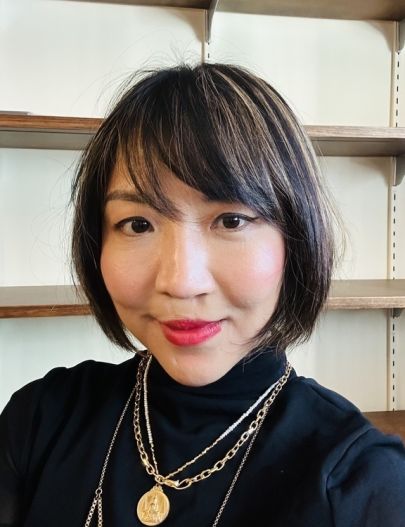
Training Data: Notes on the Computerization of Southeast Asia
September 5, 2024
12:15 pm
Kahin Center
Gatty Lecture Series
Join us for a talk by Shaoling Ma, Associate Professor of Asian Studies at Cornell University, who will discuss the computerization of Southeast Asia.
This Gatty Lecture will take place at the The Kahin Center, 640 Stewart Ave. Lunch will be served. For questions, contact seapgatty@cornell.edu.
About the Talk
There has been no comprehensive history of computerization in Southeast Asia between the 1950s and the 1980s, and my talk will offer some explanations as to why this is not a bad thing. To tell a history of computerization in any geopolitical region is to simultaneously conceive of the computerization of the region, that is, of how the classification, imaging, and prediction of human-natural-and-machine systems increasingly shape actionable and optimizable knowledge of its peoples, and natural and built environments. In the case of Southeast Asia, a critical assessment of such a history shows how accounts written during this period cast the region as the receiving end of foreign hardware technologies and know-how, or as a resource frontier for the collection of environmental, demographic, agricultural, industrial, and other “raw” data, is still only a story half-told. At stake is to go further in grasping how such developmentalist histories inadvertently and invaluably theorize the roles that political states, economies, and cultures play in the growing, global perception of software as hardware- and machine-independent, an ideology that made it possible to position local Southeast Asian communities as part of a computational, planetary order. Conceived as preliminary notes—referencing the “training data” in my title—drawn from what can only be a non-totalizing project, this talk will highlight select computer applications in the fields of education and consulting, environmental sensing, and agricultural and land informatics. By examining how universities, states, and consultancy firms rationalize software development as national self-reliance; how a 1977 Final Report on Computer Processing of Remote Sensing Data prepared by the Asian Institute of Technology for the Committee for Coordination of Investigations of the Lower Mekong Basin interpret and retrain data from LANDSAT satellite imageries; and the language of modern, informatics management in the Malaysian Rubber Industries Development Authority’s implementation of a computer support system, I hope to show how these anecdotes, partial and eclectic as they are, paradoxically commit to thinking of Southeast Asia on a large, abstract, and reflexive scale.
About the Speaker
Shaoling Ma is an interdisciplinary scholar and critical theorist of global Chinese history, literature, and media in the Department of Asian Studies at Cornell University. She is the author of The Stone and the Wireless: Mediating China, 1861-1906 (Duke UP, 2021), and is currently working on a second book manuscript on a theory and cultural history of computational environments in East and Southeast Asia. She serves as Book Review Editor (film/media studies/drama) for MCLC: Modern Chinese Literature and Culture.
Additional Information
Program
Einaudi Center for International Studies
Southeast Asia Program
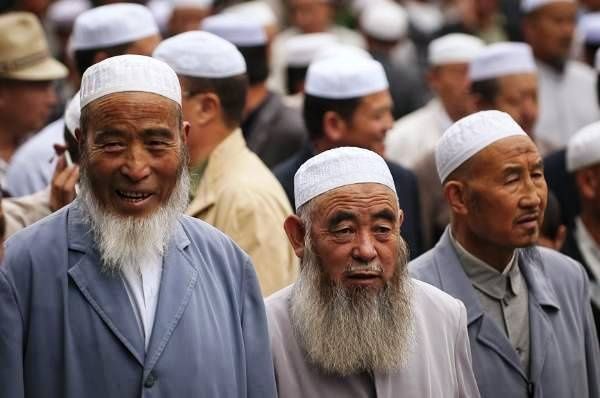
The World’s Largest Stateless People, and the Rhetoric of Victim-Blaming Muslims in Myanmar (Burma)
December 5, 2024
4:30 pm
Uris Hall, G08
Talk by Al Haj Khalifah U Aye Lwin (Religions for Peace Myanmar, Masjid Sujud Shah Utica NY)
Myanmar has a track record of forging unity in multiplicity, and Muslims have been an integral part of Myanmar society since the Pagan dynasty. Rohingyas were, in fact, prominent citizens, just like other Myanmar Muslims from different origins. They were recognized as full-fledged Myanmar citizens even by the military before the coup. However, when the entire nation started to oppose despotic military dictatorship, the junta projected Islam as a danger to Burmese nationalism. Myanmar Muslims became soft targets and easy prey. Rohingyas were the hardest hit among the Myanmar Muslims. Their citizenship was stripped off, and tens of thousands of them were hounded out of the country. Genocide and ethnic cleansing were the order of the day. Rohingyas are targeted as a danger to Burmese Buddhist nationalism by the military, and native, often pious Myanmar Buddhists who have (often) been brainwashed and indoctrinated to hate them. Multifaith leaders in Myanmar were trying to alter the stereotyped rhetoric with the help of broad-minded leaders when the country was faced with yet another military coup. Nevertheless, faith-based leaders in Myanmar are determined and will continue to strive toward achieving this endeavor.
Additional Information
Program
Einaudi Center for International Studies
Southeast Asia Program
Global Hubs Info Session: Joint Seed Grants with National University of Singapore

September 5, 2024
8:00 am
Global Cornell is offering competitive faculty grants in collaboration with Global Hubs partners.
Apply for funding to explore potential research collaborations with colleagues at Hubs universities.
Global Hubs collaborative research seed grants bring together Cornell and partner institution faculty to develop joint projects with the potential to create new or expanded research partnerships and cutting-edge scholarship with academic and societal impact. These international seed grants provide initial financial support for early-stage research projects or capacity-building efforts to create and sustain long-term collaborations and secure external funding.
Please join us on September 5, 8:00 EDT / 8:00 SGT for a joint info session to learn more about the Cornell–NUS’s grant opportunity. Q&A and collaboration matchmaking will follow a short presentation.
Up to five (5) research proposals will be funded.
Each successful proposal may receive up to $5,000 from each university for a total of $10,000.
Application deadline: October 4, 11:59 p.m. EDT
Project duration: January 1–December 31, 2025.
Register for the NUS-Cornell Joint Info Session on Zoom.
Learn more and apply for a NUS-Cornell joint seed grant.
Sign up for the NUS-Cornell collaboration matchmaking.
Learn about additional seed grants available with other Global Hubs partners.
Additional Information
Program
Einaudi Center for International Studies
Southeast Asia Program
Global Hubs Info Session: Joint Seed Grants with Chulalongkorn University (Thailand)

August 28, 2024
8:00 am
Global Cornell is offering competitive faculty grants in collaboration with Global Hubs partners.
Apply for funding to explore potential research collaborations with colleagues at Hubs universities.
Global Hubs collaborative research seed grants bring together Cornell and partner institution faculty to develop joint projects with the potential to create new or expanded research partnerships and cutting-edge scholarship with academic and societal impact. These international seed grants provide initial financial support for early-stage research projects or capacity-building efforts to create and sustain long-term collaborations and secure external funding.
Please join us on 28 August 2024, 8:00 a.m. EDT (Ithaca) / 7:00 p.m. (Bangkok) for a joint info session to learn more about the Chula–Cornell grant opportunity. Q&A and collaboration matchmaking will follow a short presentation.
Chula-Cornell Seed Funds:
Up to five (5) research proposals will be funded.Each successful proposal may receive up to $5,000/฿200,000 from each university for a total of $10,000/฿400,000. Project duration: January 1–December 31, 2025Application deadline: 4 October 2024, 11:59 p.m. EDTRegister for the Chula-Cornell Joint Info Session on Zoom.
Learn more and apply for a Chula-Cornell joint seed grant.
Sign up for the Chula-Cornell collaboration matchmaking.
Learn about additional seed grants available with other Global Hubs partners.
Additional Information
Program
Einaudi Center for International Studies
Southeast Asia Program
On the Passing of James Scott
Eric Tagliacozzo
On July 19, 2024, James Scott, Sterling Professor at Yale in both Political Science and Anthropology, and founder of Yale’s Agrarian Studies Program, passed away at the age of eighty-seven.
Additional Information
Program
Information Session: Global Internships

December 13, 2024
12:00 pm
Uris Hall, G08
Go global in summer 2025! Global Internships give you valuable international work experience in fields spanning global development, climate and sustainability, international relations, communication, business, governance, and more.
***
The Mario Einaudi Center for International Studies hosts info sessions for graduate and for undergraduate students to learn more about funding opportunities, international travel, research, and internships. View the full calendar of fall semester sessions.
Additional Information
Program
Einaudi Center for International Studies
Reppy Institute for Peace and Conflict Studies
East Asia Program
Southeast Asia Program
Latin American and Caribbean Studies
Institute for African Development
Institute for European Studies
South Asia Program
Migrations Program
Information Session: Global Internships
November 27, 2024
1:00 pm
Go global in summer 2025! Global Internships give you valuable international work experience in fields spanning global development, climate and sustainability, international relations, communication, business, governance, and more.
Register for this virtual session.
***
The Mario Einaudi Center for International Studies hosts info sessions for graduate and for undergraduate students to learn more about funding opportunities, international travel, research, and internships. View the full calendar of fall semester sessions.
Additional Information
Program
Einaudi Center for International Studies
Reppy Institute for Peace and Conflict Studies
East Asia Program
Southeast Asia Program
Latin American and Caribbean Studies
Institute for African Development
Institute for European Studies
South Asia Program
Migrations Program
Information Session: International Relations & Migration Studies Minors

October 30, 2024
4:30 pm
Uris Hall, G08
The Migration Studies Minor is a university-wide, interdisciplinary undergraduate minor that prepares students to understand the historical and contemporary contexts and factors that drive international migration and shape migrant experiences around the globe. This minor draws on the rich course offerings found across the humanities and social sciences at Cornell and is designed to draw students outside of their major fields and to extend their knowledge beyond a single country.
Is the Einaudi Center's International Relations minor for you? Here's a chance to find out. In the international relations minor, you study the politics, economics, history, languages, and cultures of the world and gain a fresh perspective on your major field of study. Graduates go on to successful careers in fields like international law, economics, agriculture, trade, finance, journalism, education, government service, and more.
Can’t attend? Contact migration-minor@einaudi.cornell.edu (Migrations) or irm@einaudi.cornell.edu (International Relations).
***
The Mario Einaudi Center for International Studies hosts info sessions for graduate and for undergraduate students to learn more about funding opportunities, international travel, research, and internships. View the full calendar of fall semester sessions.
Additional Information
Program
Einaudi Center for International Studies
Reppy Institute for Peace and Conflict Studies
East Asia Program
Southeast Asia Program
Latin American and Caribbean Studies
Institute for African Development
Institute for European Studies
South Asia Program
Migrations Program
CANCELLED: Information Session: Global Internships
November 13, 2024
1:00 pm
Go global in summer 2025! Global Internships give you valuable international work experience in fields spanning global development, climate and sustainability, international relations, communication, business, governance, and more.
This session has been cancelled. For more sessions on Global Internships, view the full calendar of info sessions.
***
The Mario Einaudi Center for International Studies hosts info sessions for graduate and for undergraduate students to learn more about funding opportunities, international travel, research, and internships. View the full calendar of fall semester sessions.
Additional Information
Program
Einaudi Center for International Studies
Reppy Institute for Peace and Conflict Studies
East Asia Program
Southeast Asia Program
Latin American and Caribbean Studies
Institute for African Development
Institute for European Studies
South Asia Program
Migrations Program