
Southeast Asia Program
Land as Experiment, Landscapes as Laboratories: Destruction and Repair in Indonesia’s Peatlands
February 6, 2023
3:30 pm
Physical Sciences Building, 401
Science & Technology Studies Spring 2023 Colloquium
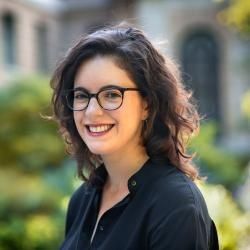
This lecture by Jenny Goldstein (Global Development, Cornell) argues that Indonesia’s peatlands are experiments with land at a scale that states, scientists, and the planet’s inhabitants are just beginning to grapple with—yet are becoming increasingly common in a warming world.
Over the past several decades these peatlands—deep deposits of decaying, carbon-dense vegetation—have been transformed from forested wetlands to flammable landscapes that emit copious amounts of carbon dioxide. The reasons for such extensive destruction are often described in terms of failure: failed state development projects and failed attempts at land repair. Goldstein argues, however, that these novel landscapes are better understood as laboratories for living with earth system volatility than as failures.
The talk draws on conceptual frameworks from geography and STS and a political ecology of peat soil to unpack the story of the Mega Rice Project, a one-million hectare site of degraded peatland in Indonesian Borneo.
The formerly authoritarian Indonesian state drained the wetlands for rice production in the 1990s; since then, the peat soil now burns on a near-annual basis. In the years since the project ended, the area has attracted attention from development agencies, corporations, financiers, NGOs, and activists around the world.
As a result, the area has been a fulcrum for experiments on how to repair Indonesia’s degraded peatlands, a laboratory for scientific and political-economic practices shaped by climate change politics, and a place where rural communities attempt to live with ongoing ecological volatility.
Speaker
Jenny Goldstein is an assistant professor in the Department of Global Development at Cornell University, an Atkinson center for a Sustainable Future Faculty Fellow, and a core faculty member of Cornell’s Southeast Asian Studies Program. She is the elected president of the Cultural and Political Ecology speciality group of the American Association of Geographers (2022-24). From 2016-17 she was an Atkinson Center for a Sustainable Future postdoctoral associate at Cornell, based in the Science & Technology Studies department.
Additional Information
Program
Southeast Asia Program
Yuxin Jia

Graduate Student
Degree Pursued: PhD
Anticipated Degree Year: 2028
Committee Chair/Advisor: Malte Ziewitz
Discipline: Science and Technology Studies
Primary Language: Chinese, English, German
Research Countries: Cambodia, Vietnam, Indonesia, Malaysia, Thailand, Brunei, Singapore
Research Interests: Infrastructure Studies
Additional Information
On Refugee Grief: An Intergenerational Remembrance

April 20, 2023
4:30 pm
Physical Sciences Building, 401
A Keynote Event for Displaced. Detained. Undeterred: A Critical/Creative Symposium
Thursday, April 20, 2023, Physical Sciences Building 401
4.30 Opening Remarks
Saida Hodžić (Cornell University)
4.45 KEYNOTE DIALOGUE
In this keynote, speakers Evyn Lê Espiritu Gandhi and Yến Lê Espiritu offer an intergenerational remembrance of Đại Tá [Colonel] HồNgọc Cẩn,our cậu hai [oldest maternal uncle] and ông hai[oldest granduncle] respectively, an Army of the Republic of Vietnam officer who was publicly executed by a Communist firing squad. This remembrance is a portal toa discussion on refugee grief, not as a private or depoliticized sentiment but as a resource forenacting a politics that confronts the conditions under which certain lives are considered moregrievable than others. Focusing on quotidian memory places, particularly Internet memorialsconstructed by the Vietnamese diasporic community, they will discuss how and why South Vietnam’swar dead have become so central to the refugees’ retellings of South Vietnamese losses in theUnited States. At the same time, they point out that these commemoration efforts can and dolead to harsh and unrelenting attacks against the living, especially those who harbor morecritical visions of the diasporic community.
The keynote will be followed by a reception.
To attend the keynote in person, register here. To attend the keynote virtually, register here.
Speakers
Evyn Lê Espiritu Gandhi is an assistant professor of Asian American Studies at the University of California, Los Angeles (Tovaangar). Author of Archipelago of Resettlement: Vietnamese Refugee Settlers and Decolonization across Guam and Israel-Palestine, Dr. Gandhi is the co-editor with Vinh Nguyen of The Routledge Handbook of Refugee Narratives.
Yến Lê Espiritu is Distinguished Professor of Ethnic Studies at the University of California, San Diego. Her books Body Counts: The Vietnam War and Militarized Refuge(es) and Departures: An Introduction to Critical Refugee Studies (co-editor) have charted an interdisciplinary field of critical refugee studies, which reconceptualizes “the refugee” not as an object of rescue but as a site of social and political critiques. Dr. Espiritu is also an inaugural member of The Critical Refugee Studies Collective.
Additional Information
Program
Southeast Asia Program
Einaudi Center for International Studies
Reppy Institute for Peace and Conflict Studies
Institute for European Studies
South Asia Program
Latin American and Caribbean Studies
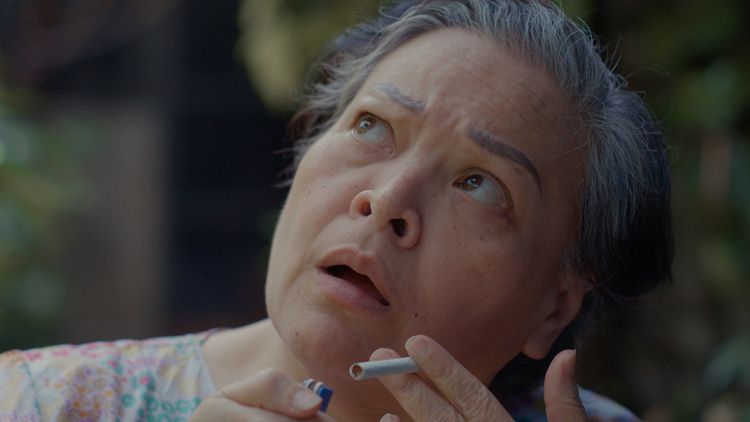
Leonor Will Never Die
March 25, 2023
5:00 pm
Willard Straight Theatre
2022 > Philippines > Directed by Martika Ramirez Escobar
With Sheila Francisco, Bong Cabrera, Rocky Salumbides
Aging film director Leonor Reyes finds herself down on her luck until a fortuitus accident plunges her directly into one of her unfinished screenplays. Subtitled. More at www.musicboxfilms.com/film/leonor-will-never-die.
1 hr 39 min
Additional Information
Program
Southeast Asia Program
CU in Cambodia 2023

Blogs from our students in the field here
Keep up with our students in the field here!
Additional Information
GETSEA Spring Mini-Course

ASEAN Regionalism in a Global Perspective
Applications are now open for GETSEA’s Spring 2023 Mini-Course!
GETSEA is offering one free and virtual mini-course this spring on topics in Southeast Asian studies, open to graduate students from a wide range of backgrounds. Current graduates students at a GETSEA member institution receive first priority in admission to the courses, though graduate students at any institution who research in and around Southeast Asia may apply for admission to take a mini-course.
These courses do not offer course credit for students at their home institutions. However, students are encouraged to work with a faculty member at their home institution to count the course towards an independent/directed study/reading credit. Mini-courses have a workload roughly equivalent to that of a one-credit course – approximately 45 hours in total, including class time, readings, and other work.
Details about our previous mini-courses are available here, and any questions or proposals can be submitted to us at getsea@cornell.edu.
ASEAN Regionalism in a Global Perspective
Taught by Aarie Glas, Northern Illinois University
Offered virtually from February 28 to April 11, 2023, Tuesdays, 8:00pm-10:00pm Eastern Time.
Application deadline: February 10
Additional Information
Crossroads, Crossings, and Transgressions: Deconstructing Borders and Barriers in Southeast Asian/American Studies
March 13, 2023
12:30 pm
Kahin Center
Gatty Lecture Series
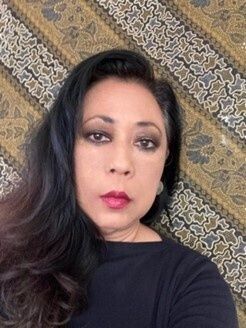
Join us for a talk by Khatharya Um, (Associate Dean and Associate Professor, UC Berkeley), which will focus on borders and barriers in Southeast Asian studies.
This Gatty Lecture will take place at the Kahin Center, but people are also welcome to join us on Zoom. Lunch will be served. For questions, contact seapgatty@cornell.edu.
Participate by Zoom here.
About the Talk
While Southeast Asia has long been a crossroad of influences and transnational movements, the rise of Asia-Pacific as an economic and political power center has brought increased attention to regional dynamics and transnational connections, processes and practices. Transnational flows of people, goods, capital, and ideas have engendered optimism about exchange, interdependence, and understanding, while persisting conflicts over resources, territorial claims, and national belonging have animated the discourse about borders, boundaries, lines of differentiation and stratification, crossings and transgressions in the examination of both the causes and consequences of conflict. These new im/mobilities and spatialities, in turn, compel a re-thinking of prevailing approaches and epistemologies that have been delimited by disciplinary boundaries.
This talk maps and interrogates the ways in which global, regional and local forces and dynamics inform new im/mobilities, spatialities, and belongings, and the negotiations that Southeast Asian individuals and communities have to engage at multiple levels and in multiple arenas. It is particularly attentive to the linkages between macro forces and the micro politics of the everyday struggle to survive and resist. It critiques and problematizes the binary between area and Ethnic/American Studies, and argues for a more expansive analytical approach that focuses on continuum, intersectionality, and relationality between peoples, communities, histories, and fields of study without abandonment of historical, contextual, and experiential specificities.
About the Speaker
Professor Khatharya Um is a political scientist, Associate Dean for Diversity, Equity, Inclusion, Belonging and Justice, and Associate Professor of Asian American and Asian Diaspora Studies at the University of California, Berkeley where she also received her PhD in Political Science and was the Chancellor’s Distinguished Postdoctoral Fellow. Professor Um is also a core faculty of Global Studies, the Center for Southeast Asian Studies, and The Institute for European Studies at Berkeley. She is a co-founder of the Critical Refugee Studies Collective, and Chair of the Global Transformation Strategic Working Group of the International Alliance of Research Universities.
Professor Um’s research and teaching interests center on Southeast Asia and Southeast Asian American studies, migration and critical refugee studies, colonial and postcolonial studies, and peace and conflict studies, with a particular focus on genocide studies. She has published extensively and in multiple languages on Southeast Asia and Southeast Asian diaspora, including the recent books From the Land of Shadows (NYU Press), Southeast Asian Migration (Sussex Academic Press),Departures (UC Press) and Southeast Asian Migration: People on the Move in Search of Work, Refuge and Belonging (Sussex Academic Press. Her pathbreaking research on Southeast Asian American educational and health disparities has informed policies and programs.
In addition to her academic work, Professor Um is also actively involved in community advocacy, principally on issues of refugee integration and of educational access for linguistically and culturally diverse students. She has founded and served on the board of numerous refugee led and refugee-serving organizations, including as Founder and Chair of the National Cambodian American Organization, as Board Chair of the Washington DC- based Southeast Asian Resource Action Center, and as President of the National Association for the Education and Advancement of Cambodian, Laotian and Vietnamese Americans. She was also a Commissioner of the National Cambodian Health Crisis Initiative, and member of the Panel of Experts of the National Education Association Quality Schools Project.
Professor Um has received numerous awards for her community leadership and service, including congressional recognitions from Congresswoman Barbara Lee and Congresswoman Anna Eshoo, and the prestigious Berkeley Chancellor’s Award for Advancing Institutional Excellence and Equity. She was the first Cambodian American woman to receive a Ph.D.
This Gatty Lecture will take place in person at the Kahin Center, but people are also welcome to join us on Zoom.
Lunch will be served.
For questions, please contact seapgatty@cornell.edu
Additional Information
Program
Einaudi Center for International Studies
Southeast Asia Program
Rehabilitating Dictatorship: The Marcos Martial Law Regime and the Election of Ferdinand Marcos Jr.
March 9, 2023
12:30 pm
Kahin Center
Gatty Lecture Series
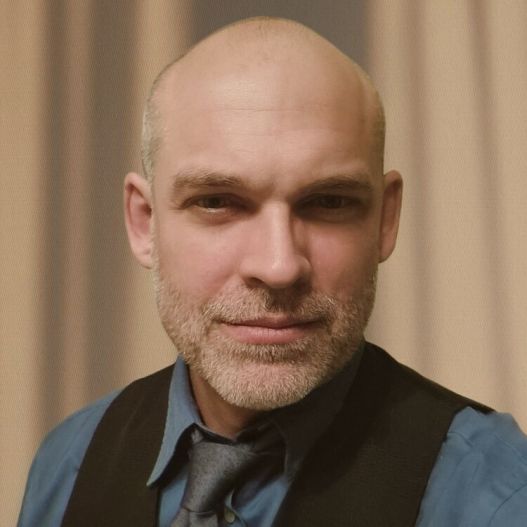
Join us for a talk by Joseph Scalice, (Presidential Postdoctoral Fellow, Nanyang Technological University), which will focus on the legacy of the Marcos dictatorship in the Philippines.
This Gatty Lecture will take place at the Kahin Center, but people are also welcome to join us on Zoom. Lunch will be served. For questions, contact seapgatty@cornell.edu.
Participate by Zoom here.
About the Talk
In May 2022, fifty years after his father declared martial law, Ferdinand Marcos Jr was elected president of the Philippines. The martial law regime of Marcos Sr was a brutal military dictatorship that ruled for more than a decade. How have the perpetrators and representatives of this regime been rehabilitated?
This lecture will detail the extraordinary events and political crisis that culminated in the 1972 declaration of martial law, examining what we now know about how it was carried out. A historical assessment of the Marcos dictatorship is fundamental to understanding the rhetoric, policies, and social significance of the Marcos Jr government.
About the Speaker
Joseph Scalice (PhD, UC Berkeley) is a historian of revolutionary movements and authoritarianism in Southeast Asia with a focus on the postwar Philippines. He is Presidential Postdoctoral Fellow at Nanyang Technological University in Singapore. His book, The Drama of Dictatorship: Martial Law and the Communist Parties of the Philippines (Cornell, 2023), uncovers the role played by rival Communist parties in the conflict that culminated in Ferdinand Marcos' declaration of martial law in 1972. Scalice has published articles on social struggles, dictatorship, and the Sino-Soviet split in Southeast Asia in Critical Asian Studies, History and Anthropology, Journal of Southeast Asian Studies, Modern Asian Studies, Philippine Studies, and Diplomatic History, among other journals.
Additional Information
Program
Einaudi Center for International Studies
Southeast Asia Program
Plantation Liberalism: Personhood and Property between Philippine Mindanao and the Black Atlantic
March 3, 2023
3:00 pm
Mann Library, 160
On the banana plantations of Mindanao, the Philippines’ southernmost region, activists involved in an anti-chemical campaign decry their exposure to pesticide drift as an infringement on both their person and their personhood. Such forms of plantation-driven dehumanization draw the Pacific and the Atlantic worlds into a tight embrace. This seminar offers the notion of plantation liberalism as a means of overcoming some of the “regional closets” (Jegathesan 2021) that persist in studies of Southeast Asia. Plantation liberalism is the property-oriented vision of personhood introduced by agrarian colonialism that continues to define the contours of environmental activism today. To trace its genealogy in the Philippines, this seminar outlines how American planters of the early 20th century drew on racial ideologies, inherited from the Antebellum South, to project limited personhood onto Mindanawon natives and to impose private property as the path towards their “benevolent assimilation.” It then demonstrates how those ideals became the narrative terrain on which activists continue to articulate environmental campaigns, and on which their claims for justice continue to be adjudicated. By illuminating the transfer of these ideas between Philippine Mindanao and the Black Atlantic, this seminar seeks modes of transregional scholarship attentive to connection and comparison, but sensitive to the contingencies of historical context.
About the speaker:
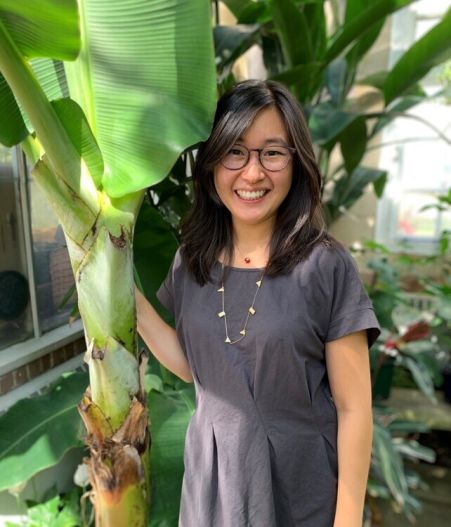
Alyssa Paredes is Assistant Professor of Anthropology at the University of Michigan, Ann Arbor. She is a socio-cultural anthropologist researching plantation agriculture, scientific convention, transnational trade, and environmental activism between the Philippines and Japan. Her book manuscript, tentatively titled Bananapocalypse: Plantation Economies and Ecologies in a Global Mindanao, draws on transnational fieldwork to identify the crop science, agrochemical regulation, market segmentation techniques, and food standards as arenas where actors contend over the commodity chain’s various externalities. Her work appears in Ethnos: Journal of Anthropology and the Journal of Political Ecology, as well as in edited collections like The Promise of Multispecies Justice (Duke University Press, 2022) and Feral Atlas: The More-than-Human Anthropocene (Stanford University Press, 2020). She holds a PhD with distinction from Yale University. Before joining as assistant professor, she was LSA Collegiate Fellow 2020-2022 at the University of Michigan.
A Gatty Lecture and Critical Development Studies Seminar
This seminar is co-organized by the Cornell Southeast Asia Program, Cornell Global Development, the Department of Anthropology and the Graduate Field of Development Studies.
Seminars in Critical Development Studies are managed by faculty and Ph.D. students in the Department of Global Development and the Graduate Field of Development Studies. You are encouraged to take part in these invigorating discussions in-person in Warren Hall B73 or via Zoom.
Additional Information
Program
Southeast Asia Program
Einaudi Center for International Studies
Grad Chats: Beyond the IRB: Ethics and International Research

March 29, 2023
4:30 pm
Uris Hall, G-08
Current calls to decolonize global research renew the institutional and personal scrutiny of our “best practices” in conducting field research. Beyond formal adherence to the Belmont principles of “respect, beneficence, and justice,” researchers must reexamine some of the hidden (and not so hidden) costs borne by the local community in the research effort. Panelists will discuss ethical considerations of international research and ethnography in a variety of methodological practices: randomized control trials, focus group discussions, essay competitions, and selective summer camps.
Moderator
Rachel Beatty Riedl (Government, A&S; Einaudi Center)Panelists
Arnab Basu (Dyson School)Alex Nading (Anthropology, A&S)Sarah Thompson (South Asia Program, Einaudi Center)***
Grad Chats: Conversations on International Research and Practice is a series hosted by the Mario Einaudi Center for International Studies to support graduate students with interdisciplinary training and planning around conducting international research.
Spring 2023 Schedule
From Plan A to Plan B: Designing Research for a Changing World (Thursday, February 16, 4:30 pm – 6:00 pm, Uris Hall G02)Beyond the IRB: Ethics and International Research (Wednesday, March 29, 4:30 pm – 6:00 pm, Uris Hall G08)Best Practices and Challenges in International Field Research (Thursday, March 30, 4:30 pm – 6:00 pm, Uris Hall G02)Finding a Research Focus through Creative Writing (Tuesday, April 18, 4:30 pm – 6:00 pm, Uris Hall G08)Travel Health and Safety Awareness for Conducting Research Abroad (Tuesday, May 9, 4:30 pm – 6:00 pm, Uris Hall G08)
Additional Information
Program
Einaudi Center for International Studies
East Asia Program
Southeast Asia Program
Latin American and Caribbean Studies
Institute for African Development
Institute for European Studies
South Asia Program