
Southeast Asia Program
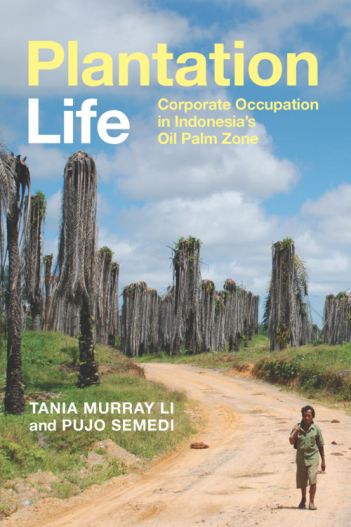
Gatty Lecture: Plantation Life: Corporate Occupation in Indonesia’s Plantation Zone
November 4, 2022
8:00 pm
Kahin Center
Tania Li and Pujo Semedi
Tania Li: Professor of Anthropology, University of Toronto
Pujo Semedi: Associate Professor of Anthropology, Gadjah Mada University
Plantation Life examines the structure and governance of Indonesia’s contemporary oil palm plantations, which supplies 50% of the world’s palm oil. Li and Semedi theorize “corporate occupation” to underscore how massive forms of capitalist production and control over the palm oil industry replicate colonial-style relations that undermine citizenship. In so doing, they question the assumption that corporations are necessary for rural development, contending that the dominance of plantations stems from a political system that privileges corporations. In this talk, the authors will present the main arguments of the book and describe the methods they devised for collaborative research and writing.
Tania Murray Li is Professor of Anthropology at the University of Toronto. Her publications include Plantation Life: Corporate Occupation in Indonesia’s Oil Palm Zone (with Pujo Semedi, Duke University Press 2021), Land's End: Capitalist Relations on an Indigenous Frontier (Duke University Press, 2014), Powers of Exclusion: Land Dilemmas in Southeast Asia (with Derek Hall and Philip Hirsch, NUS Press, 2011), The Will to Improve: Governmentality, Development, and the Practice of Politics (Duke University Press, 2007) and many articles on land, labour, class, capitalism, development, resources and indigeneity with a particular focus on Indonesia.
Pujo Semedi is an associate professor at the Dept. of Anthropology, Gadjah Mada University. His research mostly addressed the issues of environmental and economical dynamics in rural, agricultural communities. He published articles on Indonesian fishing communities, upland agriculture communities, and tea and palm oil plantations in Java and Kalimantan. Currently he collects data on the social transformation from agricultural to industrial society in Southern Germany and Norway in the last century.
This Gatty lecture will take place in person at the Kahin Center, but people are also welcome to join us on Zoom.
***Note that this talk takes place at 8pm, not the usual 12:30pm.
For questions, please contact seapgatty@cornell.edu.
Additional Information
Program
Einaudi Center for International Studies
Southeast Asia Program
Gatty Lecture: Who Wants to Learn about Globalization? A Field Experiment in Vietnam
October 27, 2022
12:30 pm
Kahin Center
Eddy Malesky
Professor of Political Economy, Duke University
Are the poor ambivalent about globalization? Do they fail to understand the new economic opportunities and constraints associated with greater market integration? Despite the effects of trade liberalization on job opportunities and losses, as well as its impacts on consumer products and prices in the domestic market, most existing scholarship on globalization maintains that only the highly educated have any sense of its distributional impacts. Study after study finds that only the college- educated are economically literate; and this is a fundamental predictor of their favorability towards open markets. Yet, other research in economics and psychology shows that economic need is a key driver of economic learning, suggesting – but not testing – that the uneducated poor may have incentives to be knowledgeable about the impacts of globalization. We challenge the conventional view and propose that disadvantaged populations are the most motivated to learn about the distributional effects of globalization shocks in their locality. Faced with economic uncertainty, enduring economic hardship and a dearth of information on how to overcome this adversity trigger their efforts to seek information. More specifically, as developing countries embrace international markets, we anticipate that economically insecure groups – and migrants in particular- are the most incentivized to educate themselves on factors that might improve their situation in the changing economy. We focus on migrants because they come from vulnerable households and have the most limited access to information on the vast array of economic opportunities in their destination. In contrast to permanent residents in their host city, migrant workers tend to be employed in lower skill jobs, subject to insufficient and unstable income, harsh working conditions, and poor and unsanitary living situations (e.g., Das 2020, Qui et al 2011). We test our theory with a nation wide randomized experiment in Vietnam, finding that migrants are twice as likely as other groups to educated themselves about the forthcoming EU-Vietnam trade agreement.
Dr. Edmund Malesky is a Professor of Political Economy in the Political Science Department at Duke University and a noted specialist in economic development, authoritarian institutions, and comparative political economy in Vietnam. On August 1, 2020, he became the director of the Duke Center for International Development (DCID), a unit within Duke University’s Sanford School of Public Policy that advances international development policy and practice through interdisciplinary approaches to post-graduate education, mid-career training, international advising, and research. Malesky has published in the top journals in political science and economics. In 2019, Dr. Malesky was elected Chair of the Southeast Asia Research Group (SEAREG) Council. Since 2014, he has been a member of the board of the International Political Economy Society (IPES) and also serves on the editorial boards of several publications, including the Journal of Politics, Comparative Political Studies, and the Journal of East Asian Studies. In 2012, Dr. Malesky received a state medal from the Government of Vietnam for his role in promoting economic development for USAID’s Vietnam Provincial Competitiveness Index. In 2013, he was appointed by President Obama to serve on the board of the Vietnam Education Foundation. Dr. Malesky has published extensively in leading political science and economic journals and have received several academic awards including the Harvard Academy Fellowship (2004-2005; 2007-2008) and the Rockefeller Bellagio Residency Fellowship (2014).
Co-sponsored by the Department of Government.
This Gatty lecture will take place in person at the Kahin Center, but people are also welcome to join us on Zoom.
Lunch will be served.
For questions, please contact seapgatty@cornell.edu.
Additional Information
Program
Einaudi Center for International Studies
Southeast Asia Program
Gatty Lecture: Claiming Karen as National Identity: Transnational Experiences of Karen Baptists in Nineteenth-Century America and British Burma
October 20, 2022
12:30 pm
Kahin Center
Hitomi Fujimura
Visiting Postdoctoral Fellow at York Centre for Asian Research, York University in Toronto
In this talk, Hitomi will lecture on how the Karen Baptists who later established the KNA nurtured the idea of claiming national identity through multi-layered settings. The analysis entails a broader, transnational perspective because their life was as mobile as they lived in foreign lands. Studying in Upstate New York and Chicago in the 1860s and 70s, Karen Baptist students, facing Americans’ image of exotic Asia and racial discrimination, learned to identify as natives of Burma in Asia. This talk will argue that when Karen Baptist intellectuals began the political self-representation in British Burma, they claimed the Karen nation not merely as an ethnic assertion. They mainly aimed to appeal to the colonial government as an indigenous nation of British Burma, distinct from the majority Burmans, while their ethnic-identity project was a total failure with their fellow Karen-speaking population. In contextualizing the Karen case, usually labelled as pro-British, with the firm, monolithic ethnic sentiment, Hitomi will bring the historicity of claiming national identity into the discussion.
Hitomi Fujimura is Visiting Postdoctoral Fellow at York Centre for Asian Research, York University in Toronto. Having conducted
long-term fieldwork (2014-2016) and multiple short-term research trips in Myanmar, she completed her Ph.D. at Sophia University, Tokyo, Japan, in 2019. Her dissertation on the Karen Baptist history in the Nineteenth century examines a wide range of Sgaw Karen historical documents, oft-overlooked primary sources in historical studies of Myanmar, and reconsiders the lives and experiences of Karen Baptists, covering from the initial mass conversion in the 1830s and 40s to the political activities of the Karen National Association (KNA), the first
ethnic organization of the country, in the 1880s. Her articles have appeared in several Journals and books in Japanese and English,
including the Journal of Burma Studies and Journal of Southeast Asian Studies (upcoming).
Co-sponsored by the Religious Studies Program.
This Gatty lecture will take place in person at the Kahin Center, but people are also welcome to join us on Zoom.
Lunch will be served.
For questions, please contact seapgatty@cornell.edu.
Additional Information
Program
Einaudi Center for International Studies
Southeast Asia Program
Gatty Lecture: Academic Outsider
October 14, 2022
3:00 pm
Warren Hall, B73
Victoria Reyes
Associate Professor, Gender & Sexuality Studies, University of California, Riverside
Many enter the academy with dreams of doing good; this is a book about how the institution fails them, especially if they are considered "outsiders."
Tenure-track, published author, recipient of prestigious fellowships and awards—these credentials mark Victoria Reyes as somebody who has achieved the status of insider in the academy. Woman of color, family history of sexual violence, first generation, mother—these qualities place Reyes on the margins of the academy; a person who does not see herself reflected in its models of excellence.
This contradiction allows Reyes to theorize the conditional citizenship of academic life—a liminal status occupied by a rapidly growing proportion of the academy, as the majority white, male, and affluent space simultaneously transforms and resists transformation. Reyes blends her own personal experiences with the tools of sociology to lay bare the ways in which the structures of the university and the people working within it continue to keep their traditionally marginalized members relegated to symbolic status, somewhere outside the center.
Reyes confronts the impossibility of success in the midst of competing and contradictory needs—from navigating coded language, to balancing professional expectations with care-taking responsibilities, to combating the literal exclusions of outmoded and hierarchical rules. Her searing commentary takes on, with sensitivity and fury, the urgent call for academic justice.
Victoria Reyes is Associate Professor in the Department of Gender & Sexuality Studies at University of California, Riverside. She studies culture, borders and empire and is author of the multiple award-winning book Global Borderlands (2019, Stanford University Press). Her most recent book, Academic Outsider: Stories of Exclusion and Hope, was published in July 2022 by Stanford Briefs, an imprint of Stanford University Press
Co-organized with Cornell Global Development and the Graduate Field of Development Studies.
Co-sponsored by the Women's Resource Center; the Asian American Studies Program; Feminist, Gender, and Sexuality Studies; and the Department of Sociology.
This Gatty lecture will take place in person at ***Warren Hall B73, NOT the Kahin Center***, but people are also welcome to join us on Zoom.
Happy hour reception to follow.
For questions, please contact seapgatty@cornell.edu.
Additional Information
Program
Einaudi Center for International Studies
Southeast Asia Program
Gatty Lecture: Unbecoming: Exploring Filipinx Trans Identity Through Literary Fiction

September 29, 2022
12:30 pm
Kahin Center
Meredith Talusan
Sarah Lawrence College and Condé Nast author and editor
Trans and Filipinx identities have the common quality of existing in liminal and contested spaces as they encompass wildly divergent understandings of gender, sexuality, nationality, race, and origin. Talusan explores the collision of these forces in her recent fiction, which she will read and unpack in this talk, to illustrate how her background as a comparative literature scholar working on Southeast Asian literature has given her an array of tools for telling nuanced and compelling stories.
Meredith Talusan (she/they) is the author of the critically-acclaimed memoir Fairest from Viking/Penguin Random House, a Lambda Literary Award Finalist. She has also contributed to numerous books and her essays have appeared in The New York Times, The Guardian, The Atlantic, The Nation, WIRED, SELF, and Condé Nast Traveler, among other publications. Her fiction is also published or forthcoming in Guernica, Boston Review, The Rumpus, Grand, and BLR. She has received awards from GLAAD, The Society of Professional Journalists, and the National Lesbian and Gay Journalists Association. She is on the creative writing faculty at Sarah Lawrence College and is also the founding executive editor of them, Condé Nast’s LGBTQ+ digital platform, where she is currently contributing editor.
Co-sponsored by the Department of Comparative Literature; Feminist, Gender, and Sexuality Studies; the Asian & Asian American Center (A3C); the Department of Performing & Media Arts; the LGBT Resource Center; and the Department of Literatures in English.
This Gatty lecture will take place in person at the Kahin Center, but people are also welcome to join us on Zoom.
Lunch will be served.
For questions, please contact seapgatty@cornell.edu.
Additional Information
Program
Einaudi Center for International Studies
Southeast Asia Program
Gatty Lecture: Meritocracy Reconsidered: Bureaucratic Selection and Nation-Building in Indonesia
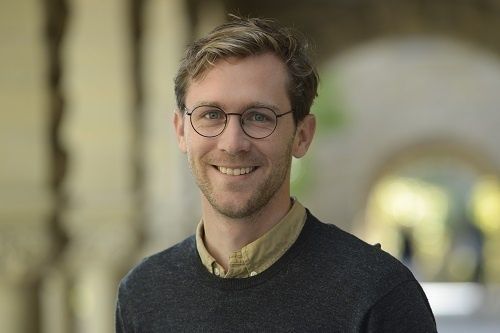
September 22, 2022
12:30 pm
Kahin Center
Nicholas Kuipers
Assistant Professor of Political Science & Presidential Young Professor, National University of Singapore
Many countries select civil servants via examinations. In this talk, I argue that the outcomes of these tests prompt attitudinal shifts on the part of winners and losers—particularly when successful applicants disproportionately hail from specific ethnic, racial, or religious groups. Looking at Indonesia, I present evidence in support of this argument from a survey conducted in partnership with the Indonesian civil service agency, in which we solicited survey responses from the universe of applicants for civil service jobs. Matching responses to the database of test scores, I show that individuals who failed the exam are more likely to (1) support preferential treatment for in-groups, (2) reflect negatively on an ethnically inclusive national identity, and (3) believe the recruitment process was corrupt. Building on these empirical results, I conclude by presenting a reconceptualization of the decision to implement civil service reform as a trade-off between the twinned demands of state-building and nation-building.
Nicholas Kuipers is an Assistant Professor of Political Science and Presidential Young Professor at the National University of Singapore. His research is interested in understanding how institutions structure political attitudes and has been published or is forthcoming in journals such as the American Political Science Review, the British Journal of Political Science, Perspectives on Politics, and World Politics. Nicholas received his PhD from the University of California, Berkeley and was previously a predoctoral scholar at the Center on Democracy, Development, and the Rule of Law at Stanford University.
Co-sponsored by the Department of Government.
Additional Information
Program
Einaudi Center for International Studies
Southeast Asia Program
Gatty Lecture: The Gift of a Corpse: Notes from a Singaporean Mortuary on the Necropolitics of the Ordinary
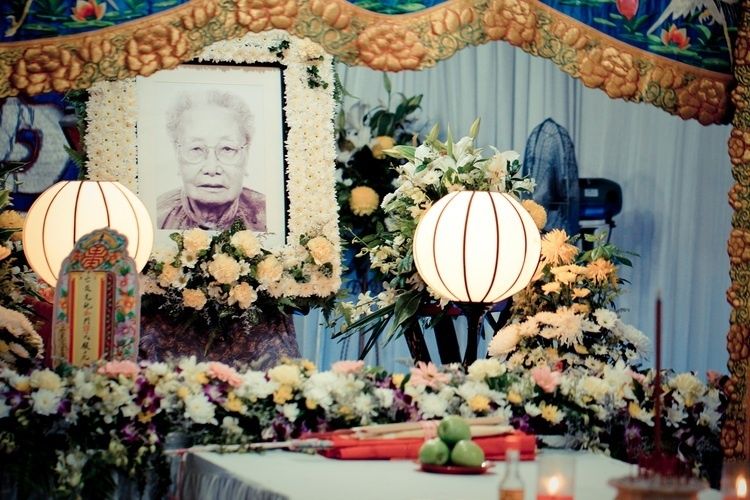
September 15, 2022
12:30 pm
Kahin Center
Ruth Toulson
Professor of Anthropology, Maryland Institute College of Art
Throughout history, dead bodies have been exhumed to rewrite the past. Their burial places have justified redrawing the boundaries of nations. And preserved bodies have made visible the continuing relevance of their ideological regimes. Multiple authors have probed the corpse’s power as a potent political symbol. But much of the existing literature on necropolitics has an exclusive focus on contexts of violent regime change. And the dead bodies these authors describe are either those of political leaders or of “the dead” understood as an undifferentiated mass. In Singapore, in contrast, anthropologist, Ruth E. Toulson, argues that the manipulation of corpses is a quotidian strategy of political power, part of the everyday actions of a stable state. What’s more, the corpses this state puts to
its use are those of ordinary people, whose unremarkable deaths are marked in what seem initially to be unremarkable ways. This is the necropolitics of the ordinary.
In this seminar, drawing on her work as a mortician, Toulson takes you behind the scenes in the Singaporean world of death. She argues that Singapore’s funeral parlors, crematoria, and columbaria are charged sites of the politic. But how this comes to be is a puzzle, for the state has little interest in legislating ritual and grief. What is the mechanism for this politicization? It happens, she suggests, not in the form of top-down policy but via the relationships that are possible only here, the tripart relationships between the bereaved, death-workers, and the corpse.
Ruth E. Toulson is a cultural anthropologist. She teaches in the Division of Liberal Arts, Maryland Institute College of Art, Baltimore, Maryland. She is the editor, with Zahra Newby, of The Materiality of Mourning: Cross Disciplinary Perspectives (Routledge 2018) and the author of multiple articles and book chapters on death, grieving, and material culture, which draw on her research in the funeral industry in Southeast Asia and Mainland China. Her current book project draws on multi-year fieldwork in Chinese funeral parlors in Singapore, where she worked as a mortician, to examine the causes and consequences of rapid transformation in the way death is ritualized and grieved.
Co-sponsored by the Religious Studies Program.
This Gatty lecture will take place in person at the Kahin Center, but people are also welcome to join us on Zoom.
Lunch will be served.
For questions, please contact seapgatty@cornell.edu.
Additional Information
Program
Einaudi Center for International Studies
Southeast Asia Program
Gatty Lecture: Toward an Archipelagic Southeast Asian Studies: Vietnamese Refugee Settlers and the Decolonial Politics of Nước
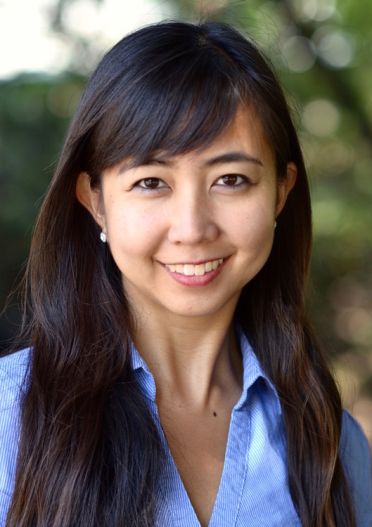
September 1, 2022
12:30 pm
Kahin Center
Evyn Lê Espiritu Gandhi
Assistant Professor of Asian American Studies, University of California, Los Angeles
What does it mean to think Southeast Asia archipelagically? What points of connection and convergence does an archipelagic method enable? In this talk, Dr. Evyn Lê Espiritu Gandhi offers notes on an archipelagic praxis for Southeast Asian studies. Putting the Vietnamese concept of nước, which means water/country/homeland, in conversation with Pacific Islander and Palestinian understandings of the archipelago, Dr. Gandhi traces the postwar migration of Vietnamese refugees to Guam and Israel-Palestine in order to unpack what she calls the "refugee settler condition": the fraught positionality of refugee subjects whose resettlement in a settler colonial state is predicated on the unjust dispossession of an Indigenous population. This talk probes the decolonial politics of nước as routed through archipelagic epistemologies, theorizing emergent forms of refugee-Indigenous solidarity.
Evyn Lê Espiritu Gandhi is an assistant professor of Asian American Studies at UCLA (Tovaangar). Her work engages critical refugee studies, settler colonial and Indigenous studies, and transpacific studies. She is the author of Archipelago of Resettlement: Vietnamese Refugee Settlers and Decolonization across Guam and Israel-Palestine, which was published open access by University of California Press in April 2022. In summer 2022, Dr. Gandhi organized a public history exhibit based on this book's research entitled Remembering Saigon: From Vietnam to Guam. She is currently co-editing an anthology, Routledge Handbook of Refugee Narratives, with Vinh Nguyen, as well as working on a second book project, tentatively entitled Revisiting the Southern Question: South Korea, South Vietnam, and the US South. Dr. Gandhi hosts a podcast, Distorted Footprints, through her Critical Refugee Studies class.
Co-sponsored by the American Indian and Indigenous Studies Program (AIISP).
This Gatty lecture will take place in person at the Kahin Center, but people are also welcome to join us on Zoom.
Lunch will be served.
For questions, please contact seapgatty@cornell.edu.
Additional Information
Program
Einaudi Center for International Studies
Southeast Asia Program
Gatty Lecture: Amnat and Barami: Chulalongkorn and Bhumibol: The Two Longest Reigns in Siam and Thailand
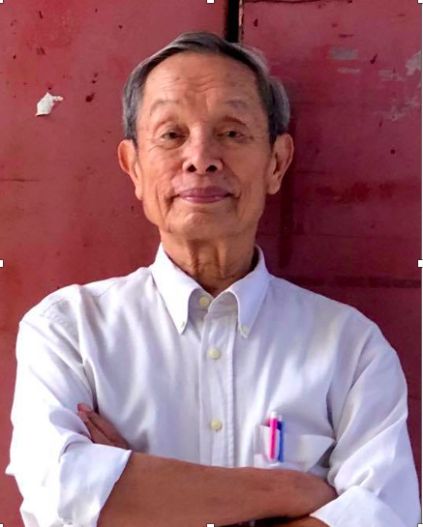
August 25, 2022
12:30 pm
Kahin Center
Charnvit Kasetsiri
Professor Emeritus, Pridi Banomyong International College, Thammasat University, Bangkok
A comparative studies of the two longest reigns of King Chulalongkorn of Siam and King Bhumibol of Thailand.
Charnvit Kasetsiri is a Professor Emeritus of Thammasat University, Bangkok, Thailand, born 1941; he is a prominent historian and Thai Studies scholar. After obtaining his bachelor’s degree in Diplomacy with Honor from Thammasat, 1963, he pursued his 1967 M.A. in Diplomacy and World Affairs at Occidental College, Los Angeles, California, under a Rockefeller scholarship and his 1972 Ph.D. in Southeast Asian History at Cornell University.
Co-sponsored by the Department of History.
This Gatty lecture will take place in person at the Kahin Center, but people are also welcome to join us on Zoom.
Lunch will be served.
For questions, please contact seapgatty@cornell.edu.
Additional Information
Program
Einaudi Center for International Studies
Southeast Asia Program
A Global Food Crisis Is Unfolding

Chris Barrett, IAD/SEAP
“If you worry about domestic politics, if you worry about environmental matters, if you worry about immigration matters, if you worry about diplomacy in the military, you should be paying attention to the food crisis, because it is lurking in the background, pushing those things,” says Chris Barrett, professor of applied economics and management. Barrett is also quoted in this Insider piece about the global food crisis.