
Southeast Asia Program
Ahead of Trump Call, Fighting Between Thailand and Cambodia Intensifies

Tom Pepinsky, SEAP
Thomas Pepinsky, a Cornell University politics professor, provides expert analysis on Trump's likely engagement in resolving the Thailand-Cambodia conflict.
Additional Information
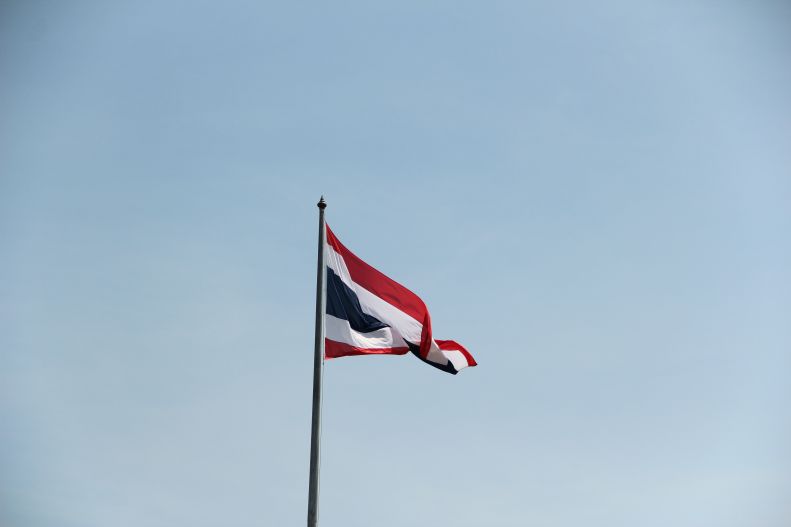
Thai Leader’s Hard Line on Cambodia Clash Risks Irking Trump
Tom Pepinsky, SEAP
Tom Pepinsky, professor of government, notes that Cambodia’s West Point–trained prime minister has strong incentives to respond forcefully to any perceived threats to national sovereignty.
Additional Information
SEAP Summer Language Fellowship

Details
SEAP offers funding for graduate students to intensively study a Southeast Asian language during the summer.
If applicable, all applicants are required to also apply for the Graduate School Summer Foreign Language Grant due April 15, which provides up to $1,000 in international travel support.
Amount
For summer language study at any level: Tuition and fees allowance of up to $5,000, paid directly to the institution offering the language program.
Eligibility
Applicants must be PhD or master's students affiliated with SEAP.
How to Apply
In your application, you will be asked to provide information on your proposed study location. You must identify your own preferred program. Please indicate the language level you intend to study during the award period.
Your program must be at least six weeks in duration and offer at least 120 student contact hours at the advanced level or 140 contact hours at the beginning or intermediate level. Pre-assessment and post-assessment tests are required.
We strongly encourage applicants to contact the appropriate Cornell Southeast Asian Language Senior Lecturer to discuss individual language learning goals and explore potential intensive language programs.
Questions?
Please direct any questions to SEAP Program Manager Colin Peterson (crp88@cornell.edu).
Additional Information
Information Session: Laidlaw Scholars Leadership & Research Program
January 6, 2026
11:00 am
The Laidlaw Scholars Leadership and Research Program promotes ethical leadership and international research around the world—starting with the passionate leaders and learners found on campuses like Cornell. Open to first- and second-year students, the two-year Laidlaw program provides generous support to carry out internationally focused research, develop leadership skills, engage with community projects overseas, and become part of a global network of like-minded scholars from twenty universities worldwide.
At this session, we'll share more information about the program, including independent international projects with the Einaudi Center’s trusted partners around the world for the summer 2026 leadership-in-action portion of the program, and tips for writing a successful application. Applications are due January 12, 2026.
Register here. Can’t attend? Contact programs@einaudi.cornell.edu.
Additional Information
Program
Einaudi Center for International Studies
Reppy Institute for Peace and Conflict Studies
East Asia Program
Southeast Asia Program
Latin American and Caribbean Studies
Institute for African Development
Institute for European Studies
South Asia Program
Southwest Asia and North Africa Program
Information Session: Laidlaw Scholars Leadership & Research Program
December 16, 2025
2:00 pm
The Laidlaw Scholars Leadership and Research Program promotes ethical leadership and international research around the world—starting with the passionate leaders and learners found on campuses like Cornell. Open to first- and second-year students, the two-year Laidlaw program provides generous support to carry out internationally focused research, develop leadership skills, engage with community projects overseas, and become part of a global network of like-minded scholars from twenty universities worldwide.
At this session, we'll share more information about the program, including independent international projects with the Einaudi Center’s trusted partners around the world for the summer 2026 leadership-in-action portion of the program, and tips for writing a successful application. Applications are due January 12, 2026.
Register here. Can’t attend? Contact programs@einaudi.cornell.edu.
Additional Information
Program
Einaudi Center for International Studies
Reppy Institute for Peace and Conflict Studies
East Asia Program
Southeast Asia Program
Latin American and Caribbean Studies
Institute for African Development
Institute for European Studies
South Asia Program
Southwest Asia and North Africa Program
Allure and Ambivalence: The Indian Aesthetic in Contemporary Thai Religious Worlds
April 6, 2026
12:15 pm
Uris Hall, G08
Talk by Aditya Bhattacharjee (Asian Studies, Cornell University)
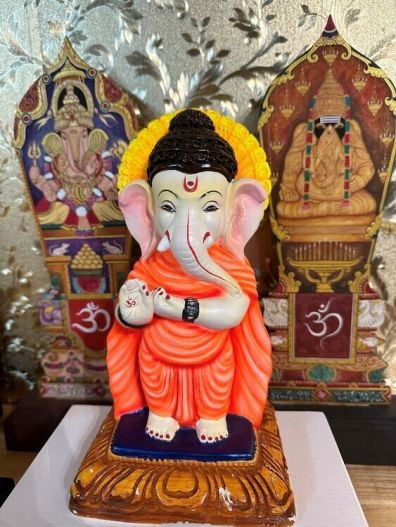
The cultural affinities that have long connected South and Southeast Asia are particularly visible in Thailand, one of the first countries to recognize India after independence and a nation that occupies a prominent place both in India’s cultural diplomacy efforts and in the itineraries of internationally bound Indian tourists. My talk turns from these well-known forms of state-level and civilizational interaction to the popular and everyday textures of lived, religious worldmaking in which ordinary Thais encounter and make sense of Indian-ness. Drawing on longstanding ethnographic fieldwork that moves fluidly between temples, social media platforms, and unplanned interactions on city streets, I consider how Thai Buddhists in varied settings engage Indian-ness less as a living South Asian tradition than as an aesthetic vocabulary that can be refracted and reinterpreted through a Buddhist grammar of their own.
In practice, this refractive process produces visual and ritual fields in which Indian themes appear in unexpected combinations and take on meanings shaped by local contexts. In these settings, Indian motifs are woven into wider Asian assemblages that combine Buddhist imagery, Chinese prosperity figures, and local protective spirits. Taken together, the talk’s case studies illuminate a distinct Thai Hindu modality whose allure and ambivalence, as perceived by both participants and observers, invite a reconsideration of how Indian-ness travels, settles, and is remade across Asia. In doing so, the talk reframes notions of a global Hinduism through an intra-Asian lens that decenters India as the singular vehicle of religious innovation within its study.
Aditya Bhattacharjee is a Mellon Postdoctoral Fellow jointly appointed in the Department of Asian Studies and the Society for the Humanities at Cornell University. His research examines how Hindu identities and ritual practices take shape across diverse cultural worlds, from urban Thailand to diasporic communities in North America. He is currently developing his first book, Global Ganesh: Mapping a Divine Diaspora, based on his dissertation at the University of Pennsylvania. The project traces how Thai Buddhist laypeople and monastics engage Indian deities such as Ganesha, Shiva, Vishnu, and various Hindu goddesses in suburban Bangkok and in the American Northeast, using these cases to reconsider how borrowing and appropriation are defined within interreligious encounters. Bringing together insights from material and visual culture, diaspora studies, and theories of ritual creativity, the book challenges India-centered models of Hindu mobility and offers globally informed perspectives on religious circulation in Asia. Before coming to Cornell, Bhattacharjee taught at the Rhode Island School of Design, where he developed interdisciplinary courses on Asian philosophy, diaspora, and religious art.
Additional Information
Program
Einaudi Center for International Studies
South Asia Program
Southeast Asia Program
Language Resource Center Speaker Series - The Southeast Asian Language Council (SEALC) Projects, 2019–2024: Cornell Collaborations
February 11, 2026
4:00 pm
Stimson Hall, G25
"The Southeast Asian Language Council (SEALC) Projects, 2019–2024: Cornell Collaborations"
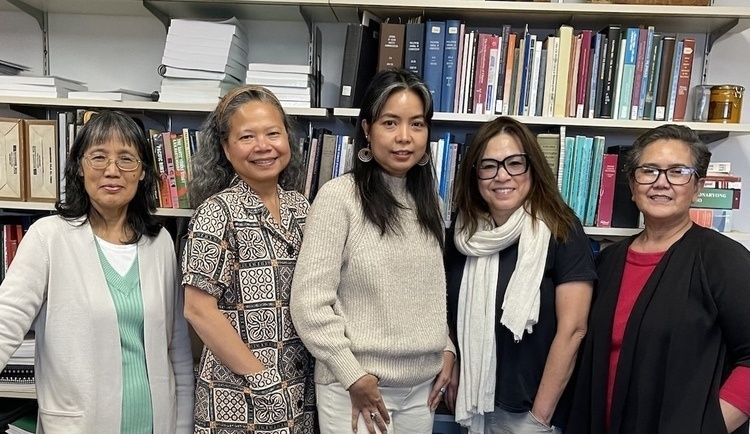
Yu Yu Khaing, Jolanda Pandin, Hannah Phan, Thess Savella, and Thúy Tranviet
Cornell University
The Southeast Asian Language Council (SEALC) is a national organization that promotes and coordinates initiatives in Southeast Asian language teaching by working closely with the National Resource Centers (NRC) for Southeast Asian Studies, the Council of Teachers of Southeast Asian Languages (COTSEAL), the Southeast Asian Summer Studies Institute (SEASSI), and area-specific organizations such as Cornell’s Southeast Asia Program (SEAP).
From 2019–2024, SEALC received a five-year grant from the Henry Luce Foundation to support six workshops focused on developing and evaluating instructional materials to strengthen Southeast Asian language instruction. These workshops addressed oral proficiency, project-based and heritage learning, reading materials development, listening assessment, and publication, and were hosted at institutions across the U.S., in Asia, and online for Southeast Asia-based instructors.
At Cornell, five of the six Southeast Asian language faculty—representing Burmese, Indonesian, Khmer, Tagalog, and Vietnamese—participated in various phases of this initiative. In this session, they will share their contributions to the SEALC projects and reflect on their experiences collaborating with colleagues across multiple institutions in both the U.S. and Asia.
Yu Yu Khaing (Burmese) will share collaborative work on Burmese Reading Proficiency Tests from the perspectives of both teachers and learners. She will also highlight how she uses proficiency-based assessment practices in her course quizzes and tests.
Jolanda Mendaun Pandin (Indonesian) participated in five SEALC projects. These collaborative efforts began with seven experienced language faculty in the U.S. and Singapore and later expanded to 14 faculty members from the U.S., Indonesia, Singapore, and Japan. In her presentation, she will focus on two projects: the Oral Proficiency Project (2019–2020), which identified Indonesian-specific language features missing from the 2012 OPI guidelines, and the Listening Assessment Design and Development Project (2024), which strengthened the Indonesian program’s curriculum by advancing listening assessment design and practices.
Hannah Phan (Khmer) will discuss two collaborative projects with Khmer language instructors in the U.S. following her participation in the SEALC projects: the Project-Based Language Learning (PBLL) (2020-2021) and the Reading Materials Development Workshops (2023). She will highlight how these workshops informed methodological approaches, material development, and assessment practices for language teaching and acquisition.
Thess Savella (Filipino/Tagalog) will discuss her collaboration with fellow Filipino language instructors from various universities in the U.S. on two SEALC projects: the Filipino Oral Proficiency Guidelines (OPG) Project 2 (2019–2020) and Listening Assessment Design and Development (2024). She will also provide context on the pre-SEALC Filipino OPG Project 1 (2011–2012), which informed the design of the OPI Project 2.
Thúy Tranviet (Vietnamese) will both open and close the session. She will begin by briefly outlining the six SEALC projects and conclude by highlighting her participation in three — OPG, Reading Materials Development, and Listening Assessment — including the materials she developed for her classrooms and the lessons learned. She presented these insights at the final symposium, Piloting the Proficiency-Based Instructional Materials and Assessment Tools: Insights and Lessons Learned, held in September 2025 at the University of Hawai’i, which marked the culmination of the SEALC projects.
Bios (in alphabetical order by last name):
Yu Yu Khaing (M.A., 2025) is a Senior Lecturer who teaches Burmese at all levels. Since joining Cornell in 2015, she has developed immersive Burmese language courses and multimedia learning materials, supported by a Cornell teaching innovation grant. She is also a certified ACTFL–ILR tester.
Jolanda Mendaun Pandin (M.A., 2000 and 2002) is a Senior Lecturer of Indonesian at Cornell. In 2017, she became the first President of the Consortium for the Teaching of Indonesian (COTI) after its transition to a non-profit, serving two terms from 2017–2023. Since 2015, she has developed conservation-focused listening materials for all levels and actively participated in the Veterinary School’s summer conservation project and One World Health course. A certified ACTFL tester since 2020, she has also collaborated on most SEALC projects since 2019.
Hannah Phan (MPS, 1998) joined Cornell in 2005 as a full-time Khmer instructor. She brings extensive training and experience in language teaching, having studied second-language pedagogy in Russia and Singapore. She has many years of classroom experience and has been a certified ACTFL tester in Khmer since 2009.
Thess Savella (M.A. 1997 and 2000) has taught all levels of Filipino at Cornell since 2002 and currently serves as President of the Consortium for the Advancement of the Philippine Languages and Cultures (CAPLAC). In 2023, she was one of two recipients of Cornell’s Sophie Washburn French Instructorship. She is also a certified ACTFL–ILR tester (since 2013) and a Seal of Biliteracy (SOBL) certification tester (since 2020). Her recent SEALC work include the Filipino Oral Proficiency Guidelines (OPG) Projects 1 and 2 and the Listening Assessment Design and Development Project.
Thúy Tranviet (Ph.D., 2015) has taught Vietnamese at Cornell since 1995. Over three decades, she has created extensive instructional materials for courses at all levels and in multiple formats. An interdisciplinary scholar, her interests span language and literary studies, international education, and international development. In addition to language courses, she has taught content-based courses on community engagement and climate change, including a field trip to Vietnam where students explored environmental issues in both global and local contexts.
This event will be held in person in G25 Stimson and will also be streamed live over Zoom (registration required). Join us at the LRC or on Zoom.
The event is free and open to the public.
Additional Information
Program
Einaudi Center for International Studies
Southeast Asia Program
Rightless Resistance

Rightless Resistance investigates why resistance to land grabbing so often fails. The rapid expansion of oil palm plantations has triggered widespread conflict across rural Indonesia, as communities lose their land with little compensation. Based on an unprecedented study of 150 such conflicts, this book uncovers how villagers fight back against palm oil companies, and what their struggles reveal about power, law and citizenship in postcolonial Indonesia.
Book
Additional Information
Program
Type
- Book
Publication Details
Publication Year: 2026
ISBN: 9781501785962
Why Southeast Asia Fights Over Food—but Shouldn’t
Joshua Kam, SEAP Grad Student
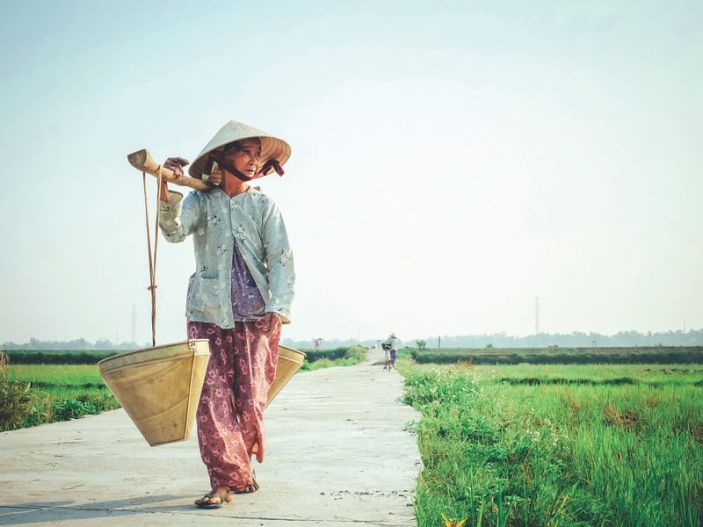
Joshua Kam, a doctoral Asian Studies student, offers insight on the history and cultural symbolism of native Southeast Asian fruits.
Additional Information
New Work in Southeast Asian Studies: The 28th SEAP Graduate Student Conference
March 6, 2026
9:00 am
Kahin Center
The Southeast Asia Program’s annual graduate conference offers a space for scholars of Southeast Asia to share new work, receive feedback, and engage with peers and faculty across disciplines.
This year’s special-format conference will feature a mix of panel presentations and individual talks from current SEAP graduate students, creating room for discussion and reflection on emerging scholarship in Southeast Asian studies.
Faculty organizers encourage speakers to explore intersections across their projects as they prepare their presentations. Abstracts and titles from presenters are due January 21, 2026.
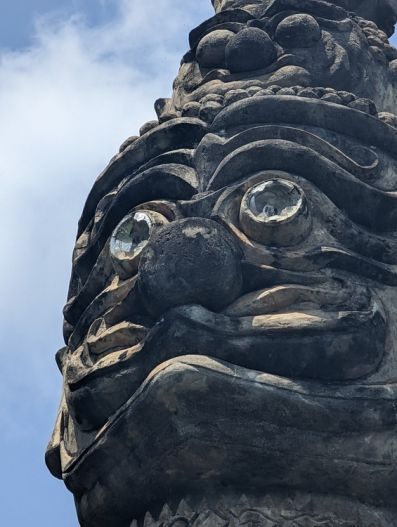
Photo contributed by Anna Koshcheeva, from the Buddha Park near Vientiane, Laos.
Additional Information
Program
Einaudi Center for International Studies
Southeast Asia Program