
Southeast Asia Program
Mother, Border, Other: Third World Internationalism and the Politics of Motherhood in Indonesia and China
March 19, 2026
12:15 pm
Kahin Center
Gatty Lecture Series
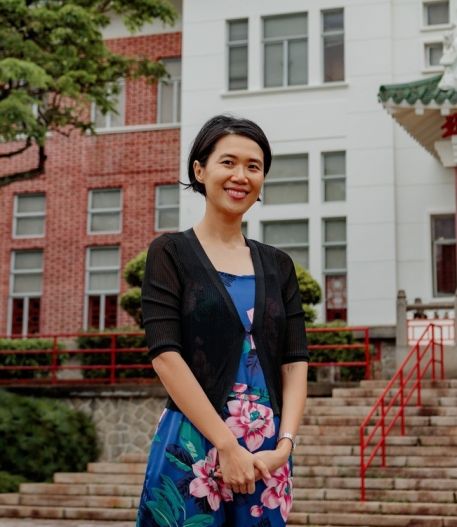
Join us for a talk by Taomo Zhou, Associate Professor of Chinese Studies, National University of Singapore.
This Gatty Lecture will take place at The Kahin Center, 640 Stewart Ave. Lunch will be served. For questions, contact seapgatty@cornell.edu.
Abstract
Motherhood—one of the most important and yet mundane social institutions—is central to our understanding of the latter half of the twentieth century. This talk focuses on a left-wing Indonesian activist in the Afro-Asian movements, Francisca Casparina Fanggidaej (1925–2013), a mother of seven who endured decades of forced separation from her family. Based on a close reading of Fanggidaej’s diaries, personal letters, and oral history interviews with her family and friends, I discuss the politics of maternal absence in Indonesia and China—two leading countries in the Afro-Asian movements. I explore how these two countries shaped the public and self-perceptions of non-residential mothers through their welfare provisions and reproductive policies; and how a transnational figure like Fanggidaej navigated motherhood within frameworks of revolutionary anticolonialism in Indonesia, state socialism in China, and the global rise of capitalist neoliberalism, which ultimately displaced the Third World internationalist vision once championed by both nations. I argue that the fall of Third World internationalism signaled not only a missed opportunity to reconfigure global geopolitics, but also a lost chance to redefine motherhood—not as the individualized enterprise of the birth mother alone but as a communal effort involving an assemblage of caretakers regardless of kinship or gender.
About the Speaker
Taomo Zhou is an Associate Professor in the Department of Chinese Studies and Dean’s Chair in the Faculty of Arts and Social Sciences, National University of Singapore. Her first book, Migration in the Time of Revolution: China, Indonesia and the Cold War (Cornell University Press, 2019), won a Foreign Affairs “Best Books of 2020” award and an Honorable Mention for the 2021 Harry J. Benda Prize from the Association for Asian Studies. Taomo is currently working on her second book project tentatively entitled “Made in Shenzhen: A Global History of China’s First Special Economic Zone,” which is under advance contract with Stanford University Press. She is also researching on motherhood during the Cold War.
Additional Information
Program
Einaudi Center for International Studies
East Asia Program
Southeast Asia Program
Beyond “Maritime Southeast Asia”: Seafarers of the International Shipping Industry and the Making of a Global Maritime Region
February 19, 2026
12:15 pm
Rockefeller Hall, 374
Gatty Lecture Series
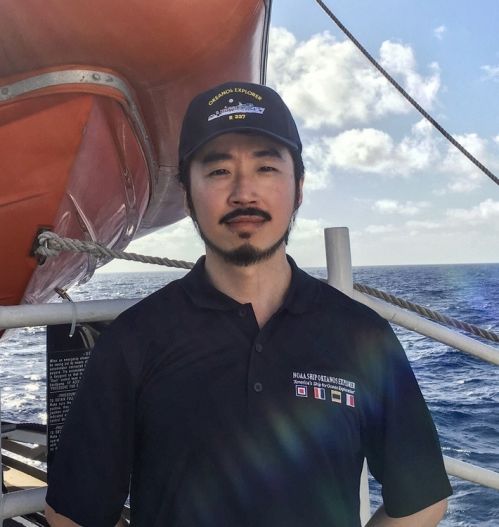
Join us for a talk by Liang Wu, Postdoctoral Associate at SEAP/Science and Technology Studies, Cornell University.
This Gatty Lecture will take place at Rockefeller 374, Asian Studies Lounge. Lunch will be served. For questions, contact seapgatty@cornell.edu.
Abstract
What and where is “Maritime Southeast Asia”? In this Gatty Lecture, maritime scholar Dr. Liang Wu presents a case study of Filipino among other Southeast Asian seafarers working in the international shipping industry across the global oceans, thus expanding the conventional definition of “Maritime Southeast Asia” – the archipelagic region of Southeast Asian countries situated between Indian and Pacific Oceans.
At this moment, hundreds of thousands of Southeast Asians are circumnavigating the world as they work on ocean-going merchant vessels of contemporary shipping, delivering 90% of international trade and sustaining economies and societies around the globe. The majority of the world’s 2 million seafarers come from the Global South regions of Southeast Asian countries such as the Philippines, Indonesia, Myanmar, and Vietnam, alongside China and India. Due to their long contracts and cyclical employment, most of these Southeast Asian workers spend their lives on the high seas beyond national jurisdictions, under flag-of-convenience states such as Panama, Liberia, and the Marshall Islands, and within the foreign territories of port states – all beyond the definitional region of “Maritime Southeast Asia”.
Through learning about the lifeworlds and lifeways of Southeast Asian seafarers, Dr. Wu will discuss in this Gatty Lecture a range of critical topics from containerization to postcolonialism, familism, the social infrastructures of maritime ministries, and also industrial- environmental externalities. In tracing the far-reaching and uneven conditions and ramifications of such maritime metageography of sea trade, Dr. Wu’s work shifts analytical attention from regional seas, ports, and littoral societies to transoceanic labor, nodes, and networks; it advances a labor-centered and mobility-political approach to study the “maritime Southeast Asian” aspects of the global archipelago – one constituted not only by circulation and connectivity, but also by routinized absence, spatial confinement, juridical ambiguity, social invisibility, and integral accidents.
In the aftermath of the COVID-19 global pandemic and as supply chain disruptions continue to erupt, Dr. Wu’s redefinition carries urgent implications for how we conceptualize maritime regions, essential labor, and the social foundations of global logistics and human condition.
About the Speaker
Dr. Liang Wu is a SEAP Postdoctoral Associate at Cornell University. He is also affiliated with the Department of Science & Technology Studies and the interdepartmental consortium Cornell Oceans. Dr. Wu started studying the international shipping and seafaring industry in 2006, and has carried out research at ports in Asia and the U.S., onboard, and online. Dr. Wu received his Ph.D. in anthropology from the Graduate Center, City University of New York. His interdisciplinary maritime work has been supported by the National Science Foundation, Social Science Research Council, Wenner-Gren Foundation, Center for Engaged Scholarship, and Ralph Bunche Institute for International Studies among other funding agencies. Overall, Dr. Wu is an engaged scholar who examines the intersection of maritime economy, blue humanities, social oceanography, and marine policy. He is a former Visiting Assistant Professor at Bates College enhancing ocean literacy and ocean engagement in Maine, and a Marine Policy and Science Communication Knauss Fellow at the National Oceanic and Atmospheric Administration. Dr. Wu also belongs to various national and international working groups and professional associations such as Waterfront Alliance, Deep-Ocean Stewardship Initiative, United Nations Ocean Decade Global Stakeholder Forum, Climate Change Interest Group (CCIG) of the American Anthropological Association, and American Association for the Advancement of Science.
Additional Information
Program
Einaudi Center for International Studies
Southeast Asia Program
Ocean and Human Health in Southeast Asia
February 12, 2026
12:15 pm
Kahin Center
Gatty Lecture Series
Developing an Innovative Mobile Phone Tool for Monitoring Marine Biodiversity and Human Nutrition in Timor-Leste
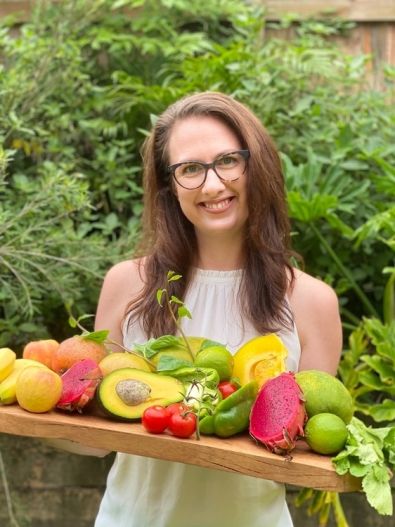
Join us for a talk by Lydia O'Meara, Postdoctoral Fellow at the Cornell Atkinson Center for Sustainability, Cornell University.
This Gatty Lecture will take place at The Kahin Center, 640 Stewart Ave. Lunch will be served. For questions, contact seapgatty@cornell.edu.
Abstract
Across the Indo-Pacific Coral Triangle, one of the world’s most biodiverse yet threatened regions, climate change and human pressures are reshaping both marine ecosystems and the coastal communities that rely on them for livelihoods and nutrition. Yet, integrated and timely data on ocean and human health remain scarce, especially in remote, low-resource settings. This lecture presents the early stages of a Cornell Atkinson Center for Sustainability study developing a low-cost mobile phone–based tool to track aquatic food consumption as an integrated monitoring indicator of marine biodiversity and food security at high frequency amidst a changing climate in Timor-Leste.
Using Interactive Voice Response technology on basic mobile phones, the project will pilot high-frequency participant-recorded dietary monitoring with women in small-scale fishing households, a nutritionally vulnerable and sentinel population for tracking community food security. By recording the diversity of aquatic foods eaten throughout the year, the study will explore how seasonal and environmental fluctuations shape access to nutrient-rich aquatic foods, whilst also providing insights into changes in marine biodiversity. This lecture will focus on the co-design, feasibility, and refinement of innovative integrated mobile phone monitoring tools suited to contexts where conventional surveys are constrained by severe weather, low literacy, and limited infrastructure. Timor-Leste serves as a case study for how inclusive, low-cost technologies can sustain nutrition and biodiversity data flows amid climate variability, informing future research and policy at the ocean–human health interface across SE Asia.
About the Speaker
Originally from Australia, Lydia O’Meara is an international nutritionist passionate about sustainable food systems for nutrition. Lydia is a Postdoctoral Fellow with the Cornell Atkinson Center for Sustainability, working in the Department of Public and Ecosystem Health. She is also an Emerging Leader Representative for the WHO World Health Summit in the Asia-Pacific. Her three-year Cornell fellowship focuses on developing and validating a novel mobile phone–based tool for high-frequency monitoring of diets among low-literate women in remote, resource-limited settings, with current fieldwork in Timor-Leste. With over seven years’ experience, Lydia has worked with organizations including UN Nutrition, the FAO, and WorldFish on food security and nutrition research across Africa, South and Southeast Asia, and the Pacific Islands. Her current work centers on aquatic foods for nutrition and the design of sustainable, equitable food systems in the context of climate change and anthropogenic pressures. Her research has been published in high-impact international journals, including the Lancet Planetary Health, Global Food Security, and PNAS. When she’s not working, Lydia enjoys exploring local foods and cultures.
Additional Information
Program
Einaudi Center for International Studies
Southeast Asia Program
Using Archaeology, History and Geology to Build a Paleo-tsunami History for Southeast Asia
February 5, 2026
12:15 pm
Kahin Center
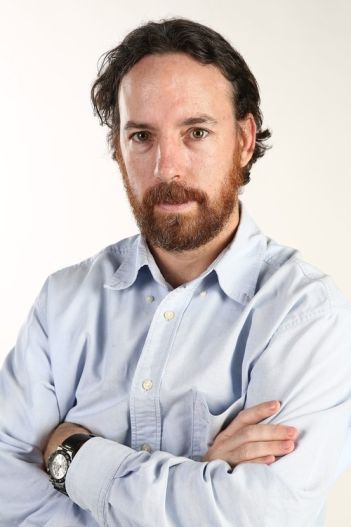
Gatty Lecture Series Join us for a talk by Patrick Daly, Staff Scientist, Department of Anthropology at Washington University in St. Louis.
This Gatty Lecture will take place at The Kahin Center, 640 Stewart Ave. Lunch will be served. For questions, contact seapgatty@cornell.edu.
Abstract
In 2004 the Indian Ocean tsunami devastated coastal regions in Indonesia, Thailand, Malaysia, Sri Lanka, India and the Maldives, causing massive loss of life and billions of dollars of damage, displacing hundreds of thousands of households, and triggering one of the largest international post-disaster reconstruction efforts in history. It is arguable that the loss of life was so high because few were prepared for a tsunami of that magnitude, as there were then no known historical or geological evidence for paleotsunami in the region. This talk brings together evidence from almost two decades of historical and geo-archaeological research that I have participated in after the 2004 event in Aceh, Indonesia to build a detailed paleo-tsunami history. I discuss how we combined archaeological landscape survey across over 40km of coastal areas surrounding the city of Banda Aceh, with stratigraphic, sedimentological, micro-fossil, and geochronological analysis of deposits uncovered within a cave on the Sumatran coast to conclusively show that the 2004 event was only the most recent in a long history of massive, destructive tsunami that have hit areas inundated by the 2004 tsunami. I end my talk by situating our results within other paleo-tsunami studies conducted around the region to propose an over 7,000 year timeline of major tsunami occurrence in the eastern Indian Ocean.
About the Speaker
Patrick Daly is a Staff Scientist for Sustainability and Resilience in the Department of Anthropology at Washington University in St. Louis. He completed a PhD. at the University of Oxford in environmental archaeology in 2003, and held post-doctoral and research appointments at Cambridge University and the Asia Research Institute at the National University of Singapore. He founded the Risk and Society research cluster at the Earth Observatory of Singapore, Nanyang Technological University, where he worked as a Principle Investigator until 2024. Employing a combination of anthropological and environmental archaeological methods, his research focuses upon human responses to changing environmental conditions and long-term recovery from large-scale disasters. He has spent the past two decades conducting research on historical hazards across southern Asia and community level recovery following the 2004 Indian Ocean tsunami. He is currently working on a monograph on post-disaster reconstruction: The Aftermath of Aid: Capacity Building, Development and Sustainability in Post-tsunami Aceh.
Additional Information
Program
Einaudi Center for International Studies
Southeast Asia Program
From Barefoot Lawyers to International Tribunals: Martial Law on Trial
January 29, 2026
12:15 pm
Kahin Center
Gatty Lecture Series
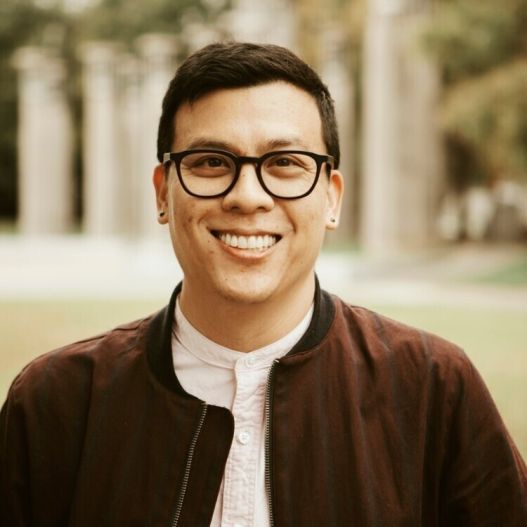
Join us for a talk by Mark Sanchez, Assistant Professor of Asian Studies (Asian American) at Vanderbilt University.
This Gatty Lecture will take place at The Kahin Center, 640 Stewart Ave. Lunch will be served. For questions, contact seapgatty@cornell.edu.
Abstract
This talk explores how legal advocates fought to defend civil liberties during the martial law era in the Philippines (1972-1981). During martial law, legal activists tried to challenge the Marcos regime in Philippine courts while trying to avoid legitimating martial law. Other legal advocates sought to garner international support while maintaining the centrality of Filipino people’s voices and experiences. The Free Legal Assistance Group (FLAG), an organization started by former Senator Jose W. Diokno and other lawyers to fight for the civil liberties of everyday Filipinos helped lead such fights. So too did anti-Marcos activists in the National Democratic Front (NDF) of the Philippines and the Moro National Liberation Front (MNLF). This work operated on a local level with documentation efforts and habeas corpus filings as well as an international level, with examples such as the Permanent People’s Tribunal (PPT) trial against the Marcos government in 1980. Despite the challenge of laying claim to the law against an authoritarian state, legal activists continued to advocate against the regime’s excesses and worked to shift local and international opinions against the Marcos state. Their work greatly contributed to transnational efforts to document human rights violence in the Philippines and offers insights into productive collaborations between grassroots and international solidarity activists.
About the Speaker
Mark John Sanchez teaches Asian American and Philippine history courses at Vanderbilt University. He is currently completing a book on the making of a transnational opposition to the martial law regime of Ferdinand Marcos, Sr. He is also working on a project on Philippine labor migration, speculation, and gambling.
Additional Information
Program
Einaudi Center for International Studies
Southeast Asia Program
The Politics of Culture in Peninsular India and Sri Lanka, 900-1500 AD conference
April 11, 2026
10:00 am
Kahin Center
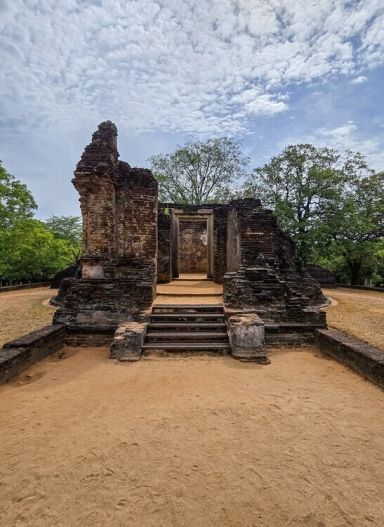
This conference explores the interrelationships among political literary, and religious culture in early second-millennium South India and Sri Lanka. Scholars of premodern South Asia and Indian Ocean political culture now recognize that transregional processes fundamentally shaped political environments in this region. The substantial migration of scholars, military operators, ritual specialists, and pilgrim-patrons led to substantial transfers of knowledge. During this period, textual forms, material culture, languages, and technical sciences were on the move. Speakers will highlight the potential of working across languages and between key political-cultural centers to identify core characteristics of premodern political culture in peninsular India and Sri Lanka from approximately 900-1500. The culture of politics in this region underwent substantial changes during this period, bookended by the Indian Ocean imperial vision of the Cōḷas to the advent of the Portuguese Indian Ocean colonial empire.
Conference participants include:
Manasicha Akepiyapornchai, Asian Studies, University of Texas at Austin
Daud Ali, South Asia Studies, University of Pennsylvania
Stephen Berkwitz, Religious Studies, Missouri State University
Anne Blackburn, Asian Studies, Cornell University
Whitney Cox, South Asian Languages & Civilizations, University of Chicago
Elaine Fisher, Religious Studies, Stanford University
Alistair Gornall, History & Religion, Singapore University of Technology and Design
Larry McCrea, Asian Studies, Cornell University
Bruno Shirley, Buddhist Studies, Heidelberg University
Additional Information
Program
Einaudi Center for International Studies
South Asia Program
Southeast Asia Program
Information Session: South Asia Summer Language Fellowships
February 4, 2026
4:30 pm
Uris Hall, G08
Achieve fluency in a language of South Asia with the help of a Foreign Language and Area Studies (FLAS) summer fellowship. You’ll gain valuable knowledge about cultures and countries in which your language is commonly used, while developing skills in a language critical to the needs of the United States. Graduate and undergraduate students are eligible.
Eligible South Asian languages available for in-person or virtual intensive language study include Bengali, Dari, Gujarati, Hindi, Kannada, Malayalam, Nepali, Oriya, Pashto, Persian, Punjabi, Sinhala, Tamil, Telugu, Tibetan & Urdu.
The deadline to apply is February 18, 2026.
Can't attend? Contact sap@einaudi.cornell.edu for more information.
Additional Information
Program
Einaudi Center for International Studies
Reppy Institute for Peace and Conflict Studies
Southeast Asia Program
South Asia Program
Southwest Asia and North Africa Program
Migrations Program
Anthropology Colloquium: Sampreety Gurung

May 1, 2026
3:00 pm
120 Mary Ann Wood Drive, B21
Temporariness and Belonging in a “free country”
In Malaysia, the incorporation of Nepali, mostly male, migrants as “foreign workers” has created the conditions within which they have come to see themselves as “foreigners” or just “workers” in “someone else’s place” (arkako thau). On the other hand, frequent references to Malaysia as a “free country”—where one can freely roam around and indulge in sex and alcohol unlike the Gulf where “one can’t even look a girl in the eye”; where people “forget” their country and family and “disappear” never to return; and where the hawapani (air and water) is, if not the same, better than Nepal—also signal forms of belonging. While these narratives reflect betrayal as an absent provider to both family and the nation, they also reflect failures and deviance from normative scripts and bounds of respectability and law and reveal a world of contestation, where ways of being otherwise exist not despite but through their particular predicaments as “foreign workers.” The talk examines this dual sense of exclusion and inclusion through which Nepali migrants experience work and life in Malaysia and asks what life-making and freedom might mean in a context of enforced temporariness.
Sampreety is a PhD candidate in the Department of Anthropology at Cornell.
Additional Information
Program
South Asia Program
Einaudi Center for International Studies
Southeast Asia Program
Information Session: Graduate Student Opportunities at the Einaudi Center
February 9, 2026
4:30 pm
Uris Hall, G08
Join us to learn about opportunities for graduate students with the Einaudi Center for International Studies. This session will discuss how to discover or strengthen global interests, including research and travel grants, guest lectures, fellowships, and more!
Can't attend? Email programs@einaudi.cornell.edu for more information.
Additional Information
Program
Einaudi Center for International Studies
Reppy Institute for Peace and Conflict Studies
East Asia Program
Southeast Asia Program
Latin American and Caribbean Studies
Institute for European Studies
South Asia Program
Migrations Program
Institute for African Development
Southwest Asia and North Africa Program
Book Explores "Modernity and Malevolence" in Indian Clinical Care
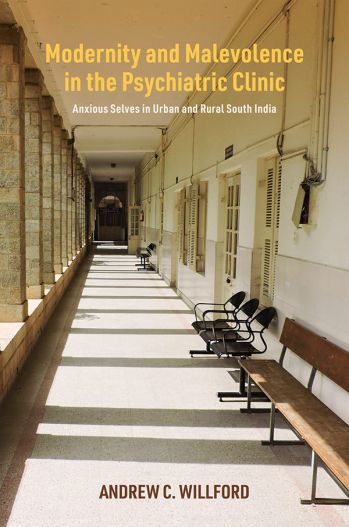
Andrew Willford, SAP/SEAP
Andrew Willford (SAP/SEAP) explores how culture shapes psychological symptoms in his new book, “Modernity and Malevolence in the Psychiatric Clinic: Anxious Selves in Urban and Rural South India.”