
Southeast Asia Program
Welcome back, students!
Learn about Opportunities for You at Einaudi
Video: Join us! Whether you're a grad student or first-year, you'll find your community and a world of opportunities at Einaudi.
Additional Information
Info Session: Fulbright U.S. Student Program for Undergraduates
October 20, 2021
4:45 pm
The Fulbright U.S. Student Program supports college graduates conducting research or teaching English in more than 150 countries. Applications are due in the fall; students who wish to begin the program immediately after graduation are encouraged to start the process in their junior year.
Contact: fulbright@einaudi.cornell.edu
Additional Information
Program
Einaudi Center for International Studies
Reppy Institute for Peace and Conflict Studies
East Asia Program
Southeast Asia Program
Latin American and Caribbean Studies
Institute for African Development
Institute for European Studies
South Asia Program
Info Session: Laidlaw Scholars Program
October 13, 2021
4:45 pm
Learn about the Laidlaw Undergraduate Research and Leadership Program. Open to first- and second-year students, this 2-year program provides generous support to carry out internationally-focused research, develop leadership skills, engage with community projects overseas, and join a global network of like-minded scholars from more than a dozen universities. Join us to learn more about the program, its benefits, and the application process, as well as tips for approaching potential faculty research mentors and writing a successful application
Additional Information
Program
Einaudi Center for International Studies
Reppy Institute for Peace and Conflict Studies
East Asia Program
Southeast Asia Program
Latin American and Caribbean Studies
Institute for African Development
Institute for European Studies
South Asia Program
SEALC-GETSEA Language Tuition Awards
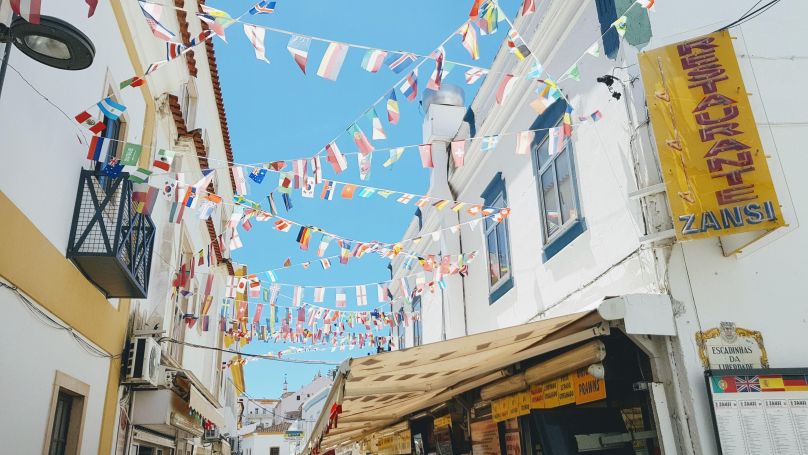
Supporting language study across the US
SEAP is pleased to be a founding member of the consortium for Graduate Education and Training in Southeast Asian Studies (GETSEA), and in that capacity we are announcing this year's cycle of SEALC-GETSEA language tuition support awards.
These awards are crucial to support graduate students across the US studying Southeast Asian languages at institutions other than their own.
In an exciting new partnership, two consortia on Southeast Asian studies have joined forces to improve collaboration in the teaching of Southeast Asian languages. With support from the Henry Luce Foundation, the Southeast East Asian Language Council (SEALC) and the Graduate Education and Training in Southeast Asian Studies (GETSEA) consortia award financial assistance to students who incur tuition fees when studying a Southeast Asian language during the academic year at an institution other than their home institution via synchronous distance learning. This award is intended to facilitate cross-institutional collaboration and increase access to Southeast Asian language instruction, especially for students who seek to study a language or level of study not currently offered at their home institution.
SEALC and GETSEA consider several factors when awarding students and determining placements. The first is the mission of SEALC and GETSEA to uphold and expand institutional support for the teaching of SEA languages and SEA language instructors. In the interest of this mission, the SEALC-GETSEA awards support distance, synchronous language classes taught by lecturers hired as salaried staff members by the North American host institution. In addition to this mission, SEALC and GETSEA consider the requests and time constraints of the student applying for language tuition support when assigning placements, to maximize the language gains of the student. These considerations frequently allow us to support students looking for first through third year language instruction, but rarely those who require more advanced levels. Finally, in order to support the greatest number of qualified students possible, we strive to place students in high quality courses with reduced tuition costs. We look forward to supporting additional institutions in their efforts to increase the accessibility of their SEA LCTL courses via synchronous distance.
We are pleased to announce the SEALC-GETSEA Language Tuition Support awardees and exchange participants (*) from the prior academic year (2020-2021) and for the upcoming academic year (2021-2022).
2020-2021
Isabel Chew (Burmese, NIU)Ryan Huston (Thai, University of Washington – Seattle)Jillian Lewis (Khmer, UC-Berkeley)Adrienne Magill (Indonesian, NIU)*Lillian Li Ling Ngan (Vietnamese, UCLA)Trisha Remetir (Filipino, UW-Madison)Chao Ren (Burmese, SOAS)*Irena Rosenberg (Khmer, Cornell University)An Nguyen Sakach (Burmese, NIU)*Mai Ze Vang (Hmong, University of Minnesota)
2021-2022
Tiyas Bhattacharyya (Khmer, NIU)Carina Campellone (Indonesian, UW-Madison)Ryan Emerson (Lao, NIU)Christian Gilberti (Burmese, NIU)Selcuk Koseoglu (Indonesian, UW-Madison)*Dasom Lee (Vietnamese, UCLA)Al Lim (Lao, NIU)Natalie Ng (Lao, NIU)Lucille Right (Khmer, NIU)*Saraswati Soedarmadji (Indonesian, UCLA)Anagha Sreevals (Indonesian, UW-Madison)Meaghan Waff (Indonesian, UW-Madison)Wenxuan Xue (Thai, UW-Madison)
To grasp the true significance of the SEALC-GETSEA language tuition support awards from the student perspective, we invite you to read the article below. Author Chao Ren is a SEALC-GETSEA awardee from academic year 2020-2021 and a member of the GETSEA graduate student advisory council. His article highlights the academic, professional, and personal benefits of continued SEA language study made possible by the SEALC-GETSEA awards, based on his own experience and his interviews with fellow awardees.
“Mingalaba Chao, you look incredibly awake for what time it is where you are!”
Says Saya Justin Watkins, Professor of Burmese at SOAS in London. This is how I spent most of the Monday and Friday mornings of this past academic year—early morning hours, barely awake, holding tea in my Michigan mug, and dialing into my remote Burmese class from Russell Square, ready to crack another passage in literary Burmese. Since I am the only one in the class located in the Western Hemisphere, classes are scheduled at 8am or sometimes even 7am so that other classmates won’t need to stay up too late. These morning classes not only gave me, a notoriously non-morning person, a reason to (have to) get up early, but also offered me a precious refuge away from the constant anxieties of the pandemic and of unsavory domestic and international politics, which have quite literally plagued so many of us over the past year.
As a graduate student studying colonial Southeast Asian history at the University of Michigan, I have always wanted to learn the Burmese language systematically – but it is not currently offered at my home institution. In September 2020, I was fortunate to receive one of these awards and enrolled in the remote Burmese language class offered by the School of Oriental and African Studies. This award has proved to be tremendously helpful for my studies, especially at this particular juncture. With the pandemic still ongoing around the globe, on-site research has become impossible, so many of us had to change research plans. Under such restrictive circumstances, language learning has become a wonderfully productive alternative to research and a distracting mental health refuge. As I struggled to find rigorous and affordable Burmese language learning opportunities in previous years, I had always hoped to find some language preparation before diving deeper into the study of archival documents. This language training award met this need perfectly—despite the absence of Burmese language instruction at my home institution, the GETSEA/SEALC award allowed me to further my training in the Burmese language and better prepare myself for future research.
In the fall of 2020, SEALC-GETSEA made seven awards (out of nine offered) and facilitated three exchanges for students from institutions across North America to further their Southeast Asian language learning through synchronous remote classes. Many recipients have pointed out that these awards have made an otherwise incredibly challenging academic year more productive and rewarding. For many graduate students, the sudden pause of on-site research in Southeast Asia has certainly created serious difficulty for their progress to degree as well as substantial extra financial burden. The language training award has enabled many recipients to make the most of the lockdown period by further developing their linguistic skills in preparation for future fieldwork and research. Some of us were even able to advance our research with the help of the language classes.
Isabel Chew, a PhD candidate in Political Science at the University of British Columbia, was particularly grateful for the opportunity to read materials relevant to her own research in the language classes after the February military coup in Myanmar. “It is great to be able to work on materials close to my own research—Sayama Tharaphi and Sayama Maw Maw help us learn the language in the context of culture, and introduce us to political cartoons, puns, etc. that are related to current affairs.” Some recipients also explicitly express their appreciation that the award covers two semesters of classes, as language training needs an extended period of time. Ryan Huston, a PhD candidate in Microbiology at the Ohio State University, mentions that the support for remote language learning has prepared him well for his extended future research in Thailand on bacteria, in collaboration with a Thai scholar. Overall, the awardees are finding ourselves much better prepared linguistically and culturally for our research than before.
For many recipients these language exchange opportunities, albeit virtual, also provided precious community-building opportunities in the time of pandemic lockdown and social isolation. Many of us had previously studied Southeast Asian languages at SEASSI, the Southeast Asian Studies Summer Institute at UW Madison, and over the past year have been missing the social interactions offered by SEASSI. The language awards of this past year have made it possible for some recipients to reconnect with their previous language instructors at SEASSI, or even with their former classmates, while making new friends from different institutions.
“It was great to reconnect with one of my previous language teachers at SEASSI, Sheila Zamar, who made the online class experience so enjoyable,” says Trisha Remetir, PhD candidate in English and Comparative Literature at the University of North Carolina, Chapel Hill, “and I heard about the Southeast Asian Language Training Award via my previous connections with SEASSI!” Like Trisha, many of us learned about this language training award through SEASSI circles, and the communities that these language exchange opportunities nurtured and maintained have proven to be tremendously helpful for all of us during this unusual time. An Nguyen Sakach, PhD student in linguistics at Northern Arizona University, thinks the SEASSI alumni network is a really precious resource. “It was through SEASSI circle emails that I learned about this opportunity—in the SEASSI alumni network people get to share information, share research resources, and perhaps we can also keep practicing languages together after the courses finish!”
These communities have turned out to be professionally helpful for many of us too, as Southeast Asian Studies personnel are always thinly scattered across the globe, and it is often the case that graduate students in Southeast Asian Studies find it difficult to get to know colleagues familiar with their own geographical and cultural specialization. “It has been really great that I get to connect with people from other institutions who work on the same country as I do, even in such times of isolation,” says Isabel, who also adds that there are no institutions in Canada that offers Burmese, which makes the community-building even more precious for her.
The remote learning setup of this past year can indeed be challenging at times, but most of the time it has turned out to work surprisingly well for us. The generally small size of Southeast Asian language classes has certainly made it easier for Zoom class participants, but more importantly, the language instructors’ enthusiastic commitment to teaching has really made a difference, making students feel fully welcome and comfortable in the virtual classroom—despite the barrier of time zone differences in some instances. Many recipients acknowledge the commitment and innovation of the language instructors – who use break-out rooms and games – as a really important factors in their fruitful experience with remote synchronous language classes. “I am actually pleasantly surprised by how effective online synchronous classes can be for language learning—we probably don’t get to do as much cultural stuff as we would hope, but other than that in terms of instructional efficacy for language learning, there is no significant difference from in-person classes,” Isabel comments, “but 6am classes can be challenging!”
As the pandemic moves toward the latter phase and universities plan for a more in-person academic year, the collective experience of remote synchronous learning we have gained throughout the past year will undoubtedly be a precious resource for future language exchange opportunities. Despite much of the world being put on halt, these language exchange opportunities and language training awards have created an academically productive and mentally rewarding year for many of us, and we come out of this year much more confident and prepared for ongoing work in Southeast Asian Studies as we move into the post-pandemic future.
For more information on the GETSEA-SEALC Language Tuition Support Awards and to apply for the next funding cycle, keep an eye on the SEALC and GETSEA websites.
Additional Information
Program
Gatty Lecture Series: Gods of the Soil: The Continuous Creolizations of Cham Religions in Mainland Southeast Asia

November 11, 2021
12:15 pm
Kahin Center, 640 Stewart Ave
Part of the Ronald and Janette Gatty Lecture Series.
William Noseworthy, Visiting Fellow, Cornell SEAP
Dr. Noseworthy is a Visiting Fellow with the Southeast Asia Program (SEAP) at Cornell University. He is a social historian of Southeast Asia who has completed most of his fieldwork and archival work to-date in Cambodia and Vietnam. In Southeast Asia, he benefited from being one of the many students in Vietnam trained in Cham language and script by the great Gru Hajan (Dr. Thành Phần) and Gru Sakaya (Dr. Trương Văn Món), as well as from a term as a Senior Research Fellow with the Center for Khmer Studies. He has also been an SSRC-Global Residential Fellow at Gottingen University in Germany and previously received his PhD from UW-Madison's Department of History.
For questions, please contact seapgatty@cornell.edu.
Gatty Lectures will be held in-person at the Kahin Center, with the option to attend virtually as well. To attend virtually, please register at https://cornell.zoom.us/meeting/register/tJIrdeCprDkrGtHSzLD3ESseNvJrOv…?
In accordance with university event guidance, all campus visitors who are 12 years old or older must also present a photo ID, as well as proof of vaccination for COVID-19 or results of a recent negative COVID-19 test. If you are not currently participating in the Cornell campus vaccination/testing program, please bring proof of vaccination or the results of a recent negative test. More information on acceptable documentation is available here.
Additional Information
Program
Einaudi Center for International Studies
Southeast Asia Program
Gatty Lecture Series: Sacred States and Subjects: Religion, Law, and State-Building in Colonial Malaya
December 2, 2021
12:15 pm
Kahin Center, 640 Stewart Ave
Part of the Ronald and Janette Gatty Lecture Series.
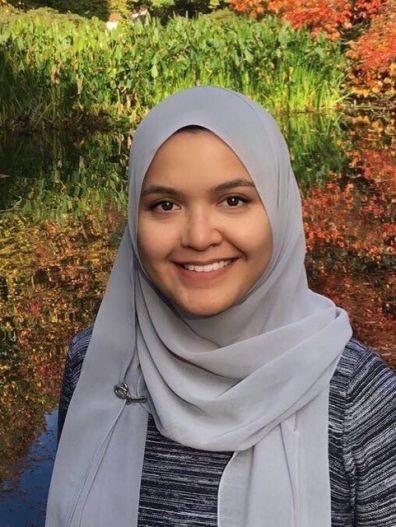
Hanisah Sani, Faculty of Arts and Social Sciences, National University of Singapore
Hanisah Abdullah Sani is a comparative-historical sociologist of empire and state-formation, modernization, and development. Her research lies in the intersection of law and society, religion and politics, and social change; and she specializes in the colonial and modern histories of the Malay world and Southeast Asia. Dr. Sani received her PhD in sociology from the University of Chicago in 2019, and was a Visiting Associate at the Weiser Center for Emerging Democracies at the University of Michigan from 2019-21. She was a National University of Singapore Overseas Graduate Scholar and Overseas Postdoctoral Fellow, where she is currently faculty member in Malay Studies at the Faculty of Arts and Social Sciences.
For questions, please contact seapgatty@cornell.edu.
Gatty Lectures will be held in-person at the Kahin Center, with the option to attend virtually as well. To attend virtually, please register at https://cornell.zoom.us/meeting/register/tJArduyoqzstEtwmPHhgHmsMS1nbIZ….
In accordance with university event guidance, all campus visitors who are 12 years old or older must also present a photo ID, as well as proof of vaccination for COVID-19 or results of a recent negative COVID-19 test. If you are not currently participating in the Cornell campus vaccination/testing program, please bring proof of vaccination or the results of a recent negative test. More information on acceptable documentation is available here.
Additional Information
Program
Einaudi Center for International Studies
Southeast Asia Program
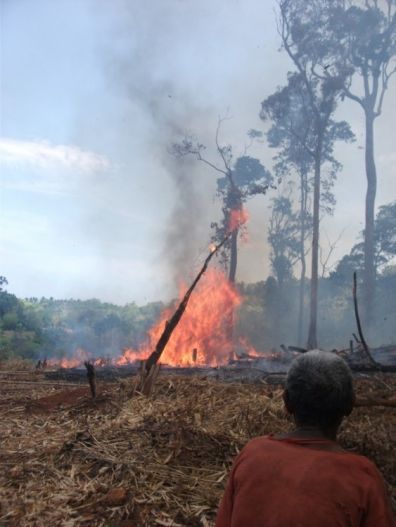
Gatty Lecture Series: Placing Blame: Climate, Culpability and Indigenous Lives in the Philippines
November 4, 2021
12:15 pm
Kahin Center, 640 Stewart Ave
Part of the Ronald and Janette Gatty Lecture Series.
Please note that this talk will not be held in person at the Kahin Center, and will take place on Zoom. Members of the SEAP community are welcome to come to the Kahin Center to watch the Zoom event together.
Will Smith, Alfred Deakin Institute for Globalization and Citizenship, Deakin University, Australia
Will Smith is an anthropologist and human geographer whose research is focused on human-forest interfaces, the social dimensions of agricultural production, and the politics of indigenous knowledge in both Australia and upland Southeast Asia. His current research is focused on the illegal wildlife trade in the Philippines and conservation-based solutions to zoonotic disease emergence.
For questions, please contact seapgatty@cornell.edu.
To attend virtually, please register at https://cornell.zoom.us/meeting/register/tJErcuyvqDwrGdUzm_nO7lx6bSgc3D….
In accordance with university event guidance, all campus visitors who are 12 years old or older must also present a photo ID, as well as proof of vaccination for COVID-19 or results of a recent negative COVID-19 test. If you are not currently participating in the Cornell campus vaccination/testing program, please bring proof of vaccination or the results of a recent negative test. More information on acceptable documentation is available here.
Additional Information
Program
Einaudi Center for International Studies
Southeast Asia Program
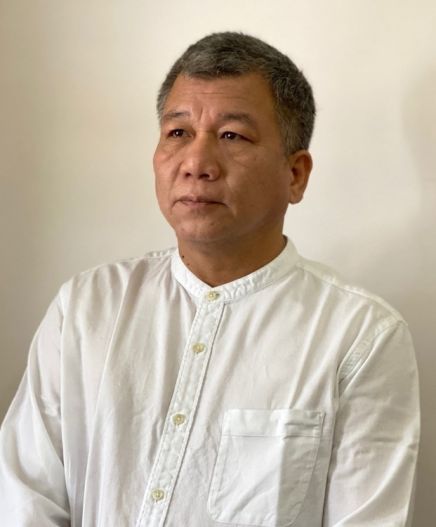
Gatty Lecture Series: Civil-Military Relations in Myanmar's Failing Democratic Transition
October 28, 2021
12:15 pm
Kahin Center, 640 Stewart Ave
Part of the Ronald and Janette Gatty Lecture Series. ***This event is open to current Cornell NetID users only***
Kyaw Yin Hlaing, Center for Diversity and National Harmony
Dr. Kyaw Yin Hlaing is the executive director at the Center for Diversity and National Harmony. He earned M.A. and Ph.D. degrees from Cornell University, and has taught at the City University of Hong Kong and the National University of Singapore. He is a former Advisor to President U Thein Sein, a former member of the National Economic and Social Council, and a former director of the political dialogue program at the Myanmar Peace Center. He has published four edited volumes and more than 50 articles and reports on Myanmar politics and society. His research and teaching interests include state- and nation-building, authoritarian politics, democratization, state-society relations, social movements, communal problems, and peace building. He is currently researching what has gone wrong with Myanmar’s democratic transition.
For questions, please contact seapgatty@cornell.edu.
Gatty Lectures will be held in-person at the Kahin Center, with the option to attend virtually as well. To attend virtually, please register at https://cornell.zoom.us/meeting/register/tJIrcuyrrj0sHNNVeTzq4duFI-pfRm….
In accordance with university event guidance, all campus visitors who are 12 years old or older must also present a photo ID, as well as proof of vaccination for COVID-19 or results of a recent negative COVID-19 test. If you are not currently participating in the Cornell campus vaccination/testing program, please bring proof of vaccination or the results of a recent negative test. More information on acceptable documentation is available here.
Additional Information
Program
Einaudi Center for International Studies
Southeast Asia Program
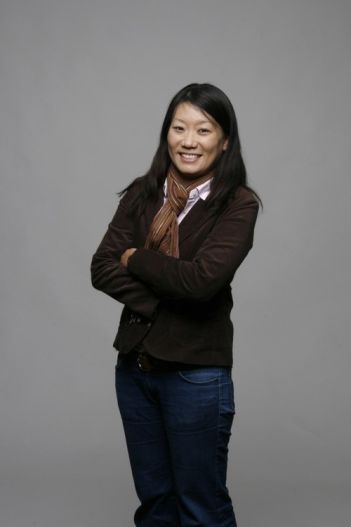
Gatty Lecture Series: Integration, Accommodation, or Conflict: A Framework for Understanding Ethnic Politics in Southeast Asia
October 21, 2021
12:15 pm
Kahin Center, 640 Stewart Ave
Part of the Ronald and Janette Gatty Lecture Series.
Amy Liu, Department of Government, University of Texas at Austin
Amy Liu (PhD Emory University; BA Smith College) is an associate professor in the Government Department and codirector of the Politics of Race and Ethnicity Lab at the University of Texas at Austin. Her research and teaching focus on the intersection of ethnic politics, language politics, and migration politics. Her first book Standardizing Diversity: The Political Economy of Language Regimes (2015, University of Pennsylvania) examines how the recognition of lingua francas can be conducive for economic growth – in Asia generally and in Southeast Asia specifically. Her second book The Language of Political Incorporation: Chinese Migrants in Europe (2021, Temple University Press) looks at the linguistic networks of Chinese migrants and the implications for engagement with local authorities in Europe. She is working on a new book project examining the diversity and representation of government cabinets. Liu is the current chair of the APSA Southeast Asian Politics Research Group, a member of the leadership board for Women in Southeast Asian Social Sciences, and on the advisory council for the Center for Taiwan Studies.
For questions, please contact seapgatty@cornell.edu.
Please note that this talk will not be held in person at the Kahin Center, and will take place on Zoom. Members of the SEAP community are welcome to come to the Kahin Center to watch the Zoom event together. To attend virtually, please register at https://cornell.zoom.us/meeting/register/tJ0qc-qsqT8oGtOd0Kz8y6htLhRZIp….
Additional Information
Program
Einaudi Center for International Studies
Southeast Asia Program
Reppy Institute for Peace and Conflict Studies
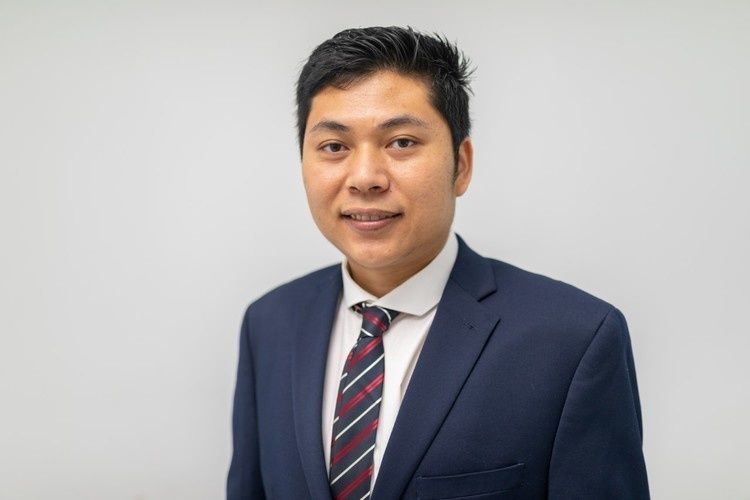
Gatty Lecture Series: What Happened in the Myanmar Election?
October 14, 2021
12:15 pm
Kahin Center, 640 Stewart Ave
Part of the Ronald and Janette Gatty Lecture Series. ***This event is open to current Cornell NetID users only***
Nay Yan Oo, Visiting Scholar, The Southeast Asia Program, Cornell University
Nay Yan Oo is a visiting scholar in the Southeast Asia Program (SEAP) at Cornell University. He previously worked as a technical advisor for the Governance Program at The Asia Foundation in Myanmar, a resident fellow at the Pacific Forum in Hawaii, and a Program Manager at the Friedrich Naumann Foundation for Freedom in Yangon. He ran for the Myanmar parliament in the 2020 election from the People’s Party and exposed several scandals of the National League for Democracy government (2016-20). He has a Master of Public Policy from the University of Oxford and an MA in Political Science from Northern Illinois University. His research interests include the politics of Myanmar, civil-military relations, democratization, civil service reform, and political parties and elections. He is the founder and host of Trends in Myanmar – a political talk show. In Ithaca, he is living with Dr. Rachel Safman’s family (a SEAP alumnus and PhD in Sociology, ’02).
For questions, please contact seapgatty@cornell.edu.
Gatty Lectures will be held in-person at the Kahin Center, with the option to attend virtually as well. To attend virtually, please register at https://cornell.zoom.us/meeting/register/tJMpcuugpjsuGtHBEbUmkZ6me3g9Dl….
Additional Information
Program
Einaudi Center for International Studies
Southeast Asia Program