
Lyric Poetry as State Criticism in Modern Japan
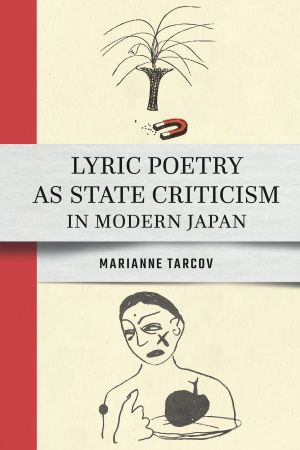
Lyric Poetry as State Criticism in Modern Japan explores how seemingly apolitical verse became a subtle vehicle for political expression under censorship. In an era of intense state control, Japanese poets such as Kitahara Hakushū, Hagiwara Sakutarō, Yonezawa Nobuko, and Ōte Takuji turned to lyric poetry to discuss police censorship and surveillance of modern media, state-sponsored efforts at Western-style modernization, and the policing of gender and sexuality. Marianne Tarcov shows how lyric form, widely perceived as personal and harmless, enabled poets to veil their critique in plain sight.
Through close readings and original translations, Tarcov reframes the role of poetry in twentieth-century Japan. She demonstrates that lyric was not merely an aesthetic retreat; it was a space where public and private, art and politics, could intersect and sometimes clash. Lyric Poetry as State Criticism in Modern Japan reshapes how we understand voice, complicity and critique in repressive regimes. It will speak to anyone interested in literature, media, and the power of quiet dissent.
A fascinating and insightful examination of modern Japanese poetry, this book takes the reader on an informed and informing journey through turbulent Taishō and early Shōwa periods, demonstrating the often-overlooked significance of the modern lyric and its interactions with the shifting political and cultural landscapes of the times.
—Janice Brown, University of Colorado Boulder
Marianne Tarcov reopens new possibilities of reading poems that we used to simply dismiss as either private lyrics or war-crazed propaganda. Her ambitious work will advance the field of modern Japanese poetry studies with its radically new approach.
—Hosea Hirata, Tufts University
Book
29.95
Additional Information
Program
Type
- Book
- Cornell East Asia Series
Publication Details
Publication Year: 2026
Publication Number: 227
ISBN: 9781501786785