
Announcing 2026-27 EAP Fellowship and Grant Recipients

Congratulations to the Awardees!
The East Asia Program is proud to support the research of Cornell students. Learn more about EAP funding.
CV Starr Fellowship

Henry L. Cheng
History
Maoism’s Afterlife: Youth Politics and the Transnational Re-Making of Maoist Politics
My dissertation examines the transnational afterlife of Maoism by asking how a common revolutionary language repeatedly generated radically different political projects across the Pacific world. Rather than treating Maoism as a fixed ideology exported from the People’s Republic of China, it argues that Maoist discourse was continually reassembled through processes of youth politicization, textual circulation, and political reinterpretation as it moved across distinct social and historical contexts. Drawing on archival research, oral history, and digital ethnography, the dissertation follows four interconnected sites: Mao-era China, the Asian American movement in the United States, the Nepali Maoist movement, and contemporary nationalist youth culture in China. Rather than presenting these as parallel case studies, it reconstructs a transpacific historical trajectory in which Maoism repeatedly departed from, transformed beyond, and ultimately returned to China in profoundly altered forms.
Youngdong Cho
Linguistics
Non-canonical questions and speaker bias
Youngdong’s dissertation explores the nature of non-canonical questions and the speaker bias encoded in them. It is commonly assumed that a speaker asks a question out of ignorance, attributing greater epistemic authority to the listener. However, speakers often ask questions while already holding a belief about the answer, conveying what is known as speaker bias, and non-canonical questions frequently carry such bias. Focusing on Korean, Youngdong examines two non-canonical question constructions that have received little scholarly attention. The first involves special uses of wh-expressions (e.g., what, where, which) that convey a speaker’s negative bias, rejecting or challenging what someone has just said. He asks whether this negative flavor is semantically encoded in the expression itself or arises through pragmatic inference in conversation. The second is the echo question, which repeats a preceding utterance to seek clarification rather than to request new information. Youngdong asks whether echo questions can be analyzed as biased questions, in which the speaker flags the preceding utterance as unexpected while leaving open whether they will ultimately reject or embrace it. Although his primary focus is Korean, he extends the investigation to other East Asian languages, where parallel constructions are attested. His work aims to broaden our understanding of question constructions and to show that these marginal-looking cases are not exceptions to be set aside, but a window into how meaning is divided between what words literally encode and what speakers infer from context.

Xinyang Li
History
Feeling Virtue: A Cultural History of Gendered Pain in Late Imperial China (1368-1911)
A Cultural History of Gendered Pain in Late Imperial China studies how physicians, biographers, officials, and sufferers themselves made pain mean something in China between 1368 and 1911, a period in which the intensification of moral discipline coincided with an unprecedented proliferation of medical texts, so that pain was claimed at once by two authoritative discourses, the medical, which sought to explain and relieve it, and the moral, which sought to value it. It asks how late imperial physicians gendered the body not only through reproduction, as the scholarship on gynecology has held, but through pain itself, and whether endurance and susceptibility to suffering were read out of selective interpretations of the medical canon to cast women as an afflicted sex.
It follows what happened when that clinical translation broke down, in the failed treatments, resisted diagnoses, and moments of physician surprise where the suffering body seems to refuse the theory laid over it. It takes up the diagnosis of somatic pain as the material consequence of unruly emotion, above all the gendering of liver constraint, and asks how the same disorder might render a body physically frail in one reading and morally culpable in another. And it turns to the two practices where the virtuous body was made through deliberate harm, flesh-slicing (gegu) and footbinding, to ask why pain might hold the compromise between medical and moral reasoning firm in the first, where agony could become proof of virtue and medicine was made to verify its efficacy, while fracturing that compromise in the second, where different genres seem to demand pain’s visibility in one register and its suppression in another.

Chengxiang Lin
Asian Literature, Religion, and Culture
Chinese Energy: Extraction, Media, and Form, 1949-1989
Chengxiang’s dissertation examines Chinese energy culture during the high socialist era and its aftermath, a period marked by an intensive drive for world-making that demanded the rapid expansion of energy production. Proceeding from the premise that energy constitutes a consequential abstraction traversing both the natural and cultural domains, it explores poetry, fiction, music, painting, performance, and film produced alongside the development of China’s energy industries, including coal, oil, and hydropower. The dissertation treats these cultural works as critical sites for observing the transfer of energy across different domains. In doing so, it attempts to reveal how these works, as media, enact cultural techniques that mediate between humanity and nature, with particular attention to the forms in and through which this mediating process unfolds.
Alice Fung
History of Art and Visual Studies
Modernism as Method: Art and Politics of Postwar Hong Kong (1949-1969)
Alice’s dissertation investigates the cultural development of postwar Hong Kong, tracing how Western modernism was adopted, reshaped, and embedded in the city’s artistic and institutional life. Rather than treating modernism as a purely aesthetic category, her research examines its role within shifting political, cultural, and colonial formations. By positioning Hong Kong as a key site for rethinking the global history of modernism, her project offers a new perspective on postwar Chinese art that moves beyond the conventional emphasis on socialist contexts.
Diverse Knowledge East Asia
Jacqueline Liu
Government
Making and Claiming Home: Desires of Sovereignty in Hong Kong and its US Diasporas
Recent discussions of immigrant political life in the United States highlight the diversity of political worldviews across migrant communities. This dissertation focuses on the Hong Kong diaspora in the United States, examining how Hong Kong immigrants translate political values
across contexts, carrying historically grounded attachments while engaging new institutional, cultural, and political environments. Situating recent migration within longer histories of Chinese migration—from 19-century movements during the Gold Rush to later waves around the 1997 handover—the project traces how experiences of governance, social change, and uncertainty inform aspirations for stability and belonging. Grounded in ethnographic research in the Bay Area and Texas, the dissertation develops an empirically grounded political theory of home and democratic imaginaries. It is attentive to lived experience, and highlights how memories of past events, everyday practices of homemaking, and encounters with new social and political norms shape how democracy is understood, practiced, and reimagined across contexts.

Rosie Nguyen
Communication
From Invisible Work to Silent Labor: Literary Production in Vietnam’s Publishing Industry
My dissertation project explores the experiences of Vietnamese book authors working within an increasingly platformized creative industry, in the context of rising digital authoritarianism and platform colonialism. Specifically, I explore how authors navigate three interrelated tensions: creativity and commerce (market demands and platform logics), creativity and control (state regulation), and creativity and culture (sociocultural norms and historical specificity). Drawing on the framework of “the unspoken” from literary studies, the project analyzes the silent dimensions of literary labor. Using an innovative approach that combines practice-based and participatory methods, the project creates a co-creative space with authors to investigate how silence operates within the writing process. Based on this empirical work, I aim to propose a theoretical shift to rethink creative labor in the Global South, moving from invisible work to silent labor. By centering Vietnamese literary labor as a site where platform capitalism, authoritarian governance, and sociocultural specificities converge, this dissertation project examines how creative autonomy is negotiated within multilayered regimes of power often obscured in Global North analyses of cultural labor.
Hu Shih Fellowship

Yidan Wang
Comparative Literature
Postsocialist Zoology: Speculative Animals and Unregistered Affects in Contemporary China
This project examines a growing body of cultural works in which animals appear as elusive and impossible beings. These representations depart from socialist paradigms of mastery and utility, giving rise instead to a zoological imagination marked by ambiguity, excess, and affective disturbance. By tracing these speculative forms-of-life, the project advances three interconnected arguments at the intersection of posthumanism and postsocialism. First, speculative animal life serves as a lens for probing the unsayable in contemporary China, especially affects suppressed by censorship or sentiments not yet named, functioning as a political gesture of divergence from dominant ideologies and a subtle resistance against existing biopolitical frames. Reading these figures sheds light on the hidden dimensions of China’s postsocialism today, revealing its contested appeals, hopes, and frustrations. Second, taking speculative lives seriously requires bringing posthumanism and biopolitics into dialogue. Biopolitics has largely ignored the regulation of nonhuman life, while posthumanist scholarship has tended to avoid biopolitical frameworks. Situated in postsocialist China, speculative animals expose the limits of both: they disturb the animacy hierarchy from humans to nonhuman animals to nonliving beings, and their nonexistent existence resists the classificatory logics that both fields have left unexamined. Third, posthumanism is not a universal method but must be theorized in concrete historical and political contexts. China’s engagement with humanism—from Confucian traditions through Republican-era debates, Maoist reformulations, and post-1980s liberal revivals—does not share the same genealogy as Western (post)humanism, nor does it need to be routed through cybernetics or poststructuralism. Rather, it emerges from a specific intersection of these intellectual currents with China’s own political legacies. I call this formation postsocialist posthumanism.

Lisa Zhao
Linguistics
Mandarin Tone Production in Noise: Effects of Auditory Feedback Availability Across Native, Heritage, and English L2 Speakers
Speech production relies on the dynamic interplay between feedforward motor plans—internally generated motor commands that guide speech movements based on previously learned sensorimotor mappings—and auditory feedback, the process of monitoring one's own speech sounds to detect and correct errors during production. However, how these two control systems interact in tonal languages and across speakers with different language experiences remains poorly understood. This project investigates how degraded auditory feedback affects Mandarin tone production and how reliance on feedback is shaped by speakers’ language backgrounds, focusing on native, heritage, and second-language learners. While prior research shows that disrupting auditory feedback affects L2 speech more than native speech, most evidence comes from Western and non-tonal languages and rarely considers heritage speakers, whose early but variable exposure may yield distinct speech motor control strategies. Through controlled acoustic and articulatory experiments, this study examines Mandarin tone production under normal and noise-masked feedback. By combining these manipulations with detailed language background questionnaires and fluency assessments, the project moves beyond categorical group comparisons to model how individual experience predicts sensitivity to feedback disruption. The findings will advance theoretical accounts of motor control in tonal production, fill critical gaps in heritage language research, and generate empirically grounded insights for Mandarin pedagogy, particularly in heritage language education contexts.
Lee Teng Hui Fellowship
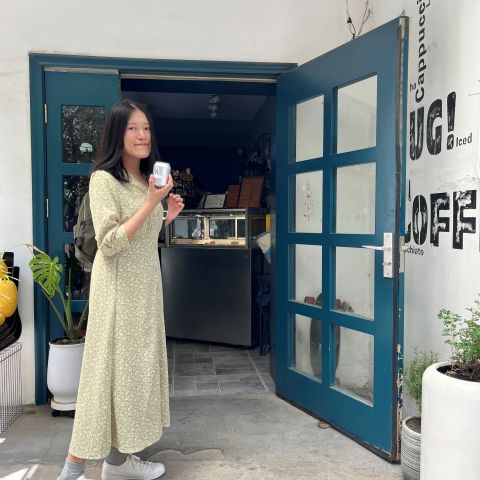
Hanna Lin
Government
Rethinking Racial Capitalism with the (Re)Emergence of Global China
Hanna Lin is a PhD candidate in the Department of Government at Cornell University whose research focuses on the relationships among racism, capitalism, colonialism, and imperialism, with a particular emphasis on (Global) China studies. She is currently working on a dissertation project that examines racialized capitalist social relations from within the borders of the Chinese state to its global reach. Specifically, her research aims to theorize the following three interrelated sets of relationship: fragmented relationships within the seemingly homogeneous Han Chinese population, the racialized relationships between Han and non-Han populations, and the racialized relationships between the so-called Chinese minzu and non-Chinese populations. This project aims to deprovincialize race theory and contribute to anti-racist scholarship by revealing forms of racialized domination beyond conventional Western frameworks, while remaining attentive to historical specificity and material relations of power. Specifically, it argues that China’s rise has complicated the global color line in the Du Boisian sense. It suggests that the global racial order cannot be understood as white supremacy in a pure sense, and that describing it as such risks obscuring existing and emerging racial formations from within material relationships that do not conform to the black(nonwhite)-and-white binary.
Robert J. Smith Fellowship
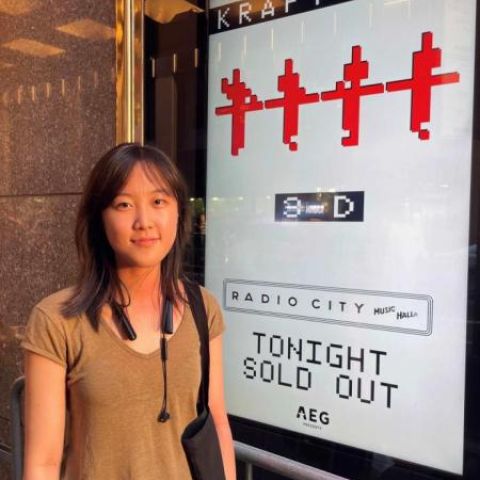
Zoe Li
Romance Studies
Ishikawa Takuboku, Language, and Socialism in Late Meiji Japan
My research project examines how Ishikawa Takuboku’s varied forms of intellectual labor, including his work as a poet, literary critic, secondary-school teacher, journalist, and proofreader, shaped his engagement with socialism in late Meiji Japan. Drawing on Takuboku’s poetry, essays, diaries, and newspaper work, the project asks how socialisitic thought became legible in writing when direct political declaration was increasingly constrained. It places Takuboku’s literary practice in dialogue with three interconnected transformations around 1910: the consolidation of genbun itchi language reform, Japan’s annexation of Korea, and the suppression of socialist and anarchist movements following the High Treason Incident. The project argues that Takuboku did not approach socialism primarily as a coherent doctrine or party affiliation, but instead registered it as a form of necessity produced through economic precarity, imperial expansion, and political repression. By examining how Takuboku treated language as both a linguistic structure and a poetic medium, the project shows how he transformed the social contradictions of Meiji modernity into a literary problem of responsibility.

Andrea Mariucci
Asian Literature, Religion, and Culture
Collective engineering and public experiments
My research project aims at exploring objects and practices involved in unofficial, amateur, or otherwise undercodified technical experimentation in Japan. In particular, I put in dialogue the entangled histories of radio, television, and home computing from the 1950s to the 1980s with playful nation-wide experiments involving communication infrastructure from the 1990s, and contemporary art projects that have been active since the mid-1990s.
All of these events, objects, and histories participate in an imaginary informed by a strong domestic electronics manufacturing industry coexisting with circles of tinkerers and hobbyists. Rather than considering them simply as an emergent historical constellation, however, I prefer to focus on their potential to offer a better understanding of our relationship with technology. Televisions built in the absence of broadcasting, or imported computers modified and torn apart paint pictures of unstable presents and uncertain futures. Through this lens, I aim to examine what a relationship with technology built around suspension, failure, and uncertainty looks like.
The funding from the East Asia Program will enable me to continue my research in Japan, which until now has involved active collaboration with local preservationists and communities of experts, both professional and amateur, unearthing archives of print materials and collecting oral testimonies that have so far received little academic attention.

Amy Wei
Asian Literature, Religion, and Culture
Cripping Cartographies: Reading for Alternative Orthographies of "Time" in Japanese Literature
My dissertation project examines modern and contemporary Japanese fiction and poetry as critical sites for the assertion of crip potentiality and crip futurity. As part of a growing movement that responds to Chris Bell’s (2006) charge of a “white disability studies,” my work offers a series of cripped counter-cartographies of Japanese literary movements that historicize and relativize imaginations of crip modalities and crip radicality differently embodied and enacted under different conditions of possibility. Applying a cripped imagination as a critical hermeneutic practice in attending to the myriad dialectical spaces shaped by the (non)presencing of disability in both narrative and discursive spaces, I explore and (re)animate what I call “alternative orthographies of ‘time’” across the literary landscapes of 20th- and 21st-century Japan, from the modernist poetry of Sagawa Chika and the environmental writing of Ishimure Michiko to Matsuura Rieko’s queer fiction and the speculative post-disaster narratives of Tawada Yōko, Kawakami Hiromi, and Murata Sayaka. Doing so, I contend, allows us to not only challenge existing epistemological paradigms surrounding disability but also (re)imagine possibilities for disabled and cripped relationalities, kinships, and care.
Language Study Grants
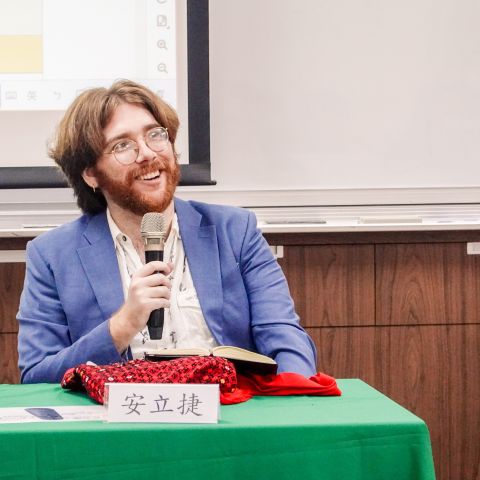
Drake Avila
Asian Studies
Thanks to EAP's generous support, I have been able to attend 5th year Chinese courses at the International Chinese Language Program hosted by National Taiwan University. My teachers have offered fascinating perspectives on Taiwanese society that have been just as, if not more, informative than our textbooks.
Outside of the classroom, I've appreciated going on day trips with an elderly Taiwanese couple and chatting with the owner of a hole-in-the wall coffee shop. Thanks to them and my teachers I feel like I have more questions to ask when reading international headlines that overly focus on Taiwan's technology and geopolitics.
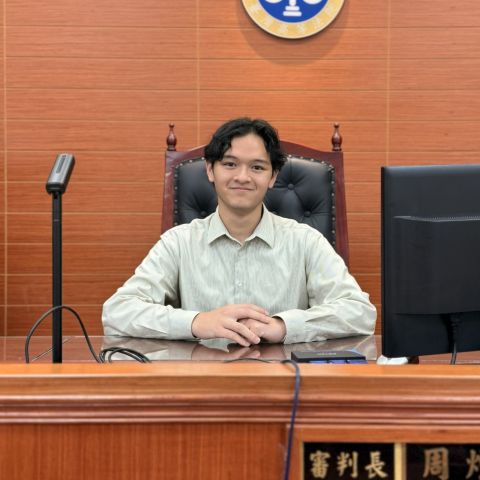
Putera Haziman Hamidan
Asian Studies
With the support of the EAP Language Study Grant, Putera is spending time in the International Chinese Language Program at National Taiwan University (ICLP-NTU) to bridge into advanced Mandarin through intensive coursework focused on Chinese culture and history, business and commerce, as well as contemporary media. In order to better understand local society, Putera has also volunteered at a local middle school, attended a High Court excursion, and visited tea factories and historical sites. In addition to Mandarin, Putera also engages with Taiwan’s rich linguistic landscape, including Taiwanese Hokkien, Hakka, and Indigenous languages.
Putera will also be attending CET Shanghai at Donghua University, where he will focus on how language is used across different Sinophone contexts, particularly in relation to identity, regional variation, and everyday professional communication. By examining digital platforms such as QR-based payment systems, WeChat, and Alibaba, he aims to better understand how culture influences economic behaviour. Overall, through this experience, Putera seeks to develop a deeper understanding of the role of Mandarin in China-ASEAN business, cross-cultural engagement, and identity unification. He hopes to bring these insights back to Malaysia and better connect with the Chinese diaspora, while gaining a deeper understanding of the roles of assimilation and economic participation.
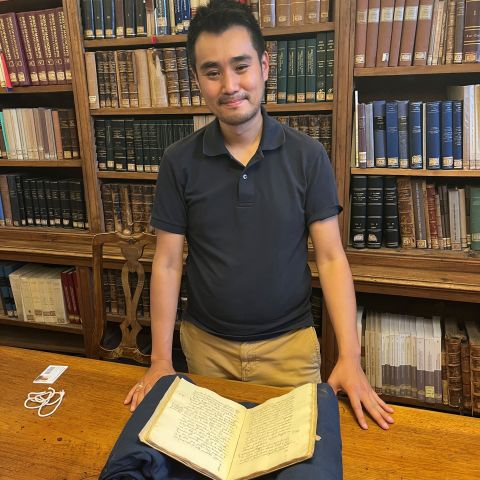
Addi Liu
Music and Sound Studies
Addi Liu spent his summer in Venice attending the Ca’ Foscari–Princeton Summer School in Classical Chinese at the Università Ca' Foscari and conducting archival research at the Biblioteca della Fondazione Ugo e Olga Levi and Biblioteca Nazionale Marciana. His dissertation broadly examines the circulation of music theory through hand diagrams and hand mnemonics between China and Europe. In particular, he traces a genealogy of an Iberian "looping" Guidonian hand in which one was transmitted from Portugal to China via the seventeenth-century Portuguese Jesuit Tomás Pereira (Xu Risheng 徐日昇). The dissertation asks to what extent does the hand serve as an instrument of its own right, and how much of the experiential knowledge was left unarticulated in the textual transmission of one of the music textbooks (Lülü zuanyao 律呂纂要) created for the Kangxi Emperor's music lessons.

Chunhao Luo
History
This summer I studied the Sino-Nom script of Vietnamese at the University of Social Sciences and Humanities in Hanoi, Vietnam. Through the lens of medical history, my research aims to historicize how the category of “the south” developed and evolved in early modern China and Vietnam to demarcate medical, ethnic, and political differences. I will investigate how medical traditions constituted ethnic demarcation and facilitated the state building of both Chinese and Vietnamese empires. This project requires the reading knowledge of the Sino-Nom script, a combination of Sinography and characters denoting the vernacular Vietnamese. Thanks to the crucial support of the East Asia Program, I was able to improve my reading skill in this script.

Ruiying Zhang
Asian Literature, Religion, and Culture
The EAP Language Study Grant supported my Japanese language learning this summer. From June to August, I took daily private lessons offered by the Naganuma School, with three instructors focusing on academic reading, writing, and daily communication.
My research examines the technopolitics of automation in China, with a focus on Sino-Japanese technological exchanges, including Japanese exhibitions in China, Chinese investigation tours in Japan, and the informal circulation of technical objects and technological knowledge. The private lessons enhanced my ability to read Japanese primary sources, particularly postwar technical reports and product manuals, and prepared me for archival work in Japan.
Travel Grants
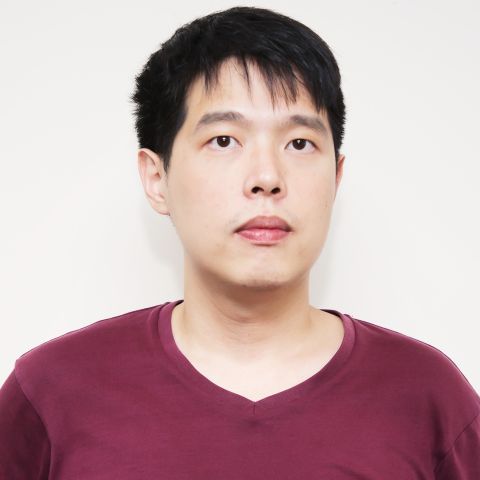
Kuan-Ting Chen
Cornell Law School
The Trap of Alienability: How Property Law Undermines Indigenous Land Rights in Taiwan
Can an Indigenous land policy that restricts title transfer effectively withstand the structural pressures of a property system built on a preference for alienability? This research identifies a trap of alienability in property law, where the internal logic of property law reconstructs and transfers functional control over land despite formal transfer restrictions. Focusing on Taiwan’s Indigenous reserved land policy, this research demonstrates how a strategic combination of mortgages and leases—termed synthetic alienation—is used to capture essential sticks of ownership while leaving formal titles intact. Furthermore, this research employs Lee Fennell’s Property-as-Service-Streams (PASS) framework to diagnose why this trap persists, emphasizing Indigenous landowners’ “land-rich-but-service-poor” situation. By focusing narrowly on “thing-ownership” while restricting access to conventional credit, the current land policy creates an asymmetric incentive structure that renders resource-poor Indigenous landowners highly vulnerable to this trap. This reliance on individualized ownership further exacerbates vulnerability, leading to land fragmentation that exposes Indigenous owners to “divide-and-acquire” strategies

Xinghan Chen
City & Regional Planning
Urban renewal is widely promoted as a means to improve environmental quality and urban livability, yet how these transformations are experienced by different social groups remains insufficiently understood. This project examines group-based differences in the perception of renewed urban spaces across three Chinese megacities—Shanghai, Hangzhou, and Beijing. It draws primarily on field-based, semi-structured surveys to investigate variations in belonging, everyday use, cultural identification, and other key dimensions of urban experience among residents with different hukou and migration backgrounds, educational attainment, age, gender, and socioeconomic characteristics. Supplementary in-depth interviews provide additional context for interpreting these patterns. The project also incorporates street-level imagery and geotagged social media commentary to compare perceptions expressed in situ with those reflected in visual representations and online discourse. By combining field-based evidence with widely used digital data sources, the project seeks to advance a more socially grounded understanding of urban renewal and to inform more inclusive approaches to the planning and evaluation of rapidly transforming cities.
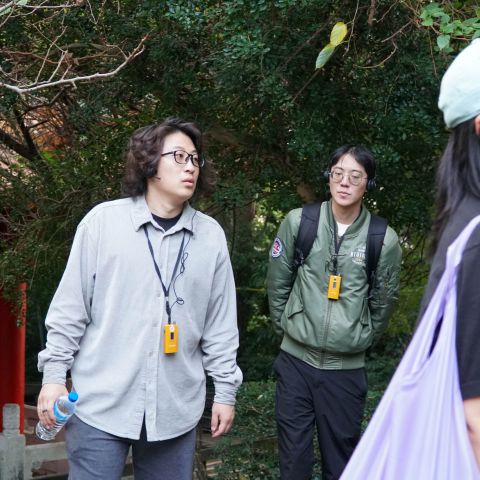
Kevin Dong
Asian Literature, Religion, and Culture
Precarious Norms, Curious Forms: Everyday Contact Zones in the Japanese Colonial Empires
Dong's project examines everyday practices in the inter-racial contact zones of the Japanese colonial empire through certain patterns in people’s social exchanges and the imbrication of these patterns appearing in the form of precarity and curiosity. Contact zones are bordering places that connect different racial residential areas; they are designed, disciplined, hierarchical social spaces under imperial rules in Manchuria and Taiwan. This study emphasizes precarity and curiosity in the phenomenological encounters in contact zones: some give rise to incentives in agricultural statistics, literary debates, and ethnomusicological trips, while others embody the impasse in inter-racial understandings and capture the rational and affective dimensions of unknowing. It argues for a formalistic perspective—from literary forms to patterns in social orders—in colonial everyday experience that renders visible a critical pre-stage before knowledge-making and helps explain the inevitable failure of the empire.
Alice Fung
History of Art and Visual Studies
See abstract above.
Xinyang Li
History
See abstract above.
Jacqueline Liu
Government
See abstract above.
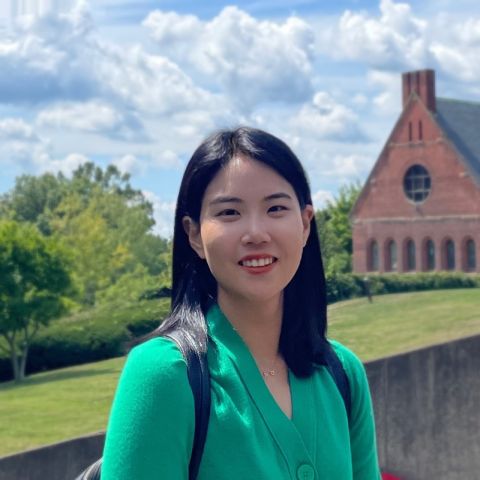
Su-Yeon Seo
Asian Literature, Religion, and Culture
Su-Yeon’s project examines how literary form reshaped the procedures through which knowledge became credible in eighteenth- and nineteenth-century China and Korea. Focusing on Chinese novels with encyclopedic characteristics and their Korean counterparts, including critiques, translations, and adaptations, it investigates how fiction transformed scholarly practices of verification into narrative processes. Developing the concept of “literary empiricism,” the project situates fiction within historically specific practices that determined what counted as reliable information and valid knowledge. By tracing the movement of such forms and practices across China and Korea, the project also considers how different literary and intellectual contexts reshaped the epistemic possibilities of the novel. In doing so, it reconceives literary narrative as an active participant in the making of knowledge and rethinks the boundary between the literary and the epistemic in Qing China and Chosŏn Korea.
Yidan Wang
Comparative Literature
See abstract above.

Yumeng Zhang
Asian Literature, Religion, and Culture
Existing scholarship on medieval Chinese religion has often emphasized elite discourse, institutional traditions, and official attempts to regulate local practices. Yet these perspectives leave unexplained how local communities continued to sustain and reshape religious traditions beyond orthodox frameworks. I argue that material and performative sources provide an alternative archive for reconstructing these vernacular ritual worlds. Tombs, shrines, festivals, ritual texts, images, and oral traditions reveal how ordinary households and local communities negotiated social aspirations, family continuity, and relationships with divine and ancestral powers. Focusing on the tenth to the fourteenth century, spanning the Song (960–1279), Jin (1115–1234), and Yuan (1271–1368) dynasties, my dissertation demonstrates that local ritual practices and religious registers persisted through adaptation rather than disappearance, even when officials labeled certain rites as “superstition” or “heterodoxy.” These evolving traditions, often transmitted through non-textual practices and community performances, sustained local beliefs concerning fertility, death, gender, and communal belonging beyond the boundaries of elite historiography.