
Development, Law, and Economics
100 Years of Economic Development Conference

September 17, 2022
12:00 am
Cornell University
View and download the final conference program here.
After some stops and starts due to the pandemic, 100 Years of Economic Development will be held at Cornell University in Ithaca, NY, from September 15-17.
From the end of World War I to now, it has been a tumultuous 100 years, during which a host of newly-independent nations began to chart out their own policies, often guided by the emerging discipline of development economics. It is a century that straddled the Great Depression and the Great Recession, witnessed rapid globalization with the creation of multilateral organizations, and attempts at global coordination of policy.
Recent decades have seen major breakthroughs in digital technology, and the rise of Big Tech, compelling us to rethink the foundations of economics and the nature of regulation. These changes have occurred alongside a reckless exploitation of the environment, which has cast a shadow over human sustainability. There is a scramble now, aided by the jolt received from the COVID-19 pandemic reminding us of the urgency of reform, to rectify some of this damage.
This conference is an occasion for a stocktaking of economics and economic policymaking. There will be a combination of plenary panels and keynote addresses, with papers from economists and social scientists from around the world, including developing economies.
We expect the conference to result in several published works. The Journal of Economic Behavior and Organization, and the new journal, Oxford Open Economics, have agreed to publish proceedings based on this conference.
Kaushik Basu
Professor of Economics and Carl Marks Professor of International Studies, Department of Economics and SC Johnson College of Business, Cornell University
Administrative Manager: Rick Lee (rick.lee@cornell.edu), Einaudi Center
Advisory Committee: Chris Barrett, Panle Barwick, Arnab Basu, Michele Belot, Nancy Chau, Amrita Dhillon, Brian Dillon, Robert Hockett, Suraj Malladi, Anandi Mani, Ugo Panizza, Sudipta Sarangi
The event is cosponsored by Cornell's Department of Economics (Arts & Sciences) and the Mario Einaudi Center for International Studies.
Additional Information
Program
Einaudi Center for International Studies
South Asia Program
4 Places That Could Be Trouble if the Economy Goes South

Eswar Prasad, SAP
It’s a time of great peril, says Cornell economics professor Eswar Prasad. Though he doesn’t see cascading crises at this stage, Prasad says countries with high levels of foreign currency debt, economic and political challenges are vulnerable as global financial conditions tighten.
Additional Information
IAD Fall 2022 Conference
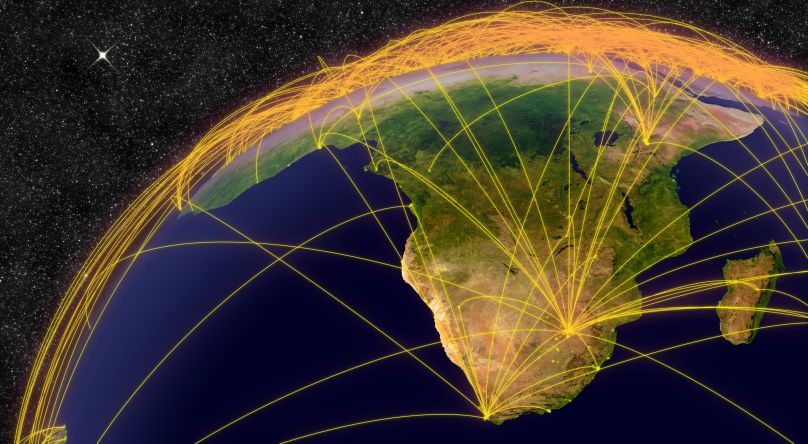
Digitalization in Africa: Impetus for Innovations and Development
The Institute for African Development is pleased to announce the theme of its upcoming fall conference, DIGITALIZATION in AFRICA: IMPETUS FOR INNOVATIONS AND DEVELOPMENT.
The conference will be held on October 28-29, 2022 (Ithaca, NY) USA
Hybrid mode / in-person at Cornell
The conference will focus on the digital era as an entrepreneurial transformative prototype in Africa. Other aspects of the conference will focus on the channels utilized by Africans while navigating digital instruments, developing well-thought programs and technological innovations. Although technology is easily transferred, the context of the beneficiary nation or community has to take into account optimal application. Africans are applying technology to open all possibilities and devising ways to promote the eradication of poverty. This conference will pivot on digital trajectories and projection into the future beyond the 21st century, exhibiting African innovative competence in the digital era as part of the most critical areas of a holistic organization towards thorough and more broadly social progress.
Africa has experienced a digital revolution giving rise to infinite opportunities, empowering a myriad of ordinary people to venture into the technology domain, who would have otherwise been left out. The new reality is that global economies are moving towards digitization in all aspects of daily life. The power of digital technology is captivating, promising, and salient. Digital technologies are not alien to Africa and African perspectives are shifting, influenced by the dynamic economic, political, and social landscape. The digitization platform stands unshakable and this was more evident during the COVID-19 pandemic.
Abstracts should meet the standard of original scholarly research, and commentary. Abstracts will be reviewed through a double-blind process of peer review. References, tables, charts, graphs, images, and figures and any illustrations should not be considered as part of the word count and are to be added at the end of the text. Abstracts should not contain any information that might identify the author(s). A short biography (maximum 50 words), indicating the full name, institutional affiliation, and email address should be sent as a separate accompanying document.
We invite submissions that represent an original study (not previously published) that deal with digital technologies in Africa. Submissions must include an abstract consisting of 800 (minimum) - 1000 (maximum) words. All manuscripts should focus on one of the four identified sub-themes:
(i) Africa and Digital Economies: Digital economy is the new marketplace and modern-day economics. Cashless economies are on the rise, mobile technologies like M-pesa and Bitpesa are impacting transactions across the continent and the world. How is digitalization factored in innovations, entrepreneurship, local and global trade? How have the different sectors of the economy, including agriculture, responded to the digital reality?
(ii) Digitalization and Political spaces: The political landscape has drastically changed due to digital technologies especially with information, social media, and voting rights. How are technologies being enhanced to writing better laws and policies in communities, and fostering new ways of thinking?
(iii) Digitalization and Education: The education landscape previously characterized by the traditional brick & mortar only classroom model has been pressed to acknowledge the need to move to a mix of technology within the traditional teaching and learning context and an all-borderless space utilizing technology. How has the digital reality impacted education spaces, considering the different levels, from elementary school to higher education in general and specifically the universities? What are the implications of the digital expansion on the production of knowledge?
(iv) Digitalization and Medicine: The development of Africa’s digital health sector has been intensified by the need for improved and innovative health services. Countries like Rwanda with its drone-delivered medicine and South Africa’s machine-dispensed medication are leading the way in Africa. On the whole, telemedicine possibilities must cater to people irrespective of where they live and their socio-economic status. Contemporary and innovative medical technology is fundamental to enhancing and transforming the health landscape on the continent.
(v) Digitalization and Religion: Religion as a social institution occupies a wide physical and social space that impacts development programs in Africa. How have religious organizations responded to this digital emergence? How have practices of different religions that required in person participation adapted in response to the digital occurrence?
Additional Information
U.S. and Taiwan Hold First Round of Trade Talks in New Bid to Counter China’s Economic Influence

Allen Carlson, CMSP/EAP/SAP
Allen Carlson, director of Cornell University’s China and Asia-Pacific Studies program, comments on U.S.-China relations.
Additional Information
How Economic Sanctions Shaped Today's Global Powers

Nicholas Mulder, IES
Nicholas Mulder, assistant professor of history, discusses how economic sanctions throughout history have shaped global powers.
Additional Information
Fearful of Getting Cut Off, China Pushes for Self-Reliance

Eswar Prasad, SAP
“One lesson that China is probably taking from the fallout is it remains vulnerable to financial, economic and technological sanctions,” says Eswar Prasad, professor of international trade policy and economics.
Additional Information
Migrations grants fund world-wide interdisciplinary projects
Tristan Ivory, Kristin Roebuck, Chantal Thomas

"This is really an opportunity to break out of our academic silos and learn from one another," said Kristin Roebuck, assistant professor of history and Howard Milstein Faculty Fellow in A&S.
Roebuck’s work represents the historical piece of the laboratory, which also includes contemporary perspectives on law and labor relations from partners Chantal Thomas, associate dean for academic affairs and Radice Family Professor of Law in Cornell Law School, and Tristan Ivory, assistant professor of international and comparative labor in ILR. Roebuck and Ivory are EAP core faculty members.
Additional Information
Fearful of Getting Cut Off, China Pushes for Self-Reliance

Eswar Prasad, SAP
“One lesson that China is probably taking from the fallout is it remains vulnerable to financial, economic and technological sanctions,” says Eswar Prasad, professor of international trade policy and economics.
Additional Information
Winter Session 2023: CU in Cambodia
Take the preparatory course this fall!
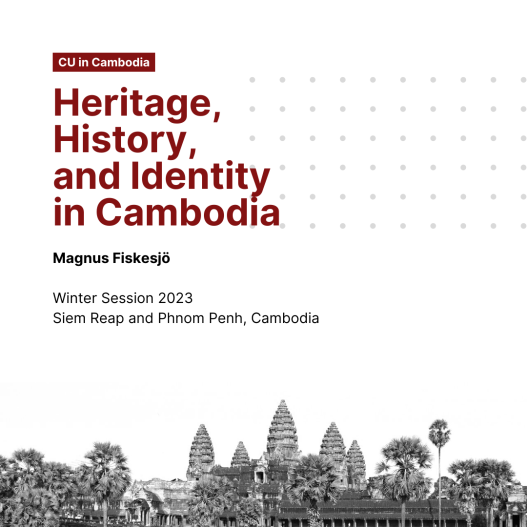
Heritage, History, and Identity in Cambodia
Winter Session 2023
Siem Reap and Phnom Penh, Cambodia
This winter session 3-credit course on site in Cambodia will focus on Cambodian heritage past and present — both how it's been created in the past, including the city of Angkor, and how that heritage and Cambodian history is understood and engaged today. There will be lectures, including by Cambodian guest lecturers, as well as film showings. Importantly, to explore these questions, we will visit historical sites as well as museums and other relevant sites, including performances, where history is remembered and engaged. The course will be based in Siem Reap, in collaboration with the Center for Khmer Studies there, and there will also be excursions to Phnom Penh, the capital.
Cornell students who have taken 3+ credits of SEA courses are eligible for funding from SEAP.
This 3-credit course will be held in Cambodia.
To prepare for CU in Cambodia, students should plan to take KHMER 1100 “Elements of Khmer Language and Culture” this fall with Hannah Phan. The course will introduce basic Khmer/Cambodian language and culture to anyone with interest in the subject matter, those planning to travel to Cambodia, heritage students, etc.
Email cu-in-cambodia@cornell.edu to receive updates and information on how to apply.
Additional Information
"Memories of Underdevelopment" (Cuba)

Latin American and Caribbean Studies (LACS) Film Series
THURS, APRIL 28 | 6:00PM | G64 Goldwin Smith Hall, Kaufmann Auditorium
Open to members of the Cornell community only.
Memories of Underdevelopment (Cuba), LACS Film Series
In the aftermath of the Bay of Pigs Invasion, Sergio (Sergio Corrieri), an affluent writer, chooses to stay behind in Cuba while his wife and family escape to neighboring Miami. Sergio is pessimistic about the revolution's promise to bring sweeping change to his country, and he squanders his days prowling the streets of Havana looking for female companionship. Trouble erupts when his fling with chaste Elena (Daysi Granados) nearly ruins him after her family accuses Sergio of rape.