East Asia Program
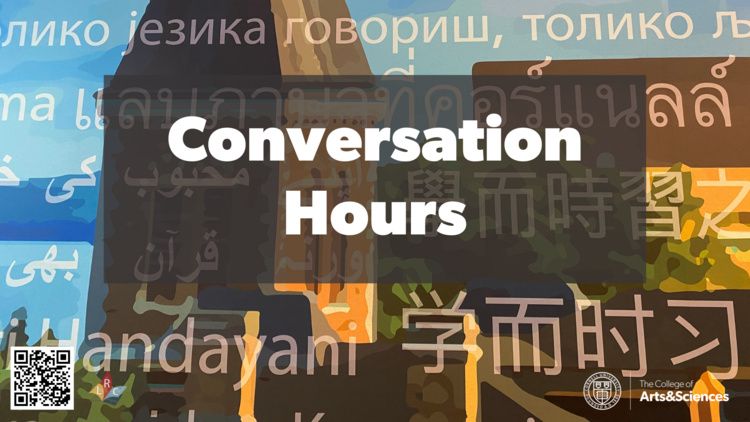
Mandarin Conversation Hour
December 3, 2025
3:30 pm
420 College Ave, Ithaca, NY 14850
Come to CTB to practice your language skills and meet new people. Conversation Hours provide an opportunity to use the target language in an informal, low-pressure atmosphere. Have fun practicing a language you are learning! Gain confidence through experience! Just using your new language skills helps you learn more than you might think. Conversation Hours are open to any learner, including the public.
Additional Information
Program
East Asia Program
Research at Risk: Cultural and Language Fluency
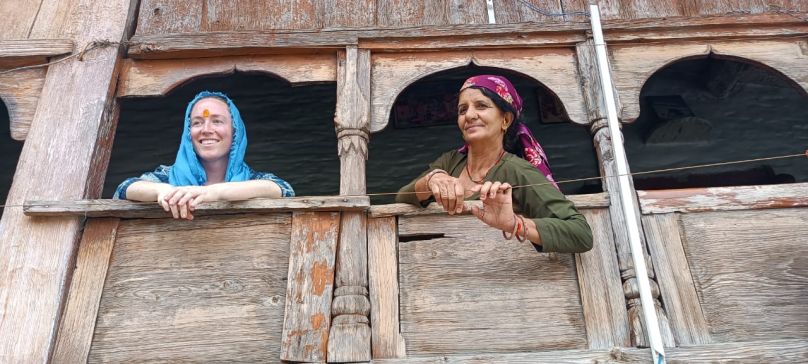
SEAP and SAP lose funding, seek solutions
The federal government has announced the end of National Resource Center and FLAS funding, which have supported area studies training for decades.
Additional Information
Faculty Research Seed Grants: Global Hubs Info Session
October 1, 2025
12:00 pm
Join this info session to learn about 2026 Global Hubs Faculty Research Seed Grants offered by Global Cornell as part of our Global Hubs initiative. Info session attendees will learn about the grant opportunity and application tips through a short presentation and Q&A.
Through these seed grants, Cornell faculty from across the university are invited to apply for research funds to work with collaborators at Hubs partner institutions. Funded projects should lead to tangible outcomes, including the submission of at least one co-authored peer-reviewed publication and at least one application for external grant funding.
Up to 20 applications for research with a Global Hubs collaborator will be funded.
Successful proposals will receive up to $5,000 from Cornell, with the potential for matching funds from some Global Hubs partner universities.
Application deadline: October 15, 2025, 4:00 p.m. ET
Project duration: January 1–December 31, 2026
Virtual information sessions:
September 18, 2025, 12:00–1:00 p.m. ET (register)
October 1, 2025, 12:00–1:00 p.m. ET (register)
Learn more and apply for a Global Hubs joint seed grant.
Additional Information
Program
Einaudi Center for International Studies
Latin American and Caribbean Studies
Reppy Institute for Peace and Conflict Studies
East Asia Program
Southeast Asia Program
Institute for African Development
Institute for European Studies
South Asia Program
Migrations Program
Southwest Asia and North Africa Program
Faculty Research Seed Grants: Global Hubs Info Session
September 18, 2025
12:00 pm
Join this info session to learn about 2026 Global Hubs Faculty Research Seed Grants offered by Global Cornell as part of our Global Hubs initiative. Info session attendees will learn about the grant opportunity and application tips through a short presentation and Q&A.
Through these seed grants, Cornell faculty from across the university are invited to apply for research funds to work with collaborators at Hubs partner institutions. Funded projects should lead to tangible outcomes, including the submission of at least one co-authored peer-reviewed publication and at least one application for external grant funding.
Up to 20 applications for research with a Global Hubs collaborator will be funded.
Successful proposals will receive up to $5,000 from Cornell, with the potential for matching funds from some Global Hubs partner universities.
Application deadline: October 15, 2025, 4:00 p.m. ET
Project duration: January 1–December 31, 2026
Virtual information sessions:
September 18, 2025, 12:00–1:00 p.m. ET (register)
October 1, 2025, 12:00–1:00 p.m. ET (register)
Learn more and apply for a Global Hubs joint seed grant.
Additional Information
Program
Einaudi Center for International Studies
Latin American and Caribbean Studies
Reppy Institute for Peace and Conflict Studies
East Asia Program
Southeast Asia Program
Institute for African Development
Institute for European Studies
South Asia Program
Migrations Program
Southwest Asia and North Africa Program
Einaudi Welcomes SWANA Program

Four New Program Directors
We welcome the Einaudi Center's new Southwest Asia and North Africa Program and four new program directors this fall.
We're excited to introduce the Southwest Asia and North Africa Program! SWANA is Einaudi's new hub for research, learning, and engagement with the cultures and peoples of the vast geographical region stretching from Morocco in the west to Iran in the east.

SWANA gathers expertise and perspectives from across Cornell's colleges and schools under the leadership of the program's inaugural director, Seema Golestaneh. Golestaneh is an associate professor of Near Eastern studies in the College of Arts and Sciences (A&S). Her research focuses on contemporary Islamic thought in the Persian-speaking world.
“We approach the Middle East as a region of complex engagements, shifting boundaries, and shared histories.”
Golestaneh looks forward to partnering with communities in the SWANA region and scholars around the world, she said, noting plans this year to “further develop our burgeoning relationship with the American University in Cairo.”
Extending beyond the Middle East, Southwest Asia and North Africa is a place-based description that highlights geographical and cultural inclusion. Golestaneh hopes SWANA will embody that spirit on campus by serving as a social and intellectual home for Cornell's diverse community of researchers and students.
“This year we'll host interdisciplinary scholars whose work represents the cutting edge of the field,” she said. “We are particularly excited about the graduate student conference we have scheduled for spring 2026.”
SWANA premiered as an initiative through a cosponsored speaker series last spring. Don't miss its first event as an Einaudi program: a lecture by Islamic art historian Margaret Graves on September 25.
New Program Directors
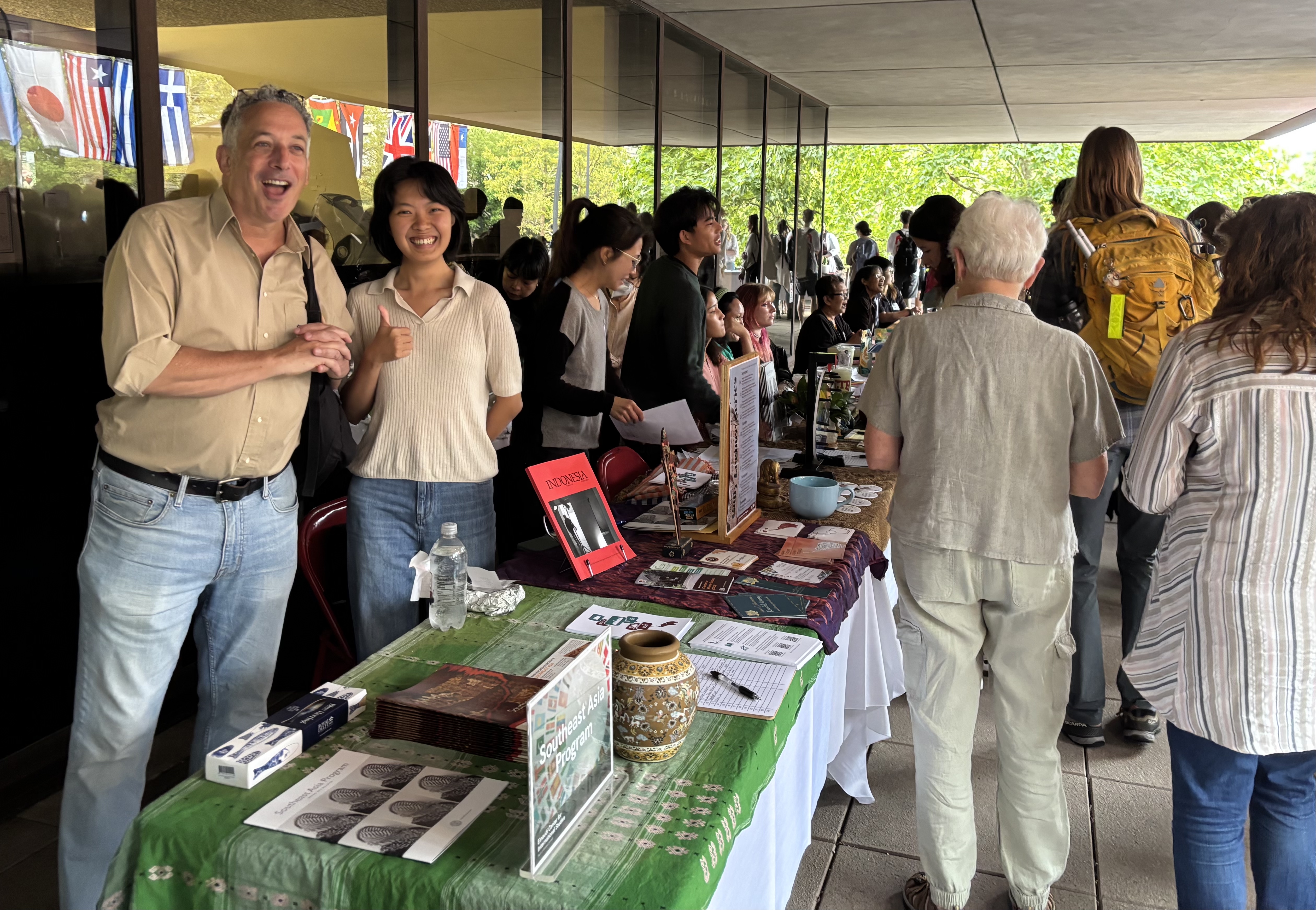
Joining SWANA's Seema Golestaneh are new program directors in the East Asia Program, Latin American and Caribbean Studies Program, and Southeast Asia Program.
EAP: Nick Admussen
Nick Admussen is an associate professor in the Department of Asian Studies (A&S). His research on contemporary Chinese poetry focuses on inventing and refining methods of interpretation through which people separated by linguistic or political distance can come to understand one another.
LACS: Alex Nading
Alex Nading is a medical and environmental anthropologist (A&S). His research—mostly focused on Nicaragua—has examined transnational campaigns against dengue fever, bacterial disease, and chronic kidney disease, as well as grassroots movements to address these issues.
SEAP: Eric Tagliacozzo
Eric Tagliacozzo is the John Stambaugh Professor of History in A&S. His research centers on the history of people, ideas, and material in motion in and around Southeast Asia, especially in the colonial age.
Additional Information
Book Talk with Dr. Brendan Galipeau
September 30, 2025
4:45 pm
Rockefeller Hall, 374
"Catholic and Buddhist Ecologies in Tibetan Wine Production in Southwest China"
Brendan A. Galipeau
Lecturer
Environmental Studies Program
Binghamton University
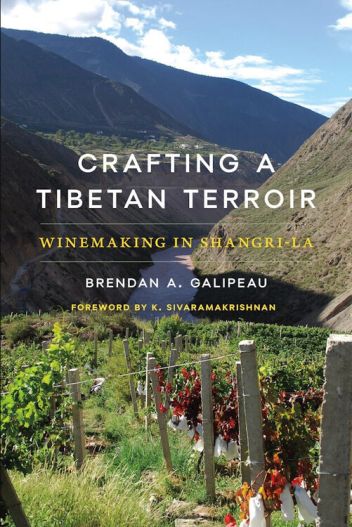
Drawing from material in my recently published book, Crafting a Tibetan Terroir, this talk discusses the historical Catholic roots and modern Buddhist environmental responses to viticulture in Tibetan Southwest China. Vineyards were first introduced to this region by nineteenth-century French and Swiss Catholic missionaries to make sacramental wine, a tradition continued and expanded upon today by Catholic households today. These developments have formed in response to twenty-first century commercialization of the region for tourism, and a desire among Catholic families to differentiate themselves within the wider landscape of wine across Northwest Yunnan Province. Here Tibetan agropastoral livelihoods have been transformed by monocropping vineyards for state supported wineries. Catholic families have resisted these commercialization efforts and instead produce their own wines identified with French history and Catholic ritual. In neighboring Buddhist communities, a majority of households have welcomed state capitalism and viticulture and the new economic opportunities they bring. However, select active Buddhist environmentalists are agitating against these new economies in response to increasing use of agrochemicals and pollution. These reactions are largely driven by perceived degradation of sacred landscapes and failing devotion to mountain deities, observed through changes in the landscape such as glacier retreat.
Brendan A. Galipeau is a Lecturer in Environmental Studies at Binghamton University. He previously served as Assistant Professor of Anthropology at National Tsing Hua University in Taiwan from 2019 to 2024 and as a postdoctoral fellow in Transnational Asian Studies at Rice University from 2017 to 2019. He received his PhD in Anthropology from the University of Hawai‘i at Manoa in 2017 and MA in Applied Anthropology at Oregon State University in 2012.
Galipeau has lived in and been conducting research in Tibetan Southwest China for almost two decades since 2007. His research and publications broadly focus on environmental change and human relations with nature in Southwest China and Taiwan, with a particular focus on agrarian change, hydropower resettlement, and religious ecologies. His work and publications have been featured in a variety of publications and media including Made in China, Journal of Agrarian Change, Human Ecology, Culture, Agriculture, Food, and Environment, National Public Radio, and the web publication The Third Pole. Crafting a Tibetan Terroir published by the University of Washington Press in 2024 is his first book.
Sponsored: Religious Studies Program
Co-sponsors: East Asia Program, Department of Asian Studies
Additional Information
Program
East Asia Program
Unification, Threat, and Security: Public Views Across the Strait
October 3, 2025
2:00 pm
A. D. White House
Speaker:
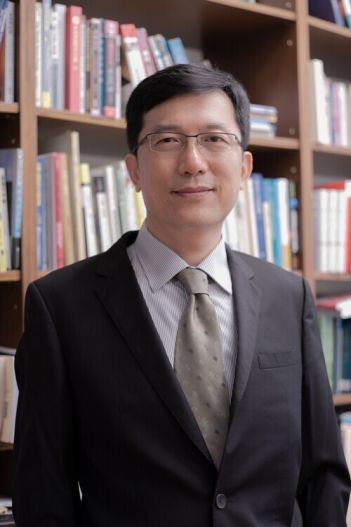
Chih-Jou Jay Chen, Director of Institute of Sociology, Research Fellow, Academia SinicaPanelists:
Victor Nee, Frank and Rosha Rhodes Professor of Economic Sociology, and Director of the Center for the Study of Economy and SocietyPeter J. Katzenstein, Walter S. Carpenter, Jr. Professor of International StudiesNaoki Sakai, Distinguished Professor Emeritus of Asian Studies
Description: This study compares perceptions in China and Taiwan regarding military unification and threat. Drawing on recent national survey data in China and long-term representative surveys in Taiwan, the findings reveal a widening gap. Many in China favor the use of force and often assume strong support for unification in Taiwan, though views differ across social groups and fall into distinct orientations ranging from moderates to militant hardliners. In Taiwan, confidence in China’s development has steadily declined, more people view China as a threat, and unification support remains marginal. Preference for maintaining the status quo is dominant, while support for independence has grown. Despite consistent willingness to resist aggression, confidence in Taiwan’s defense capacity has weakened, alongside stronger expectations of U.S. support. These mutually reinforcing perceptions sustain polarization across the Strait and raise concerns for regional stability and global security.
This is a hybrid event. To join the livestream, please register here: https://cornell.zoom.us/webinar/register/WN_7cdUCO70TaG76o8j-56JAA
Additional Information
Program
Einaudi Center for International Studies
East Asia Program
18 Cornellians Receive Fulbright Awards

With Support from Einaudi
They will conduct research, study, and teach English in Canada, France, Honduras, India, Jamaica, the Netherlands, Norway, and Taiwan.
Most will be on site by October.
The Fulbright program is the U.S. government's flagship international educational exchange program. The Einaudi Center administers the Fulbright program at Cornell, providing all the resources students and alumni need to apply for Fulbright funding for international experiences.
Cornell consistently ranks as a “top producer” among universities with the highest number of candidates selected for the Fulbright U.S. Student Program. With this year's Fulbrighters, we are celebrating over 600 awards since the 1940s!
We're excited to congratulate conservationist Kyrin Pollock, one of this year's five Fulbright–National Geographic Award recipients—and the first Cornellian ever to receive the prestigious award. Kyrin will spend the year working with the Olokhaktomiut Hunters and Trappers Committee in Ulukhaktok, Canada, to document how industrial noise is transforming Arctic waters. Watch for more news about her journey from National Geographic and Einaudi.
The next cycle of Fulbright U.S. Student Program is open now. The Einaudi Center encourages Cornell undergraduate students, graduate students, and recent alumni to explore the opportunity and apply.
Meet the Fulbrighters

Alexis Anderson '23
Honduras
Research: Impacts of Coastal Pollution on Stony Coral Tissue Loss Disease in Roatán, Honduras
“Improving the knowledge base on how SCTLD spreads is critical to help stop further global expansion of the disease.”
Erin Connolly '22
Norway
Research: Phorid Fly Biodiversity Across the Latitudinal Gradient of Norway
“Early months of my work in Trondheim will be based in the laboratory …, while the later months of the award will be dedicated to … a diurnal sampling scheme fieldwork project.”

Isabella Culotta '22
Netherlands
Master of Design: Probing Our Perceptions of Waste at the Design Academy of Eindhoven
“Our aversion to speaking and even thinking about our waste constrains our discovery and implementation of innovative waste management systems.”
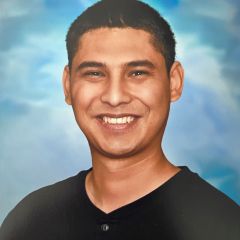
Gabriel Godines '23
Taiwan
English Teaching Assistant
“My experience in the U.S. Navy sparked my interest in East Asia, particularly in fostering understanding between the U.S. and China.”
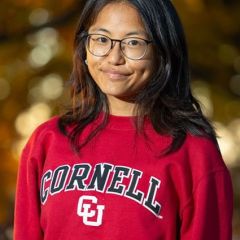
Tenzin Kunsang '25
India
Research: Reconceptualizing Education in Exile: Transnationalism in the Tibetan Children's Village
“These findings will help … to promote domestic language and cultural preservation among Tibetan-American students amid the politicization of schools in Tibet.”

Michelle Lee '25
France
English Teaching Assistant
“Due to the COVID-19 pandemic in 2020, I missed an opportunity to study abroad in France. This setback has motivated me to regain the chance to experience the country firsthand.”
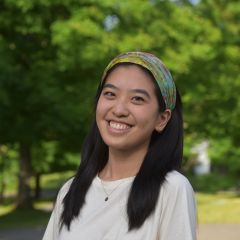
Tiffany Liu '22
Taiwan
English Teaching Assistant
“I … hope to observe the various technological initiatives currently pioneered by the Ministry of Education in Taiwan, including the movement to integrate AI.”
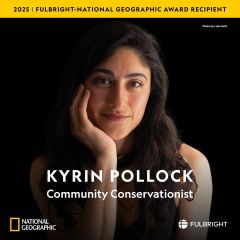
Kyrin Pollock, MEng '19
Fulbright–National Geographic Award Recipient (Canada)
Research: Arctic Echoes: Exploring Inuvialuit Knowledge and Marine Soundscapes in Conservation
“My work will address a gap in Arctic marine bioacoustics research … with documentation of Indigenous knowledge and an audio sample of the changing Arctic Ocean soundscape.”

Caitlyn Sams '25
Jamaica
Research: Herbal Medicine in Oncology: Safety of Psilocybin and Cancer Therapy Co-Medication
“This project will … spark conversations about herbal medicine use and promote avenues for holistic cancer care.”
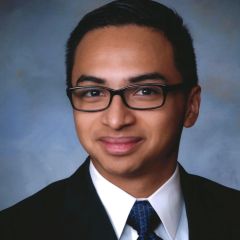
Miguel Soto Tapia '20
Taiwan
English Teaching Assistant
“I want to undertake an English teaching assistantship in Taiwan because I love language, teaching, and mentoring.”
Apply for Fulbright
The Einaudi Center supports you throughout the entire process of applying. The Fulbright U.S. Student Program is open to undergraduate students, graduate students, and recent Cornell alumni.
Additional Information
Korean Conversation Hour
December 4, 2025
5:00 pm
Stimson Hall, G24A
Come to the LRC or join us on Zoom to practice your language skills and meet new people. Conversation Hours provide an opportunity to use the target language in an informal, low-pressure atmosphere. Have fun practicing a language you are learning! Gain confidence through experience! Just using your new language skills helps you learn more than you might think. Conversation Hours are open to any learner, including the public.
Join Korean Conversation Hour via Zoom.
Additional Information
Program
East Asia Program