
East Asia Program
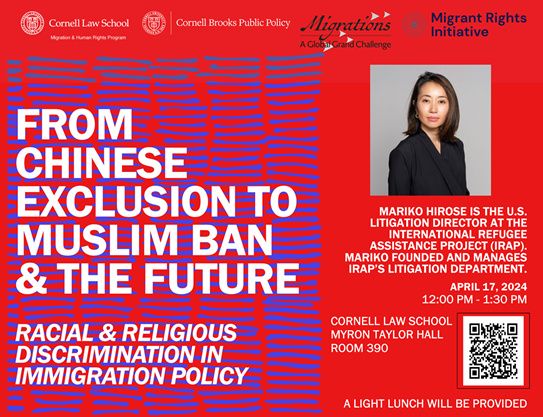
From Chinese Exclusion to Muslim Ban & The Future
April 17, 2024
12:00 pm
Myron Taylor Hall, 390
A light lunch will be provided.
Register in advanced to attend.
About the Speaker
Mariko Hirose is the U.S. Litigation Director at IRAP. In this role, Mariko founded and manages IRAP’s litigation department.
Prior to joining IRAP, Mariko worked at the New York Civil Liberties Union where she litigated a broad range of cases and coordinated integrated advocacy efforts. Her previous experiences also include litigating civil rights cases at Outten & Golden LLP and at the American Civil Liberties Union; teaching as an Adjunct Professor of Law at the New York University School of Law and at the Fordham University School of Law; and clerking for the Honorable Stephen Reinhardt of the U.S. Court of Appeals for the Ninth Circuit.
Mariko is a graduate of Stanford Law School and Yale University. She grew up primarily in Japan and spent time in China before law school as a Yale-China Teaching Fellow.
Mariko is a member of the New York bar.
Host and Sponsors
This event is hosted by Cornell Law School. Cosponsored by the Migrations initiative, part of Global Cornell.
Additional Information
Program
Einaudi Center for International Studies
East Asia Program
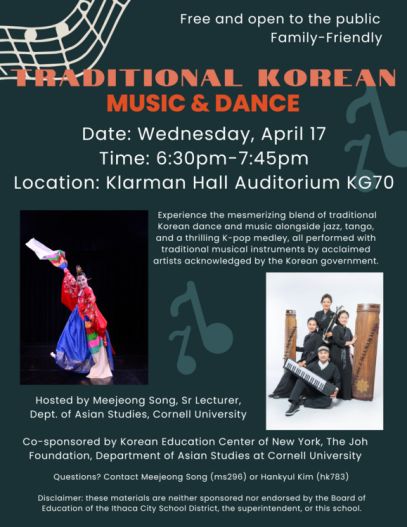
Traditional Korean Music and Dance
April 17, 2024
6:30 pm
Klarman Hall, Auditorium KG70
Immerse yourself in Korean culture!
The Korean Language Program invites you to a Traditional Korean Music and Dance Concert featuring acclaimed performers.
Join us for a dynamic evening of cultural fusion at Cornell University! Experience the mesmerizing blend of traditional Korean dance and music alongside jazz, tango, and a thrilling K-pop medley, all performed with traditional musical instruments by acclaimed artists acknowledged by the Korean government. This free event is open to all, so invite your friends and family to witness the seamless integration of diverse musical genres in a celebration of Korean heritage. Don't miss this unique opportunity to be transported through a captivating journey of dance, sound, and rhythm!
Hosted by Meejeong Song, Sr. Lecturer and Coordinator for the Korean Language Program at Cornell
Co-sponsored by Korean Education Center of New York, The Joh Foundation, Department of Asian Studies at Cornell University
Additional Information
Program
East Asia Program
Panel on Transnational Repression

April 25, 2024
4:30 pm
Biotechnology Building, G10
Governments engage in transnational repression when they reach across borders to silence dissidents living abroad. Tactics for transnational repression include assassinations, abductions, threats, and direct action against dissidents’ families and friends living within the repressive government’s territory.
This panel will focus on this global phenomenon and its local consequences for students and faculty members at Cornell, U.S. campuses more broadly, and other communities around the world. It will include the voices of dissidents affected by transnational repression as well as scholars and experts working in the field.
This is a panel discussion following the April 24 documentary In Search of My Sister screening. The film chronicles Rushan Abbas's relentless pursuit of truth and justice.
About the Panelists
Rachel Denber, Deputy Director of the Europe and Central Asia Division, specializes in countries of the former Soviet Union. Previously, Denber directed Human Rights Watch's Moscow office and did field research and advocacy in Russia, Georgia, Armenia, Azerbaijan, Kazakhstan, Uzbekistan, Estonia, Ukraine, Kyrgyzstan and Tajikistan. She has authored reports on various human rights issues throughout the region. Denber earned a bachelor's degree in international relations from Rutgers University and a master's in political science from Columbia University, where she studied at the Harriman Institute. She speaks Russian and French.
Firoozeh Kashani-Sabet, Walter H. Annenberg Professor of History, Firoozeh Kashani-Sabet is a prominent scholar of Iranian and Middle Eastern history. Her research addresses issues of national and cultural formation and gender concerns in Iran, as well as historical relations between the U.S., Iran, and the Islamic world. She is the author of highly influential works, including Frontier Fictions: Shaping the Iranian Nation, 1804-1946, which analyzed land and border disputes between Iran and its neighboring countries. These debates were pivotal to national development and cultural production and have significantly informed the territorial disputes in the region today. Conceiving Citizens: Women and the Politics of Motherhood in Iran, a wide-ranging study of the politics of health, reproduction and maternalism in Iran from the mid-19th century to the modern-day Islamic Republic.
Rushan Abbas, founder and executive director of Campaign for Uyghurs. Rushan Abbas’s activism started in the mid-1980s as a student at Xinjiang University, co-organizing pro-democracy demonstrations in Urumchi in 1985 and 1988. Since she arrived in the United States in 1989, Ms. Abbas has been an ardent campaigner for the human rights of the Uyghur people. Ms. Abbas is the founder and executive director of Campaign for Uyghurs (CFU) and became one of the most prominent Uyghur voices in international activism for Uyghurs following her sister’s detainment by the Chinese government in 2018. Ms. Abbas has spearheaded numerous campaigns, including the “One Voice One Step” movement, which culminated in a simultaneous demonstration in 14 countries and 18 cities on March 15, 2018, to protest China’s detention of millions of Uyghurs in concentration camps.
Sean Roberts is an Associate Professor in the Practice of International Affairs and Director of the International Development Studies (IDS) MA program at The George Washington University’s Elliott School of International Affairs. He received his MA in Visual Anthropology (2001) and his PhD in Cultural Anthropology (2003) from the University of Southern California. While completing his Ph.D. and following graduation, he worked for 7 years for the United States Agency for International Development in Kazakhstan and Kyrgyzstan, managing democracy, governance, and human rights programs in the five Central Asian Republics. He also taught for two years as a Post-Doctoral Fellow at Georgetown University’s Center for Europe, Eurasian, and Russian Studies before coming to the Elliott School in 2008. Academically, he has written extensively on the Uyghur people of China and Central Asia, about whom he wrote his dissertation, and his 2020 book The War on the Uyghurs (Princeton University Press).
About the Moderator
Rebecca Slayton, Director of the Reppy Institute for Peace and Conflict Studies, is an associate professor of science and technology studies in the College of Arts and Sciences. Her research and teaching examine the relationships among risk, governance, and expertise, focusing on international security and cooperation since World War II. Her first book, Arguments that Count: Physics, Computing, and Missile Defense, 1949-2012 (MIT Press, 2013), shows how the rise of a new field of expertise in computing reshaped public policies and perceptions about the risks of missile defense in the United States. Her second book project, Shadowing Cybersecurity, examines the emergence of cybersecurity expertise through the interplay of innovation and repair. Slayton is also working on a third project that examines tensions intrinsic to creating a “smart” electrical power grid—i.e., a more sustainable, reliable, and secure grid.
Host
Judith Reppy Institute for Peace and Conflict Studies
Additional Information
Program
Einaudi Center for International Studies
Reppy Institute for Peace and Conflict Studies
East Asia Program
Institute for African Development
South Asia Program
Institute for European Studies
Southeast Asia Program
Nobel Prize-winning Author Mo Yan Is Being Sued in China for 'Distorting History'

Jessica Chen Weiss, EAP
In recent years, the party has really become increasingly concerned about what it sees as the roots of the Soviet Union's collapse, said Jessica Chen in an interview with NPR’s Scott Simon.
Additional Information
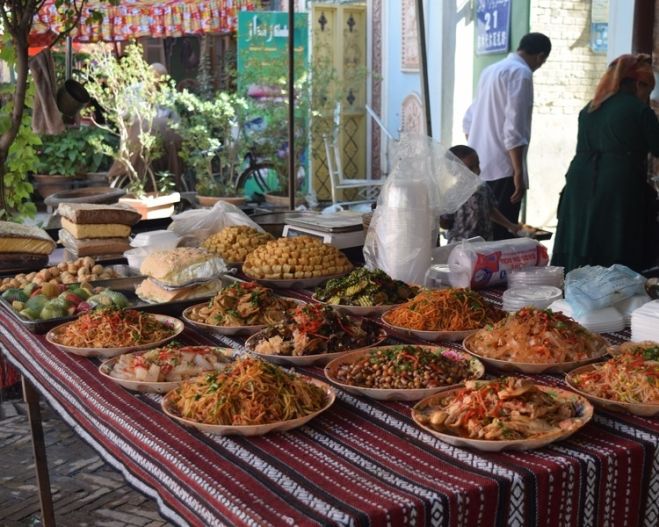
Transforming Asia with Food: Women and Everyday Life
April 20, 2024
9:30 am
Kahin Center, 640 Stewart Ave
The panels will delve into women’s roles in effecting change across Asia through everyday practices of food production, handling, preparation, and consumption. This interdisciplinary and transregional approach will open new windows on the ways in which women—which we see as a heterogenous category, intersecting with class, education, locality, etc.—and their domestic practices have restructured familial, social, cultural, and at times political dynamics during the transition to “modernity."
DAY 1 (Friday, April 19) Program
Saturday, April 20
9:30-12:00 Cooking as Gendered Agency
Chair: Shaoling Ma (Cornell University)Tom Hoogervorst (KITLV, Leiden)Michelle King (The University of North Carolina)Joshua Kam (Cornell University)Mohini Mehta (Uppsala University)Arunima Datta (University of North Texas)
Additional Information
Program
Einaudi Center for International Studies
East Asia Program
Southeast Asia Program
South Asia Program
Transforming Asia with Food: Women and Everyday Life
April 19, 2024
10:30 am
Kahin Center, 640 Stewart Ave
The panels will delve into women’s roles in effecting change across Asia through everyday practices of food production, handling, preparation, and consumption. This interdisciplinary and transregional approach will open new windows on the ways in which women—which we see as a heterogenous category, intersecting with class, education, locality, etc.—and their domestic practices have restructured familial, social, cultural, and at times political dynamics during the transition to “modernity."
Friday, April 19
10:30-12:30 Nourishing Life, Family, and the Nation
Chair: Nick Admussen (Cornell University) Joshua Schlachet (University of Arizona) Christina Firpo (California Polytechnic State University)Violetta Ravagnoli (Emmanuel College) Wang Fei-Hsien (Indiana University)1:45-3:00 Keynote Address
Hyaeweol Choi (The University of Iowa)3:30-5:30 The Kitchen and Aspirational Domesticity
Chair: Jaime Sunwoo (Multidisciplinary artist)Suyoung Son (Cornell University)Rituparna Chowdhury (West Bengal State University)Chiara Formichi (Cornell University)DAY 2 (Saturday, April 20) Program
Additional Information
Program
Einaudi Center for International Studies
East Asia Program
Southeast Asia Program
South Asia Program
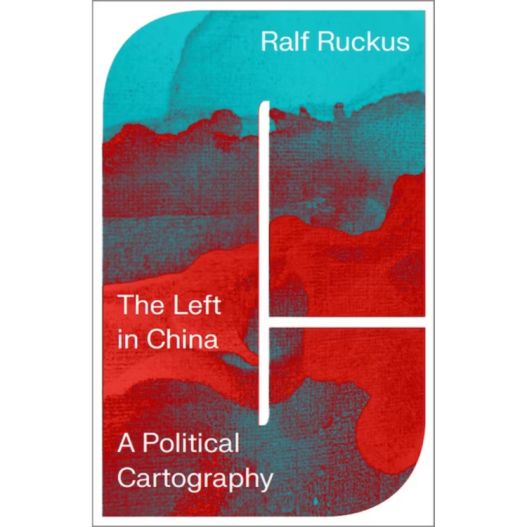
The Left in China
April 12, 2024
3:00 pm
Cornell ILR School, 281 Ives Faculty Building
Ralf Ruckus will present central arguments from the book The Left in China. A Political Cartography (Pluto Press, 2023):
All over the world, progressive forces debate the nature of the People’s Republic of China (PRC) and the Chinese Communist Party (CCP). While some consider them to be socialist, others recognize the critical role of the current CCP government in facilitating capitalist exploitation and the suppression of social struggles.
Often, little or no attention is given to leftwing oppositional movements and groups in the PRC. Since the founding of the PRC in 1949, changing class divisions have led to waves of social protests by workers, migrants, and women, which inspired several generations of leftwing opposition against CCP rule.
The dialectic of social struggles and leftwing oppositional movements has shaped the history of the PRC, from the socialist build-up in the 1950s to the Cultural Revolution in the 1960s, the democracy movements in the 1970s and 1980s, the resistance of the socialist working class against capitalist restructuring in the 1990s and 2000s, and the struggles of migrant workers and women since.
This event is co-sponsored by the East Asia Program.
Additional Information
Program
East Asia Program
Einaudi Center for International Studies
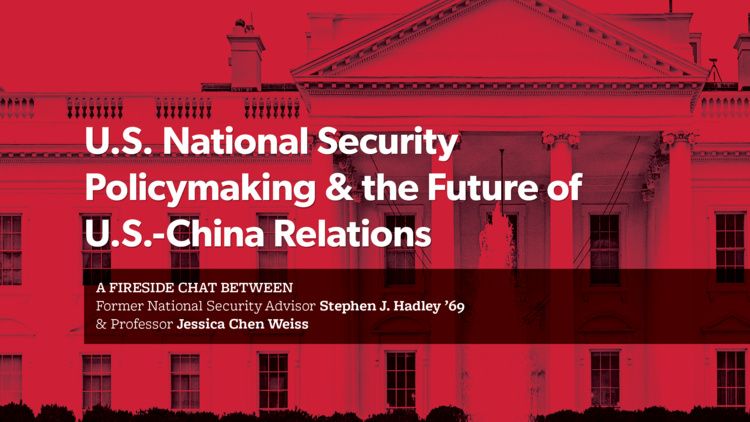
U.S. National Security Policymaking and the Future of U.S.-China Relations: A Fireside Chat between Former National Security Advisor Stephen J. Hadley (2005-2009, Cornell '69) and Professor Jessica Chen Weiss
April 17, 2024
5:00 pm
245 Feeney Wy, Ithaca, NY 14853, Physical Sciences Building 120.
The Cornell Levinson Program in China and Asia-Pacific Studies is delighted to host a conversation on U.S. national security policymaking and the future of U.S.-China relations between Former National Security Advisor Stephen J. Hadley and Professor Jessica Chen Weiss on Wednesday, April 17, from 5 PM to 6:15 PM, at 120 Physical Sciences Building, followed by a reception from 6:15 PM to 7:15 PM at the Baker Portico.
This event is co-sponsored with Cornell Jeb E. Brooks School of Public Policy, Cornell Mario Einaudi Center for International Studies, Cornell Department of Government, and Cornell East Asia Program.
This hybrid event is free to attend.
For joining in-person, please register on EventBrite here.
Register for the Webinar at: https://cornell.zoom.us/webinar/register/WN_y25dTQ7LSTOCFjmTVNkjDA
Stephen J. Hadley Bio:
Stephen Hadley is a principal of Rice, Hadley, Gates & Manuel LLC, an international strategic consulting firm founded with Condoleezza Rice, Robert Gates, and Anja Manuel. He is an Executive Vice Chair of the Board of Directors of the Atlantic Council and is also the former Board Chair of the United States Institute of Peace (USIP).
Mr. Hadley served for four years as the Assistant to the President for National Security Affairs from 2005 to 2009. From 2001 to 2005, Mr. Hadley was the Assistant to the President and Deputy National Security Advisor, serving under then National Security Advisor Condoleezza Rice. Mr. Hadley had previously served on the National Security Council staff and in the Defense Department including as Assistant Secretary of Defense for International Security Policy from 1989 to 1993.
During his professional career, Mr. Hadley has served on a number of corporate and advisory boards, including: the National Security Advisory Panel to the Director of Central Intelligence, the Department of Defense Policy Board, and the State Department’s Foreign Affairs Policy Board. He is also the editor of the book Hand-Off: The Foreign Policy George W. Bush Passed to Barack Obama.
Jessica Chen Weiss Bio:
Jessica Chen Weiss is the Michael J. Zak Professor for China and Asia-Pacific Studies in the Department of Government at Cornell University and nonresident senior fellow at the Asia Society Policy Institute Center for China Analysis. From August 2021 to July 2022, she served as senior advisor to the Secretary's Policy Planning Staff at the U.S. State Department on a Council on Foreign Relations Fellowship for Tenured International Relations Scholars (IAF-TIRS). Weiss is the author of Powerful Patriots: Nationalist Protest in China’s Foreign Relations (Oxford University Press, 2014). Her research appears in International Organization, China Quarterly, International Studies Quarterly, Journal of Conflict Resolution, Security Studies, Journal of Contemporary China, and Review of International Political Economy. With commentary in the New York Times, Washington Post, Foreign Affairs, Los Angeles Times, and the Ezra Klein show, Weiss was profiled by the New Yorker and named one of Prospect Magazine's Top Thinkers for 2024. Weiss was previously an assistant professor at Yale University and founded FACES, the Forum for American/Chinese Exchange at Stanford University. Born and raised in Seattle, Washington, she received her Ph.D. from the University of California, San Diego.
Additional Information
Program
Einaudi Center for International Studies
East Asia Program
Getting to Climate Justice: A Global Approach
April 11, 2024
5:00 pm
Rockefeller Hall, Schwartz Auditorium, Room 201
Lund Critical Debate
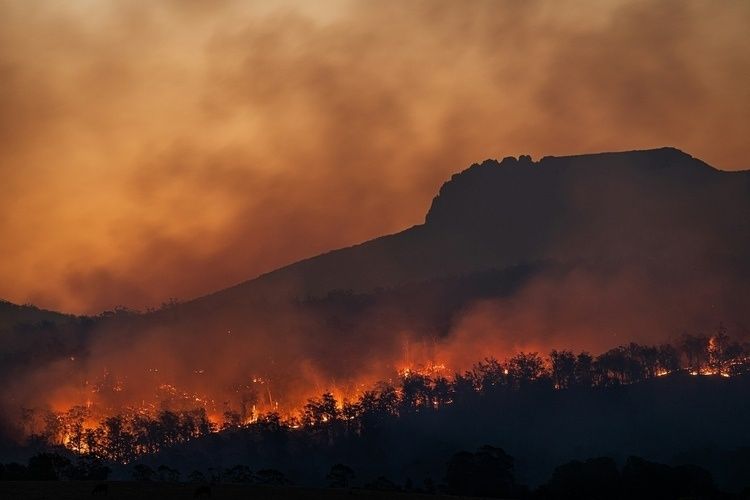
Climate change has a disproportionate impact on the world’s most vulnerable populations, yet climate crises also impact people across the full spectrum of wealth and power. How do we understand these varied impacts and design climate policy to maximize human well-being and justice on a global level?
As climate change accelerates, we see the rise of violent conflict and humanitarian emergencies in some places but not others. In some places but not others, we see disruptions in food security and forced migration. And around the world, debates rage about access to energy, the need to profit from valuable natural resources, and pressures to reduce extraction and consumption.
This year’s Lund debate from the Mario Einaudi Center for International Studies explores how citizens and policymakers worldwide can act to increase justice in our shared climate crisis. The panel will discuss key issues surrounding societies, governments, business, and labor and ways to share responsibilities globally to reduce emissions and mitigate climate change.
How can we imagine new strategies for reshaping global trade and finance, national and transnational security policies, and environmental protections that go beyond political borders? Join climate journalist Kate Aronoff and climate security expert Joshua Busby (LBJ School of Public Affairs, University of Texas) for a conversation on our climate’s state of emergency and how governments can help.
***
Livestream for National and International Viewers
Can't join in person? Register to attend virtually at eCornell.
***
Panelists
Kate Aronoff is a Brooklyn-based staff writer at The New Republic, covering climate and energy politics, and a fellow at the Roosevelt Institute. She is the author of Overheated: How Capitalism Broke the Planet and How We Fight Back (2021) and the coauthor of A Planet to Win: Why We Need a Green New Deal (2019). Aronoff serves on Dissent magazine's editorial board and the advisory board of Jewish Currents.
Joshua Busby is professor of public affairs in the University of Texas at Austin’s Lyndon B. Johnson School of Public Affairs. His research focuses on climate change, global health, transnational advocacy movements, and U.S. foreign policy. Busby was principal investigator on two multimillion-dollar climate and security grants from the U.S. Department of Defense. He served as senior advisor for climate at the U.S. Department of Defense from 2021 to 2023. His newest book is States and Nature: The Effects of Climate Change on Security (2022).
Moderator
Rachel Bezner Kerr is director of Einaudi’s Institute for African Development and professor of global development in the College of Agriculture and Life Sciences. She served as coordinating lead author for the United Nations’ Intergovernmental Panel on Climate Change sixth assessment report chapter on climate change impacts and adaptation of food systems.
***
About the Debate
The Lund Critical Debate is a signature event of the Mario Einaudi Center for International Studies. Established in 2008, Einaudi's Lund debate series is made possible by the generosity of Judith Lund Biggs '57.
Additional Information
Program
Einaudi Center for International Studies
Reppy Institute for Peace and Conflict Studies
East Asia Program
Latin American and Caribbean Studies
Institute for African Development
Institute for European Studies
South Asia Program
Monsoon Marketplace: Capitalism, Media, and Modernity in Manila and Singapore
April 11, 2024
4:30 pm
Rockefeller Hall, 374
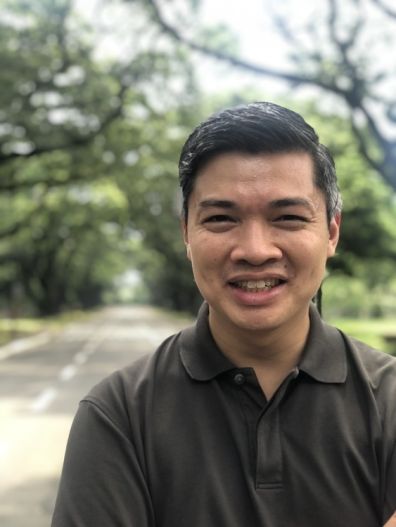
Join Media Studies and the Southeast Asia Program for a talk by Elmo Gonzaga, Associate Professor in the Division of Cultural Studies at the Chinese University of Hong Kong (CUHK).
About the Talk
This talk discusses how the book Monsoon Marketplace applies an archipelagic method to trace the changing vernacular cultures of capitalist modernity, mass consumption, and media spectatorship in two Southeast Asian cities Manila and Singapore by looking at print, film, and audiovisual representations of commercial and leisure spaces including night markets, amusement parks, department stores, movie theaters, and shopping malls that captivated their populations at three important historical moments of colonial occupation in the 1930s, national development in the 1960s, and neoliberal globalization in the 2000s. Juxtaposing seemingly unrelated urban environments that have become unrecognizably and irretrievably transformed such as Calle Escolta and Raffles Place, the talk will examine lost spaces like Crystal Arcade and Change Alley, which had offered contrasting experiences of consumerism and sociality in times of upheaval.
About the Speaker
Elmo Gonzaga is Associate Professor in the Division of Cultural Studies and Director of the MA in Intercultural Studies Programme at The Chinese University of Hong Kong (CUHK). He obtained his PhD in Rhetoric from the University of California, Berkeley. A native of Manila, he is a former Permanent Resident of Singapore. His work on Southeast Asian film and urban cultures has appeared in Cinema Journal, Cultural Studies, South East Asia Research, Verge: Studies in Global Asias, and the Journal of Asian Studies. He is the project leader of the Doing Theory in Southeast Asia online database, which was funded by a highly competitive Hong Kong Research Grants Council General Research Fund grant.
Additional Information
Program
Einaudi Center for International Studies
Southeast Asia Program
East Asia Program