
East Asia Program
Author talk: Ji Li, "Negotiating Legality: Chinese Companies in the U.S. Legal System"
April 8, 2024
4:45 pm
Myron Taylor Hall, 182
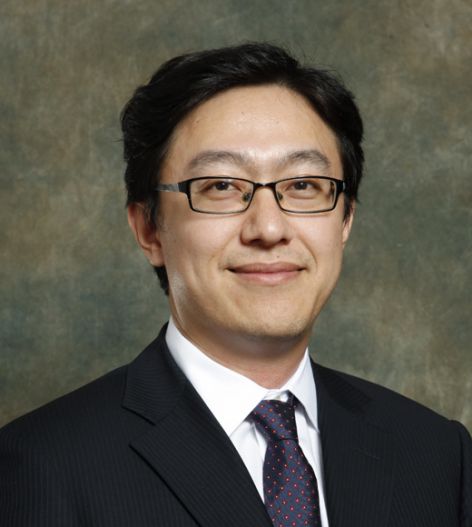
Ji Li, of US-China Business and Law at UC Irvine, will discuss his book titled Negotiating Legality: Chinese Companies in the U.S. Legal System (soon to be published in May 2024 by Cambridge University Press). Introduced by Yun-chien Chang, the Jack G. Clarke Professor in East Asian Law.
Refreshments provided with RSVP .
Book description: Despite escalating geopolitical rivalry, the US and China continue to be economically intertwined. Numerous Chinese companies have made substantial investments in the US and are reluctant to exit this strategically important market. While the global expansion of Chinese companies has ignited intense policy and academic debates, their interactions with complex host-state legal systems have largely escaped systematic examination. To fill this knowledge gap, Negotiating Legality introduces a dual institutional framework and applies it to analyzing extensive interviews and multi-year survey data, thereby shedding light on how Chinese companies develop in-house legal capacities, engage with US legal professionals, and navigate litigation in US courts. As the first comprehensive investigation of these crucial topics, this book is indispensable for anyone interested in China's rise, its global impacts-especially on the legal systems of developed nations like the US-and the intricate dynamics of US-China relations.
Additional Information
Program
East Asia Program
Book talk: Sustainable Peace in Northeast Asia
March 25, 2024
12:00 pm
Uris Hall, 204
Y.S. Lee, author of Sustainable Peace in Northeast Asia (Anthem Press, 2023) and Adjunct Professor of Law at Cornell Law School speaks about his book which examines the causes of long-standing and complex tensions in the region and explores possible solutions to build lasting peace there. Introduced by Yun-chien Chang, Jack G. Clarke Professor in East Asian Law.
RSVP is required as space is limited. Please note, lunch is available to the first 15 who RSVP.
Uris Hall 204.
Includes a light lunch.
This event is co-sponsored by the Reppy Insitute for Peace and Conflict Studies.
More about the book: Sustainable Peace in Northeast Asia examines the causes of these complex tensions in Northeast Asia and their underlying political, historic, military, and economic developments. It further discusses their political-economic implications for the world and explores possible solutions to build lasting peace in the region. This book offers a unique approach to these important issues by examining the perspectives of each constituent country in Northeast Asia: China, South and North Korea, Japan, and Mongolia, and their respective roles in the region. Major global powers, such as the United States and Russia, have also closely engaged in the political and economic affairs of the region through a network of alliances, diplomacy, trade, and investment. The book discusses the influence of these external powers, their political and economic objectives in the region, their strategies, and the dynamics that their engagement has brought to the region. Both South Korea and North Korea have sought reunification of the Korean peninsula, which will have a substantial impact on the region. The book examines its justification, feasibility and effects for the region. The book also discusses the role of Mongolia in the context of the power dynamics in Northeast Asia. A relatively small country, in terms of its population, Mongolia has rarely been examined in this context; Sustainable Peace in Northeast Asia makes a fresh assessment on its potential role.
Additional Information
Program
Einaudi Center for International Studies
East Asia Program
Reppy Institute for Peace and Conflict Studies
Cornell Classical Chinese Colloquium: Andrew Schonebaum
March 8, 2024
3:30 pm
Rockefeller Hall, 374 Asian Studies Lounge
Animating Forces by Andrew Schonebaum.
The Cornell Classical Chinese Colloquium (CCCC) 古文品讀 is a reading group for scholars interested in premodern Sinographic text (古文). We are pleased to welcome Andrew Schonebaum, East Asian Studies, Maryland University to lead this month's text-reading.
Liaozhai zhiyi, like other anomalous account collections, is a curious text. It not only records curiosities of the natural world – enormous bugs, tiny animals, and suchlike, it is curious about particular topics, investigating (in brief, but repeatedly), things that seem inexplicable – that dragons could die, or that foxes could evade the punishment of thunder. Liaozhai examines the stuff of life - the animating force, souls, human forms, and zombies (jiangshi 僵屍 / 殭屍). It asks, what is the difference between a body that is alive and one that is dead? What transformation takes place in the moment of death? Life itself – what animates a body is the ultimate object of inquiry into the unseen, and one that still fascinates. We are of course, always gathering first-hand information about our bodies, and yet, as a natural object what makes it go, is elusive. We will read “Woman from Changzhi” 長治女子 about a Daoist who steals the life anima of a woman to bring alive a wooden doll. We will also consider other records that detail the legal and moral menace of "plucking life" (caisheng 採生).
The group meets monthly during the semester to explore a variety of classical Chinese texts and styles. Other premodern texts linked to classical Chinese in Japanese, Korean, and Vietnamese have been explored. Presentations include works from the earliest times to the 20th century. Workshop sessions are led by local, national, and international scholars. Participants with any level of classical Chinese experience are welcome to attend.
At each session, a presenter guides the group in a reading of a classical Chinese text. Attendees discuss historical, literary, linguistic, and other aspects of the text, working together to resolve difficulties in comprehension and translation.
No preparation is required; all texts will be distributed at the meeting.
Additional Information
Program
Einaudi Center for International Studies
East Asia Program
Cornell Classical Chinese Colloquium: Tomoyasu Iiyama
February 2, 2024
3:30 pm
The Emergence of the Yuan non-Han Ancestry in Late Qing North China by Tomoyasu Iiyama, Waseda University.
The Cornell Classical Chinese Colloquium (CCCC) 古文品讀 , a reading group for scholars interested in premodern Sinographic text (古文), is thrilled to welcome Tomoyasu Iiyama, of Waseda University, and a visiting scholar at Harvard University's Yenching Institute to present the first text-reading of the spring semester!
This text-reading attempts to shed light on the largely unknown trajectories of the resurgence and evolution of Yuan non-Han ancestries in North China from the late eighteenth century through the early twentieth century. By exploring three relatively well-documented cases of the resurgence of the Yuan non-Han ancestry, this text-reading offers two tentative conclusions. First, the commemoration of the non-Han ancestries seems to have been roused by the two-century-long Gazetteers of the Great Qing Empire compilation project, throughout which the state reiterated extensive surveys of local worthies, widow chastity, and martyred loyal subjects, including those from the previous dynasties. Second, apart from the intention of the Qing court, gazetteer compilation projects functioned as a classification project of some kind, if not ethnicity. The ancestries classified by the Qing came to compete with modern minzu identities classified by the Ethnic Classification Project during the mid-twentieth century.
More information: The group meets monthly during the semester to explore a variety of classical Chinese texts and styles. Other premodern texts linked to classical Chinese in Japanese, Korean, and Vietnamese have been explored. Presentations include works from the earliest times to the 20th century. Workshop sessions are led by local, national, and international scholars. Participants with any level of classical Chinese experience are welcome to attend.
At each session, a presenter guides the group in a reading of a classical Chinese text. Attendees discuss historical, literary, linguistic, and other aspects of the text, working together to resolve difficulties in comprehension and translation.
No preparation is required; all texts will be distributed at the meeting.Advanced registration is required.
Additional Information
Program
East Asia Program
"The Dangerous Politics of State-Business Relations in Contemporary China" by Meg Rithmire

March 4, 2024
4:45 pm
The Cornell Contemporary China Initiative (CCCI) is excited to welcome Meg Rithmire, Business Administration, Harvard Business School to speak on, "The Dangerous Politics of State-Business Relations in Contemporary China."
Why have relations between the Chinese Communist Party and Chinese private-sector business elites gone from “co-optation” and “cronyism” to crackdowns and emigration? Drawing on her book (Precarious Ties, Oxford University Press 2023) and related work on the turn to security in China’s political economy, Meg Rithmire traces the current crackdown to the long presence of distrust between political and business elites in China and the CCP’s partial liberalization of the financial sector over the last 20 years.
Introduced by EAP director, Jeremy Wallace (Government).
CCCI brings together scholars, researchers, and students with sustained research interests in contemporary China. In response to widely expressed needs related to contemporary China across campus, CCCI invites leaders in the field to give talks on an array of interdisciplinary issues about the current Chinese economy, politics, and society.
Additional Information
Program
Einaudi Center for International Studies
East Asia Program
Beijing Tightens Its Political Grip on Hong Kong

Magnus Fiskesjö, EAP/PACS/SEAP
Magnus Fiskesjö, associate professor of anthropology, discusses the atmosphere in China on NPR's Morning Edition.
Additional Information
Cornell Concert Series presents: DoosTrio

February 18, 2024
7:30 pm
Bailey Hall
Three masters and old friends join together in a new collaboration. Kayhan Kalhor, Wu Man, and Sandeep Das are established soloists in their individual traditions. Their new trio highlights the ancient traditions of Iran, China, and India in a 21stcentury program. Three-time GRAMMY-nominee Kayhan Kalhor is an internationally acclaimed virtuoso on the kamancheh, who through his many musical collaborations has been instrumental in popularizing Persian music in the West. Recognized as the world’s premier pipa virtuoso and leading ambassador of Chinese music, Wu Man has carved out a career as a soloist, educator, and composer giving her lute-like instrument a new role in both traditional and contemporary music. A Guggenheim Fellow and GRAMMY-winning musician, Sandeep Das is one of the leading tabla virtuosos in the world today.
Please visit cornellconcertseries.com for details about the masterclasses, lectures, meet-and-greets, and other events of this residency.
“You can get lost in [Kayhan Kalhor’s] music in a wonderful way. It roams through far-flung provenances and ages…mystically tinted, mysterious sounds, which echo in the inclined listener for a long time.” – JazzThing
“Vibrant pipa master Wu Man. A one-woman force of nature.” – Gramophone Magazine
“When [Sandeep] plays the tabla, he is a creator of myths, a master communicator, and an orchestra, all in one.” – Yo-Yo Ma
This event is presented as part of Cornell’s Freedom of Expression Theme Year.
The rich musical traditions these musicans perform continue to exist under various political situations in their home countries. Both the musical content and musicians’ ability to travel freely to perform impacts their freedom of expression. As such, this concert serves to increase appreciation across the Cornell community for the history, importance, and challenges of free expression and academic freedom.
Additional Information
Program
Einaudi Center for International Studies
East Asia Program
South Asia Program
China Expert, Present at Xi Visit to US, Aims to Cool Tensions
Jessica Chen Weiss, EAP
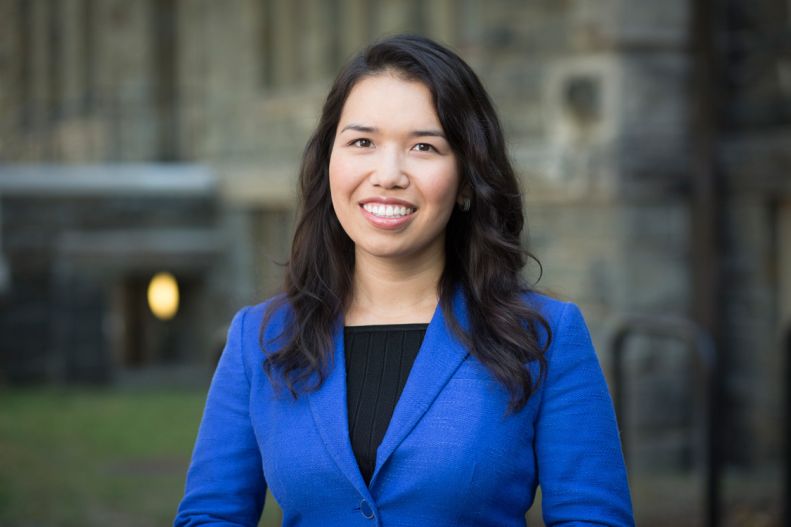
Professor Jessica Chen Weiss, an expert on U.S.-China relations, was among the attendees of the dinner following President Joe Biden and Chinese President Xi Jinping’s historic summit on Nov. 15 in San Francisco.
Additional Information
People Like Me: A Student Panel about Navigating Identity Abroad

March 13, 2024
5:00 pm
Statler Hall, 165
Planning for study abroad? No matter how you identify or where you're studying, early planning is the key to a successful study abroad experience.
Join us for a facilitated discussion with fellow students about navigating your intersectional identities while studying abroad. A panel of returned study abroad students will share their experiences, knowledge, and advice for expressing your whole self in a different culture. This is a great opportunity to ask questions and think about your identity in a new context—outside the norms of Cornell, your hometown, or your home country.
This global freedom of expression event is an opportunity to explore critical issues related to free expression of your identity and how you encounter the world. As a student abroad, you have a deeply personal chance to experience cultural exchange, collaborate productively in a global context, and have challenging conversations while staying true to yourself—all vital skills for successful participation in democracy.
The Office of Global Learning is here to help as you think about your identity in a global context, learn about new norms and ways of life, and find the support you need.
In-Person Event
Attend the panel in Statler Hall 165
Additional Information
Program
Einaudi Center for International Studies
Reppy Institute for Peace and Conflict Studies
East Asia Program
Southeast Asia Program
Latin American and Caribbean Studies
Institute for African Development
Institute for European Studies
South Asia Program
The Rise and Fall of the World’s Most Successful Joint Venture

Jessica Chen Weiss, EAP
Jessica Chen Weiss, professor of government, is quoted about the relationship between the U.S. and China.