
East Asia Program
Radical Future: Gender and Science Fiction in Contemporary Korea
May 5, 2023
4:45 pm
by Ji-Eun Lee (Associate Professor in East Asian Languages and Cultures, Washington University in St. Louis)
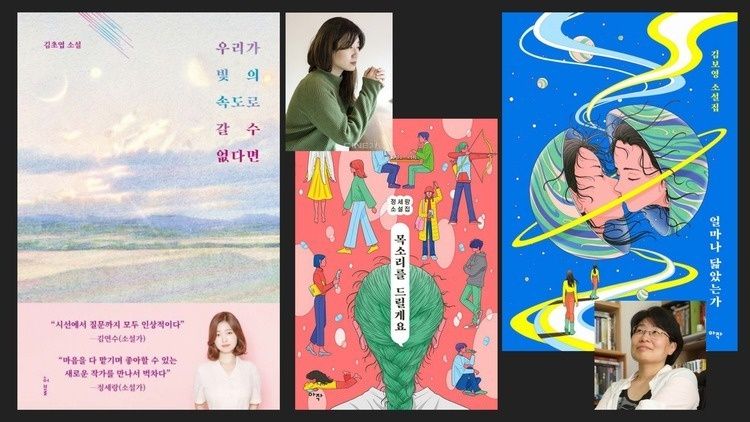
As post Korean War South Korea strived to become a global manufacturer of electronics and mundane commodities, Science Fiction has been perceived less as a genre than as educational material for boys, something that would instill nationalistic ambition given science and technology's promise as a way out of the country’s poverty. Even after Korea’s rise as a global economic powerhouse in the 1990s, SF remained a minor genre domestically. Considering its humble origin story, the current rise and popularity of SF in South Korea is remarkable for several reasons, but perhaps the most striking is that it is led by woman writers and young woman readers. This talk will give an introduction to the current phenomenon of Korean SF and its relation to feminism with the goal of discerning the contours of Korea's own SF impulse and the energies behind it. The talk will explore works by Kim Bo-young (b.1975), Chung Se-rang (b.1984), and Kim Choyeop (b.1993), three bestselling woman writers who have spearheaded the trend, and will examine the social, historical, and cultural environment in which their works arose. It thus considers how SF and Fantasy answers some feminist calls for a world differently imagined and constructed. In this consideration, it views the emergent SF genre and its indigenous roots in Korea as an independent tradition, one that developed separately from the Western / American / European SF tradition.
Additional Information
Program
East Asia Program
Making Peace With Nature: Ecological Encounters Along the Korean DMZ
May 1, 2023
4:45 pm
Goldwin Smith Hall, GSH64
Eleana Kim (Anthropology, UC Irvine)
This book talk discusses Eleana Kim’s recently published ethnography of the ecologies of the South Korean borderlands, in areas adjacent the Korean Demilitarized Zone. Based on fieldwork with ecologists, environmentalists, and residents who live along the border, this book reframes the Korean DMZ and the national division around more-than-human peace. It also argues that militarized ecologies deserve greater attention in the context of climate crisis and the convergence of militarization and privatization at a planetary scale. BIO: Eleana Kim is a sociocultural anthropologist and professor of anthropology and Asian American Studies at University of California, Irvine. She is the author of Making Peace with Nature: Ecological Encounters along the Korean DMZ (2022) and Adopted Territory: Transnational Korean Adoptees and the Politics of Belonging (2010), both published by Duke University Press. She currently serves as the president of the Society for Cultural Anthropology.
Additional Information
Program
Einaudi Center for International Studies
Reppy Institute for Peace and Conflict Studies
East Asia Program
Host Nation film screening

April 19, 2023
7:00 pm
Cornell Cinema, 104 Willard Straight Hall, Ithaca NY, 14853
Host Nation by Ko-woon Lee (2016, 116 minutes)
“Do you want to work in Korea?” Thus begins twenty-six-year-old Filipina woman Maria’s two-year journey into the sex industry in South Korea, which mainly caters to American soldiers stationed there.
Host Nation chronicles Maria’s hopes, dreams, and crucial reality for two years to lay bare the legalized system of sex trafficking between South Korea and the Philippines. Maria had long dreamed about escaping from her slum neighborhood in Davao, Philippines, and getting a job abroad and when she was introduced to a talent manager, Madam Yolie, it seemed her dream was about to come true.
Yolie, who operates a training center and a temporary boarding house in Manila for women, has witnessed the ups and downs of the sex industries of neighboring Asian countries and sees the openings in the industry as job opportunities for poor Filipino women.
The documentary follows Maria’s pathway into the South Korean sex industry via the E-6 visa, the so-called “entertainers’ visa,” slowly revealing the vast network of cross-border profit makers who enable sex trafficking, including a talent scout, a manager in Manila, a Korean broker, a Korean club owner and even Korean government agencies.
Part of the series Power of Seeing 보는 이의 권력 hosted by the East Asia Program at the Mario Einaudi Center for International Studies.
Film website: www.koreanfilm.or.kr/eng/films/index/filmsView.jsp?movieCd=20164198
In Korean, Tagalog and English with English subtitles.
Generously cosponsored by the Reppy Institute for Peace and Conflict Studies and the Cornell Society for the Humanities.
Additional Information
Program
Einaudi Center for International Studies
Reppy Institute for Peace and Conflict Studies
East Asia Program
Southeast Asia Program
The Woman, the Orphan, and the Tiger film screening
April 12, 2023
7:00 pm
Cornell Cinema
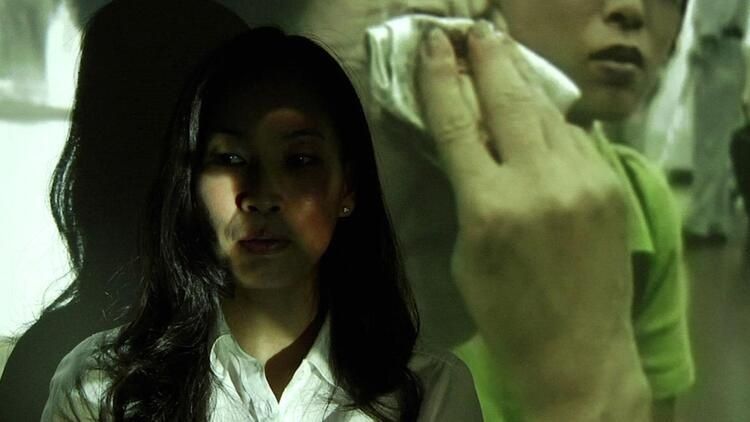
The Woman, the Orphan, and the Tiger by Jane Jin Kaisen & Guston Sondin-Kung (2010, 72 min)
Following a group of international adoptees and other women of the Korean diaspora in their 20s and 30s, the film uncovers how the return of the repressed confronts and destabilizes narratives that have been constructed to silence histories of pain and violence inflicted onto the bodies and lives of women and children.
Film website: janejinkaisen.com/the-woman-the-orphan-and-the-tiger
In English, Korean and Danish with English subtitles
Part of the series Power of Seeing 보는 이의 권력 hosted by the East Asia Program at the Mario Einaudi Center for International Studies.
Generously co-sponsored by the Reppy Institute for Peace and Conflict Studies and the Cornell Society for the Humanities.
Additional Information
Program
Einaudi Center for International Studies
Reppy Institute for Peace and Conflict Studies
East Asia Program
Film Screening: Tour of Duty
March 15, 2023
7:00 pm
Cornell Cinema
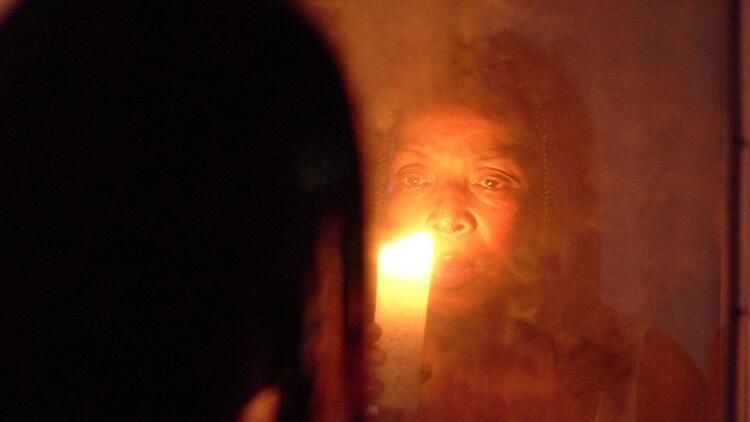
Tour of Duty by Kim Dong-ryung and Park Kyoung-tae (2 hours 30 min. 2012)
There remains only silence in a US military camp town in the northern part of Gyeonggi province which will be pulled down any time soon.
In the town, three women are still living with pains engraved in their bodies. Aunt Bobby who used to make burgers in Seonyu-ri for 30 years; Ms. Insoon Park who used to collect scraps and draw paintings on them in the abandoned narrow alleys of Bbat-bul, Uijeongbu; and Ms. Sungja Ahn who is half-Korean and half-African American. Following the pieces of their memories, the film travels into the forgotten town to reveal the truth left behind.
This documentary by Kim Dong-ryung and Park Kyoung-tae chronicles the lives of three women impacted by the US military presence in South Korea. The Seonyu-ri red light district located at the Paju U.S. military camp town became a well-known site after the Korean War. Now awaiting its fate to be demolished, this film sets out on a trip through time and space in this place where certain memories and people have long departed and others still linger.
In Korean with English subtitles.
Film website: www.dmzdocs.com/eng/addon/00000002/history_film_view.asp?m_idx=101967&Q…
Part of the series Power of Seeing 보는 이의 권력 hosted by the East Asia Program at the Mario Einaudi Center for International Studies.
We thank the generous co-sponsorship of the following:
The Reppy Institute for Peace and Conflict Studies
The Cornell Society for the Humanities
Additional Information
Program
Einaudi Center for International Studies
East Asia Program
Reppy Institute for Peace and Conflict Studies
Japan’s Graphic Memoirs of Depression and OCD
March 9, 2023
4:30 pm
Goldwin Smith Hall, GSH64 Kaufman Auditorium
by Yoshiko Okuyama (Department of Languages, University of Hawaii at Hilo)
Faculty host: Andrew Campana (Department of Asian Studies, Cornell)
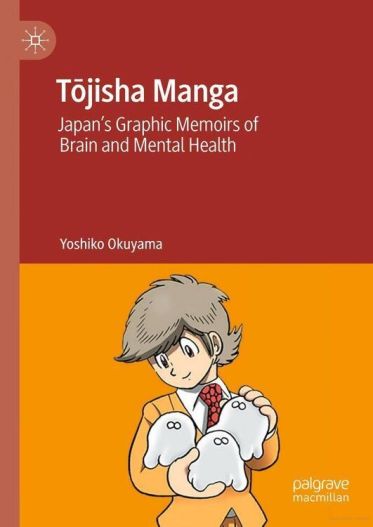
This presentation draws from Okuyama's book, Tōjisha Manga: Japan’s Graphic Memoirs of Brain and Mental Health (2022). She will begin with a brief statement on how she became involved in disability studies, personally and professionally. Then, to provide some background, she will touch upon the history of Japan’s tōjisha undō (minority rights movements). For the rest of the talk, Okuyama will focus on how depression and obsessive-compulsive disorder (OCD) are narrated in graphic memoirs in Japan, using the case studies from the book. For a fresh perspective, she will conclude with a list of the most recently published autographical comics on these and other topics of mental health such as eating disorders that are not discussed in the book.
Bio:
Yoshiko Okuyama (PhD, University of Arizona) is a professor of Japanese studies in the Department of Languages at the University of Hawaiʻi at Hilo, where she has been teaching at UH-Hilo for more than twenty years. Her areas of specialization include Japanese popular culture, disability studies, deaf studies, second language acquisition, and technology-mediated communication. Her recent publications include Tōjisha Manga: Japan’s Graphic Memoirs of Brain and Mental Health (Palgrave Macmillan, 2022), Reframing Disability in Manga (University of Hawaii Press, 2020), and Japanese Mythology in Film: A Semiotic Approach to Reading Japanese Film and Anime (Lexington Books, 2015). She received a research grant from the Association of Asian Studies in 2020, a scholarship for an NEH Summer Institute, Global Histories of Disability, in 2018, a research fellowship from the Japan Foundation in 2017, and a Nihonjijō Kyōiku Shōreikin (Japanese Affairs Educational Subsidy) at Nanzan University in 2014. She has also given presentations at universities such as Cornell University and the Georgia Institute of Technology, as well as interviews with media outlets, including National Public Radio, National Geographic, and CNN. She lives on the Big Island of Hawaiʻi, signs American Sign Language, and is a mid-life marathon enthusiast.
Additional Information
Program
East Asia Program
Textiles of Asia: Patterns & Processes
October 31, 2023
12:00 am
Carl A. Kroch Library, Kroch Asia Exhibition Space
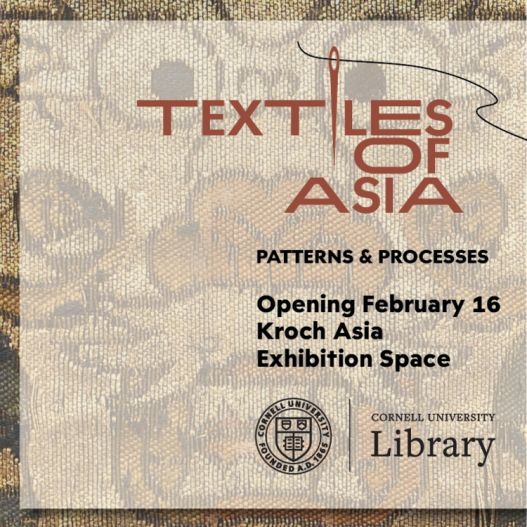
As part of the Threads of History exhibition series, Kroch Asia presents Textiles of Asia: Patterns & Processes.
There is a rich history of textiles in Asia. From the animal-skin clothing of the Ainu to the intricate weaving of silk, Asian cultures have showcased their artistry through their textiles for centuries. Textiles of Asia: Patterns and Processes covers a multitude of fabrics, designs, and production techniques created by indigenous cultures and those imported through trade and travel.
Exhbit runs February 16th - October 31st, 2023 in the Kroch Asia Exhibition Space.
Contact AsiaRef@cornell.edu for questions or more information.
Additional Information
Program
East Asia Program
Southeast Asia Program
South Asia Program
2023 Preston H. Thomas Memorial Symposium: FRINGE
March 4, 2023
8:00 pm
Abby and Howard Milstein Auditorium
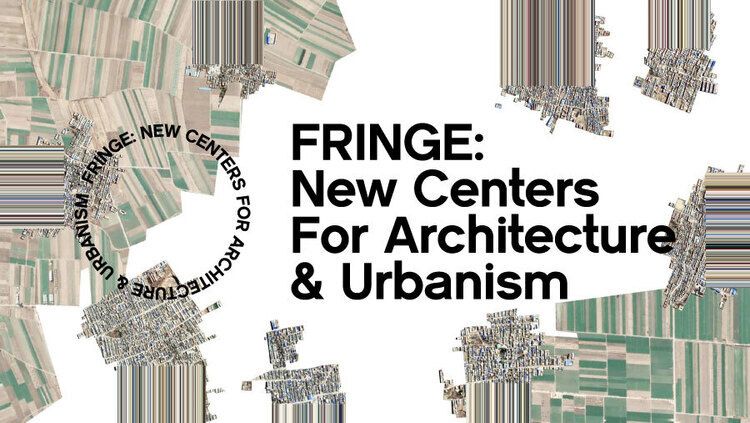
FRINGE: New Centers for Architecture & Urbanism
The FRINGE is an ambiguous and ubiquitous patchwork of zones forming a wide range of territorial landscapes that can be characterized as neither distinctly urban nor distinctly rural. Imbued with narratives driven by unrelenting and perpetual urbanization, the FRINGE serves as a global engine for urban growth, a site for extractive industries, a territory for agricultural and technological productions, and a continuous land supply for architectural production and the expansion of urbanites. Formerly understood as peripheral, these rural-urban zones constitute new conceptual centers for architecture and urbanism, from generating innovative and adaptive material usage to redefining spatial adjacency between agricultural and urban landscapes. Emerging as the predominant context for current and future urban development, the FRINGE embodies contradicting adjacencies that are situated between the local-specific and the urban-generic and outside the preconceived binaries of urban versus rural, natural versus manmade, or remote versus connected.
Containing some of the world's most intensely altered rural-urban contexts, East and Southeast Asia have provided a fertile seedbed for research on global FRINGE architecture and urbanism. Bringing together innovative design and research through the lens of the built environment, this symposium questions: How do the material and technological changes brought about by urbanization collide with the spatial, cultural, and social practices of the rural? How do such meetings create or alter the special conditions of agency and interconnection, from the digital to the traditional, from the informal to the infrastructural, within the rural-urban?
Kicking off with a keynote lecture and the first panel in Beijing on March 2 (co-hosted with the Cornell China Center), the symposium will continue with a second panel at the Milstein Hall on the Cornell University campus in Ithaca, New York, on March 3. An accompanying exhibition will be on view in the Bibliowicz Family Gallery from February 28 to March 23. The symposium and the accompanying exhibition aim to unpack the FRINGE's spatial, ecological, and technological capacities to reveal innovative design strategies that strive to be more environmentally conscious, socially equitable, and architecturally adaptive.
The Preston H. Thomas series is funded through a gift to Cornell's College of Architecture, Art, and Planning from Ruth and Leonard B. Thomas of Auburn, New York, in memory of their son, Preston. The symposium events are free and open to the public.
The Beijing panel of the symposium is co-hosted and co-sponsored by the generous support of the Cornell China Center.
Organized by Architecture Assistant Professor Leslie Lok; coordinated by Design Teaching Fellow Hanxi Wang. Exhibition assistant Jialiang (Hunter) Huang; Augmented Reality interface support by Yichen Jia.
Additional Information
Program
Einaudi Center for International Studies
East Asia Program
Southeast Asia Program
2023 Preston H. Thomas Memorial Symposium Exhibition

March 17, 2023
9:00 am
Bibliowicz Family Gallery, Milstein Hall
The 2023 Preston H. Thomas Memorial Symposium Exhibition highlights the work of leading creative experts around the world that explores and integrates regional cultural, material, technological, and spatial practices in the rural-urban territories of East and Southeast Asia. Through a collection of visual materials and augmented reality (AR) experiences, the exhibition provides an immersive and interactive experience of works that challenge preconceived notions of the rural-urban binary and propose exciting potentials for rethinking construction technologies, sustainability, and citizen agency in the built environment.
The exhibition features the work of:
1+1>2 Architects, Amateur Architecture Studio, ArchiUnion, Bangkok Project Studio, DnA Design and Architecture, Drawing Architecture Studio, Future Cities Laboratory, Rural-Urban Building Innovation Laboratory, Rural Urban Framework, Studio Anna Heringer, SUP Atelier
Learn more about the 2023 Preston H. Thomas Memorial Symposium "FRINGE: New Centers for Architecture and Urbanism."
Additional Information
Program
Einaudi Center for International Studies
East Asia Program
Southeast Asia Program
Carlos Alvarado Quesada: Fighting for Democracy and the Planet: Costa Rica's Case
March 22, 2023
6:00 pm
Alice Statler Auditorium
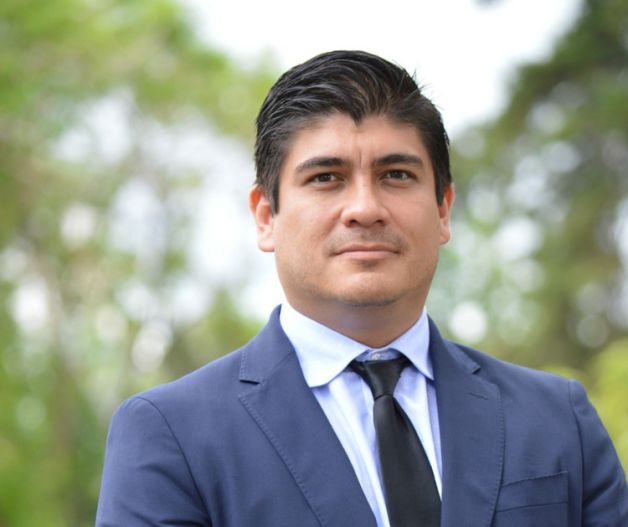
Bartels World Affairs Lecture In this year's Bartels lecture from the Mario Einaudi Center for International Studies, former president of Costa Rica Carlos Alvarado Quesada shares how conservation and sustainability are crucial for preserving democracy around the world. Costa Rica is one of the most biodiverse spots on the planet, with more than one-quarter of the nation's land protected in parks and preserves. As Costa Rica's leader from 2018 to 2022, Alvarado proposed a challenge for his country and the world: to make Costa Rica a decarbonized nation by 2050. During his visit to Cornell, Alvarado explores some of the questions that guided his administration: What roles do democracy and governance play in shaping environmental policies at the local, national, and global levels? And how can we meet the basic needs of the world’s ever-growing human population—equitably and democratically—without sacrificing the health of the planet and its other inhabitants? A reception with refreshments will follow the lecture. Lecture: 6:00–7:30 p.m. | Alice Statler AuditoriumReception: 7:30–8:30 p.m. | Park AtriumFree ticket required for in-person attendance. Reserve your ticket for the lecture and/or reception today! Join the lecture virtually by registering at eCornell. *** How did President Alvarado's policies protect Costa Rica's environment? Read a Bartels explainer by the Lab of O's Viviana Ruiz-Gutierrez. *** About Carlos Alvarado Quesada Carlos Alvarado Quesada was Costa Rica's 48th president, serving from 2018 until 2022. He was Costa Rica's youngest president in a century, taking office at age 38. Representing the Citizens' Action Party (PAC), Alvarado previously served as minister of labor and social security. Alvarado received the 2022 Planetary Leadership Award from the National Geographic Society for his commitment and action to protect the ocean. He accepted on behalf of his country the 2019 Champion of the Earth Award, the United Nations' highest environmental honor. A writer and political scientist, Alvarado is currently Professor of Practice of Diplomacy at Tufts University's Fletcher School in Massachusetts. *** About the Bartels World Affairs Lecture The Bartels World Affairs Lecture is a signature event of the Mario Einaudi Center for International Studies. Part of Einaudi's work on democratic threats and resilience, this year's lecture is cosponsored by Einaudi's Latin American and Caribbean Studies Program. The Einaudi Center’s flagship event brings distinguished international figures to campus each academic year to speak on global topics and meet with Cornell faculty and students, particularly undergraduates. The lecture and related events are made possible by the generosity of Henry E. Bartels ’48 and Nancy Horton Bartels ’48.
Additional Information
Program
Einaudi Center for International Studies
East Asia Program
Institute for African Development
Institute for European Studies
Latin American and Caribbean Studies
Reppy Institute for Peace and Conflict Studies
South Asia Program
Southeast Asia Program