
East Asia Program
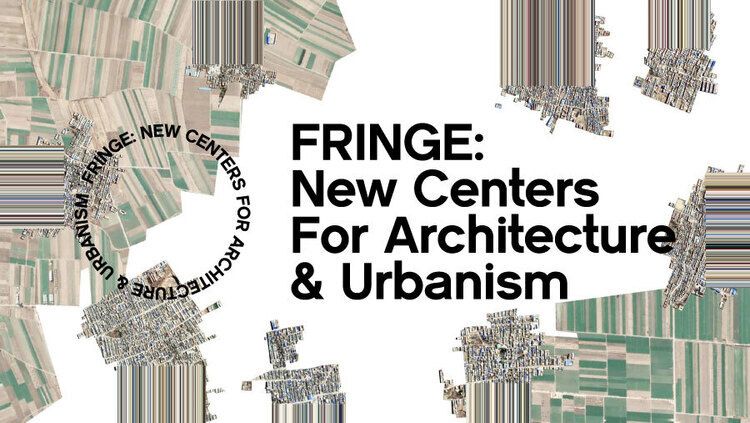
FRINGE: New Centers for Architecture and Urbanism (Beijing Panel)
March 3, 2023
8:00 pm
FRINGE: New Centers for Architecture and Urbanism - 2023 Preston H. Thomas Memorial Symposium
Beijing Panel — Thursday, March 2 (Ithaca) | Friday, March 3 (Beijing)
In-Person & Livestream Webinar
Cornell China Center | 1208 Beijing IFC Tower B
8 p.m. (Ithaca) | 9 a.m. (Beijing)
Welcome and Introduction
8:15 p.m. (Ithaca) | 9:15 a.m. (Beijing)
Keynote Address: Lu Wenyu & Wang Shu, Amateur Architecture Studio
9:15 p.m. (Ithaca) | 10:15 a.m. (Beijing) | Panel
Speakers:
Xu Tiantian, DnA Design and Architecture
Song Yehao, SUP Atelier
Song Gang, Atelier cnS
Moderator:
Ying Hua, Director of Cornell China Center
RURAL ITERATIONS
Where the Oxford English Dictionary defines “reiteration” as an act of repetition, in architecture, to iterate and reiterate is to work in a cyclical methodology, prototyping, testing, and analyzing, to refine a product or process.
This panel looks in detail at recent works that “iterate” upon China’s rural territories. In these projects, the rural is reclaimed as a repository of architectural materials and methods, which had been gradually lost during urbanization, and re-iterated to produce new architecture that is nonetheless highly contextualized and connected to local cultural and material practices. Sometimes this reclamation is literal – repurposing material and site; and sometimes methodological; and sometimes programmatic.
Through the work of the speakers, we gain an understanding of the speed, scale, and context of China’s rural transformation, as well as how practitioners can work with local communities and craftsmen, manufacturers, government agencies, and outside experts on technology to reiterate materials and cultures practices for new architectural methods.
The symposium also has additional events in Ithaca. View the 2-day symposium overview, schedule, exhibition, and organizers.
The Preston H. Thomas series is funded through a gift to Cornell's College of Architecture, Art, and Planning from Ruth and Leonard B. Thomas of Auburn, New York, in memory of their son, Preston. The symposium events are free and open to the public. The Beijing panel of the symposium is co-hosted and co-sponsored by the Cornell China Center. Organized by Architecture Assistant Professor Leslie Lok; coordinated by Design Teaching Fellow Hanxi Wang. Exhibition assistant Jialiang (Hunter) Huang; Augmented Reality interface support by Yichen Jia.
Additional Information
Program
Einaudi Center for International Studies
East Asia Program
Southeast Asia Program
Remix: Recycling the 1990s in Chinese Digital Media
March 2, 2023
1:00 pm
Rockefeller Hall, 374
This talk formulates an approach to Trans-Asia Critical Humanities by showing how trans-local theory emerges and travels from situated ordinary experience to bring Asia in dialogue with the world. With a focus on how media forms are interconnected to tell stories of our contemporary time, I dive into Chinese digital media scenes to consider the theoretical potential of remix, a creative practice of recycling waste and fragments across media to transmit social memory and political consciousness. I discuss a cultural boom since the late 2010s, within which repressed stories of laid-off workers during China’s radical market transitions in the 1990s have been refashioned across all realms of media to critique the current economic crisis and labor precarity. By examining how the art of remix crosses spatial, temporal, medial, and ideological boundaries, I highlight its intervention in blasting open a trans-Asian history of disposability and forging new grounds of relatedness in the precarious global present.
Additional Information
Program
East Asia Program
Asia in Loops; or, How to Stop Worrying about Method
February 21, 2023
4:30 pm
Rockefeller Hall, 374
An interpretation of Trans-Asia Critical Humanities based on generalizable notions of hybridity, interconnected flows, and horizontality evokes the principle of nested, generative feedback functions, which increasingly undergird finance capital, machine learning, and data governance today. A diagram of loops easily conjures the recursive fantasy driving our economic infrastructure, which claims that everything belongs to the same kind of network. In view of this cultural logic of self-generating networks, even our prized notions of scholarly self-reflexivity, and by extension, complicity, may be inadequate. Despite this preliminary cynicism, my talk inhabits different scales of thinking to argue that the crucial difference between a speculative, heuristic loop and an automated, systemic one remains one for the critical humanities to make. “Asia in Loops” maps the trajectory of my research beginning from my first book, The Stone and the Wireless: Mediating China, 1896-1906 (Duke UP, 2021). From there, I share my ongoing research that attempts a version of Trans-Asia, which does not reproduce the curves and lines of interconnectedness found in any Belt-and-Road-Initiative-related infographics. Ultimately, “Asia in Loops” raises a very old problem: can culture or critique still assert its autonomy in the face of the recursive principles driving such varying political-technical-commercial assemblages or network forms: And can we do so without worrying excessively about method?
Additional Information
Program
East Asia Program
Einaudi Awards Send Students Worldwide
Undergrad Researchers in the Daily Sun
Summer research opportunities for undergraduates include global internships and travel awards from Einaudi's regional and thematic programs.
Additional Information
Furor Over Chinese Spy Balloon Leads to a Diplomatic Crisis
Jessica Chen Weiss, EAP
Jessica Chen Weiss, professor of government and public policy, says that the cancellation of Secretary of State Antony Blinken’s trip to Beijing “reflects the unfortunate triumph of symbolism over substance."
Additional Information
Where U.S.-China Relations Stand after Suspected Spy Balloon Was Shot Down

Jessica Chen Weiss, EAP
Jessica Chen Weiss, professor of government and public policy, discusses U.S.-China relations after the U.S. shot down what is thought to be a Chinese spy balloon.
Additional Information
The Global University, Addressing New Subjects of Knowledge
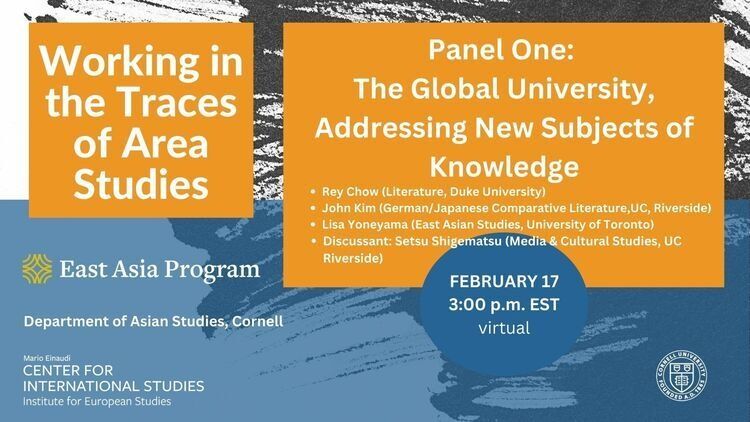
February 17, 2023
3:00 pm
The Global University, Addressing New Subjects of Knowledge is Panel 1 of a 4 panel series which is part of Working in the Traces of Area Studies hosted by faculty emerita Brett DeBary (Asian Studies, Cornell) and Naoki Sakai (Asian Studies, Cornell).
We propose that the disciplines called “Area Studies,” while greatly
contributing to the postwar reform of the university, have reached a point
of historical stasis that demands we search for novel objects,
unaccustomed viewpoints, and different methods of inquiry. After World
War II, the “West’s” center of gravity shifted from Western Europe to North
America, with the United States beginning to occupy the epistemological
center in knowledge production. But Area Studies now confronts the
emergence of global universities transformed by the requirements of
neoliberal economic reforms, the shifting geopolitical balance of power,
unprecedented mobility of information and subjects of knowledge, and the
formation of transnational communities based on media-generated affect.
What are the implications for Area Studies, and its relation to the
humanities in general?
Panelists:
Rey Chow (Literature, Duke University)
John Kim (German/Japanese Comparative Literature, UC, Riverside)
Lisa Yoneyama (East Asian Studies, University of Toronto)
Discussant: Setsu Shigematsu (Media and Cultural Studies, UC, Riverside)
Faculty hosts: Brett DeBary and Naoki Sakai
What is Working in the Traces of Area Studies?
“Working in the Traces of Area Studies” will convene a series of international virtual symposia over the 2023 academic year. “The situation of area studies” will be the overarching theme, with the objective of developing thinking on how the tasks assigned to postwar “area studies” might be re-envisioned, and asking if there is still a plausibility of a trans-national, trans-ethnic, and trans-civilizational positionality from which the discipline of area studies may be revised. Discussions will focus on the implications of the ongoing reconfiguration of power relations which have rendered uncertain the places of the “West” and “non-West” in the disciplinary structure of area studies. Particularly critical will be analysis of the inter-related related concepts of “area,” “language,” “culture” and embodied “ethnicity” or “race.” On this basis, the series will suggest that new comparative perspectives are urgently needed, especially to African and East European Studies, which have traditionally shared with Asian Studies the designation of “area studies.”
Additional Information
Program
Einaudi Center for International Studies
East Asia Program
Jeremy Lee Wallace | The Political Economy of Greening China
February 6, 2023
2:45 pm
Olin Hall, 155
Abstract: Without action from China, the world will not be able to contain the climate emergency. China produced nearly 30% of global carbon emissions in 2020, making Xi Jinping’s declaration that year that his country would be carbon neutral by 2060 one of epic significance. Will China be able to meet or exceed this goal, and what political and economic roadblocks stand in its way? This lecture introduces some of the challenges, opportunities, and competing narratives at play, with a particular focus on real estate construction and China’s growth model.
Bio: Prof. Wallace teaches courses related to urbanization, authoritarianism, and economic development. China’s Next Economy is a lecture course focusing on today’s debates about the costs and opportunities facing the leaders and citizens of China as they transition into the technology and service-dominated future.
This event is presented as part of the 2023 Perspectives on the Climate Change Challenge Seminar Series:
Most Mondays, Spring Semester 2023, 2:45-4:00pm(via Zoom OR In person in 155 Olin Hall)This university-wide seminar series is open to the public, and provides important views on the critical issue of climate change, drawing from many perspectives and disciplines. Experts from Cornell University and beyond present an overview of the science of climate change and climate change models, the implications for agriculture, ecosystems, and food systems, and provide important economic, ethical, and policy insights on the issue. The seminar is being organized and sponsored by the Department of Biological and Environmental Engineering and Cornell Atkinson Center for Sustainability.
Additional Information
Program
East Asia Program
Christopher Marquis: Mao and Markets (virtual book talk)
February 9, 2023
7:30 am
Come hear Christopher Marquis discuss his new book Mao and Markets (Yale University Press, 2023) that charts how Mao’s ideological principles, mass campaigns, and socialist institutions have enduringly influenced Chinese entrepreneurs, listed companies and provincial and city politicians.
As China opened up its economy over the past four decades, conventional wisdom held that the country’s growing embrace of free markets would lead to a more liberal society. Instead, China’s unprecedented economic growth has positioned state capitalism as a durable foil to the orthodoxy of free markets, to the confusion of many in the West. Many have commented on China's renewed embrace of Maoist principles. What does this mean for the future of the Chinese economy and relations with the West? What are the implications of China returning to some of the ideological principles spearheaded by Mao Zedong? And how much of China’s decades of economic success can be credited to Mao and Maoism?
This panel is cohosted by the Cornell China Center, the Yale Club of Hong Kong, the Notre Dame Beijing Global Gateway, and the Yale Center Beijing.
About the Speaker
Christopher Marquis is the Sinyi Professor of Chinese Management at the University of Cambridge Judge Business School. He is the author of the award winning books Better Business: How the B Corp Movement is Remaking Capitalism and Mao and Markets: The Communist Roots of Chinese Enterprise. Prior to joining Cambridge he worked at Cornell for over 6 years, and Harvard for over 11 years, where he developed an award-winning course on social entrepreneurship. He is the author of more than 20 peer-reviewed academic articles and more than 50 Harvard business cases on topics related to sustainable business, and has earned awards for scholarly achievement from the Academy of Management and the American Sociological Association. Marquis earned a PhD in sociology and business administration from the University of Michigan and BA in History from Notre Dame. Before his academic career, he worked for six years in the financial services industry, most recently as vice president and technology manager for a business unit of J.P. Morgan Chase.
Event Details
7:30 am - 8:30 am Eastern Standard Time (EST) / 8:30 pm - 9:30 pm China Standard Time (CST). The event language is English.
Register for the book talk. Advance registration is required before Febrary 7 at 11:00 pm EST to obtain a Zoom event link. Your registration request will be confirmed at least 24 hours ahead of the event. If you encounter problems, please email yalecenterbeijing@yale.edu.
Please enter the Zoom room 15 minutes before the event start time. When the room is full, latecomers will not be able to join the event.
Additional Information
Program
Einaudi Center for International Studies
East Asia Program
Xingke tiben: A Murder Case from 1762
April 21, 2023
3:30 pm
Rockefeller Hall, 374 Asian Studies Lounge
Xingke tiben: A Murder Case from 1762
CCCC with Matthew Sommer (History, Stanford)
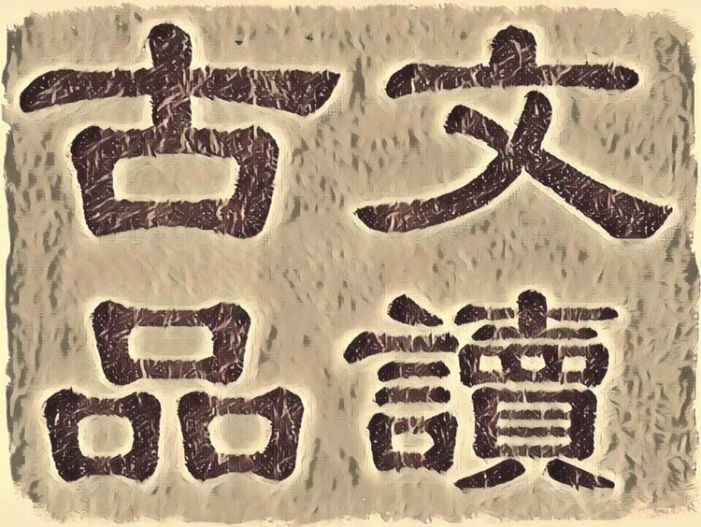
The Cornell Classical Chinese Colloquium (CCCC) 古文品讀 is a reading group for scholars interested in premodern Sinographic (古文) text. The group typically meets monthly during the semester to explore a variety of classical Chinese texts and styles. Other premodern texts linked to classical Chinese in Japanese, Korean, and Vietnamese have been explored. Presentations include works from the earliest times to the 20th century. Workshop sessions are led by local, national, and international scholars.
All are welcome, with any level of experience with classical Chinese or Sinographic text.
Additional Information
Program
Einaudi Center for International Studies
East Asia Program