
East Asia Program
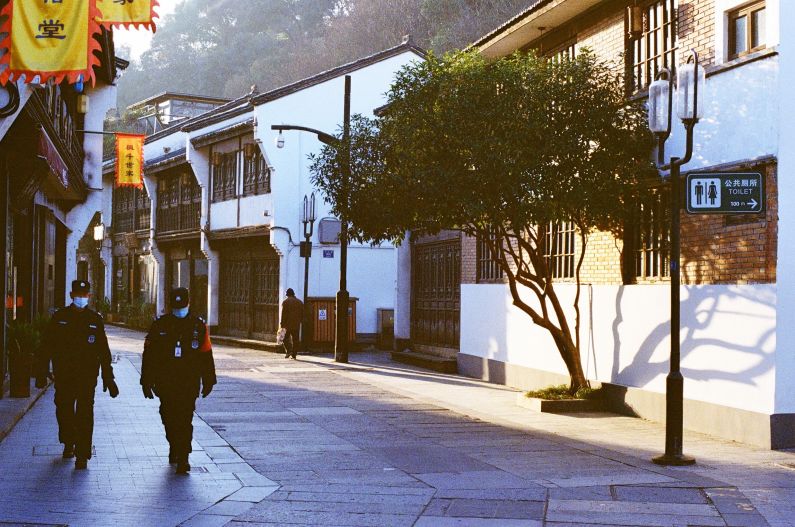
China’s Private Crackdown on Protests Targets People in Their Homes
Jeremy Wallace, EAP
“To me, this feels very familiar, at least this part of it: the idea of kind of not trying to make a scene, trying to reduce backlash in the moment,” says Jeremy Wallace, associate professor of government. “By kind of more targeted repression and hoping that the fear of such things will keep people from protesting in the first place.”
Additional Information
China’s ‘Modest’ Covid and Economic Measures Aren’t Going to Cut It, Professor Says

Eswar Prasad, SAP
Eswar Prasad, professor of international trade policy, says it’s “interesting that the leadership seems to have allowed at least some room for the protests to play out … [but] the big question is whether the message is getting through to the country’s top leadership.”
Additional Information
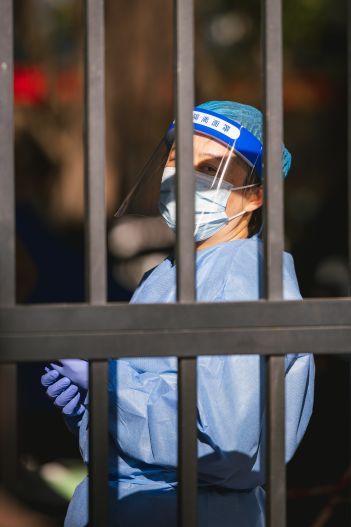
China’s Covid Narrative is Backfiring
Jeremy Wallace, EAP
“Given the reality that China has basically had so little devastation in terms of health effects, it would really crush the narrative. And I think that that narrative is important,” says Jeremy Lee Wallace, associate professor of government.
Additional Information
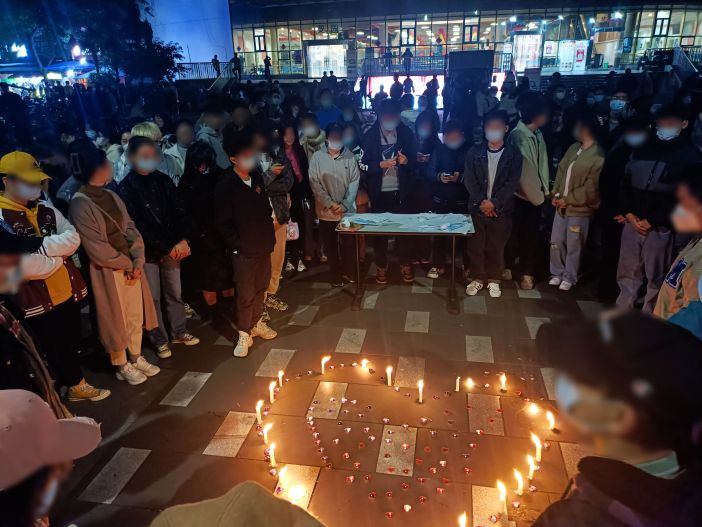
What Makes China’s Wave of Protests Different This Time
Eli Friedman, EAP
“For the first time under Xi Jinping, we have a nationwide protest movement,” says ILR professor Eli Friedman in an interview in Vox.
Additional Information
Analysis: Apple Supply Chain Data Shows Receding Exposure to China as Risks Mount

Eli Friedman, EAP
“The China supply chain is not going to evaporate overnight,” says Eli Friedman, associate professor in the ILR School. “Decoupling is just not realistic for these companies for the time being.”
Additional Information
A More Pragmatic Xi Jinping Launches a Global Charm Offensive for China

Jessica Chen Weiss, EAP
“Xi’s view is really tit for tat. If you engage, they will engage. If you want to throw a punch, Xi is going to throw a punch,” says Jessica Chen Weiss, professor of government. “We may look back and see Bali as an inflection point, where it might begin to level off and not accelerate so rapidly toward confrontation.”
Additional Information
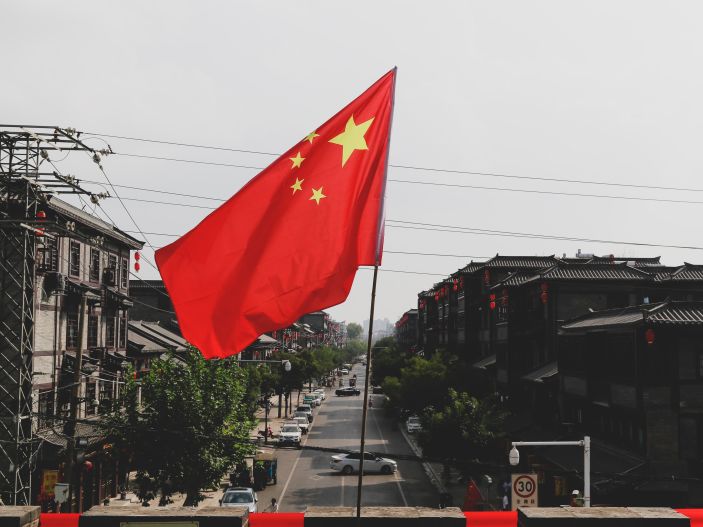
Why Protesters Are Targeting Xi Jinping for China’s "Zero Covid" Failures
Jeremy Wallace, EAP
Jeremy Wallace, associate professor of government and faculty director of the East Asia Program, writes this analysis about the protests in China over its zero Covid policy.
Additional Information
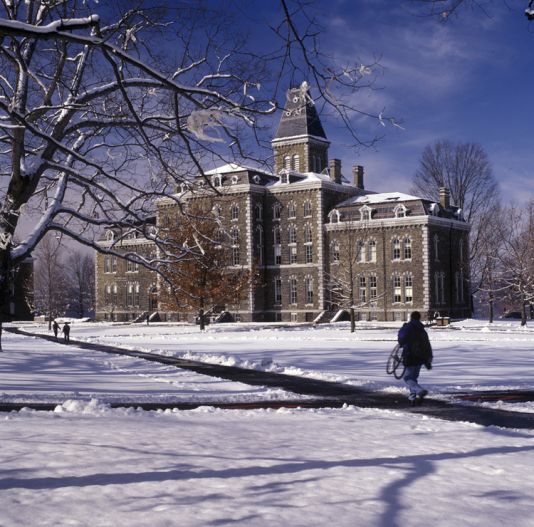
Situating the Protests in China: a panel discussion of Cornell students and faculty
December 6, 2022
4:45 pm
McGraw Hall, 165
This panel discussion will bring together four speakers to discuss various aspects of the recent protests in China that are without recent precedent. We will aim to provide social and political context for the protests as well as historical analysis. Our panelists include both students and faculty who will present diverse viewpoints. The goal of the event is simply to bring people together to better understand what is happening, why it is happening, and to understand how things might develop from here.
Panelists: Eli Friedman, moderator
Allen Carlson and Xu Xin
Co-sponsored by Brittany and Adam J. Levinson China and Asia-Pacific Studies Program and the East Asia Program.
Additional Information
Program
Einaudi Center for International Studies
East Asia Program
Announcing the winners of the Kyoko Selden Memorial Translation Prize for 2022

The final year of this prize
The Asian Studies Department of Cornell University is pleased to announce the Kyoko Selden Translation Prize for 2022 in this, our final year of the prize. In the category of previously published translators, the 2022 award went to Matthew Fraleigh (Associate Professor, Brandeis University)for his translation of Hayashi Kakuryō’s “Record of a Journey that Was More than Mere Diversion” (Kishikairoku). The award in the previously unpublished category was given to Yi Deng (Doctoral Candidate, Columbia University), for her translation of chapters from Santō Kyōden ’s profusely illustrated 1806 prose fiction, Faithful Birds of Sorrow (Utō yasukata chūgiden).
The Asian Studies Department of Cornell University is pleased to announce the Kyoko Selden Translation Prize for 2022 in this, our final year of the prize. As always, we were both educated and inspired by the range of work we received: texts that spanned Japanese writings produced from the 13th to the 21st century in a variety of modes---from individually to collectively written works, and from canonical, marginal, and even anonymous sources. We were gratified by the way this year’s submissions once again resonated with the literary passions and impressive textual competencies of our esteemed former colleague, Kyoko Selden. We would also like, on this occasion, to thank the friends, colleagues, and former students of Kyoko’s who contributed to the prize funds, as well as to the Selden family and the Asia Pacific Journal’s Japan Focus for their generosity and support.
In the category of previously published translators, the 2022 award went to Matthew Fraleigh (Associate Professor, Brandeis University)for his translation of Hayashi Kakuryō’s “Record of a Journey that Was More than Mere Diversion” (Kishikairoku), an early Meiji chronicle of the author’s 1871 trip along the Tama River and through the mountains of present-day Okutama, with plentiful allusions to Chinese poetry and literary landscapes. Honorable Mention in this category was awarded to Lin-shih Loh (Assistant Professor, National University of Singapore) for her translation of Letters from Iwaki (Iwaki Tsūshin 2012-2014), by Yoshida Hiromi. The letters record Yoshida’s observations in the coastal city of Iwaki, 54 miles south of Fukushima, as she assisted evacuees living for long periods of time displaced from their homes in the areas worst hit by the disasters of 3.11.
The award in the previously unpublished category was given to Yi Deng (Doctoral Candidate, Columbia University), for her translation of chapters from Santō Kyōden ’s profusely illustrated 1806 prose fiction, Faithful Birds of Sorrow (Utō yasukata chūgiden). The tale narrates fantastic exploits attributed to a daughter and son of Taira Masakado in their quixotic pursuit to avenge their father’s death after the failure of his rebellion in 940.
In this concluding year of our work we would finally like to express our appreciation for all who have participated in the Selden Translation Prize competition, as it has honored and evoked our memories of the deeply intertwined relations between scholarship and translation in Kyoko Selden’s own work.
Additional Information
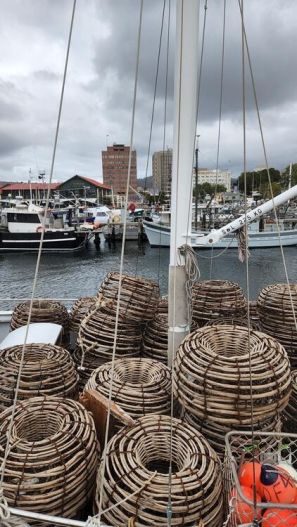
Tracing the Chinese Crayfish Trade in Kenya
December 8, 2022
12:00 pm
Uris Hall, Einaudi Conference Room 153
In this talk, Amanda Kaminsky will present a paper that untangles the supply chain of Kenya's crayfish industry, to explore how multispecies landscapes come to manifest and shape our social and cultural norms. Amanda draws from one year of ethnographic fieldwork to analyze the historical political ecology of crayfish in Kenya and its contemporary meaning among Chinese consumers. As a nonnative species feeding a primarily Chinese market, crayfish highlight the ambiguity of foreign and native categories, as well as the ambiguous position occupied by China in the Kenyan imagination.
Amanda Kaminsky is a Ph.D. candidate in sociocultural anthropology at the University of Michigan. Amanda earned an M.S. in Environmental Policy at the University of Michigan School of Environment and Sustainability, and a B.A. in Chinese from Middlebury College.
This event is hosted by the Migrations initiative, and co-sponsored by the East Asia Program and Institute for African Development.
RSVP to save your spot for a vegan/vegetarian Thai lunch.
Additional Information
Program
Einaudi Center for International Studies
East Asia Program
Institute for African Development