
East Asia Program
EAP Spring '23 Event Schedule

Engendering China, Korean Film Series, Multimedia-art
This semester features 12 guest speakers, two symposia, a Korean film series at Cornell Cinema called, 'Power of Seeing,' the Annual Hu Shih Distinguished Lecture, and the Morning Dew media installation by artist-in-residence Soni Kum at the Johnson Museum. Take advantage of these dynamic and engaging experiences. And visit this site often for event updates.
2/01 Morning Dew: The Stigma of Being Brainwashed by Soni Kum multimedia exhibition at the Johnson Museum of Art
2/06 The Political Economy of Greening China by Jeremy Wallace (Government, Cornell University and EAP Director) at 4:00 p.m. Olin Hall 155
2/13 CCCI: Men, Masculinity, and Childbirth in Early Twentieth-Century China by Ling Ma (History, SUNY Geneseo) at 4:45 p.m.Goldwin Smith Hall Kaufman Auditorium GSH 64
2/17 The Global University, Addressing New Subjects of Knowledge faculty hosts Brett DeBary and Naoki Sakai, professors emerita (Asian Studies, Cornell) and panelists at 3:00 p.m. Virtual
2/17 CCCC: Content and Form: Dunhuang Anthologies of Tang Poetry by Casey Stevens (Asian Studies, Cornell) Cornell Classical Chinese Colloquium text-reading at 3:30 p.m. Rockefeller Hall 374
3/6 CCCI: Her Voice: Recounting Japanese Military Sexual Slavery in Chinese Literature and Film by Xian Wang (East Asian Languages and Cultures, University of Notre Dame) at 4:45 p.m. Goldwin Smith Hall Kaufman Auditorium GSH 64
3/9 Japan’s Graphic Memoirs of Depression and OCD by Yoshiko Okuyama (Japanese Studies, University of Hawai'i at Hilo) at 4:30 p.m. Goldwin Smith Hall Kaufman Auditorium GSH 64
3/10 Is the University Still a Site of Critical Thinking? Critical Thinking in the Ruins at 1:00 p.m. Virtual
3/15 Tour of Duty by Dong-ryung Kim & Kyung-tae Park (2012, 150 min.) Power of Seeing Korean Film Series at 7:00 p.m. Cornell Cinema 104 Willard Straight Hall
3/22 The Pregnant Tree and the Goblin by Dong-ryung Kim & Kyung-tae Park (2019, 115 min.) Power of Seeing Korean Film Series at 7:00 p.m. Followed by a virtual Q and A with filmmakers. Cornell Cinema 104 Willard Straight Hall
3/25 Morning Dew Symposium Borders, Visibility, and Invisibility featuring Soni Kum, artist in residence, collaborating artists, art critics, art historians, and East Asia schoalars from 2:00-5:00 p.m. at the Wing Lecture room Floor 21, The Herbert F. Johnson Museum
3/30 Majority Rule and Consortial Policymaking: The Evidence from Early China The Annual Hu Shih Distinguished Lecture by Michael Nylan (History, UC Berkeley) at 4:45 p.m. Physical Sciences Building 120
3/31 CCCC: Michael Nylan (History, UC Berkeley) Cornell Classical Chinese Colloquium text-reading at 3:30 p.m. Rockefeller Hall 374 Asian Studies Lounge
4/12 The Woman, The Orphan, and The Tiger by Jane Jin Kaisen and Guston Sondin-Kung (2010, 72 min.) Power of Seeing Korean Film Series at 7:00 p.m. Cornell Cinema 104 Willard Straight Hall
4/13 Is Japan’s Grip on Ethnic Nationalism Slipping? by Charlie Morgan (Sociology, Ohio U) at 4:45 p.m. Physical Sciences Building 120
4/19 Host Nation by Ko-woon Lee (2016, 90 mins.) Power of Seeing Korean Film Series at 7:00 p.m. Cornell Cinema 104 Willard Straight Hall
4/14 CCCC with Liyu Hua (Asian Studies, Cornell) at 3:30-5:30 p.m. Rockefeller Hall 374 Asian Studies Lounge
4/20 CCCI: Transgender in Late Imperial China: Case Studies from the Qing Archives by Matthew Sommer (History, Stanford University) at 4:45 p.m. Goldwin Smith Hall Kaufman Auditorium GSH 64
4/21 CCCC: Matthew Sommer (History, Stanford University) Classical Chinese Colloquium text-reading at 3:30 p.m. Rockefeller Hall 374 Asian Studies Lounge
4/24 Working in the Traces of Area Studies Panel III: Japanese Studies and Area Studies at 9:00 p.m. EST and 10:00 a.m. Japan time; virtual
4/27 Chinese in the Digital Age by Thomas Mullaney (History, East Asia Languages, and Cultures, Stanford University) at 12:30 p.m. Virtual
5/01 Making Peace With Nature: Ecological Encounters Along the Korean DMZ by Eleana Kim (Anthropology, UC Irvine) at 4:45 p.m. Goldwin Smith Hall GSH64 Kaufman Auditorium
5/04 Working in the Traces Panel IV: Hierarchies of Knowledge Transmission and the Developmentalist Paradigm panel discussion at 8:00 p.m. EST and on May 5 at 9:00 a.m. in Japan's timezone.
5/05 Radical Future: Gender and Science Fiction in Contemporary Korea by Ji-Eun Lee (East Asian Languages and Cultures, Washington University in St. Louis) at 4:45 p.m. Virtual
5/08 CCCI: The Fabric of Care: Women’s Work and the Politics of Livelihood in Socialist China by Yige Dong (Sociology, University at Buffalo) at 4:45 p.m. Goldwin Smith Hall Kaufman Auditorium GSH 64
5/10 and 11 Biophobia Symposium Plenary On May 10 from 7:00-9:00 p.m. and May 11 Biophobia Symposium Round-table discussions from 10:30 a.m. to 4:30 p.m. Both dates are at the College of Human Ecology Savage Hall 200. Hybrid.
Additional Information
Program
Majority Rule and Consortial Policymaking: The Evidence from Early China | The Annual Hu Shih Distinguished Lecture
March 30, 2023
4:45 pm
Physical Sciences Building, 120
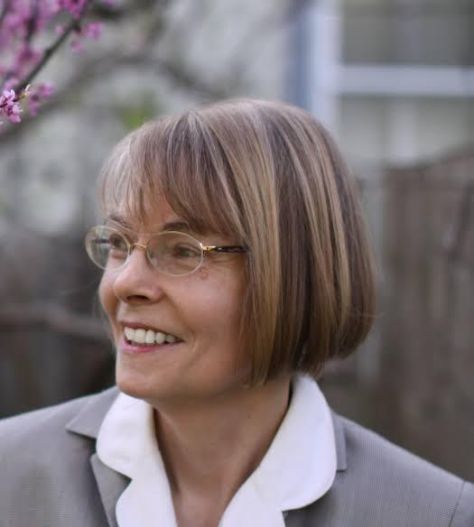
Michael Nylan (History, UC Berkeley) gives this year's Annual Hu Shih Distinguished Lecture on "Majority Rule and Consortial Policymaking: The Evidence from Early China."
Inspired by Hu Shih’s many contributions to the study of Chinese history — among them, his careful outline of “the logical method in ancient China” and his many writings on “freedom” — this talk intends to challenge a popular narrative equating “Asian values” or, more narrowly, “Chinese tradition,” with “one-man, top-down rule.” The talk will instead show first, that a range of theoretical writings in classical Chinese advocate consortial rule and wide consultation, for cogent reasons, and second, that not only the Han histories but also the built environment in the Western Han capital of Chang’an attest to the importance the court placed on facilitating frequent exchanges between members of the governing elites and those they governed, via well-established institutions, networks, and communication corridors. The newly excavated materials support this revisionist picture for all administrative levels during the early empires in China, suggesting that Hu Shih's optimistic vision of a brighter Chinese future was not entirely utopian. Please rsvp for the in-person event. Though we request an rsvp, no one will be turned away as long as we have capacity.
Michale Nylan bio:
Michael Nylan 戴梅可generally writes in three disciplines: the early empires in China, philosophy, and art and archaeology. Her current projects include a reconstruction of a Han-era Documents classic (submitted to press; under review); a general-interest study of the "Four Fathers of History" (Herodotus, Thucydides, Sima Qian, and Ban Gu), which is nearly done, and a study of the politics of the common good in early China tentatively entitled The Air We Breathe. Recent published books include Chang'an 26 BCE: an Augustan age in China, with substantive comparisons to Rome and the Roman empire; The Chinese Pleasure Book; and two translations, of Yang Xiong's Fayan and The Art of War.
Research Interests
Early China and its modern reception: Seven centuries of Warring States through Eastern Han (475 BC–AD 220), with an emphasis on sociopolitical context; aesthetic theories and material culture; and cosmological belief; gender history and the history of such emotions as "daring" and "salutary fear" (aka prudential caution).
New Research
My new research is on the Four Fathers of History (Herodotus, Thucydides, Sima Qian, and Ban Gu); on the distinctive sociopolitical and culture conditions for classical learning in the two Han dynasties; and on "the politics of the common good" in early China.
Two book-length translations for the University of Washington Press ("Classics of Chinese Thought") series: (1) The Documents (Shu ching), in collaboration with He Ruyue, Shaanxi Shifan daxue; and (2) Wang Ch'ung's Lun heng.
Education
PhD, Princeton University, 1976-81. East Asian Studies.
MA, State University of New York at Buffalo, 1970-73. History.
BA, University of California at Berkeley, 1968-70. History.
Additional Training:
Cambridge University (Oriental Studies) and the Institute of Archaeology (Beijing)
Additional Information
Program
Einaudi Center for International Studies
East Asia Program

Chinese in the Digital Age by Thomas Mullaney (History, EA Languages and Cultures, Stanford)

April 27, 2023
12:30 pm
For over 70 years, Chinese script has been a driving force in shaping the digital age and pushing it beyond familiar alphabetical ecologies. Western-designed screens, printers, keyboards, character encoding schemes, and more have all been forced to adapt to accommodate the intricacies of the world's one major non-alphabetical writing system. Despite China's position as a global leader in technology, however, these ecologies of Chinese computing have long remained uncharted territories--until now. Join Stanford historian Thomas S. Mullaney on a tour of Chinese in the digital age.
Additional Information
Program
Einaudi Center for International Studies
East Asia Program
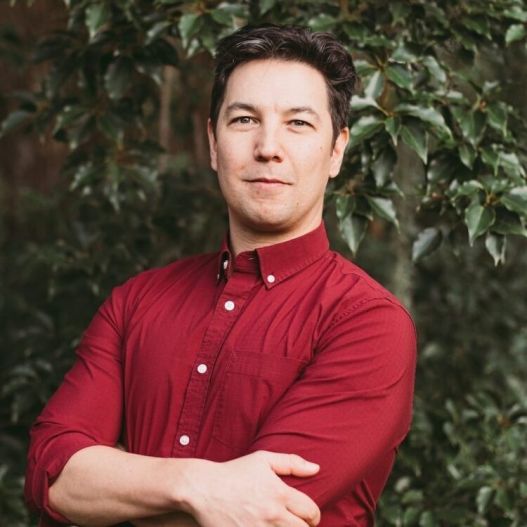
Matthieu Felt, Haga Yaichi and the Meaning of 'Ancient' Japanese Literature
January 31, 2023
4:30 pm
Rockefeller Hall, 374
Scholars of eighth-century Japanese literary works such as Kojiki, Nihon shoki, and Man’yōshū are conventionally assigned the subfield of “ancient literature.” This subfield emerged in the late nineteenth century, when two paradigms vied to define the character of Japanese antiquity and, by extension, the nature of Japanese literature. One paradigm envisioned antiquity as immature and undeveloped, and ending around 710 CE. The other claimed that Japanese antiquity was a golden age of literate production, ending in 794 CE. In this talk, I show that Tokyo Imperial University Professor Haga Yaichi changed his position from the former paradigm to the latter between 1890 and 1899, and I argue that this reversal stemmed from the desire to create a national popular literature for the Japanese ancient period. Due to Haga’s influence, the latter paradigm is now the orthodox position, with great consequence for both the academic study of premodern Japanese literature and the popular perception of its constituent texts. A reevaluation of the origins of premodern Japanese literature, and especially of ancient literature, is necessary for the field to exorcise the ghosts of Meiji nationalism.
Additional Information
Program
East Asia Program
Drisana Misra, Metallic Archipelagos: The Amer-Asian Creolization of Gold and Silver Isles

January 26, 2023
1:00 pm
Rockefeller Hall, 374
During the so-called “Age of Discovery,” Spanish, Portuguese, Dutch, and Japanese ships crisscrossed the Pacific in search of islands rich in precious metals. One of these fabled imaginaries materialized on the cartographic plane as the “Gold and Silver Isles.” They were often depicted in the northern seas off the coast of the Japanese archipelago. Known as kinshima (“Gold Isle”) and ginshima (“Silver Isle”) in Japanese, these islands became the object of both Japanese and European interests in the region, as seafarers spread word of their anticipated location. Through the transpacific voyages of Francisco Gali, Pedro de Unamuno, Sebastián Vizcaíno, Tanaka Shōsuke, and Hasekura Tsunenaga, the geographic imaginaries of Japan and New Spain found themselves intertwining at this mutual point of interest. But the isles’ location shifted and transformed as it was traded back and forth between various actors well into the eighteenth century. On the one hand, the islands reflected the conception of Japan as part of the New World—but also as separate from the New World; on the other, they provided a site of Japanese engagement with the circulating discourses on gold, silver, discovery, resource extraction, and colonization.
Additional Information
Program
East Asia Program
China Pins Growth Hopes on Struggling Small Businesses

Eswar Prasad, SAP
“The government’s challenge now is to rebuild private-sector confidence, which will be essential to boost household consumption and private investment,” says Eswar Prasad, professor of international trade policy and economics.
Additional Information
In China, Xi Jinping Faces a Difficult Year on Several Fronts

Jessica Chen Weiss, EAP
“Like Washington, Beijing seeks greater stability in the near term while investing in efforts to deter and counter perceived threats,” says Jessica Chen Weiss, professor of government and public policy. Tensions aren’t likely to subside, she says, “without reciprocal actions to lower the temperature,”
Additional Information
Grad Chats: Beyond the IRB: Ethics and International Research

March 29, 2023
4:30 pm
Uris Hall, G-08
Current calls to decolonize global research renew the institutional and personal scrutiny of our “best practices” in conducting field research. Beyond formal adherence to the Belmont principles of “respect, beneficence, and justice,” researchers must reexamine some of the hidden (and not so hidden) costs borne by the local community in the research effort. Panelists will discuss ethical considerations of international research and ethnography in a variety of methodological practices: randomized control trials, focus group discussions, essay competitions, and selective summer camps.
Moderator
Rachel Beatty Riedl (Government, A&S; Einaudi Center)Panelists
Arnab Basu (Dyson School)Alex Nading (Anthropology, A&S)Sarah Thompson (South Asia Program, Einaudi Center)***
Grad Chats: Conversations on International Research and Practice is a series hosted by the Mario Einaudi Center for International Studies to support graduate students with interdisciplinary training and planning around conducting international research.
Spring 2023 Schedule
From Plan A to Plan B: Designing Research for a Changing World (Thursday, February 16, 4:30 pm – 6:00 pm, Uris Hall G02)Beyond the IRB: Ethics and International Research (Wednesday, March 29, 4:30 pm – 6:00 pm, Uris Hall G08)Best Practices and Challenges in International Field Research (Thursday, March 30, 4:30 pm – 6:00 pm, Uris Hall G02)Finding a Research Focus through Creative Writing (Tuesday, April 18, 4:30 pm – 6:00 pm, Uris Hall G08)Travel Health and Safety Awareness for Conducting Research Abroad (Tuesday, May 9, 4:30 pm – 6:00 pm, Uris Hall G08)
Additional Information
Program
Einaudi Center for International Studies
East Asia Program
Southeast Asia Program
Latin American and Caribbean Studies
Institute for African Development
Institute for European Studies
South Asia Program
Grad Chats: From Plan A to Plan B: Designing Research for a Changing World

February 16, 2023
4:30 pm
Uris Hall, G-02
What do you do when the site where you planned to do your research has a major disruption making your research infeasible? What do you do when a loved one gets sick and you need to find more time for caregiving in the last semester of your program? What do you do when you get a job—a year earlier than you anticipated—and you need to finish quickly? Have a Plan B! Come hear from current and former PhD students who have had to make changes in plans, how they negotiated the process with their committee, and where they are today.
Moderator
Mildred Warner (City and Regional Planning, AAP)Panelists
Gloria Blaise (Natural Resources and the Environment, CALS)Michael Cary (Global Development, CALS)George Homsy (Binghamton University)Adam (Chuling) Huang (International and Comparative Labor, ILR)***
Grad Chats: Conversations on International Research and Practice is a series hosted by the Mario Einaudi Center for International Studies to support graduate students with interdisciplinary training and planning around conducting international research.
Spring 2023 Schedule
From Plan A to Plan B: Designing Research for a Changing World (Thursday, February 16, 4:30 pm – 6:00 pm, Uris Hall G02)Best Practices and Challenges in International Field Research (Tuesday, March 14, 4:30 pm – 6:00 pm, Uris Hall G08)Beyond the IRB: Ethics and International Research (Wednesday, March 29, 4:30 pm – 6:00 pm, Uris Hall G08)Finding a Research Focus through Creative Writing (Tuesday, April 18, 4:30 pm – 6:00 pm, Uris Hall G08)Travel Health and Safety Awareness for Conducting Research Abroad (Tuesday, May 9, 4:30 pm – 6:00 pm, Uris Hall G08)
Additional Information
Program
Einaudi Center for International Studies
East Asia Program
Southeast Asia Program
Latin American and Caribbean Studies
Institute for African Development
Institute for European Studies
South Asia Program