
East Asia Program
Xi Jinping’s Power Play Augurs Little Scope for Improvement in US-China Relations

Jessica Chen Weiss, EAP
This piece references an analysis written by Jessica Chen Weiss, professor of government and public policy, for Foreign Affairs Magazine.
Additional Information
‘Moving Backward’: In Xi’s China, Some See an Era of Total Control
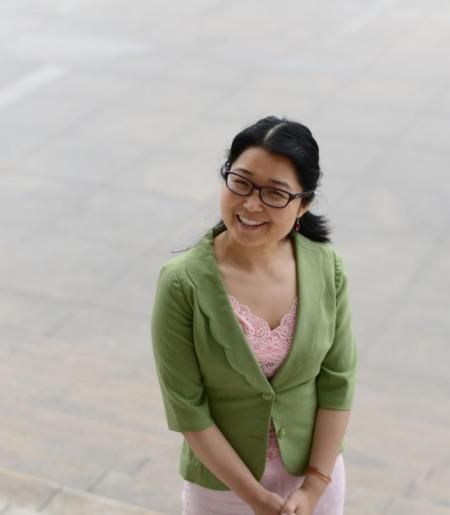
Peidong Sun, EAP
Peidong Sun, associate professor of arts and sciences in China and Asia-Pacific studies, says, “The teeth of totalitarianism were inching toward me. If I still wanted to do the kind of research I liked, I would have to leave China.”
Additional Information
With New Crackdown, Biden Wages Global Campaign on Chinese Technology
Jessica Chen Weiss, EAP
“Sanctions that put the United States at odds with its allies and partners today will both undercut their effectiveness and make it harder to enroll a broad coalition of states in U.S. deterrence efforts,” says Jessica Chen Weiss, professor of government and public policy.
Additional Information
Global Grand Challenges Symposium: Frontiers and the Future

November 17, 2022
8:00 am
How will we meet the most pressing demands of our time?
Join us for a two-day symposium that brings together the Cornell community and international partners to discuss the most urgent challenges around the world and how we can work together to address them.
Building on the first Global Grand Challenge, Migrations, symposium participants will help identify the next university-wide research, teaching, and engagement initiative to harness Cornell's global expertise.
The symposium, hosted by Global Cornell, will focus on five interdisciplinary themes, with panelists bringing their research and perspectives to bear:
Knowledge | Water | Health | Space | International Collaboration
Register today!
If you can't attend in person, please join us virtually:
Day 1: Wednesday, Nov. 16Day 2: Thursday, Nov. 17
Wednesday, November 16
Welcome: President Martha Pollack
Panel 1: Knowledge: What Counts, for Whom, and to What Ends?
4:30–6:00 ET, Klarman Hall, Rhodes-Rawlings Auditorium
A panel of Cornell faculty and Global Hubs partners discuss innovations in higher education, social media, and legal frameworks; new forms of knowledge production and inequalities in access; and security, privacy, disinformation, and the role of knowledge in democracies.
Read about the panelists.
Remarks, Provost Michael Kotlikoff
Reception, 6:00 ET, Klarman Hall Atrium
Thursday, November 17
8:00–5:00 ET, Clark Hall, room 700 (7th floor)
Breakfast, 8:00 ET
Panel 2: Water: Worldwide Challenges and Approaches
9:00–10:30 ET
Faculty from Cornell and partner universities explore the most critical challenges related to changing global water conditions, including access to clean drinking water; water governance, norms, and customs; trade-offs between drinking water, irrigation, and hydropower; rising sea levels and water-dependent communities; and new solutions for wastewater, ocean plastics, and pollution.
Read about the panelists.
Panel 3: Health: An Integrated Global Perspective
11:00–12:30 ET
Faculty from Cornell and partner universities explore vital issues related to health, including equity, nutrition, mental health and well-being, disease, communication, new technologies, sociocultural norms, One Health, sustainable agriculture and ecosystems, elder care, and the business of medicine/health.
Read about the panelists.
Lunch, 12:30 ET
Panel 4: Space: In a Galaxy Not So Far Away
1:30–3:00 ET
Faculty from Cornell and partner universities explore urgent topics related to our global engagements with outer space, including intergovernmental collaboration and defining a new space policy; private space travel and exploration; historical lessons for colonization; new technologies, materials, and visualizations; intelligent life; resources and extraglobal markets; and access and inequalities.
Read about the panelists.
Panel 5: International Collaboration:< /b>Taking Action for Our Global Future
3:30–5:00 ET
In this final session, panelists discuss opportunities and challenges for creating truly collaborative and mutually beneficial partnerships in an unequal world. Faculty from partner universities share ideas for collaborating on the four themes introduced earlier in the symposium, and participants explore the tension between respect for local cultures and universalisms implicated in scientific inquiry.
Read about the panelists.
Register in-person or virtually for one or all sessions!
Additional Information
Program
Einaudi Center for International Studies
Reppy Institute for Peace and Conflict Studies
East Asia Program
Southeast Asia Program
Latin American and Caribbean Studies
Institute for African Development
Institute for European Studies
South Asia Program
Doctoral student Wanheng Hu receives Young Scholar Award

The China Times $10,000 scholarship will support his research on China's medical AI
EAP is happy to announce that doctoral student Wanheng Hu won a Young Scholar Award from the China Times Cultural Foundation. He ranked first place among all ten awardees, with a top prize of $10,000. The news was announced here.
This scholarship will further Wanheng Hu's research on The Algorithmic Translation of Expertise: An Ethnography of the Chinese Medical Artificial Intelligence Industry. Through the lens of Science and Technology Studies (STS), Hu hopes to explore the ramifications of AI and machine learning to expert practices as exemplified by medical diagnostics with his ethnographic case studies against China’s unique sociotechnical background.
Wanheng is a Ph.D. candidate in the Department of STS and a graduate affiliate with the East Asia Program. A long-standing active member of EAP’s Graduate Student Steering Committee, he credits much of his success to the extensive support he has received from the EAP faculty, fellow grad students, and EAP funding. He was the 2020 recipient of the Hu Shih Fellowship and is currently a visiting research fellow at Harvard University. His research was also supported by the National Science Foundation and a China Anthropology Graduate Fieldwork Scholarship, among others.
Established in 1986, the China Times Cultural Foundation is committed to supporting and promoting academic research that centers Chinese culture and related studies. The Young Scholar Award is granted annually to doctoral candidates in North America whose dissertation research focuses on the study of Chinese cultures in the humanities and the social sciences. This year's award committee consists of seven prominent China scholars, including David Der-wei Wang of Harvard University and Wen-hsin Yeh of the University of California Berkeley.
Additional Information
Program
Berger International Speaker Series with Y. S. Lee – Weaponizing International Trade in Political Disputes: Issues Under International Economic Law and Systemic Risks
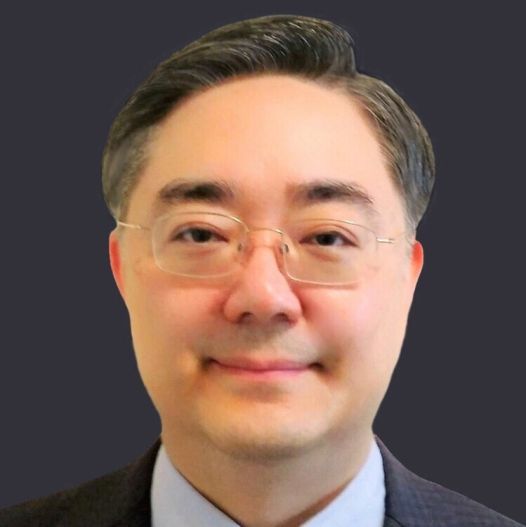
November 15, 2022
12:15 pm
Hughes Hall, Cornell Law School, Zhu Faculty Lounge (L28)
Please join us for a lunchtime seminar given by our guest Y.S. Lee, Director of the Law and Development Institute.
SEMINAR: Weaponizing International Trade in Political Disputes: Issues Under International Economic Law and Systemic Risks
DATE: Tuesday, November 15th, 2022
TIME: 12:15 p.m. to 1:15 p.m. ET
LOCATION: L28 – Zhu Faculty Lounge, Hughes Hall, Cornell Law School
*** Lunch will be provided during the event, so don’t forget to RSVP!
RSVP here
Please fill out the following short form: https://cornell.ca1.qualtrics.com/jfe/form/SV_3sMlbOhryJ6y3iu
The Seminar: Weaponizing International Trade in Political Disputes: Issues Under International Economic Law and Systemic Risks
In recent years, the world’s largest economies and traders – the United States, China, and Japan – have chosen to use measures affecting international trade as a means to achieve political objectives in contravention of the rules of international economic law and the practices of international trade established over several decades. Since the end of World War II, the world economy and international trade have rapidly expanded and prospered by achieving a degree of separation between international trade and political struggles under the rule-based international trading system, the General Agreement on Tariffs and Trade and its successor, the World Trade Organization. Thus, the recent misuses of trade measures by the world’s largest traders are alarming, because they undermine the stability of the world trading system, which has been maintained for the past several decades.
Professor Lee accounts politically-motivated trade measures (‘PTMs’) recently invoked by the United States, China, and Japan, assesses their incompatibilities with the rules of international economic law, and also examines the risks that these PTMs pose to the world trading system.
About our Distinguished Guest: Y.S. Lee
Y.S. Lee is a lawyer, economist, and international relations scholar with internationally-recognized authority in law and development and international trade law. He is currently Director and Professorial Fellow of the Law and Development Institute and Visiting Professor of Law at the University of Nebraska College of Law. He has also taught and conducted academic research at prominent universities throughout the United States, Europe, and Asia for twenty years. He graduated with a degree in economics and academic distinction from the University of California at Berkeley and received law degrees from the University of Cambridge (B.A., M.A., Ph.D). He is licensed to practice law in multiple jurisdictions, including the United States (California and North Carolina) and the United Kingdom.
Can’t make it to our event in-person? You can attend virtually!
We are also livestreaming the event, so you can sign up to attend the Zoom Webinar at this link:
https://cornell.zoom.us/webinar/register/WN_AtugJNiIQHW_TLxgyiv4oA
Please feel free to distribute the link to anyone you feel would be interested in the seminar. All are welcome!
Additional Information
Program
East Asia Program
U.S. Aims to Turn Taiwan into Giant Weapons Depot

Jessica Chen Weiss, EAP
“The U.S. has to make clear that the U.S. doesn’t have a strategic interest in having Taiwan being permanently separated from mainland China,” says Jessica Chen Weiss, professor of government and public policy.
Additional Information
What to Make of Art Today?: Xu Bing, A.D. White Professor-at-Large
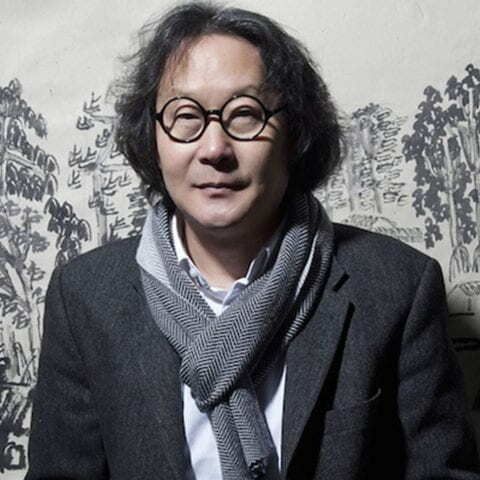
October 20, 2022
5:00 pm
Goldwin Smith Hall, Hollis E. Cornell Auditorium
A.D. White Professor-at-Large Xu Bing will present the public lecture “What to Make of Art Today?” on Thursday, October 20 at 5pm at the Hollis E. Cornell Auditorium in Goldwin Smith Hall.
You may also attend the lecture via Zoom.
This event is part of an A.D. White Professors-at-Large (ADW-PAL) visit and is co-sponsored by the Johnson Museum of Art and the Cornell Council for the Arts.
Xu Bing is an internationally acclaimed Chinese artist whose creative and cultural interventions touch on the fields of public and ecological art, printmaking, new media installations, drawing, and sculpture. Xu Bing operates studios in New York and Beijing where he served as Vice President of the Central Academy of Fine Arts. For the 2022 Cornell Biennial, the Herbert F. Johnson Museum of Art has commissioned his newest Background Story, a lyrical light box in dialogue with an historical Chinese ink painting in the Museum’s collection. His biography charts the path of the international influence of Chinese contemporary art and its complex place in Chinese culture over the last forty years.
Xu Bing will visit Cornell as an ADW-PAL from October 17-21, 2022. He was elected as an ADW-PAL in 2015. His appointment runs through 2023.
Xu Bing's "Background Story" exhibition opens October 8, 2022 and closes January 22, 2023. Located in the Gold Gallery, Floor 2L, in the Herbert F. Johnson Museum of Art.
Xu Bing has created a new work based on a centuries-old Chinese painting, Woodcutter in the Winter Mountains by Yang Xun, in the Johnson Museum’s collection for his series Background Story. Through the manipulation of recycled plastic and miscellaneous trash from daily life, the artist dilutes or intensifies light to “draw” an ink-like image on glass that conveys traditional Chinese reverence for nature while serving as a warning about humans’ ongoing mistreatment of the environment.
2022 Cornell Biennial
Sponsored by the Cornell Council for the Arts and curated by Timothy Murray, the 2022 Cornell Biennial "Futurities, Uncertain" features exhibitions, installations, and performances by 23 international and 17 Cornell-based artists. Free and open-to-the-public events will rotate on the Cornell Ithaca campus and the Cornell Tech campus in New York City from July through December 2022.
Additional Information
Program
Einaudi Center for International Studies
East Asia Program
"How Not to Restore a Monastery: Buddhism and the Politics of Spending in Goryeo and Joseon Korea"
October 28, 2022
12:00 pm
Please join the Society for Buddhist Studies for a talk by Juhn Ahn (University of Michigan).
In Goryeo and Joseon Korea, the restoration of Buddhist monasteries became the subject of heated debate. Although the Buddhist establishment in Korea had continued to restore monasteries at regular intervals for centuries, a growing number of high-profile individuals in the late Goryeo period began to voice strong concerns about the necessity of monastic restoration. Some claimed that restoration was wasteful. Others claimed that restoration was carried out by the greedy and corrupt for personal gain. Scholars of Korean Buddhism have tended to take these criticisms at face value and argue that late Goryeo Buddhism was indeed corrupt. In this talk Prof. Ahn hopes to revisit the evidence used to make such claims and show that these claims are essentially baseless and misleading. She also hopes to show that arguments in favor of or against Buddhist restoration work made on either public or private grounds gained salience only in the early Joseon period as what she call the politics of giving began to render the Buddhist practice of giving problematic. In lieu of a formal conclusion, this talk will offer some brief thoughts on how to best contextualize the public-private language that shaped the debate concerning Buddhism in early Joseon Korea and it will do so by taking a closer look at the broad transformations that took place in the general attitude towards Buddhism’s material splendor in Korea.
This event is co-sponsored by the GPSA-FC and the Department of Asian Studies, and is open to all interested.
Additional Information
Program
East Asia Program
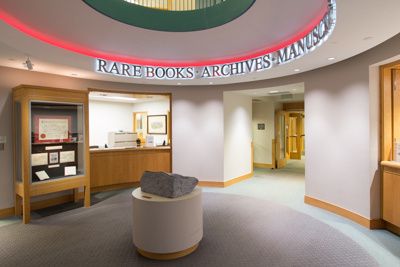
Cornell China Center Fall Field Trip: Cornell Library Rare Chinese Historic Relics
October 21, 2022
1:00 pm
Come learn about important Chinese historic materials, including cultural relics, old photo albums, and significant manuscripts from the Cornell Library’s vault. Take this rare opportunity to view these precious treasures and learn how you can engage with them through your learning, teaching, and research. Curator of the Charles W. Wason Collection on East Asia Liren Zheng will host this visit. Masks encouraged.
***THIS TRIP IS NOW FULLY ENROLLED. Register here to add yourself to the wait list.***
Additional Information
Program
Einaudi Center for International Studies
East Asia Program