
East Asia Program
Info Session: International Relations Minor

March 7, 2022
4:45 pm
Is the Einaudi Center's International Relations minor for you? Here's a chance to find out. Graduates go on to successful careers in fields like international law, economics, agriculture, trade, finance, journalism, education, and government service.
Contact: irm@einaudi.cornell.edu; https://einaudi.cornell.edu/academics/international-relations-minor
Additional Information
Program
Einaudi Center for International Studies
Reppy Institute for Peace and Conflict Studies
East Asia Program
Southeast Asia Program
Latin American and Caribbean Studies
Institute for African Development
Institute for European Studies
South Asia Program
Info Session: Fulbright Opportunities for Graduate Students

February 23, 2022
4:45 pm
The Fulbright U.S. Student Program provides full funding for graduate and professional students conducting research or teaching in any field in more than 150 countries. Open to U.S. citizens only.
The Fulbright-Hays Doctoral Dissertation Research Abroad Program supports doctoral students conducting research in modern languages or area studies for six to 12 months. Open to U.S. citizens and permanent residents of the United States. Travel to Western European countries is not eligible.
Contact: fulbright@einaudi.cornell.edu, https://einaudi.cornell.edu/fulbright-us-student-program
Additional Information
Program
Einaudi Center for International Studies
Reppy Institute for Peace and Conflict Studies
East Asia Program
Southeast Asia Program
Latin American and Caribbean Studies
Institute for African Development
Institute for European Studies
South Asia Program
Info Session: Fulbright U.S. Student Program for Undergraduates

February 21, 2022
4:45 pm
The Fulbright U.S. Student Program supports college graduates conducting research or teaching in any field in more than 150 countries. Applications are due in the fall; students who wish to begin the program immediately after graduation are encouraged to start the process in their junior year.
United States citizens in any field of study are eligible.
Contact: fulbright@einaudi.cornell.edu, https://einaudi.cornell.edu/fulbright-us-student-program
Additional Information
Program
Einaudi Center for International Studies
Reppy Institute for Peace and Conflict Studies
East Asia Program
Southeast Asia Program
Latin American and Caribbean Studies
Institute for African Development
Institute for European Studies
South Asia Program
Gatty Lecture: Stories from an Ancient Land: The Wa of the Burma-China Borderlands
January 27, 2022
7:15 am
Kahin Center
**Due to unforeseen circumstances, Arnika Fuhrmann will no longer be presenting. The speaker and title of this Gatty Lecture have changed.**
Magnus Fiskesjö's research concerns ethnic relations and political anthropology in China and Southeast Asia. His research and teaching interests include historical and political anthropology; civilizations and barbarians; sovereignty, citizenship, and state formations; autonomy and dependence; ethnopolitics, ethnicity, and ethnonymy in interethnic relations; cultural heritage and archaeology; museums and modernity; and East and Southeast Asia (including China and Burma).
This Gatty lecture will take place in person at the Kahin Center, but people are also welcome to join us on Zoom. Please register here if you wish to attend via Zoom: https://cornell.zoom.us/meeting/register/tJctd-uqqDsuHNKMibs8l_WoFPStOI…
For questions, please contact seapgatty@cornell.edu.
In accordance with university event guidance, all campus visitors who are 12 years old or older must also present a photo ID, as well as proof of vaccination for COVID-19 or results of a recent negative COVID-19 test. If you are not currently participating in the Cornell campus vaccination/testing program, please bring proof of vaccination or the results of a recent negative test.
More information on acceptable documentation is available here: https://covid.cornell.edu/visitors/
Additional Information
Program
Einaudi Center for International Studies
East Asia Program
Southeast Asia Program
"Thich Nhat Hanh and the Invention of Zen in Vietnamese Buddhism"

February 4, 2022
2:00 pm
Please join us for a talk by Alexander Soucy (St. Mary's University).
In 2006, a monk and member of the Order of Interbeing wrote an open letter to the disciples of Thích Nhất Hạnh, in which he described his (and hence their) Zen lineage. One of the claims the letter made was that Thích Nhất Hạnh "received the lamp-transmission in Từ Hiếu root temple" ten days before he left for the US in 1966. This portrayal of Thích Nhất Hạnh as Zen master has been uncritically assumed and repeated in the media as well as in the scholarship of Buddhism in the West, mostly by uncritically affixing to him the title of "Zen Master." As Nguyen and Barber noted, however, this assertion of him being part of a Zen lineage is not based in the forms of Buddhist practice and temple organization that actually exist in Vietnam. This presentation will discuss the seeming incongruence between the claims by Thích Nhất Hạnh and his followers and the Buddhist practices and institutions in Vietnam. The purpose is not to disprove their claims, but contextualize the globally important figure of Thích Nhất Hạnh within the developments of Buddhism in Vietnam and with the globalization of Buddhism.
The Cornell Buddhist Studies Seminar Series is co-sponsored by the GPSA-FC, the Departments of Anthropology, Asian Studies and Philosophy, by the South Asia Program, and by the Society for the Humanities. The talk is open to all interested; for accessibility queries please contact buddhiststudies@cornell.edu
Additional Information
Program
East Asia Program
Southeast Asia Program
South Asia Program
Terror Capitalism: Producing the 'Terrorist-Worker' in Northwest China, by Darren Byler

March 2, 2022
4:45 pm
This talk focuses on some of the key ideas of my ethnographic monograph Terror Capitalism: Uyghur Dispossession and Masculinity in a Chinese City. Drawing on more than 24 months of ethnographic research in the Uyghur region of Northwest China and nearby Kazakhstan between 2011 and 2020, open-source and internal police documents, and extensive interviews with current and former “terrorist-workers” before their detention in 2017, interviews with their family members since detention, and in several cases post release, it considers how Muslim farmers can be turned into unfree workers under the sign of terrorism. By placing these accounts in the context of broader economic transformations in the region and considering how the rise of the “terrorist-worker” figures in scholarship of the frontiers of global economy, the article makes a broader argument about a global turn toward techno-political systems of capital accumulation and state power. Specifically, it considers the roles that dataveillance and legal frames of exclusion play in the rise of what I name terror capitalism—an ethno-racialized system of data and labor expropriation and social control that operates under the sign of the “terrorist.” It shows how such a system can generate capital by holding targeted groups in place through biometric and social surveillance, producing forms of self-discipline and unfree labor for private manufacturers.
This discussion will be moderated by Cornell faculty Eric Tagliocozzo, John Stambaugh Professor of History and Esra Akcan, Michael A. McCarthy Professor of Architectural Theory
Additional Information
Program
Einaudi Center for International Studies
East Asia Program
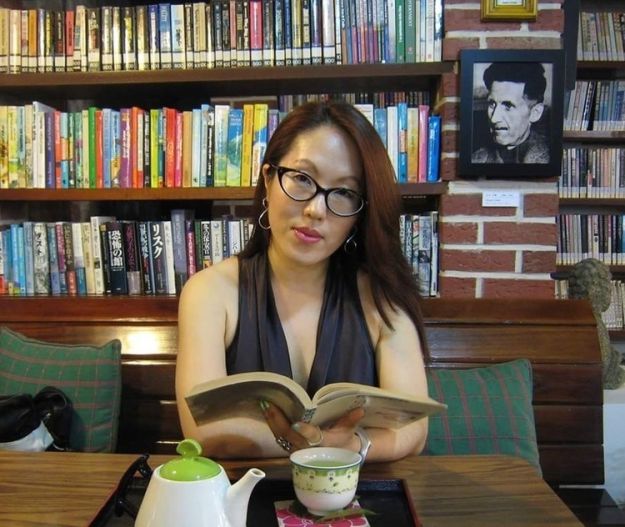
“The Birth of a (Korean) Nation (in Mexico): Transpacific Intimacies and Modern Entanglements in Kim Young-ha’s Black Flower,” by Junyoung Verónica Kim
April 25, 2022
1:00 pm
G-01 Stimson Hall
Co-sponsored by the East Asia Program
The speaker has changed her title and abstract (4/21/22). Below is the new abstract for the title above:
In 1905, as the Russo-Japanese War deepened and the rise of the Meiji Empire began to take hold including Japan’s annexation of the Korean peninsula, a thousand Koreans left their homes for Yucatán, Mexico, thereby becoming the first case of Korean migration to the Americas. Without the protection of the Korean government and lured by Mexican and Japanese contractors with the false promise of wealth and comfort, these migrants were sold into indentured servitude to work in the henequen plantations of the Yucatán. One of the most recognized writers of the Korean New Wave, Kim Young-ha recuperates this slice of history that had been silenced by all the nations involved – Korea, Japan and Mexico – in his novel Black Flower (2003). In this talk, I examine Kim’s rewriting of history that situates the 1905 Korean migration to Mexico not as a minor episode in Korean national history, but rather as a central event in the transpacific chain that links Korea and Mexico within contemporary global history. The novel’s reconfiguration of global/national history is hinged on two interlinked narrative technologies: first, Black Flower utilizes Japanese imperialism as a ready-made trope to not only construct the idea of a putative Korean nation, but also to directly connect Korean independence to the Mexican revolution; second, the novel ineluctably legitimizes the current discourse of South Korea as a multicultural trans-nation by situating the birth of the Korean modern nation in Latin America and highlighting the mobility and heterogeneity of (Korean) national borders. I contend that the current historical moment in which South Korea is imagined as a global trans-nation and sub-empire calls for a certain recuperation of this transpacific history which places the Korean Mexican indentured worker as the modern subject of the South Korean nation.
Additional Information
Program
Einaudi Center for International Studies
East Asia Program
Latin American and Caribbean Studies
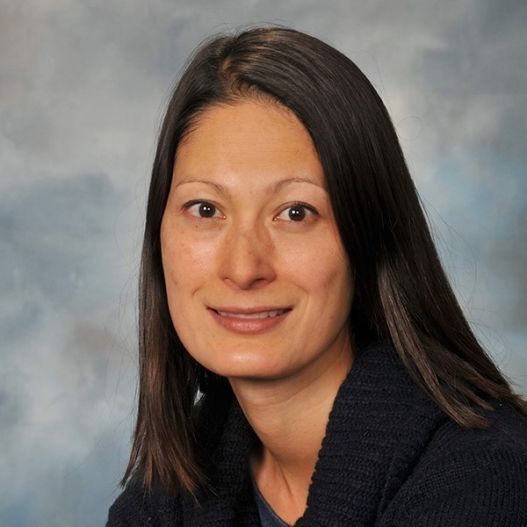
Representation and Resistance: The History of Chinese Coolies in 19th-Century Cuba (LACS Weekly Seminar Series)
May 2, 2022
1:00 pm
G-01 Stimson Hall
This talk by Mey-Yen Moriuchi (LaSalle University) explores the history of Chinese migration to Cuba, which began with the coolie trade in the mid-nineteenth century. Between 1847 and 1874, approximately 150,000 Chinese were brought to Cuba under termed contracts to fulfill a labor shortage on the sugarcane plantations. They suffered harsh conditions and were treated severely.
Chinese coolies were generally viewed as dutiful and submissive, and their voices have largely been confined to the margins of literature and history. However, the 19th-century testimonies and illustrations of Chinese coolies denounce the savagery and cruelty of the Spanish overseers, while simultaneously revealing that the coolies were not passive victims. The coolies demonstrated agency, courage, and resistance in the act of migrating, in their words, and rebellions.
Coolie labor played a major role in reshaping Cuba’s sugar economy and its existing systems of production. In addition, the amplified presence of the Chinese in Cuba challenged existing paradigms of race and nation. Cuban society was no longer black and white. The growing Chinese population forced a reconsideration of this traditional binary vision of society and, in the formation of a new Chinese-Cuban identity, complicated notions of what constituted cubanidad.
This event is co-sponsored by the Einaudi Center's East Asia Program.
Additional Information
Program
Einaudi Center for International Studies
Latin American and Caribbean Studies
East Asia Program
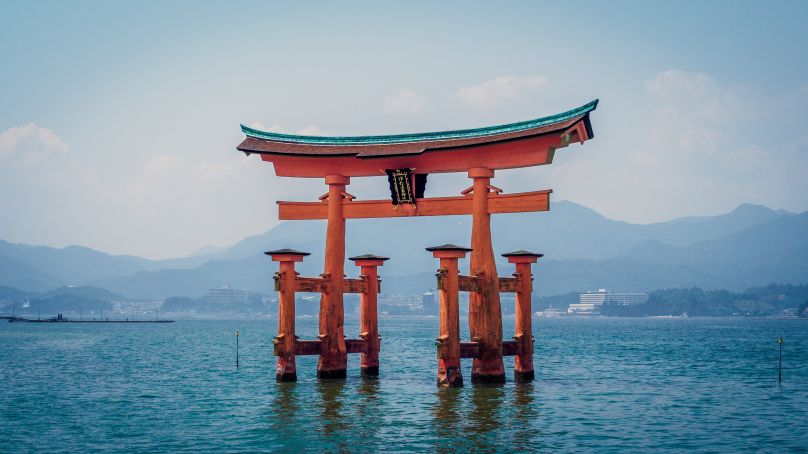
Princess Mako’s Revolution
Kristin Roebuck, EAP
“It’s really striking to me when I look at family forms and how the royal family is this bastion of older norms that no one else in Japan is required to live by,” says Kristin Roebuck, assistant professor of history. “Why is it that the lawmakers who govern that institution think it’s so important that they want to maintain gender inequality at the highest symbolic level of society?”
Additional Information
Accepting applications for 2022-2023 LB Korean Studies Research Scholar
CFA: post-doctoral or pre-doctoral research fellow in Korean studies
The Cornell East Asia Program is accepting applications for a post-doctoral or pre-doctoral research fellow in residence at Cornell (Ithaca Campus) for the 2022-2023 academic year. Advanced Ph.D. candidates and recent Ph.D. graduates whose research pertains to Korea can apply to this non-teaching research residency. Application deadline is February 11th, 2022.
Call for Applications: Cornell East Asia Program 2022-2023 LB Korean Studies Research Scholar
The Cornell East Asia Program is accepting applications for a post-doctoral or pre-doctoral research fellow in residence at Cornell (Ithaca Campus) for the 2022-2023 academic year. Advanced Ph.D. candidates and recent Ph.D. graduates whose research pertains to Korea can apply to this non-teaching research residency. Application deadline is February 11th, 2022.
The LB Korean Studies Research Scholars research program within the East Asia Program and the Mario Einaudi Center for International Studies at Cornell University aims to cultivate new collaborations that advance scholarship, knowledge dissemination, teaching, outreach, and engagement with general publics for a deeper understanding of Korea in the contemporary world. The program is open to scholars whose research and teaching focuses on Korea, especially with a comparative, global, and/or interdisciplinary perspective.
LB Korean Studies Research Scholars can have backgrounds in any discipline, as well as conduct interdisciplinary research that transcends traditional disciplinary boundaries. In addition to more traditional Korean studies fields, we envision Korea-focused work in areas such as STEM, public health, urban planning, architecture, and others. Selection will be based on the potential of the candidate’s research to cultivate dialogue and nurture collaboration across academic disciplines, as well as integrate, synthesize, and build upon existing disciplinary contributions to Korean studies research, broadly conceived. Scholars will work within the East Asia Program and the Einaudi Center for International Studies as well as engaging with mentors and peers across Cornell.
Role
Scholars will join a dynamic interdisciplinary center that brings together deep scholarly expertise with broad interdisciplinary global concerns. Scholars will benefit from training and mentoring in academic publishing and public scholarship as they contribute to the East Asia Program’s vision to advance the interdisciplinary study of Korea. They will organize programming (such as pedagogical and research events and/or colloquia), coordinate with faculty and students, identify and liaise with global and community partners, and support the communications team to disseminate the initiative’s research and events. Scholars will spend roughly 50% of their time on their research, and 50% of their time on the LB KSRS initiative.
Position available:
- Post-doctoral visiting scholar, or
- Pre-doctoral visiting scholar
The LB Korean Studies Research Scholar may be either a post-doctoral visiting scholar (within 5 years of their Ph.D. conferral) or a Ph.D. candidate at an advanced stage of their doctorate (completing their dissertation). We are interested in candidates from Ph.D. programs outside of North America as well as in the U.S., and will offer visa support to those who need it (this program does not offer H1B visa status).
Support:
- Academic year (August through May) stipend of USD29,000
- Cornell University Health Insurance coverage (approximately USD3,500)
- Research activities support of up to USD2,500 (for activities such as travel to archives or conferences, materials acquisition, publication costs, etc.)
- Cornell Graduate School tuition coverage, if needed, for candidates from non-U.S. institutions and with non-U.S. residency
- Office and other facilities use
- Full visiting scholar faculty access to Cornell university facilities and resources such as use of Cornell’s world-class Library collections and resources.
Expectations:
- In residence at the Cornell Ithaca campus August 2022 through May 2023
- Organize and convene Korean studies events and activities within EAP programming schedule
- Carry out research, and acknowledge the LB KSRS program in any publications thereof
- Give at least two presentations of research for the EAP and Cornell community
- Participate in EAP and Center for International Studies initiatives that relate to the Scholar’s work or interests
- No teaching required. However, if the Scholar wishes to teach, whether formally or informally, EAP will help identify and set up such opportunities.
How to Apply
The completed application, including two letters of reference, must be received by the application deadline of February 11, 2022. Applications should be submitted directly to eap@cornell.edu. The subject line should read: “LB Korean Studies Research Scholar Application.”
- A letter expressing interest in the program and explaining one’s qualifications for the position. In the letter, applicants must submit biographical information, including the expected (or actual) date that they will receive their PhD degree, as well as the full name and contact information of two references, one of whom must be the applicant’s doctoral advisor
- Full CV in PDF format.
- Description of proposed research (maximum of 2 pages, single spaced, 12-point font, 1-inch margins, PDF format). The proposal should be free of disciplinary jargon.
- A sample of your work, which may be a piece of writing, a portfolio of art work, teaching syllabi, or other relevant work.
- Two letters of reference, one of whom must be the applicant’s doctoral advisor, to be submitted directly by the references to: eap@cornell.edu. The subject line should read: "LB Korean Studies Research Scholar - Reference Letter." Please note that all references must be received by the application deadline on February 11, 2022.
- Select applicants will be invited to participate in an online interview with the selection committee.
- Candidates will be notified of selection decisions March 2022.
For questions, please contact the East Asia Program manager, Joshua Young, at eap@cornell.edu.