
East Asia Program
Migration in the Media

September 22, 2021
12:00 pm
In this moment of hyper-politicized border and migration issues, questions of representation are crucial. This roundtable of scholars, journalists, and practitioners will address the needs and challenges of producing stories about complex border issues along with the potential for different stories to effect real change. Our panelists are actively documenting, producing, circulating, and reflecting on migration stories through a range of media and will share from their own work, focusing especially on the contentious borderspaces of the southern U.S. and southern Europe. This discussion is organized by the Migrations initiative and co-sponsored by the East Asia Program, the Institute for European Studies, the Department of Sociology, Latin American and Caribbean Studies, and the School of Public Policy.
WHAT YOU'LL LEARN
Key questions that journalists, academics, and practitioners consider in producing and responding to stories and coverage of migration issuesHow different media shape what stories get told and who they reachHow the politicization of migration affects what stories do and do not get toldThe possibilities that different media and storytelling practices offer for challenging dominant narratives or providing more complex accountsThe role that images play in communicating migration and border issues to the public
Additional Information
Program
East Asia Program
Latin American and Caribbean Studies
Institute for African Development
Institute for European Studies
Cornell Contemporary China Initiative Fall Focus: What is China?

In the Cornell Contemporary China Initiative’s seventh year, our guest speakers and host Allen Carlson critically examine, the question “What is China?”
This topic is explored in the series through utilizing an inter-disciplinary perspective and making use of both historical and contemporary lenses. In so doing it will touch upon some of the most pressing and significant political and social issues now facing “China” and the rest of the world. In this context, particular attention will be paid to contested places, with special consideration of how they are placed within (or without) what is considered to be China. And will shed light on the impact such practices and processes have had on those living in these regions.
Hosted by Allen Carlson, Director of CAPS and Michael J. Zak Chair, Cornell University | CCCI Director, Fall 2021
Co-sponsored by the East Asia Program and The Levinson China and Asia-Pacific Studies (CAPS) Program
Please register in advance for each lecture through the linked titles below. All times are ET.
(Update: Click on the titles below to watch the event video recording (if available)).
At the Edge of China—life in a Tibetan town
Barbara Demick, author, journalist
September 27 at 4:45 p.m.*
Barbara Demick looks at life in Ngaba (Aba in Chinese), a small Tibetan county, which became the engine of Tibetan resistance to Chinese rule with a wave of self-immolations that started in 2009. Ngaba is the subject of Demick’s newest book, Eat the Buddha, which was listed among the best non-fiction of 2020 by the New York Times, Washington Post, Financial Times, Economist, and NPR, among others.
Decolonizing Chinese Historiography—with special attention to Xinjiang
James Millward, Georgetown University
October 25 at 4:45 p.m.
This talk focuses on the use of history, and, more broadly, examines how common concepts and vocabulary used by nearly all China scholars teaching and writing in English not only mischaracterize the past of states and peoples on the East Asian mainland, but reinforce PRC justifications for its colonialism, now egregiously oppressive and verging on genocidal. The problematic terminology we all use includes the idea of "dynasties," "borderlands," "minorities," and even, as it is often employed, the word "China" itself.
Hong Kong: Global China’s Restive Frontier
CK Lee, UCLA
November 8 at 4:45 p.m.
How did Hong Kong transform itself from a “shoppers’ and capitalists’ paradise” into a “city of protests” at the frontline of an anti-China global backlash? More than an ideological conflict between a liberal capitalist democratizing city and its Communist authoritarian sovereign, the Hong Kong story, stunning and singular in its many peculiarities, also offers general lessons about a global force and its uneven consequences.
Is China Part of Taiwan?
Shelley Rigger, Davidson University
November 15 at 4:45 p.m.
There is a long-standing debate over whether Taiwan is part of China. Beijing insists that not only is Taiwan part of China, it is part of the People’s Republic of China. Most Taiwanese reject the idea that the island they live on is part of the PRC, and they would prefer to remain outside the PRC state’s jurisdiction. But when it comes to China – the abstract, cultural, historical idea of China – the situation is more interesting. While some Taiwanese embrace an identity that relegates Chineseness to a minor role (or even dismiss it altogether), most of Taiwan’s 24 million people recognize a cultural and historical attachment to China. Where the two sides differ is over the meaning of that attachment for contemporary political arrangements. Few Taiwanese are swayed by the historical determinism and cultural essentialism that underlie the PRC’s case for “unification.” Rather, they believe that political identity and citizenship should follow the will of the people, not the dictates of history.
Additional Information
EAP Fall '21 Event Schedule!

This semester we're up close and provocative with topics that range from Black Leftist feminists and Maoist China to deafness as it's portrayed in manga. The Cornell Contemporary China Initiative returns examining the question: "What is China?" paying special attention to contested areas of Tibet, Xinjiang, Hong Kong, and Taiwan. All events are held virtually. Recorded events are available on the EAP Vimeo page or click on the hyperlinked event title below to watch the event recording and/or to learn more.
Fall 2021 EAP Event Schedule
All times are ET.
CCCI is the Cornell Contemporary China Initiative | CCCC is the Cornell Classical Chinese Colloquium
Film screening: The Goddess Cornell Cinema co-sponsored by EAP with live multi-instrumentalist/singer Min Xiao-Fen
Thursday, September 23 at 7:00 p.m.
CCCI: Barbara Demick, journalist| At the Edge of China—life in a Tibetan town
Monday, September 27 at 4:45 p.m.
Barbara Demick looks at life in Ngaba (Aba in Chinese), a small Tibetan county, which became the engine of Tibetan resistance to Chinese rule with a wave of self-immolations that started in 2009. Ngaba is the subject of Demick’s newest book, Eat the Buddha, which was listed among the best non-fiction of 2020 by the New York Times, Washington Post, Financial Times, Economist, and NPR, among others.
CCCC 古文品讀: Joseph Dennis, University of Wisconsin
Friday, October 1 at 3:30 p.m.
The Cornell Classical Chinese Colloquium welcomes Joe Dennis, University of Wisconsin. His text reading is: Songs to Encourage the Cessation of Litigation (Xisong ge 息訟歌) in Ming and Qing.
Yoshiko Okuyama, University of Hawaii, Hilo | Reframing Disability: Manga’s Portrayals of Deaf Characters
Monday, October 18 at 4:45 p.m.
Yoshiko Okuyama will discuss Reframing Disability in Manga (University of Hawaii Press 2020), which she wrote after interviewing manga artists, conducting archival research, and visiting events and organizations serving disability communities in Japan as a Japan Foundation fellow.
CEAS Book talk with author Glynne Walley | Eight Dogs, or Hakkenden: Part One—An Ill-Considered Jest
Wednesday, October 20 at 1:30 p.m.
CEAS welcomes author Glynne Walley to talk about his book Eight Dogs, or Hakkenden: Part One—An Ill-Considered Jest, a translation of Kyokutei Bakin's Nansō Satomi hakkenden. This multigenerational samurai saga was one of the most popular and influential Japanese books of the nineteenth century and has been adapted many times into film, television, fiction, and comics. Part One tells the story of Princess Fuse of the Satomi clan, whose tragic and heroic sacrifice leads to the creation of the Eight Dog Warriors.
CCCI: James Millward, Georgetown University | Decolonizing Chinese Historiography—with special attention to Xinjiang
Monday, October 25 at 4:45 p.m.
This talk focuses on that use of history, and, more broadly, examines how common concepts and vocabulary used by nearly all China scholars teaching and writing in English not only mischaracterize the past of states and peoples on the East Asian mainland but reinforce PRC justifications for its colonialism, now egregiously oppressive and verging on genocidal.
The Annual Hu Shih Distinguished Lecture with Tim Brook, University of British Columbia | Government for the People: Troubling Legacies of the Confucian Statecraft Tradition
Thursday, October 28 at 4:45 p.m.
Americans are familiar with Lincoln’s “of the people, by the people, for the people,” just as the Chinese are familiar with Sun Yatsen’s “three principles of the people.” They are parallel discourses of government, but rise from different traditions and anticipate different outcomes both surprising and concerning.
CCCC 古文品讀: Tim Brook | Qiu Jun's "Daxue yanyi bu" (大學衍義補)
Friday, October 29 at 3:30 p.m.
Info Session: EAP Student Funding
Monday, November 1 at 1:00 p.m.
EAP offers substantial funding resources for multi-disciplinary student research and language learning. Come to this session to learn about them and bring your questions! Students who have received funding and grants from EAP will be present along with staff who will offer suggestions for submitting strong proposals.
Counting Dreams: The Life and Writings of the Loyalist Nun Nomura Bōtō author talk with Roger Thomas | CEAS (Cornell East Asia Series publication)
Wednesday, November 3 at 1:30 p.m.
Counting Dreams tells the story of Nomura Bōtō, a Buddhist nun, writer, poet, and activist who joined the movement to oppose the Tokugawa Shogunate and restore imperial rule. Banished for her political activities, Bōtō was imprisoned on a remote island until her comrades rescued her in a dramatic jailbreak, spiriting her away under gunfire.
Legitimizing the State: China 1300 to the present | Roundtable with Tim Brook, U. of B.C., David Robinson, Colgate University, Jenny Day, Skidmore College, and Mara Yue Du, Cornell University
Friday, November 5 at 1:30 p.m.
This round-table includes Prof. Tim Brook of the University of British Columbia, Professor David Robinson of Colgate University, Professor Jenny Day of Skidmore College, and Mara Yue Du of Cornell University. Panelists will discuss the evolving meaning of "China" and how the self-legitimating state in China interacted with changing domestic and global conditions from the Mongol period to the present.
CCCI: CK Lee, UCLA | Hong Kong: Global China’s Restive Frontier
Monday, November 8 at 4:45 p.m.
How did Hong Kong transform itself from a “shoppers’ and capitalists’ paradise” into a “city of protests” at the frontline of an anti-China global backlash? To unravel this Hong Kong puzzle, this talk situates the China-Hong Kong contestation in the post-1997 era in the broader context of “global China,” conceptualized as a double movement.
Rough Work: Whose America? Our America! - Ayukawa nobuo and the (Lost) Origin of Postwar Japanese Poetry
Wednesday, November 10 at 12:00 p.m.
Yoshiaki Mihara, Hitotsubashi University, Tokyo, Japan
This Rough Work session examines post-WWII Japanese poetry of the Arechi-ha, "The Waste Land School" of poetry which was heavily influenced by T.S. Eliot and his contemporary Modernist poets in post-WWI Europe.
CCCC 古文品讀: He Bian, Princeton University
Friday, November 12 at 3:30 p.m.
CCCI: Shelly Rigger, Davidson University | Is China Part of Taiwan?
Monday, November 15 at 4:45 p.m.
There is a long-standing debate over whether Taiwan is part of China. Beijing insists that not only is Taiwan part of China, it is part of the People’s Republic of China. Most Taiwanese reject the idea that the island they live on is part of the PRC, and they would prefer to remain outside the PRC state’s jurisdiction. But when it comes to China – the abstract, cultural, historical idea of China – the situation is more interesting.
ROUGH WORK: Zifeng Liu, Ph.D. candidate, Diverse Knowledge East Asia Fellow | Translating Black Left Feminism: Shirley Graham Du Bois and Mao's China
Wednesday, November 17 at noon-1:30 p.m.
This presentation examines Shirley Graham Du Bois’s engagement with China in the long 1960s. It explores how she cautiously navigated the rapids of the unfolding Sino-Soviet split and sought to manipulate antagonistic geopolitical forces to aid global decolonial efforts.
Yunxiang Gao, Ryerson University Arise! Ye Who Refuse to be Bond Slaves: Paul Robeson, "The Black King of Songs, " and China
Wednesday, December 1 at noon-1:30 p.m.
This lecture is adapted from a chapter in Gao Yunxiang’s new book Arise, Africa! Roar, China! Black and Chinese Citizens of the World in the Twentieth Century (UNC Press, December 2021). In this lecture, Gao unpacks the dynamic yet scarcely noted relations between Paul Robeson (1898-1976), the world-famous African American singer, actor, athlete, lawyer, and political activist, and China throughout most of the twentieth century.
CCCC 古文品讀: Nathan Vedal, University of Toronto |Fan Zongshi's "Jiang shouju yuanchi ji" and the Reception of an Impossible Text
Friday, December 3 at 3:30 p.m.
Additional Information
Welcome back, students!
Learn about Opportunities for You at Einaudi
Video: Join us! Whether you're a grad student or first-year, you'll find your community and a world of opportunities at Einaudi.
Additional Information
Cornell Classical Chinese Colloquium: He Bian, Princeton University
November 12, 2021
3:30 pm
The Cornell Classical Chinese Colloquium welcomes He Bian, Princeton University to lead this month's text reading and discussion on “Yuan-Ming Nourishing Life (yangsheng) Texts: the Discourse of Men.” The text will be shared in the meeting. More details to come.
Cornell Classical Chinese Colloquium 古文品讀
The Cornell Classical Chinese Colloquium (CCCC) 古文品讀 is a reading group for scholars interested in premodern Sinographic (古文) text. The group typically meets monthly during the semester to explore a variety of classical Chinese texts and styles. Other premodern texts linked to classical Chinese in Japanese, Korean, and Vietnamese have been explored. Presentations include works from the earliest times to the 20th century. Workshop sessions are lead by local, national, and international scholars.
All are welcome, with any level of experience with classical Chinese.
At each session, a participant presents a classical Chinese text. Attendees discuss historical, literary, linguistic, and other aspects of the text, working together to resolve difficulties in comprehension and translation.
No preparation is required, all texts will be distributed at the meeting.Contact eap-guwen@cornell.edu for more information.
Or subscribe to CCCC news for updates about events. Please make sure to send your subscription request from the email address at which you wish to receive CCCC updates.
Additional Information
Program
Einaudi Center for International Studies
East Asia Program
Info Session: Africa Undergraduate Research Internships
November 17, 2021
4:45 pm
The Institute for African Development (IAD) Summer Africa Internship program provides sophomores, juniors and rising senior undergraduate students with challenging practical fieldwork in Africa. Application deadline is February 28th. Internships are available in Ghana and Zambia. Those interested in applying must attend two seminars in the IAD Special Topic Seminar Series (CRP 4770) and a pre-departure meeting.
Contact: iad@cornell.edu
Additional Information
Program
Einaudi Center for International Studies
Reppy Institute for Peace and Conflict Studies
East Asia Program
Institute for African Development
Institute for European Studies
Latin American and Caribbean Studies
Info Session: Fulbright U.S. Student Program for Undergraduates
October 20, 2021
4:45 pm
The Fulbright U.S. Student Program supports college graduates conducting research or teaching English in more than 150 countries. Applications are due in the fall; students who wish to begin the program immediately after graduation are encouraged to start the process in their junior year.
Contact: fulbright@einaudi.cornell.edu
Additional Information
Program
Einaudi Center for International Studies
Reppy Institute for Peace and Conflict Studies
East Asia Program
Southeast Asia Program
Latin American and Caribbean Studies
Institute for African Development
Institute for European Studies
South Asia Program
Info Session: Laidlaw Scholars Program
October 13, 2021
4:45 pm
Learn about the Laidlaw Undergraduate Research and Leadership Program. Open to first- and second-year students, this 2-year program provides generous support to carry out internationally-focused research, develop leadership skills, engage with community projects overseas, and join a global network of like-minded scholars from more than a dozen universities. Join us to learn more about the program, its benefits, and the application process, as well as tips for approaching potential faculty research mentors and writing a successful application
Additional Information
Program
Einaudi Center for International Studies
Reppy Institute for Peace and Conflict Studies
East Asia Program
Southeast Asia Program
Latin American and Caribbean Studies
Institute for African Development
Institute for European Studies
South Asia Program
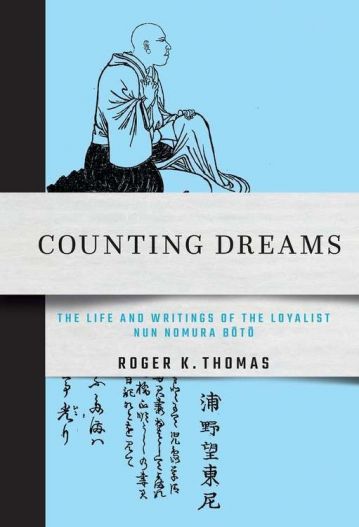
Counting Dreams: The Life and Writings of the Loyalist Nun Nomura Bōtō
November 3, 2021
1:30 pm
Cornell East Asia Series (CEAS) book talk welcomes author Roger Thomas to discuss his book, "Counting Dreams" (October 2021)
Counting Dreams tells the story of Nomura Bōtō, a Buddhist nun, writer, poet, and activist who joined the movement to oppose the Tokugawa Shogunate and restore imperial rule. Banished for her political activities, Bōtō was imprisoned on a remote island until her comrades rescued her in a dramatic jailbreak, spiriting her away under gunfire. Roger K. Thomas examines Bōtō's life, writing, and legacy, and provides annotated translations of two of her literary diaries, shedding light on life and society in Japan's tumultuous bakumatsu period and challenging preconceptions about women's roles in the era.
Thomas interweaves analysis of Bōtō's poetry and diaries with the history of her life and activism, examining their interrelationship and revealing how she brought two worlds--the poetic and the political--together. Counting Dreams illustrates Bōtō's significant role in the loyalist movement, depicting the adventurous life of a complex woman in Japan on the cusp of the Meiji Restoration.
About CEAS: The Cornell East Asia Series (CEAS) became an imprint of Cornell University Press in July 2019.
Browse CEAS Publications in the CUP Catalog
Housed in the East Asia Program, CEAS is an internationally known, award-winning scholarly press. CEAS publishes on subjects relative to the cultures of East Asia, covering topics in history, culture, and society, and translations of literary works.
Additional Information
Program
Einaudi Center for International Studies
East Asia Program
Hu Shih Lecture: Government for the People: Troubling Legacies of the Confucian Statecraft Tradition
October 28, 2021
4:45 pm
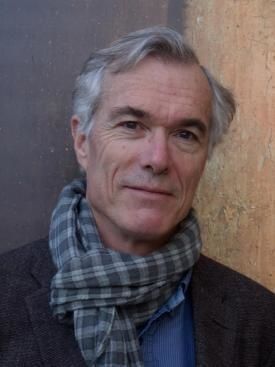
The Annual Hu Shih Distinguished Lecture welcomes Tim Brook, History, University of British Columbia. He will speak on Government for the People: Troubling Legacies of the Confucian Statecraft Tradition .
Americans are familiar with Lincoln’s “of the people, by the people, for the people,” while Chinese citizens are familiar with Sun Yatsen’s “three principles of the people.” They are parallel discourses of government, but rise from different traditions and anticipate different outcomes. On the Chinese tradition of government for the people, no-one writes more clearly than Qiu Jun (1421-1495), chancellor of the National Academy and compiler of the authoritative handbook of state administration. Caught between the models of Great State ambition and Confucian self-cultivation, Qiu put Confucian philosophy to work so that the state acted for the people—but not of them or by them. If he deserves our notice, it is because even today his vision shapes Chinese perceptions of good government in ways that surprise and trouble.
Cornell University Faculty hosts: TJ Hinrichs, History, and Suyoung Son, Asian Studies
Co-sponsored with the East Asia Program and the Department of History
Timothy Brook is a historian of China whose work has focused on the Ming dynasty (1368-1644) but extends to issues that span the period from the Mongol occupation of China in the 13th century to the Japanese occupation of China in the 20th. In addition to serving as the general editor of Harvard University Press’ History of Imperial China, he has published extensively on China in the world. A co-edited volume on the inter-polity relations of Inner and East Asia, Sacred Mandates: Asian International Relations since Chinggis Khan, was published by the University of Chicago Press in 2018. His most recent book, Great State: China and the World, appeared in Britain and France (the French edition under the title of Le Léopard de Kubilai Khan) in September 2019 and on this side of the Atlantic by HarperCollins in March 2020. The French edition was awarded the Grand Prix des Rendez-vous de l’Histoire in October 2020.
Additional Information
Program
Einaudi Center for International Studies
East Asia Program