
East Asia Program
Reframing Disability: Manga’s Portrayals of Deaf Character

October 18, 2021
4:45 pm
Yoshiko Okuyama, a professor of Japanese studies at the University of Hawai’i at Hilo, will discuss Reframing Disability in Manga (University of Hawaii Press 2020), which she wrote after interviewing manga artists, conducting archival research, and visiting events and organizations serving disability communities in Japan as a Japan Foundation fellow. Focusing on the book’s chapter on the deaf community in Japan, she will discuss their representation in manga using comic examples such as A Silent Voice (Koe no katachi) while sharing manga images and anecdotes she did not include in her book. She will conclude with a discussion of emerging issues as the pandemic continues to impact disability communities in Japan.
This event will have RID/NIC certified ASL interpreters throughout and is EAP's first fully bi-lingual English-ASL event.
Co-sponsored by the East Asia+ Collaborative.
Additional Information
Program
Einaudi Center for International Studies
East Asia Program
Cornell Classical Chinese Colloquium: Joe Dennis, University of Wisconsin
October 1, 2021
3:30 pm
The Cornell Classical Chinese Colloquium welcomes Joe Dennis, University of Wisconsin. His text reading is: Songs to Encourage the Cessation of Litigation (Xisong ge 息訟歌) in Ming and Qing.
Cornell Classical Chinese Colloquium 古文品讀
The Cornell Classical Chinese Colloquium (CCCC) 古文品讀 is a reading group for scholars interested in premodern Sinographic (古文) text. The group typically meets monthly during the semester to explore a variety of classical Chinese texts and styles. Other premodern texts linked to classical Chinese in Japanese, Korean, and Vietnamese have been explored. Presentations include works from the earliest times to the 20th century. Workshop sessions are lead by local, national, and international scholars.
All are welcome, with any level of experience with classical Chinese.
At each session, a participant presents a classical Chinese text. Attendees discuss historical, literary, linguistic, and other aspects of the text, working together to resolve difficulties in comprehension and translation.
No preparation is required, all texts will be distributed at the meeting.Contact eap-guwen@cornell.edu for more information.
Or subscribe to CCCC news for updates about events. Please make sure to send your subscription request from the email address at which you wish to receive CCCC updates.
Additional Information
Program
Einaudi Center for International Studies
East Asia Program
Panel on China–U.S. Security Issues
September 9, 2021
11:25 am
In recent years China has emerged as a leading economic power and is expanding its military capability in both conventional and nuclear forces. How should the United States respond to these changes? Our three panelists will discuss the impact of advances in cyber technology, the implications of the new Chinese ICBM sites, and the overall context in which these and other security issues should be viewed.
Speakers
Danny Stoian, Foreign Service Officer at the U.S. Department of State and Visiting Fellow with the Reppy Institute for Peace and Conflict Studies at Cornell University
Herb Lin, Senior Research Scholar for cyber policy and security at the Center for International Security and Cooperation (CISAC) and Hank J. Holland Fellow in Cyber Policy and Security at the Hoover Institution, both at Stanford University
Gregory Kulacki, Senior Analyst and China Project Manager for the Global Security Program of the Union of Concerned Scientists
Moderator
Judith Reppy, Professor Emerita in science & technology studies (STS) and Acting Director, Reppy Institute for Peace and Conflict Studies
Additional Information
Program
Einaudi Center for International Studies
Reppy Institute for Peace and Conflict Studies
East Asia Program
Contemporary China Initiative: Is China Part of Taiwan?
November 15, 2021
4:45 pm
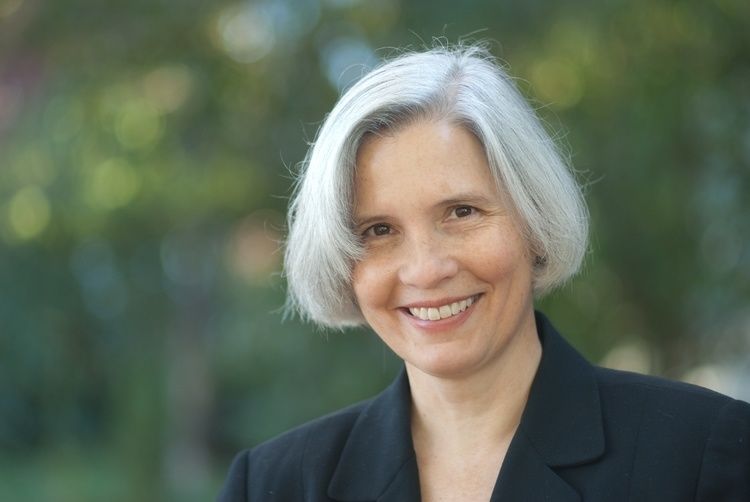
Shelley Rigger, Professor, Davidson University
Is China Part of Taiwan?
There is a long-standing debate over whether Taiwan is part of China. Beijing insists that not only is Taiwan part of China, it is part of the People’s Republic of China. Most Taiwanese reject the idea that the island they live on is part of the PRC, and they would prefer to remain outside the PRC state’s jurisdiction. But when it comes to China – the abstract, cultural, historical idea of China – the situation is more interesting. While some Taiwanese embrace an identity that relegates Chineseness to a minor role (or even dismiss it altogether), most of Taiwan’s 24 million people recognize a cultural and historical attachment to China. Where the two sides differ is over the meaning of that attachment for contemporary political arrangements. Few Taiwanese are swayed by the historical determinism and cultural essentialism that underlie the PRC’s case for “unification.” Rather, they believe that political identity and citizenship should follow the will of the people, not the dictates of history.
In the Cornell Contemporary China Initiative’s (CCCI) seventh year, our guest speakers and host Allen Carlson critically examine, the question “What is China?”
This topic is explored in the series through utilizing an inter-disciplinary perspective and making use of both historical and contemporary lenses thereby touching upon some of the most pressing and significant political and social issues now facing “China” and the rest of the world. In this context particular attention will be paid to contested places, with special consideration of how they are placed within (or without) what is considered to be China. In so doing it will shed light on the impact such practices and processes have had on those living in these regions.
Hosted by Allen Carlson, Director of CAPS and Michael J. Zak Chair, Cornell University | Director of CCCI for Fall 2021
Cosponsored by the East Asia Program and The Levinson China and Asia-Pacific Studies (CAPS) Program.
The lecture series complements Professor Carlson’s course of the same name:
CAPS 3967 / ASIAN 3395 / GOVT 3967
Additional Information
Program
Einaudi Center for International Studies
East Asia Program
CCCI: Hong Kong: Global China’s Restive Frontier with CK Lee
November 8, 2021
4:45 pm
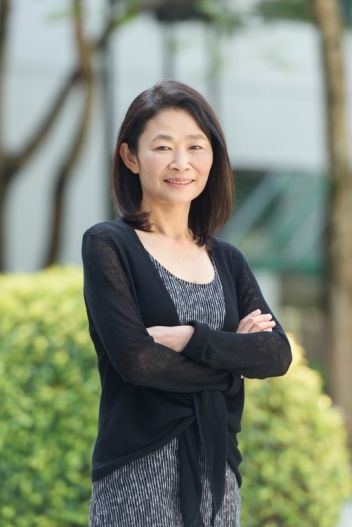
The Cornell Contemporary China Initiative welcomes CK Lee, Professor, Sociology, UCLA speaking on
Hong Kong: Global China’s Restive Frontier
How did Hong Kong transform itself from a “shoppers’ and capitalists’ paradise” into a “city of protests” at the frontline of an anti-China global backlash? More than an ideological conflict between a liberal capitalist democratizing city and its Communist authoritarian sovereign, the Hong Kong story, stunning and singular in its many peculiarities, also offers general lessons about a global force and its uneven consequences.
This talk will not be recorded.
In the Cornell Contemporary China Initiative’s seventh year, our guest speakers and host Allen Carlson critically examine, the question “What is China?”
This topic is explored in the series through utilizing an inter-disciplinary perspective and making use of both historical and contemporary lenses. In so doing it will touch upon some of the most pressing and significant political and social issues now facing “China” and the rest of the world. In this context, particular attention will be paid to contested places, with special consideration of how they are placed within (or without) what is considered to be China. And will shed light on the impact such practices and processes have had on those living in these regions.
Hosted by Allen Carlson, CAPS Director, and Michael J. Zak, Chair, Cornell University
Co-sponsored by the East Asia Program and The Levinson China and Asia-Pacific Studies (CAPS) Program
The lecture series complements Professor Carlson’s course of the same name:
CAPS 3967 / ASIAN 3395 / GOVT 3967
Additional Information
Program
East Asia Program
Contemporary China Initiative: Decolonizing Chinese Historiography
October 25, 2021
4:45 pm
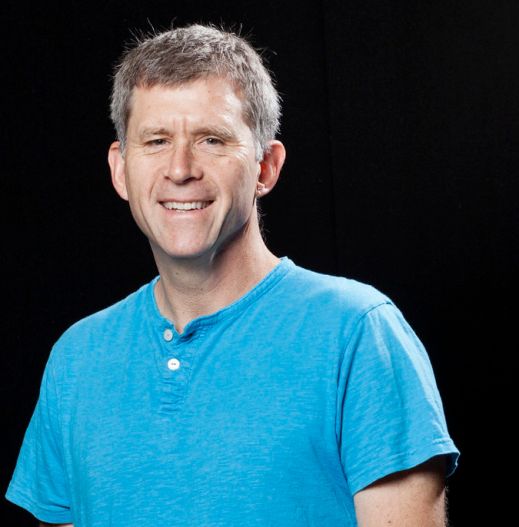
James Millward, Professor of Inter-societal History, Walsh School of Foreign Service, Georgetown University
Decolonizing Chinese Historiography—with special attention to Xinjiang
This talk focuses on the use of history, and, more broadly, examines how common concepts and vocabulary used by nearly all China scholars teaching and writing in English not only mischaracterize the past of states and peoples on the East Asian mainland but reinforce PRC justifications for its colonialism, now egregiously oppressive and verging on genocidal. The problematic terminology we all use includes the idea of "dynasties," "borderlands," "minorities," and even, as it is often employed, the word "China" itself.
In the Cornell Contemporary China Initiative’s seventh year, our guest speakers and host Allen Carlson critically examine the question “What is China?”
This topic is explored in the series through utilizing an inter-disciplinary perspective and making use of both historical and contemporary lenses. In so doing it will touch upon some of the most pressing and significant political and social issues now facing “China” and the rest of the world. In this context particular attention will be paid to contested places, with special consideration of how they are placed within (or without) what is considered to be China. And will shed light on the impact such practices and processes have had on those living in these regions.
Hosted by Allen Carlson, CCCI and CAPS Director, and Michael J. Zak, Chair, Cornell University
Cosponsored by the East Asia Program and The Levinson China and Asia-Pacific Studies (CAPS) Program.
The lecture series complements Professor Carlson’s course of the same name:
CAPS 3967 / ASIAN 3395 / GOVT 3967
Additional Information
Program
Einaudi Center for International Studies
East Asia Program
Contemporary China Initiative: At the Edge of China—life in a Tibetan town
September 27, 2021
4:45 pm
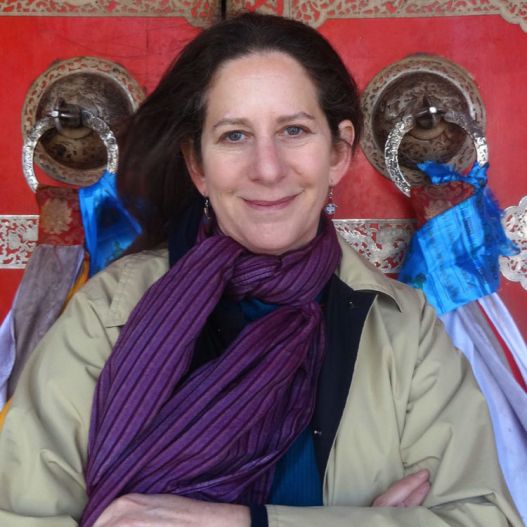
At the Edge of China—life in a Tibetan town is the focus of this talk by our guest speaker Barbara Demick, journalist, and author (Eat the Buddha, Penguin Random House, 2021). Under Xi Jinping, the Chinese Communist Party has exhibited zero tolerance for any slippage at the edges of the empire. The mass incarceration of the Muslim population of Xinjiang and the rollback of Hong Kong’s autonomy have grabbed the most attention. Tibet is experiencing the same erosion of its identity, even if the Party is proceeding more carefully.
Barbara Demick looks at life in Ngaba (Aba in Chinese), a small Tibetan county, which became the engine of Tibetan resistance to Chinese rule with a wave of self-immolations that started in 2009. Ngaba is the subject of Demick’s newest book, Eat the Buddha, which was listed among the best non-fiction of 2020 by the New York Times, Washington Post, Financial Times, Economist, and NPR, among others.
In the Cornell Contemporary China Initiative’s seventh year, our guest speakers and host Allen Carlson critically examine, the question “What is China?”
This topic is explored in the series through utilizing an inter-disciplinary perspective and making use of both historical and contemporary lenses. In so doing it will touch upon some of the most pressing and significant political and social issues now facing “China” and the rest of the world. In this context, particular attention will be paid to contested places, with special consideration of how they are placed within (or without) what is considered to be China. And will shed light on the impact such practices and processes have had on those living in these regions.
Hosted by Allen Carlson, CAPS Director, and Michael J. Zak, Chair, Cornell University | CCCI Director for Fall 2021
Cosponsored by the East Asia Program and The Levinson China and Asia-Pacific Studies (CAPS) Program.
The lecture series complements Professor Carlson’s course of the same name:
CAPS 3967 / ASIAN 3395 / GOVT 3967
Additional Information
Program
Einaudi Center for International Studies
East Asia Program
Gatty Lecture Series: Intimate Itinerancy: Sex, Work, and Chinese Women in Colonial Malay’s Brothel Economy, 1870s-1930s
September 23, 2021
12:15 pm
Kahin Center, 640 Stewart Ave
Part of the Ronald and Janette Gatty Lecture Series.
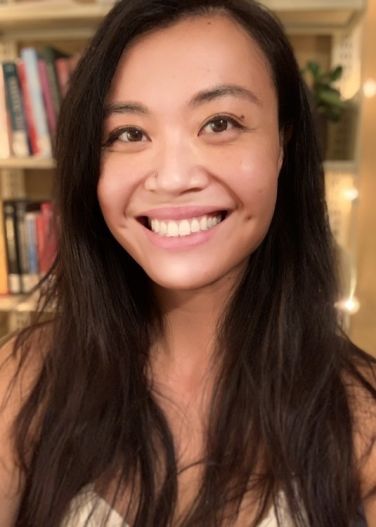
Sandy Chang, Department of History, University of Florida
Sandy F. Chang is an assistant professor in Modern Asian History at the University of Florida. She specializes in Chinese migration, gender, and sexuality studies in Southeast Asia and the British Empire. Her scholarly areas of interest also include global China, inter-Asian connections, modern border regimes, women’s history, and comparative colonialisms. She is currently working on a book project, Across the South Seas: Gender, Intimacy, and Chinese Migration to British Malaya, 1877-1941 that explores the border-crossing journeys of over a million Chinese women and their intimate lives across the Malay Peninsula. She received her PhD from the University of Texas at Austin.
For questions, please contact seapgatty@cornell.edu.
Gatty Lectures will be held in-person at the Kahin Center, with the option to attend virtually as well. To attend virtually, please register at https://cornell.zoom.us/meeting/register/tJArdOuhrDkpHNx7g2ky3ZfuJ_N1ej….
Beverages will be served outside before the talk, and in accordance with current Cornell guidance we will be wearing masks indoors. Feel free to bring your own brownbag lunch and eat outside with us before the talk.
Additional Information
Program
Einaudi Center for International Studies
Southeast Asia Program
East Asia Program
Info Session: Einaudi Dissertation Proposal Development Program
October 14, 2021
4:45 pm
This session will provide PhD students with information on the Einaudi Dissertation Proposal Development Program. The program offers seminars, workshops, and faculty mentoring to PhD students in the social sciences and humanities who are developing research projects abroad or domestic research projects on topics that connect to global issues. Students receive up to $5,000 for summer research. Workshop and seminar costs are also covered.
Contact: programming@einaudi.cornell.edu
Additional Information
Program
Einaudi Center for International Studies
Reppy Institute for Peace and Conflict Studies
East Asia Program
Southeast Asia Program
Latin American and Caribbean Studies
Institute for African Development
Institute for European Studies
South Asia Program
The Pulse of Art History Lecture Series - Nancy P. Lin
September 28, 2021
4:45 pm
Goldwin Smith Hall, G22
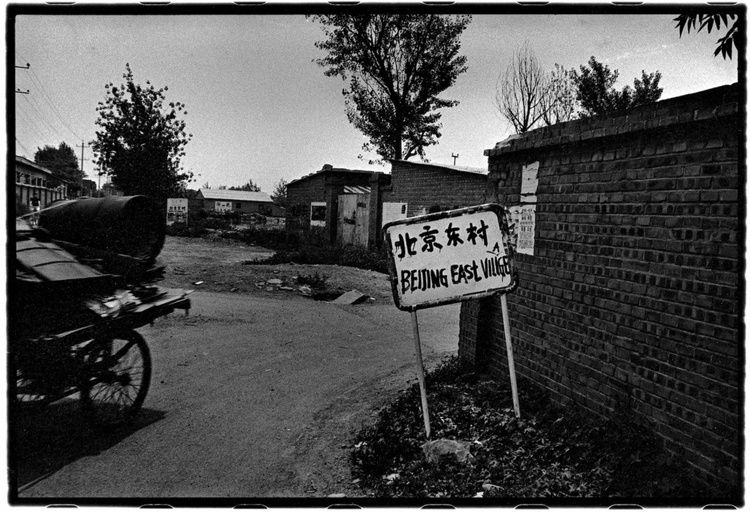
Sites at the Periphery: Making Experimental Art Spaces in Beijing
Nancy P. Lin
Klarman Postdoctoral Fellow, Cornell University
The Pulse of Art History Lecture Series
9.28.21 4:45pm
Location: Goldwin Smith G22
Abstract:
Developing without the official support of state institutions, 1990s experimental art in China has often been described as “underground” or “independent.” In this talk, I suggest that the term “peripheral” is a much more apt description as it simultaneously refers to the actual spaces in which art has flourished at the urban fringes of the city and the spatial dynamics of experimental art’s alternative positioning. Exploring how site-based art activities in Beijing’s urban periphery interfaced with the city’s physical expansion, I show how art practices transformed overlooked urban spaces to connect local sites to global art networks.
Bio:
Nancy P. Lin is a 2021 Klarman Postdoctoral Fellow in Art History at Cornell University. She received her Ph.D. in Art History from The University of Chicago. Her research considers modern and contemporary Chinese art and architecture from a transregional perspective. Her current book project focuses on the intersection between art and urbanism in examining locally situated, yet globally oriented site-based art practices in China. Lin’s publications include a forthcoming chapter in the edited volume The Allure of Matter: Materiality Across Chinese Art (2021), an article in the Journal of Contemporary Chinese Art (Winter 2021), and a chapter in the edited volume Visual Arts, Representations and Interventions in Contemporary China: Urbanized Interface (2018).
Additional Information
Program
Einaudi Center for International Studies
East Asia Program