
East Asia Program
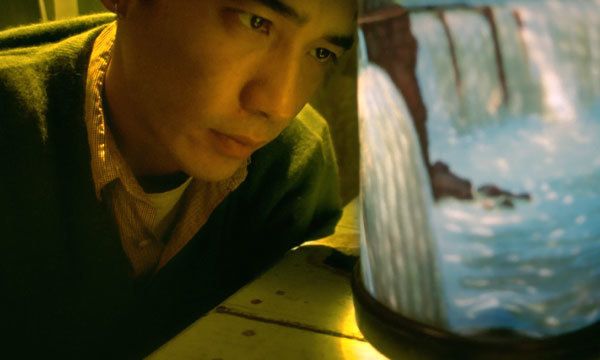
Happy Together
March 25, 2021
12:01 am
1997 > Hong Kong > Directed by Wong Kar Wai
With Tony Leung Chiu-Wai, Leslie Cheung
Wong Kar Wai deals with emotional entrapment in this film that won him the Best Director award at the 1997 Cannes Film Festival. Taking as its subject two gay lovers from Hong Kong spending the last few months of British rule away from home -- in Buenos Aires, Argentina - the film is characteristic of the director, with visuals that grab hold and never let go, and a soundtrack -- a mixture of Astor Piazzola, Frank Zappa and the Turtles -- that is undoubtedly one of the most expressive in years. In Mandarin, Cantonese & Spanish. Subtitled. Cosponsored with the East Asia Program.
1 hr 32 min
We will start taking reservations one week in advance of a film's first play date.
Reservations can be made here:
https://cinema.cornell.edu/virtual-cinema-order-form
Additional Information
Program
Einaudi Center for International Studies
East Asia Program
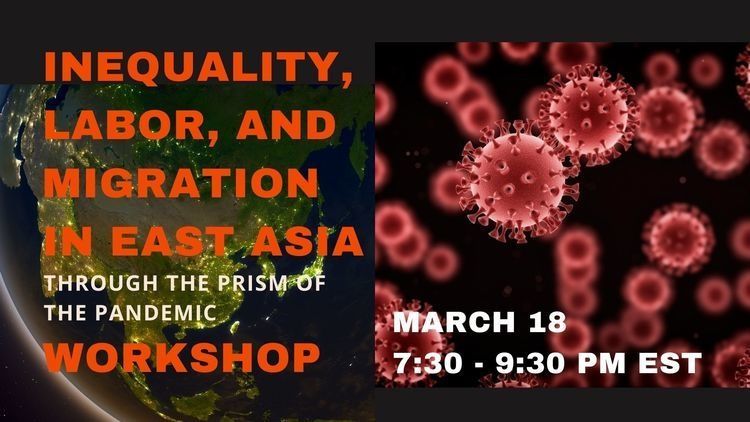
Inequality, Labor, and Migration in East Asia Through the Prism of Global Pandemic Virtual Workshop
March 18, 2021
7:30 pm
Inequality, Labor, and Migration in East Asia
Through the Prism of Global Pandemic Virtual Workshop
Long-standing demographic changes will have serious implications for the nature of work, spatial mobility, and the overall distribution of resources in the countries of East Asia. Has the Coronavirus pandemic seriously affected any of the aforementioned areas and, if so, how? Join us for an inter-and cross-disciplinary workshop that explores the ongoing pandemic and its implications for inequality, labor, and migration in China, Hong Kong, Japan, the Korean peninsula, and Taiwan.
The workshop will begin with introductory remarks before moving to several short (approx. 20 minutes) presentations around the theme and will then conclude with several affinity group breakout rooms to further facilitate in-depth conversations. Participants from all disciplinary backgrounds and career stages are welcome and we especially encourage advanced graduate students, postdoctoral fellows, and fixed-term researchers to both present and participate.
This event is hosted by East Asia Program's core faculty member, Tristan Ivory (International and Comparative Labor, ILR), and Kun Huang, Ph.D. Student (Comparative Literature) - she is also an officer of the Graduate Student Steering Committee (GSSC) of EAP with the generous cooperation in planning from Vivian Shaw (Harvard College Fellow, Department of Sociology, Harvard University) and Sujin Eom (Postdoctoral Fellow, Department of Geography, Dartmouth University) .
Additional Information
Program
Einaudi Center for International Studies
East Asia Program
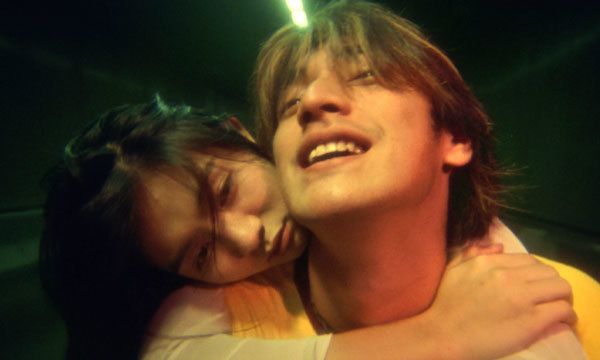
Fallen Angels
March 18, 2021
12:01 am
1996 > Hong Kong > Directed by Wong Kar Wai
With Leon Lai, Michelle Reis, Takeshi Kaneshiro, Charlie Yeung
Wong Kar Wai's take on love and loss in a '90s, urban, neon-lit setting, but a darker film than its companion piece, Chungking Express. "An exhilarating rush of a movie. Go-for-broke visual bravura." (LA Times) In Cantonese & Mandarin. Subtitled. Cosponsored with the East Asia Program.
1 hr 36 min
We will start taking reservations one week in advance of a film's first play date.
Reservations can be made here:
https://cinema.cornell.edu/virtual-cinema-order-form
Additional Information
Program
East Asia Program
Einaudi Center for International Studies
Selden Memorial Translation Prize 2021

The 2021 Kyoko Selden Memorial Translation Prize in Japanese Literature
Announcing the seventh annual competition for the Kyoko Selden Memorial Prize in Japanese Literature, Thought, and Society.
Additional Information
Henry Wan

Professor Emeritus, Economics
Henry Wan's research focuses on development under globalization, the economics of East Asia, industrial policy, and welfare economics of international trade.
Additional Information
Felicia Qiuyun Teng

Senior Lecturer, Asian Studies
Felicia Qiuyun Teng teaches intermediate and advanced Chinese language and literature. She previously served as an editor at Beijing Publishing House and as a journalist and editor for Beijing Publishing House's University Students magazine.
Additional Information
Misako Suzuki

Senior Lecturer, Asian Studies
Misako Suzuki is a senior lecturer in the Department of Asian Studies in the College of Arts and Sciences.
Additional Information
Weiqing Su George

Senior Lecturer, Asian Studies
Weiqing-Su George is a native speaker of Chinese, and has native fluency in English, advanced skills in Cantonese, and intermediate skills in Japanese. She is a member of the American Council on the Teaching of Foreign Languages and the Chinese Language Teachers Association.
Additional Information
Meejeong Song

Senior Lecturer, Asian Studies
Additional Information
Paul Steven Sangren

Emeritus, Hu Shih Distinguished Professor
Paul Steven Sangren is a socio-cultural anthropologist whose research focuses on Taiwan and China. His earliest published work combines insights drawn from structuralist theory with practice-oriented critiques to illuminate Chinese ritual processes and cosmological symbols.