
East Asia Program
Rui Liu
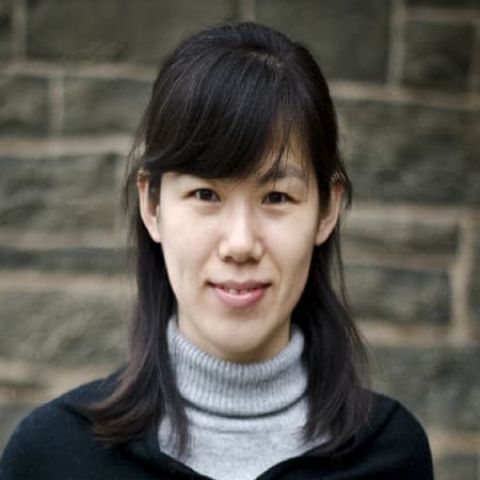
Senior Lecturer, Asian Studies
Rui Liu received her MA in Literary Theory in 2002 from the Department of Chinese Language and Literature at Tsinghua University, and her B.A. in Chinese Language and Literature in 1999 from Shaanxi Normal University in China.
Additional Information
Fangfang Li

Lecturer, Asian Studies
Fangfang Li is a lecturer in the Department of Asian Studies in the College of Arts and Sciences.
Li received her MA in teaching Chinese as a second language from Beijing Language and Culture University, and her BA in Chinese language and literature from Shandong Science and Technology University.
Additional Information
Naomi Nakada Larson

Senior Lecturer, Asian Studies
Naomi Nakada Larson is a senior lecturer in the Department of Asian Studies, College of Arts and Sciences.
Additional Information
Sahoko Ichikawa

Senior Lecturer, Asian Studies
Sahoko Ichikawa is a senior lecturer in the Department of Asian Studies in the College of Arts and Sciences.
Additional Information
EAP Spring 2021 Event Schedule

All event times are EST and held virtually. Please contact eap@cornell.edu for accessibility arrangements in advance. CCCC=Cornell Classical Chinese Colloquium; CCCI=Cornell Contemporary China Initiative
January
27 3:30-5:30 PM Antiracist Pedagogy Workshop for Asian Studies
February
11 4:30-6:00 PM Eunjung Kim, Syracuse University, Continuing Presence of Discarded Bodies: Occupational Harm, Necro-Activism, and Living Justice event co-sponsored by the CNY Humanities Corridor; this event will have CART (Captioning in real-time) provided.
12 3:30-5:30 PM CCCC: Yuanyuan Duan, Cornell University
19 3:00-4:00 PM Chasing Dreams from Africa to China: Guangzhou Dream Factory post-film viewing Q and A with filmmakers Christiane Badgley and Erica Marcus
22 9:30-11:00 AM CCCI: From Compradors to Hacendados: Cantonese Merchants In Peru and the Expanding Settler Colonial Frontiers of the Cantonese Pacific
March
5 3:30-5:30 PM CCCC: Beverly Bossler, Brown University
8 2:30-4:00 PM CCCI: Chenchen Zhang, Queen's University, Belfast Hukou and Suzhi as Technologies of Governing Citizenship and Migration in China
18 7:30-9:30 PM Inequality, Labor, and Migration in East Asia Through the Prism of Global Pandemic Virtual Workshop
22 11:30 AM-1:00 PM Rough Work: Why is English the Lingua Franca in Chinese Academia?, Xuewen Yan, Ph.D. student, Sociology, Cornell University
24 11:30 AM-1:00PM Rough Work: The Floating World: History, Haiku, Global Modernism Paul Bush, Ph.D., Northwestern University
30 11:30 AM-1:15 PM Rough Work: Loopholes for Lawmakers: Symbolic Prohibition of Bribery, Adoree Kim, Ph.D. student, Government, Cornell University
April
2 10:00-11:30 AM Image, Stories, and Silences of North Korean Defector “Returnees” to Japan, Artist talk with Soni Kum
2 3:30-5:30 PM CCCC: Sophie Volpp, UC Berkley
7 11:30 AM – 1:20 PM Rough Work: A New Look at Chinese Paper-making Communities, Yiyun Peng, Ph.D. student, Cornell History Department
12 4:30-6:00 PM CCCI: Gerald Roche, La Trobe University Tibet, China, and Settler Colonialism
23-25 Korean Linguistics in Crosslinguistic Context virtual conference details TBA
26 4:30-6:00 PM Kimberly Chung, McGill University Feminist Futures and Ecological Sense in South Korea
28 11:30 AM-1:30 PM Rough Work: Simon Dennis Posner Melodramatic Afterlives: Visions in Seoul's Blockchain Space
29 4:30-6:00 PM Southern Effects: Kaiju, Cultural Intimacy, and the Production of Distribution
May
8 10 AM-Noon CCCC: Leigh Jenco, London School of Economics and Political Science
10 4:30-6:00 PM CCCI: Biao Xiang, Max Planck Institute International Reproduction Migration: the Case of China
20 3:30-5:00 PM EastAsia+ Workshop with Thomas Lamarre: "Infrastructure and Sensibility: A Physiology of Power"
Additional Information
Program
Days of Being Wild

March 11, 2021
12:01 am
1991 > Hong Kong > Directed by Wong Kar Wai
With Leslie Cheung Kwok-wing, Maggie Cheung
Wong Kar Wai's second feature is a typically rapturous and melancholy erotic tale about a man and two women drifting through Hong Kong in 1960. In Cantonese, Shanghainese, Tagalog & Mandarin. Subtitled. Cosponsored with the East Asia Program.
1 hr 34 min
We will start taking reservations one week in advance of a film's first play date.
Reservations can be made here:
https://cinema.cornell.edu/virtual-cinema-order-form
Additional Information
Program
Einaudi Center for International Studies
East Asia Program
Sing Me a Song
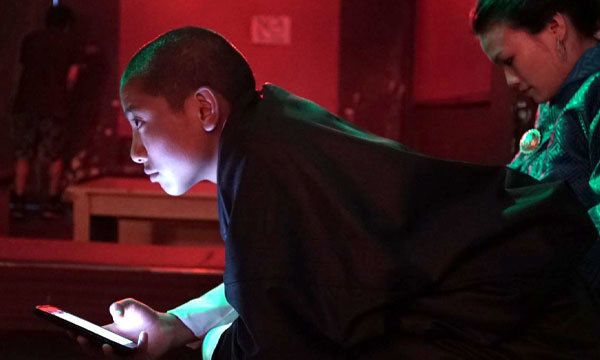
April 8, 2021
12:01 am
Ithaca Premiere>2019 > France/Germany/Switzerland > Directed by Thomas Balms
In Happiness (2014), filmmaker Balms chronicled 8-year-old Peyangki's initiation into a monastery and the arrival of electricity to his remote Bhutan village. In his new film, ten years have passed, and the filmmaker finds the teenage monk tied to his mobile phone, pursuing a romance over WeChat with a bar singer in Bhutan's capital. "...a fascinating tale of romantic melancholy played out against the peaceful, meditative backdrop of the Himalayas." (LA Times) In Dzongkha. Subtitled. More at participant.com/film/sing-me-song
1 hr 40 min
We will start taking reservations one week in advance of a film's first play date.
Reservations can be made here:
https://cinema.cornell.edu/virtual-cinema-order-form
Additional Information
Program
South Asia Program
Einaudi Center for International Studies
East Asia Program
“Like China 30 years ago” Chinese Discourses of Development in Northern Laos
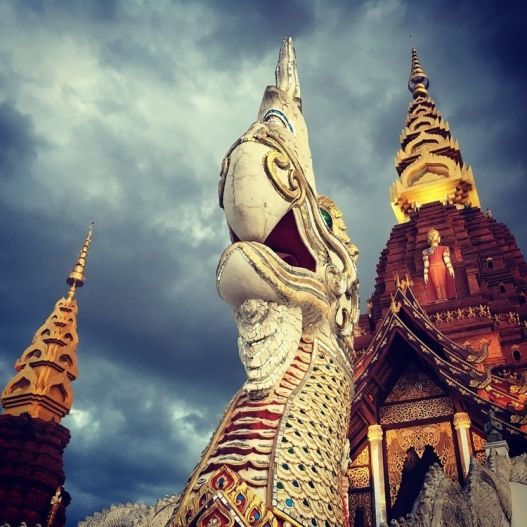
April 29, 2021
12:30 pm
***Formerly titled "South of the Clouds, North of the Nagas: Yunnan's Changing Role in the Mekong Region." The title and abstract of this talk have changed slightly.***
Part of the Ronald and Janette Gatty Lecture series
Dr. Juliet Lu, Atkinson Center for Sustainability Postdoctoral Fellow, Department of Development Sociology, Cornell University
Since the late 1990s, Chinese investment in Laos has grown exponentially and is transforming many areas of the country. Chinese actors involved in driving this expansion, from traders to agribusiness firms to state officials, tend to insist that these investments are not just business endeavours but drivers of development. They often compare Laos to China 30 years ago in terms of its degree of economic development, articulating a narrative that China’s model of development can be exported and applied in other countries. In this talk, I present multiple perspectives on how ideals of development translate from China into the Lao context. I use the stories of three groups of actors engaged in the cross-border agribusiness investments and trade to show how narratives of development are rooted in personal histories and ties to China. These experiences often differ and the narratives of development that individual actors tell are motivated by their own strategic interests. Still, they demonstrate the tendency to compare the two countries as a way of understanding the rapid transformation of Laos through Chinese investment, and of considering broader implications for the future.
Additional Information
Program
Einaudi Center for International Studies
East Asia Program
Southeast Asia Program
As Tears Go By
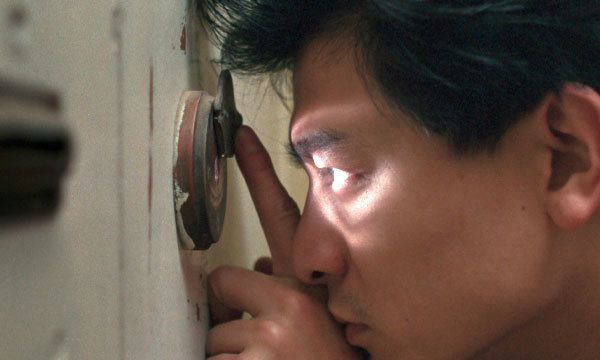
March 4, 2021
12:01 am
1988 > Hong Kong > Directed by Wong Kar Wai
With Andy Lau, Maggie Cheung, Jacky Cheung
Set amidst Hong Kong's ruthless, neon-lit gangland underworld, this operatic saga of ambition, honor, and revenge stars Andy Lau as a small-time mob enforcer who finds himself torn between a burgeoning romance with his ailing cousin and his loyalty to his loose cannon partner in crime whose reckless attempts to make a name for himself unleash a spiral of violence. Hong Kong auteur Wong Kar Wai's first feature length film. In Cantonese. Subtitled. Cosponsored with the East Asia Program.
1 hr 42 min
We will start taking reservations one week in advance of a film's first play date.
Reservations can be made here:
https://cinema.cornell.edu/virtual-cinema-order-form
Additional Information
Program
Einaudi Center for International Studies
East Asia Program
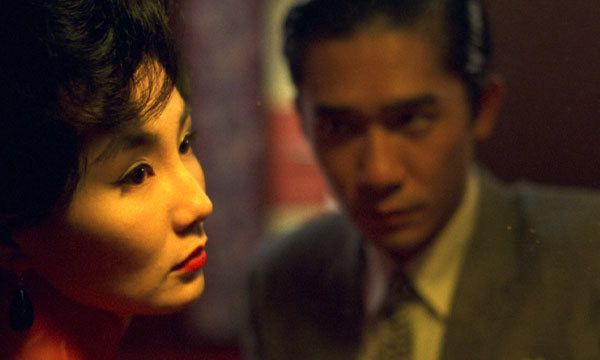
In the Mood for Love
February 25, 2021
12:01 am
2000 > Hong Kong > Directed by Wong Kar Wai
With Maggie Cheung, Tony Leung Chiu-wai
Two neighbors wrestle with irresistible desire for one another upon learning of their spouses' affair in a romantic and melancholic film set in 1960s Hong Kong. In Cantonese, Shanghainese, French & Spanish. Subtitled. Cosponsored with the East Asia Program.
1 hr 38 min
We will start taking reservations one week in advance of a film's first play date.
Reservations can be made here:
https://cinema.cornell.edu/virtual-cinema-order-form
Additional Information
Program
East Asia Program