
East Asia Program
Chinese Migrations to Monsoon Asia: The Long Historical View

September 9, 2020
5:20 pm
Chinese migrants and travelers have been traveling to the countries of the Southern Oceans (the "Nanyang", in Chinese) for at least two millennia, and probably longer. We have only scattered records of their passing for the first thousand years of these voyages, but then the documents start to get better, and we can outline the passage of enormous numbers of people, migrating to new lives in the "South Seas". This talk will trace those histories, looking at the warp and weft of Chinese migrations over two thousand years.
Presenter: Eric Tagliacozzo, John Stambaugh Professor of History at Cornell University
Register: https://cornell.zoom.us/webinar/register/WN_P0QsYVT3RS2-4xxeNH9txA
Part of the series "Migrations: A Global, Interdisciplinary, Multi-Species Examination"
Additional Information
Program
Einaudi Center for International Studies
East Asia Program
Southeast Asia Program
South Asia Program
The Observer
October 22, 2020
12:01 am
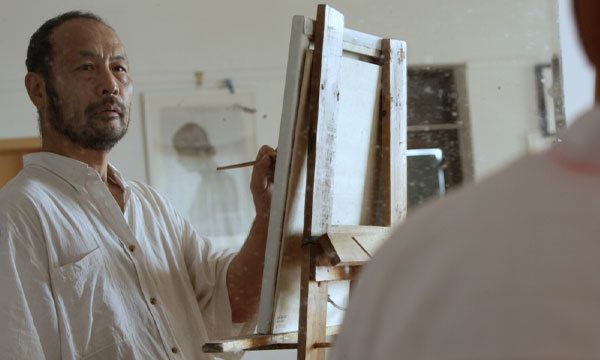
Ithaca Premiere> 2019 > China/Italy > Directed by Rita Andreetti
With Hu Jie
The observer of this documentary's title is China's Hu Jie, maker of films, woodcuts and paintings who courageously documents the years of the Great Famine and the Cultural Revolution. None of his films have been shown in his homeland. "Featuring lush photography and revealing interviews, Rita Andreetti's sensitive portrait of the artist... explores Hu Jie's commitment, tenacity and bravery, as well as the toll that his work has taken on his personal life." (Icarus Films) Subtitled. More at icarusfilms.com/df-obser Please note: we encourage those with a CU NetID to view this film by visiting CUÕs Streaming Services at newcatalog.library.cornell.edu/databases/subject/Streaming%20Video. Once there, look for this film in the Docuseek2 Collection. Those without a CU NetID should send a reservation for a screening link.
1 hr 18 min.
We will start taking reservations one week in advance of a film's first playdate. Requests received before that time will not be processed.
Additional Information
Program
Einaudi Center for International Studies
East Asia Program
House of Hummingbird

October 15, 2020
12:01 am
Ithaca Premiere
2019 > South Korea > Directed by Bora Kim
With Ji-hu Park, Sae-byuk Kim, Seung-yeon Lee
Fourteen-year-old Eun-hee moves through life like a hummingbird searching for a taste of sweetness wherever she may find it. Ignored by her parents and abused by her brother, she finds her escape by roaming the neighborhood with her best friend, going on adventures, exploring young love and experiencing everything that comes with growing up in a country on the brink of enormous change. Subtitled. More at kinolorber.com/film/house-of-hummingbird
2 hrs 18 min
We will start taking reservations one week in advance of a film's first playdate. Requests received before that time will not be processed.
Additional Information
Program
Einaudi Center for International Studies
East Asia Program
Reinventing Family: The Rise of Non-Normative Households in South Korea
October 5, 2020
4:30 pm
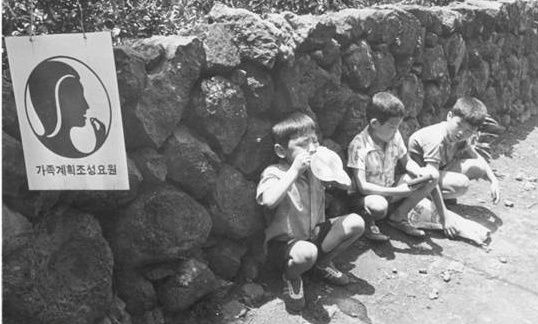
The transformation of family patterns in advanced capitalist societies has received much attention in academic and popular writing. While “modern families” are widely accepted in Europe, alarm and anxiety characterize the tenor around the changes in East Asian family structures. South Korea serves as a case study to understand the mechanisms driving the diversification of family structures including single-parent households, multicultural families, unmarried singles, and (the isolation of) senior citizens.
Speaker: Paul Chang, Harvard University
Faculty host: Ivanna Yi
Cosponsors: Department of Asian Studies, Sociology, and FGSS
Additional Information
Program
Einaudi Center for International Studies
East Asia Program
Cornell Classical Chinese Colloquium with Meir Shahar
October 17, 2020
10:00 am
Cornell Classical Chinese Colloquium with Meir Shahar, Tel Aviv University
Description of Texts for the Cornell Classical Chinese Colloquium
Written materials from late-imperial rural China are relatively rare. I have chosen two specimens for the Cornell Classical Chinese Colloquium. The first is the diary of a temple association from Shanxi Province. The second is a ritual text that likely originated in Guizhou province.
The two texts alike were written by people who received no more than rudimentary education, and as such, they shed light on the functional literacy that was enjoyed by at least some late-imperial villagers. It is fascinating to see how these villagers manipulated the limited number of characters with which they were familiar to write relatively complex and informative texts. The linguistic interest of these texts is joined by their social, economic, cultural, and religious significance. The texts offer rare insights into the social organization, financial activities, cultural performances, and religious beliefs of late-imperial villagers.
Meir Shahar, Brief Bio
Meir Shahar is the Shoul N. Eisenberg Chair for East Asian Affairs at Tel Aviv University. He received his undergraduate degree from the Hebrew University in Jerusalem, and his PhD from Harvard University. His research interests cover the fields of Chinese religion and literature, Chinese martial-arts history, the impact of Indian mythology upon Chinese culture and, most recently, Chinese animal studies.
Meir Shahar is the author of several monographs including: Crazy Ji: Chinese Religion and Popular Literature; Oedipal God: The Chinese Nezha and his Indian Origins; and the Shaolin Monastery: History, Religion, and the Chinese Martial Arts, which has been translated into numerous languages. He is the coeditor of several volumes including: Unruly Gods: Divinity and Society in China; India in the Chinese Imagination: Myth, Religion, and Thought; Chinese and Tibetan Esoteric Buddhism; and Animals and Human Society in Asia.
The CCCC is a reading group for students and scholars with an interest in premodern Sinographic text.
All are welcome, at any level of experience with classical Chinese. Please email us to register and receive the log-in credentials.
At each session, one participant presents a text in classical Chinese. Attendees discuss historical, literary, linguistic, and other aspects of the text, and work together to resolve difficulties in comprehension and translation.
Presentations include works of all sorts, from the earliest times to the twentieth century.
No preparation required: all texts will be distributed at the meeting.
Additional Information
Program
Einaudi Center for International Studies
East Asia Program
The Annual Hu Shih Distinguished Lecture with Meir Shahar "Chinese Animal Gods"
October 16, 2020
12:00 pm
The Annual Hu Shih Distinguished Lecture with Meir Shahar, History, Tel Aviv University
Chinese Animal Gods
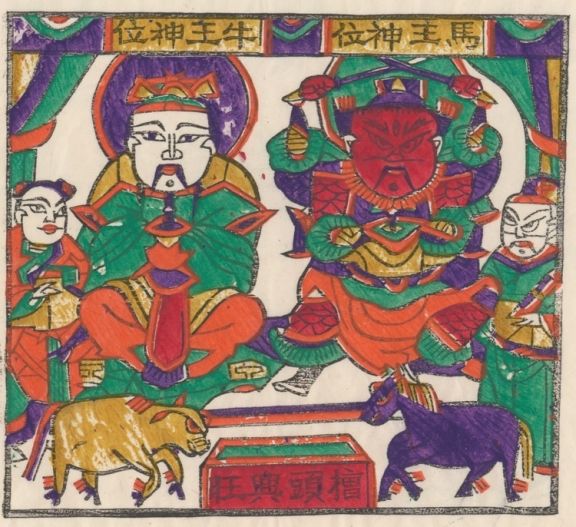
Abstract: Our ancestors depended upon beasts of burden for a living. In the Chinese case this dependence was reflected in the religious sphere. Chinese religion featured deities responsible for the wellbeing of draft animals. The two principal ones were the Horse King (divine protector of equines) and the Ox King (tutelary deity of bovines). This lecture will examine the ecological background and historical evolution of these animal-protecting cults. I will survey the Horse King's and Ox King's diverse clientele, from peasants who relied upon the water buffalo to plough their rice fields to cavalrymen whose success in battle depended upon their chargers' performance. Particular attention will be given to the theological standing of animals as reflected in their tutelary divinities' cults. In some cases, the animal itself was regarded as a deity who sacrificed himself for humanity’s sake. Chinese Buddhist scriptures described the ox as a bodhisattva who out of pity for the toiling peasant chose to be incarnated as his beast of burden.
Bio:
Meir Shahar is the Shoul N. Eisenberg Chair for East Asian Affairs at Tel Aviv University. He received his undergraduate degree from the Hebrew University in Jerusalem, and his PhD from Harvard University. His research interests cover the fields of Chinese religion and literature, Chinese martial-arts history, the impact of Indian mythology upon Chinese culture and, most recently, Chinese animal studies.
Meir Shahar is the author of several monographs including Crazy Ji: Chinese Religion and Popular Literature; Oedipal God: The Chinese Nezha and his Indian Origins; and the Shaolin Monastery: History, Religion, and the Chinese Martial Arts, which has been translated into numerous languages. He is the co-editor of several volumes including Unruly Gods: Divinity and Society in China; India in the Chinese Imagination: Myth, Religion, and Thought; Chinese and Tibetan Esoteric Buddhism; and Animals and Human Society in Asia.
On the 100th anniversary of the world-changing philosopher and statesman’s graduation from Cornell, EAP initiated an annual distinguished lecture in honor of Hu Shih. Leading scholars of Chinese and East Asian studies are invited to give a lecture on critical issues in their field of research. These lectures are archived as a resource for the Cornell community and beyond.
Full-length lecture videos and highlights
Hu Shih Distinguished lecture videos and programs are also permanently archived in the Cornell eCommons archive.
Renowned historian and feminist scholar, Dorothy Ko was the Hu Shih distinguished lecturer for 2019–20.
Additional Information
Program
Einaudi Center for International Studies
East Asia Program
Transtopia in the Sinophone Pacific

September 21, 2020
4:30 pm
Speaker: Howard Chiang, UC Davis
Transtopia calls into question the coherence of transness and seeks to enable a non-hierarchical continuum of transgender subjects and experiences. This talk explores three examples of transtopia in the history of the Sinophone Pacific: the history of renyao (the “human prodigy”), the cinematic representations of Chinese castration, and the changing nature of tongzhi (LGBTQ) activism in post-millennial Taiwan.
This event is co-sponsored by the East Asia Program, the Feminist, Gender, and Sexuality Studies Department, and Society for the Humanities.
Faculty hosts: Andrea Bachner, Masha Raskolnikov
Additional Information
Program
East Asia Program
Pandemic Politics in Southeast Asia: Society, Governance, and the State
September 18, 2020
8:00 pm
Part of the Ronald and Janette Gatty series
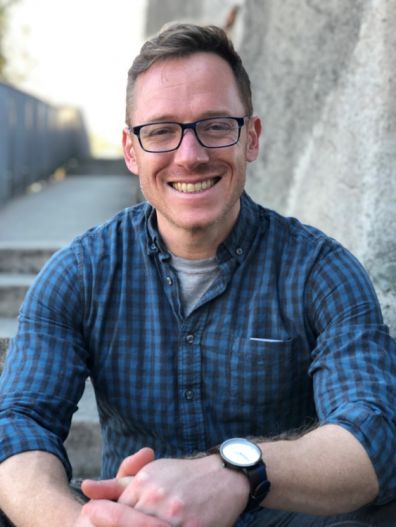
Tom Pepinsky, Tisch University Professor, Department of Government, Cornell University
The ongoing COVID-19 pandemic is the most significant challenge facing Southeast Asia since the 1997-98 economic crisis. As in the case of the economic crisis, politics determines how countries have responded. Adopting a broadly comparative perspective on the region, I outline some broad lessons from the first six months of the pandemic about how the region’s political systems, focusing on narratives of “good governance,” political accountability, and state-society relations. These lessons from this comparative approach travel beyond Southeast Asia, and I will draw comparisons between the experiences of Southeast Asia and countries such as Germany, Taiwan, Rwanda, and the United States.
Additional Information
Program
Einaudi Center for International Studies
Southeast Asia Program
East Asia Program
Economic Decoupling of the U.S. and China is ‘ A Long Way Away,’ Says Former IMF China Head

Despite China's desire to move away from the dollar-denominated international financial system, the economies of China and the US "are still quite closely tied." says Eswar Prasad (SAP).
Additional Information
Dearest Lenny: Letters from Japan and the Making of the World Maestro
September 14, 2020
4:30 pm
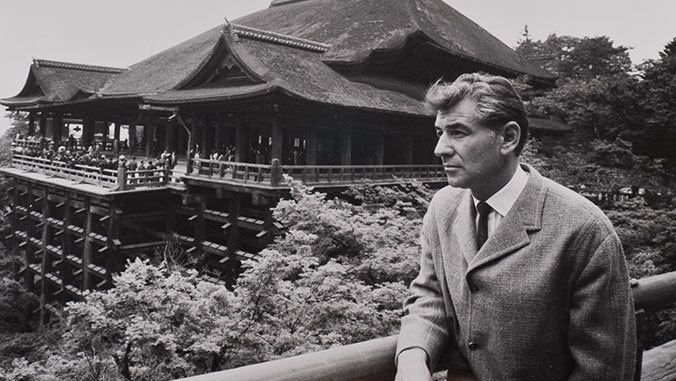
Dearest Lenny interweaves the account of Leonard Bernstein’s transformation from an American icon into a world maestro with an intimate story of his relationships with two Japanese individuals: Kazuko Amano, a loyal fan who began writing letters to Bernstein in 1947, and Kunihiko Hashimoto, a young man who fell deeply in love with Bernstein in 1979 and later became his business representative. During the period in which these two relationships unfolded, Japan’s place in the world and its relationship vis-à-vis the United States changed dramatically, which in turn shaped Bernstein’s connection to the country. Yoshihara will trace the making of a global Bernstein amidst the shifting political economy of the arts and global politics that made this American celebrity turn increasingly to Europe and Japan.
Speaker: Mari Yoshihara, Professor, and Chair of American Studies University of Hawaii at Manoa
For accessibility needs, please email eap@cornell.edu with Accessibility in the subject heading and describe your need. We need at least 3 business days advance notice but will work to accommodate all participants.
Additional Information
Program
Einaudi Center for International Studies
East Asia Program