
Einaudi Center for International Studies
A Good Shelf: Book Collections and the Spatial Culture of Reading in British Colonial India

September 9, 2024
12:15 pm
Uris Hall, G08
Talk by Swati Chattopadhyay (History of Art & Architecture, University of California-Santa Barbara )
The diffusion of printed books in India in the late eighteenth century, beyond the confines of royal courts, European factories, and missions, changed the spaces of reading, publishing, and literary exchange and archiving. For a while, as in the Western world, books, loose folios, and manuscript scrolls jostled for space in trunks and wall niches before the rectangular freestanding bookshelf became standard. As a modern introduction, however, the bookshelf exceeded its role as a container of books. It anchored political debates, created new modes of social intercourse, and changed the practice of reading in private and public spaces. This talk takes the bookshelf as a figure of space to explore the socio-political import of this historical transformation. We start with the East India Company’s looting of Tipu Sultan’s library following the Fourth Anglo-Mysore War and conclude with the proliferation of neighborhood libraries in Calcutta in the early twentieth century.
Swati Chattopadhyay is a Professor in the Department of History of Art and Architecture, California, Santa Barbara, with an affiliated appointment in Comparative Literature. An architect and architectural historian, she is the author of Small Spaces: Recasting the Architecture of Empire (Bloomsbury, 2023); Unlearning the City: Infrastructure in a New Optical Field (Minnesota, 2012); Representing Calcutta: Modernity, Nationalism, and the Colonial Uncanny (Routledge, 2005); and the co-editor with Jeremy White Routledge Companion to Critical Approaches to Contemporary Architecture (Taylor and Francis, 2019); and City Halls and Civic Materialism: Towards a Global History of Urban Public Space (Routledge, 2014). Her current work includes Nature’s Infrastructure: The British Empire and the Making of the Gangetic Plains, 1760-1880, supported by the Guggenheim Foundation, and two digital humanities projects, Mapping the Ephemeral and Bookscapes. She is a founding editor of PLATFORM.
Additional Information
Program
Einaudi Center for International Studies
South Asia Program
Afghanistan in the Classroom
September 13, 2024
3:30 pm
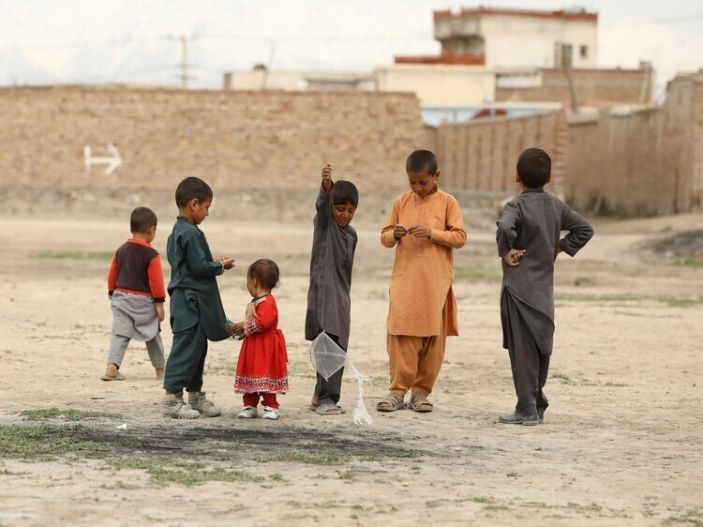
Upstate New York has welcomed a significant number of Afghan families in recent years. This virtual workshop provides approaches and tools for elementary school educators to introduce Afghanistan into their curriculum and provide a nuanced view of the people and culture.
Participating educators will receive:
an overview of Afghanistan's history and current political situationactivity ideas and materials exploring cultural themes like holidays, letters and numbers, language, food, clothing, etc.age-appropriate songs and stories addressing more complex issues like education, gender, politics, and religion
The workshop is facilitated by Akbar Quraishi and Amy Friers, alumni of Syracuse University's Public Administration and International Affairs program, who both have extensive experience in Afghanistan. Together, they founded an international relations-focused university in Kabul, in addition to working with the previous Afghan government and NGOs in Afghanistan. This workshop is supported by the federally funded Cornell-Syracuse South Asia National Resource Center Consortium.
"Afghanistan in the Classroom" is specifically designed for elementary grades, though educators of all ages and subject areas are welcome to attend. There is no registration fee for this event.
Photo credit: Sohaib Ghyasi
Additional Information
Program
Einaudi Center for International Studies
South Asia Program
Why the World Needs Strong WHO and Pandemic Agreement

Op-ed by Kaushik Basu in The Hill
In The Hill, CRADLE director Kaushik Basu argues for Congressional approval of a much-anticipated pandemic agreement. He writes, "It is imperative that global cooperation trump nationalist attitudes."
Additional Information
Composition of Congress Key Aspect in Mexico Election

Gustavo Flores-Macías, LACS
Mexicans will cast their votes on Sunday to elect thousands of congressional and local officials, as well as the successor to President Andrés Manuel López Obrador. Gustavo Flores-Macías is a professor of government at Cornell University and an expert in Latin American politics. He discusses the significance of this vote and the upcoming challenges for Mexico’s next president.
Additional Information
Abdel Moneim Mustafa (1930–)

Esra Akcan, IES
"One of the most locally admired Sudanese architects of his generation, Moneim Mustafa lived during the transition from colonial regime to national republic, when professional networks reached not only British colonial architects but also those of the last Ottoman generation." - Esra Akcan, professor of Architectural Theory writes.
Additional Information
Kenyan Fishers Face Increased Drowning Risk from Climate Change
Katie Fiorella, SEAP
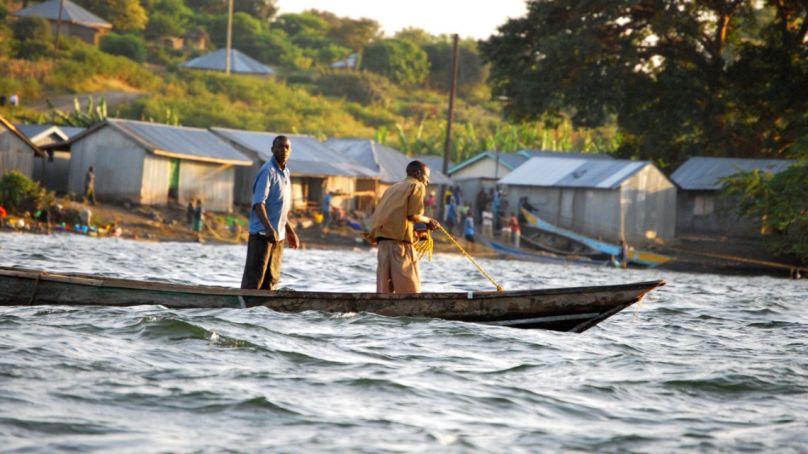
Fatal drownings are a big risk for small-scale fishers on Africa’s largest lake, with many of those deaths attributed to bad weather – conditions that are likely to worsen with climate change, according to a new study. “Drowning deaths are really a neglected risk factor,” said Kathryn Fiorella, assistant professor in the Department of Public and Ecosystem Health in the College of Veterinary Medicine and a co-corresponding author of the study.
Additional Information
ZJU-Cornell Research Dialogue on Future Agriculture and Sustainability

June 5, 2024
8:30 pm
Come learn about opportunities for Cornell faculty to conduct joint research with Zhejiang University (ZJU)!
This virtual meetup will include:
a featured presentation on research supported by a 2022 ZJU-Cornell Joint Seed Grant: Improving crop yield through fundamental understanding of the control of size and shape in plants with Adrienne Roeder (Associate Professor, School of Integrative Plant Science Plant Biology Section, Cornell University) and Lilan Hon (Professor, College of Agriculture and Biotechnology, Zhejiang University)
an opportunity for any interested Cornell and ZJU faculty to give a quick lightning introduction to their research interests on the theme of future agriculture and sustainability (3-5 min. max per person) to help researchers at both universities get to meet each other
Q&A about the Cornell-ZJU joint seed fund grant program
This event is part of a dialogue series designed to showcase the collaborative research supported by previous rounds of ZJU-Cornell joint seed grants, to create opportunities for mutual understanding of research interest by scholars in our two universities and exchange of ideas for the preparation for upcoming joint seed grants application, and to build a platform for sharing insights on collaborative research experience, cross-disciplinary thinking, and strategies for seeking impact through research.
Previously funded research related to agriculture and sustainability includes: Crop yield and agricultural production are critical for global food security. Efficient agricultural land use, environmental protection (from unintended consequences caused by the release of engineered materials into the environment during agricultural production), and the enhancement of both crop stress tolerance and adaptation to climate change are important issues to address to support long-term outcomes.
Additional Information
Program
East Asia Program
Einaudi Center for International Studies
Why Don’t Indian Voters Hold Politicians Accountable For Air Pollution?
November 4, 2024
12:15 pm
Uris Hall, G08
Talk by Tariq Thachil (Political Science, University of Pennsylvania)
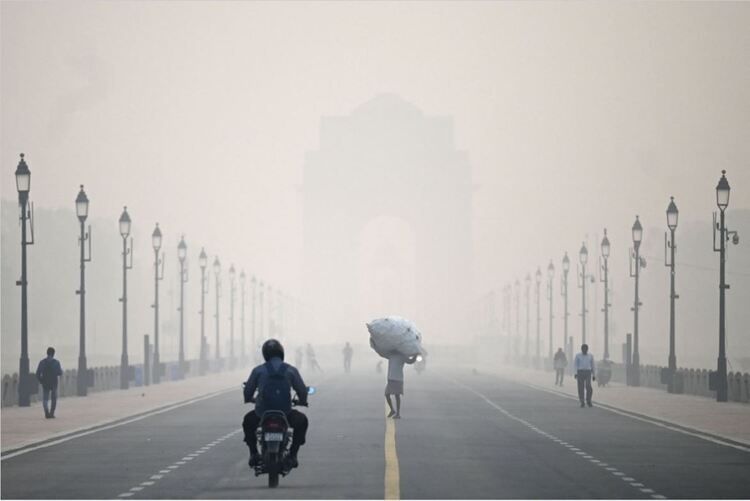
Urban citizens in low-income democracies rarely hold elected officials accountable for toxic air. To understand why, we fielded a large citizen survey in Delhi, India, a highly polluted megacity where voters rarely prioritize air pollution at the polls. We find no evidence of conventional explanations for accountability failures: residents are aware of pollution’s adverse impacts, do not privilege development over curbing emissions, and are not fractured along class or ethnic lines on this issue. Instead, we find partisanship and sensitivity to the potential private costs of mitigation policies reduce accountability pressures. On the other hand, a simple randomized intervention (sharing indoor air quality information) that personalizes the costs of air pollution increases its electoral salience. We reveal key opportunities and constraints for mobilizing public opinion to reduce air pollution in developing democracies.
Tariq Thachi is Professor of Political Science, Director of the Center for Advanced Study of India (CASI), and Madan Lal Sobti Professor for the Study of Contemporary India at the University of Pennsylvania. His recent book (coauthored with Adam Auerbach), Migrants and Machine Politics, focuses on the political lives of poor migrants in Indian cities. His first book, Elite Parties, Poor Voters examines how elite parties can use social services to win mass support, through a study of Hindu nationalism in India. He received his PhD in Government from Cornell University in 2009.
Additional Information
Program
Einaudi Center for International Studies
South Asia Program
Eliana Amoh ’26: Understanding Ghanaian Youth Migration Dynamics
Eliana Amoh, Laidlaw Scholar
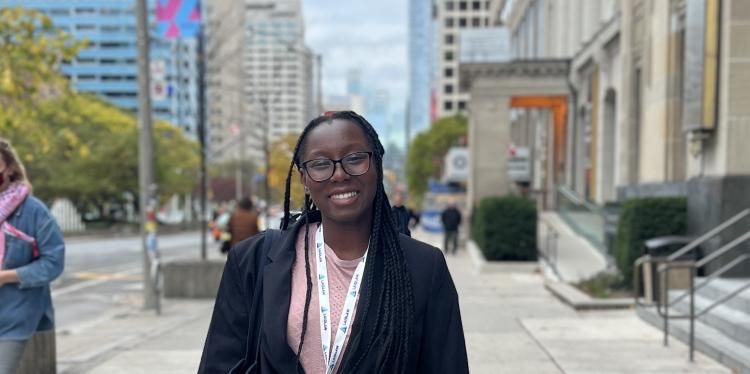
Meet Eliana Amoh ’26, an undergraduate student in Global Development whose research explores youth development, educational equity, and economic migration.
Additional Information
U.N. Court Order Deepens Israel’s Isolation as it Fights on in Rafah

Oumar Ba, PACS/GPV
Oumar Ba, assistant professor of government, says “There is certainly an acceleration here, of Israel being basically on the accused bench and having to defend its stance and its action in the eye of the international community.”