
Einaudi Center for International Studies
Cocaine Trafficking Threatens Critical Bird Habitats

Amanda Rodewald, LACS
“That displacement is causing them to go into forests that tend to have the greatest conservation value and are disproportionately occupied by Indigenous peoples,” said study author Amanda Rodewald, from the Lab of Ornithology.
Additional Information
Stephen Yale-Loehr Wins Award for Impact on the Field of Immigration Law
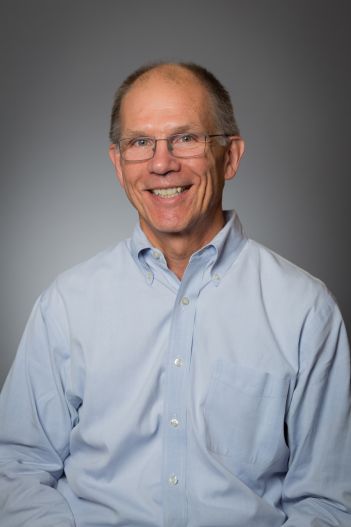
The American Immigration Lawyers Association (AILA) recognizes Stephen Yale-Loehr with the Robert Juceam Founders Award, which is given from time to time to the person or entity having the most substantial impact on the field of immigration law or policy.
Additional Information
Snap Elections a ‘Political Mistake’ for Macron

Mabel Berezin, IES
Mabel Berezin, professor of sociology at Cornell University and an expert on international populism, says Macron’s decision was a “political mistake” that could hand control of France’s government to Marine Le Pen’s right-Wing National Rally (RN) party.
Additional Information
The U.S. Debate Over China Policy Intensifies

Jessica Chen Weiss, EAP
Jessica Chen Weiss, a China scholar at Cornell University, is mentioned in this opinion piece about US-China policy.
Additional Information
Farming with a Mixture of Crops, Animals, and Trees is Better for the Environment and for People

Rachel Bezner Kerr, IAD
"Having looked at multiple different contexts – including mixed maize in Malawi and cocoa agroforestry in Ghana – we can say that diversified agriculture is a promising avenue to bring about more sustainable food production," says Rachel Bezner Kerr, professor of Global Development.
Additional Information
Summer Lecture Series: "One Size Doesn’t Fit All: Precision Nutrition for Population Health"

July 17, 2024
7:00 pm
Warren Hall, B25
A free public lecture presented by Dr. Saurabh Mehta, Cornell’s Janet and Gordon Lankton Professor, Nutritional Sciences
In this fascinating public talk, Dr.Mehta will compare and contrast "one-size-fits-all” approaches for optimizing population nutrition and health with a newer concept: precision nutrition. He’ll also discuss research gaps and needs for implementing precision nutrition-based approaches with a focus on technology and artificial intelligence.
Warren Hall is located on the Ag Quad near Mann Library. The physical address is 137 Reservoir Ave.
Free parking on campus after 5 p.m.
Additional Information
Program
Einaudi Center for International Studies
South Asia Program
Collateral Consequences of Campus Protests

Inside Higher Ed: Global Public Voices Op-ed
GPV fellow Alexandra Dufresne argues universities should protect free speech by weighing immigration costs for international student protesters.
Additional Information
Women, Work and the Role of Technology

October 28, 2024
12:15 pm
Uris Hall, G08
Talk by Farzana Afridi (Economics, Indian Statistical Institute)
In contrast to the Western experience, while the gender gap in educational attainment and fertility rates has declined in India, we don’t observe women participating concomitantly in the labor market. Can technological changes in the market and home production propel women’s labor market engagement, or does technological change have gendered impacts due to the gendered division of labor, prevailing social norms, and low market value for women’s time? This talk will unpack how adopting new technologies within the home and in agricultural production affects women’s time use and labor supply in urban and rural India.
Farzana Afridi is a Professor of Economics at the Indian Statistical Institute (Delhi), a Visiting Professor at the Munk School of Global Affairs & Public Policy at the University of Toronto, and a Research Fellow at the IZA (Bonn). Her research lies at the intersection of development and labor economics, covering three broad themes: gender and social identity, human capital, and governance. She has collaborated with government agencies, non-profits, and businesses to conduct field-based projects using administrative data and randomized experiments. Currently, she heads the Digital Platforms and WEE program, funded by the Bill and Melinda Gates Foundation, to analyze and suggest measures that empower women on digital labor platforms.
Additional Information
Program
Einaudi Center for International Studies
South Asia Program
India PM Modi's On-off Ally Holds Key to His Weakened Third Term

Kaushik Basu, IES/SAP/CRADLE
“I was impressed by 2 qualities: his efficiency & his secularism,” Kaushik Basu, professor of economics and policy, wrote on X. “I hope he retains these qualities & pulls out of NDA now."
Additional Information
Topic
- Development, Law, and Economics
Program
New European ‘Strongmen’ are Women, Gender Where Similarities End

Mabel Berezin, IES
Sociologist Mabel Berezin's work explores challenges to democratic cohesion and solidarity in Europe and the United States. She highlights the prominent women leading the right in the upcoming EU elections.