
Einaudi Center for International Studies
Information Session: Laidlaw Leadership & Research Program
October 7, 2026
5:00 pm
Uris Hall, G08
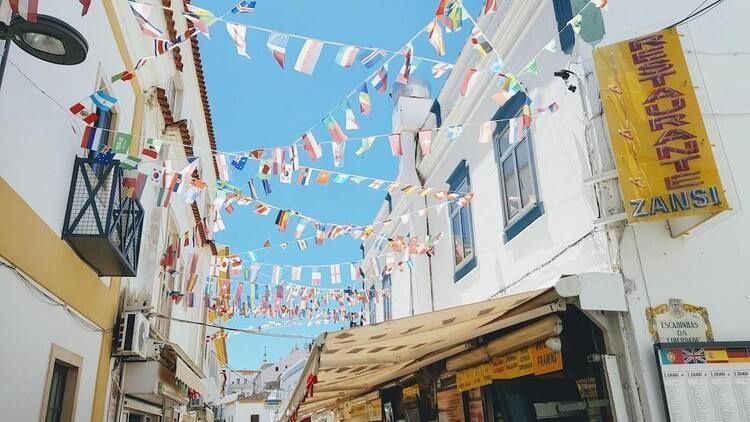
The Laidlaw Leadership and Research Program promotes ethical leadership and international research around the world—starting with the passionate leaders and learners found on campuses like Cornell. Open to first- and second-year students, the two-year Laidlaw program provides generous support to carry out internationally focused research, develop leadership skills, engage with community projects overseas, and become part of a global network of like-minded scholars from twenty universities worldwide.
Can’t attend? Contact programs@einaudi.cornell.edu to learn more.
***
The Mario Einaudi Center for International Studies hosts info sessions for graduate and for undergraduate students to learn more about funding opportunities, international travel, research, and internships. View the full calendar of fall semester sessions.
Additional Information
Program
Einaudi Center for International Studies
Reppy Institute for Peace and Conflict Studies
East Asia Program
Southeast Asia Program
Latin American and Caribbean Studies
Institute for African Development
Institute for European Studies
South Asia Program
Migrations Program
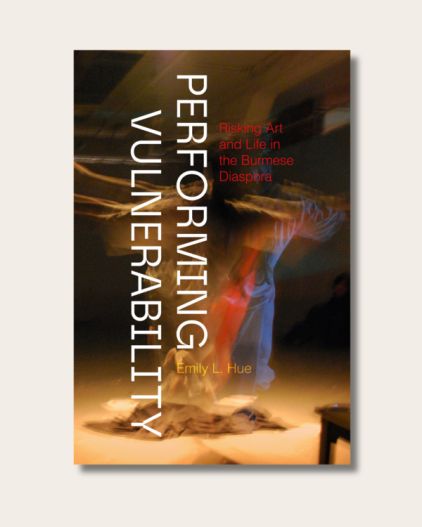
Performing Vulnerability: Risking Art and Life in the Burmese Diaspora
November 19, 2026
12:15 pm
Kahin Center
Gatty Lecture Series
Join us for a talk by Emily Hue, Associate Professor of Ethnic Studies and Southeast Asian, Text, Ritual, and Performance (SEATRiP) at the University of California, Riverside.
This Gatty Lecture will take place at the Kahin Center, 640 Stewart Ave. Lunch will be served. For questions, contact seap@cornell.edu.
Abstract
Hue will be delivering a talk, inspired by her first book Performing Vulnerability: Risking Art and Life in the Burmese Diaspora (University of Washington Press, 2025) that uses visual and performance analysis to explore how Southeast Asian diasporic artists use, in some cases, self-injury, to express their vulnerability to challenges of military rule as well as resettlement. What kinds of limitations and gains do artists encounter within arts and humanitarian industries as a result of performances of self-injury or, for some artists, abstraction of the body altogether?
About the Speaker
Emily is an Associate Professor of Ethnic Studies and core faculty in Southeast Asian Text, Ritual, Performance (SEATRiP). Her research and teaching are in the fields of Asian American Studies, feminist studies, and performance, and more recently, in new materialisms and sustainable design. You can find her most recent writing in the Critical Ethnic Studies Journal, American Studies Quarterly, Amerasia, and the Routledge Handbook of Refugee Narratives. She hails from Brooklyn, NY.
Additional Information
Program
Einaudi Center for International Studies
Southeast Asia Program
Gendering Monastic Aesthetics in Thailand
October 8, 2026
12:15 pm
Rockefeller Hall, 374
Gatty Lecture Series
*Please note this Gatty Lecture takes place in Rockefeller Hall 374, not the Kahin Center*
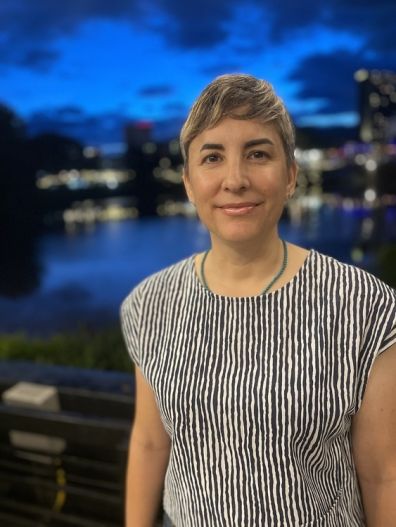
Join us for a talk by Brooke Schedneck, Associate Professor of Religious Studies at Rhodes College.
This Gatty Lecture will take place at Rockefeller Hall 374. Lunch will be served. For questions, contact seap@cornell.edu.
Abstract
How does monastic authority become visible? This presentation examines the aesthetics of Thai Buddhist monasticism, focusing on the sensory dimensions through which appearance, bodily presence, comportment, and affect generate perceptions of sacred authority. Drawing on ethnographic research, media analysis, and twenty focus groups with Thai Buddhist laypeople, I compare two contrasting forms of monastic masculinity: the restrained, ascetic authority of forest monks and the softer, more intimate and ornamental charisma of kruba monks of the northern region. These contrasting “monastic idols” demonstrate that masculinity within the Thai sangha is neither singular nor fixed but continually produced through embodied and aesthetic practices.
The second part turns to female monastic practice to ask how sacred authority is assembled in the absence of institutional recognition. For fully ordained women and precept nuns, bodily discipline, religious spaces, teaching, community care, and mediated public presence work together to make sacredness perceptible to lay supporters. Rather than conforming to or rejecting gendered expectations, female monastics construct legitimacy through an assemblage of aesthetic and religious practices. Comparing these forms of monastic authority reveals how aesthetics both reproduce and reconfigure gender, legitimacy, and sacred presence in contemporary Thai Buddhism.
About the Speaker
Brooke Schedneck is Associate Professor of Religious Studies at Rhodes College. Her research focuses on contemporary Buddhism, particularly in Thailand, where she has spent years teaching and conducting fieldwork. She is the author of Religious Tourism in Northern Thailand, which was shortlisted for the EuroSEAS Humanities Book Prize in 2022, and Living Theravada: Demystifying the People, Places, and Practices of a Buddhist Tradition (Shambhala, 2023). She is currently completing a monograph on monastic aesthetics in modern Thailand and is currently working on a project exploring spirituality among Thai youth in the digital age.
Additional Information
Program
Einaudi Center for International Studies
Southeast Asia Program
To Russia with Love: Myanmar’s Turn to Russia and Its Consequences
September 17, 2026
12:15 pm
Kahin Center
Gatty Lecture Series
Join us for a talk by Michał Lubina, Associate Professor at the South and Southeast Asia Unit, Institute of Middle and Far East, Jagiellonian University (JU), Kraków, Poland
This Gatty Lecture will take place at the Kahin Center, 640 Stewart Ave. Lunch will be served. For questions, contact seap@cornell.edu.
Abstract
Moscow-Naypyitaw rapprochement represents one of the major consequences of the 2021 Myanmar coup and one of the unexpected outcomes of the Ukraine war. Until then, Russia-Myanmar relations remained good but limited (confined to arms trade, military training, diplomatic support, and nuclear dreaming). The breakthrough came with the fourth military coup in Myanmar, followed by the Russia’s full-scale aggression against Ukraine.
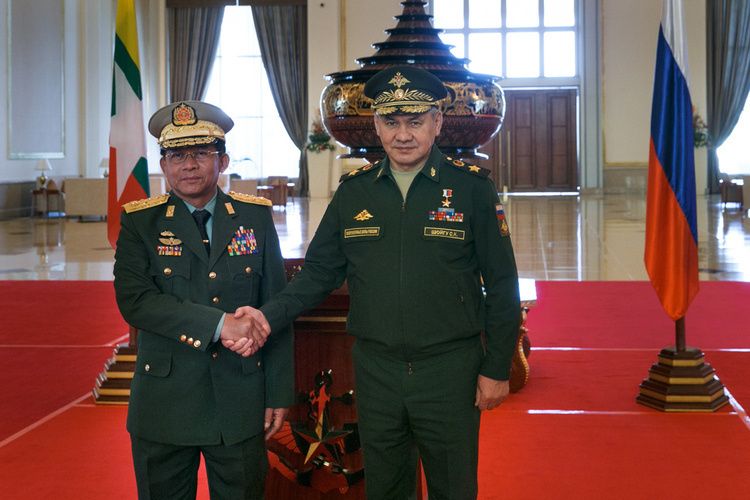
After February 2021, the isolated SAC turned to Moscow, and the Kremlin emerged as the primary international supporter of the Burmese military junta, acting as its political patron, with General Min Aung Hlaing now pilgrimaging to Russia (Moscow, Kazan and Vladivostok, and other places) almost on a routine basis. While Russia was initially still somewhat wary, Moscow’s global (semi-)isolation after the outbreak of the full-scale Ukraine war shifted this dynamic, elevating Myanmar's importance in Russian foreign policy calculations as well. Thus, a mutually convenient asymmetric relationship emerged, and Russia-Myanmar relations have reached an unprecedented level of closeness, unparalleled in their bilateral history. This is best illustrated by the personal chemistry between their leaders, even if expressed is such extraordinary ways as in March 2025, when Min Aung Hlaing compared Vladimir Putin to a rat king which was meant to be an unusual way to emphasize the political friendship with the Russian leader.
The unexpected and unusual combination of Russia and Myanmar caught observers by surprise. Why have these two countries, so geographically and culturally distant, with limited past contacts, became so close? What triggered their rapprochement? And what does it matter – to both Moscow and Naypyidaw, to the region, and even to the world? What are the consequences of this emerging partnership? And where is China in all this? What exact role does Beijing play in this unexpected Naypyidaw-Moscow rapprochement?
This talk will try to answer these questions.
About the Speaker
Michał Lubina is an associate professor at the Jagiellonian University, Kraków, Poland. He is the author of eleven books, including seven on Myanmar, and three on Russia-China relations. His most important English-language books are “A Political Biography of Aung San Suu Kyi: A Hybrid Politician” (Routledge, 2020) and “The Moral Democracy” (2019), translated into Burmese and published in Yangon in 2021.
Additional Information
Program
Einaudi Center for International Studies
Southeast Asia Program
Institute for European Studies
Reppy Institute for Peace and Conflict Studies
Bridging the Local and the Global: How Can Scholars of International Relations Benefit from Expertise on Southeast Asia and Vice Versa?
September 9, 2026
12:15 pm
Kahin Center
Gatty Lecture Series
*Please note this Gatty Lecture takes place on Wednesday, not Thursday*
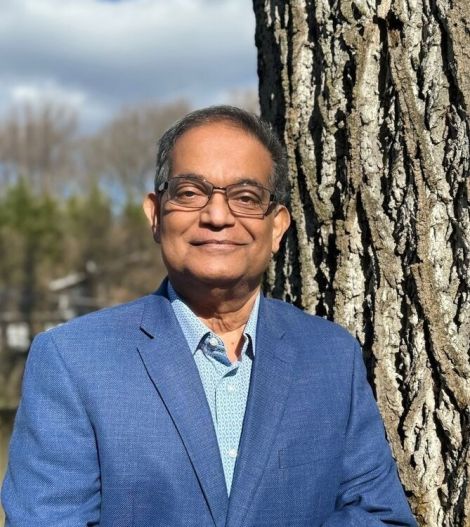
Join us for a talk by Amitav Acharya, Distinguished Professor at the School of International Service, American University.
This Gatty Lecture will take place at the Kahin Center, 640 Stewart Ave. Lunch will be served. For questions, contact seap@cornell.edu.
Abstract
Southeast Asia is a “regional world” in a “world of regions,” a “poros region” that both shapes and is shaped by the changing world order. Drawing on his 30 plus years of research, Amitav Acharya reflects on how Southeast Asian studies has informed his perspectives on wider issues of global affairs and world order, and in return, how his scholarship on international relations theory and policy has informed his understanding of Southeast Asia. His theoretical work on constructivism and world order was deeply influenced by the scholarship of Cornell scholars, especially George McTurnan Kahin (Bandung Conference), O.W. Wolters (culture and localization), and Benedict Anderson (nationalism), while his contribution to the literature on Southeast Asia and ASEAN was shaped by Peter J. Katzenstein’s constructivist work on norms, culture and identity. Studying Southeast Asia, he argues, can help bridge the artificial divide between area studies and disciplinary (e.g. political science, history, and international relations) knowledge, and enrich both Southeast Asian Studies as well as social sciences and humanities.
About the Speaker
Amitav Acharya is Distinguished Professor and the UNESCO Chair in Transnational Challenges and Governance at the School of International Service, American University, Washington, DC. His books on international relations and world order include The Once and Future World Order: Why Global Civilization will Survive the Decline of the West (Basic Books, 2025); Divergent Worlds: What the Ancient Mediterranean and Indian Ocean Can Tell Us About the Future of International Order, co-author with Manjeet S. Pardesi (Yale, 2025, winner of T.V Paul Book Prize from the International Studies Association); and The Making of Global International Relations: Origins and Evolution of IR st Its Centenary (Cambridge, 2019, co-author with Barry Buzan). His articles have been published in journals including International Organization, International Security, International Studies Quarterly, World Politics, and Journal of Asian Studies. His books on Southeast Asia include The Making of Southeast Asia (Cornell, 2013); and Whose Ideas Matter: Agency and Power in Asian Regionalism (Cornell 2009); Tragic Nation Burma: Why and How Democracy Failed (Penguin Random House 2023); Constructing a Security Community in Southeast Asia: ASEAN and the Problems of Regional Order (Routledge 2001, 2002, 2014).
Additional Information
Program
Einaudi Center for International Studies
Southeast Asia Program
Tropical Polar Bears: A Story of Militarization, Oil Industrialization, and Singapore
September 3, 2026
12:15 pm
Kahin Center
Gatty Lecture Series
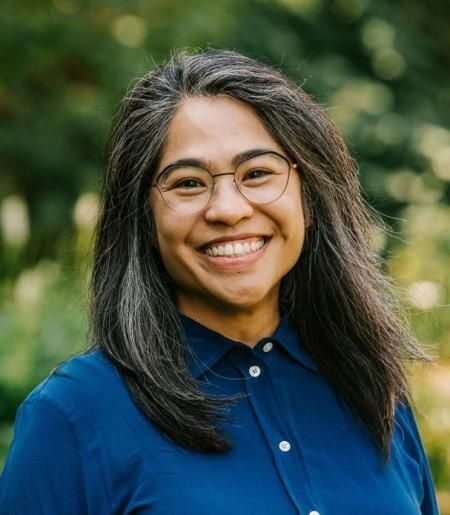
Join us for a talk by Juno Salazar Parreñas, Associate Professor of Science and Technology Studies and Feminist, Gender, and Sexuality Studies at Cornell University.
This Gatty Lecture will take place at the Kahin Center, 640 Stewart Ave. Lunch will be served. For questions, contact seap@cornell.edu.
Abstract
In 1978, the tropical city-state of Singapore received three polar bears, starting a dynasty of polar bears that ended in 2018. Within the lifespan of these tropical polar bears, the entire planet has undergone rapid and exponential growth in economies, human populations, agricultural intensification, deforestation, and the burning and consuming of carbon and chemicals--all indelibly changing the entire planet. Singapore has been a central hub for 20th and 21st century economic development, despite its dearth of natural resources. How might the story of Singapore’s famously cultivated landscape be told from the perspective of wild Canadian-born polar bears held captive in tropical Singapore? What forms of ferality erupted the controlled landscape of Singapore Zoo? This paper is based on ongoing archival and ethnographic research in Singapore, Canada, and the US.
About the Speaker
Juno Salazar Parreñas is an Associate Professor of Science and Technology Studies and Feminist, Gender and Sexuality Studies at Cornell University. Her book Decolonizing Extinction: The Work of Care in Orangutan Rehabilitation (Duke UP, 2018) received the Michelle Rosaldo Prize from the Association for Feminist Anthropology and honorable mentions for the Association of Asian Studies' Harry Benda Prize, Society for Medical Anthropology's New Millenia Award, and the American Anthropological Association's Diana Forsythe Prize. She is also the editor of Gender: Animals (Macmillan Interdisciplinary Handbooks, 2017)
Additional Information
Program
Einaudi Center for International Studies
Southeast Asia Program
Can't Find a Therapist? Here's Why

Isabel M. Perera, IES
Isabel M. Perera, a Cornell University assistant professor, analyzes the political and labor factors limiting mental health care access in the U.S.
Additional Information
Employers Fear Labor Shortage as Many Immigrants Lose Protected Status

Patricia Campos-Medina, Migrations
Patricia Campos-Medina, a Cornell University political scientist, comments on the roots and contributions of Central American TPS holders to the United States.'
Additional Information
16th Annual Tagore Lecture: Avidya
October 2, 2026
4:45 pm
Kahin Center
Talk by Vidyan Ravinthiran (English, Harvard University)
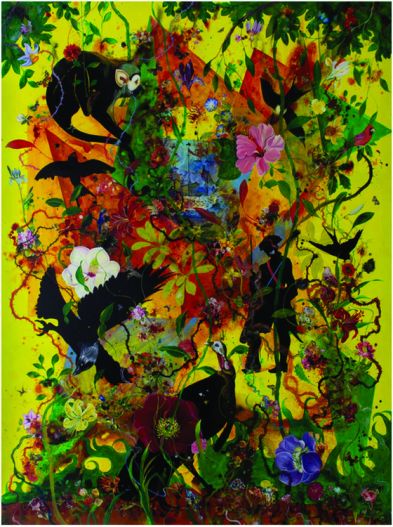
What overlap is there between political, psychological and philosophical ideas of identity, and what role might poetry play in helping their convergence? Discussing his fusion of life-writing and verse criticism, Asian/Other: Life, Poems, and the Problem of Memoir, and his Forward Prize-winning poetry collection, Avidya—both published last year—Vidyan Ravinthiran considers alternatives to the ego-noise that so thoroughly permeates our cultural discourse, including our rhetorics of empowerment and critique.
Vidyan Ravinthiran is a Professor of English at Harvard University, where his teaching ranges from the Romantic poet John Keats to video game storytelling. He is the author of three books of poetry, most recently Avidya, winner of the 2025 Forward Prize; and several books of literary scholarship, including Elizabeth Bishop’s Prosaic, winner of both the University English Prize and the Warren-Brooks Award for Outstanding Literary Criticism. He co-edited with Shash Trevett and Seni Seneviratne Out of Sri Lanka, the first anthology of both Sri Lankan and diasporic poetry, including works originally written in English, Sinhala and Tamil—named a Times Literary Supplement Book of the Year, as was Worlds Woven Together, a collection of the essays that won him Poetry magazine’s Editors’ Prize for Reviewing. Vidyan’s most recent book is Poetry and Opinion, published this year by Cambridge University Press.
Books will be available for sale and signing, courtesy of Odyssey Bookstore.
The Rabindranath Tagore Lecture Series in Modern Indian Literature is made possible by a gift from the late Cornell Professor Emeritus Narahari Umanath Prabhu and his wife, Sumi Prabhu. Inspired by Rabindranath Tagore’s expansive imagination, unbounded by geopolitical boundaries, the series has regularly featured prominent writers from across South Asia and its diasporas.
Additional Information
Program
Einaudi Center for International Studies
South Asia Program
The Dynamics of Power Politics
November 19, 2026
12:00 pm
Uris Hall, G08
This talk will give an overview of a new book manuscript, The Dynamics of Power Politics (with Paul MacDonald and Daniel Nexon), which develops a relational-network approach to power political mobilization. Much of international relations theories assume that states have access to “stocks” of power, that military, economic, and diplomatic tools are readily available and ready to deploy in power-political competition. Instead, we argue that scholars should orient their analysis of great power competition around processes of collective mobilization and demobilization, with the goal of identifying the strategies of mobilization that replicate across time and space.
About the speaker
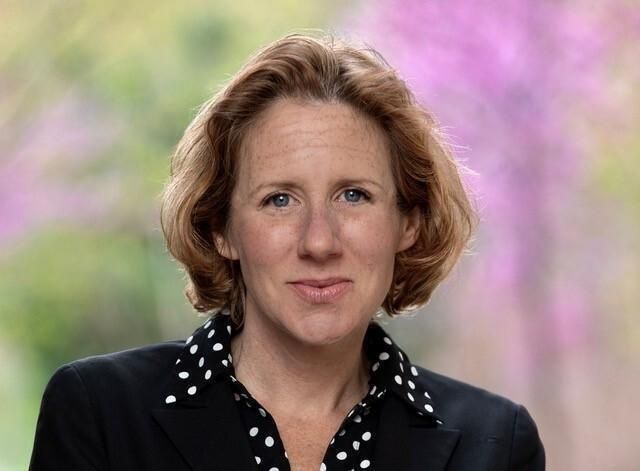
Stacie Goddard has been named director of the Arnold A. Saltzman Institute of War and Peace Studies at Columbia SIPA and will hold the Arnold A. Saltzman Professorship starting in July 2026.
Goddard served as the Betty Freyhof Johnson ’44 Professor of Political Science and Associate Provost for Wellesley in the World at Wellesley College, where she has taught since 2005. Her research and teaching focus on great power competition, with particular attention to the global politics of legitimacy and revisionist powers. She is also a Faculty Affiliate with the Center for International Security and Cooperation at Stanford University and formerly served as faculty director of the Madeleine Korbel Albright Institute for Global Affairs at Wellesley.
Host
Reppy Institute for Peace and Conflict Studies, part of the Einaudi Center for International Studies
Additional Information
Program
Einaudi Center for International Studies
Reppy Institute for Peace and Conflict Studies