
Einaudi Center for International Studies
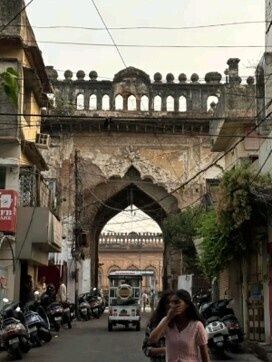
After Secularism: Sharing Religion in a Polarizing India
September 28, 2026
12:15 pm
Uris Hall, G08
Talk by Nomaan Hasan (Anthropology, Cornell University)
What role can a religion have for those outside its fold? Against a political landscape that frames Islam as an insular and adversarial presence, this talk follows a Muslim civic organization in India as it seeks to establish Islam as an ethical resource across religious boundaries. By tracking the group’s shift away from attempts at sermonic reform toward ordinary practices of volunteering and charity, the talk examines how organizers negotiate majoritarian governance to carve a social space for Islam that extends beyond Muslim identity. Although prevailing scholarship generally considers efforts to render religious traditions publicly accessible as unwittingly complicit with secular dominance, I argue that this critique misses their potential to extend an ethos beyond its usual territory.
Nomaan Hasan is a Klarman Postdoctoral Fellow in the College of Arts & Sciences at Cornell University. His current book project seeks to develop conceptual resources for living with difference at a moment when cultural particularity is mobilized by exclusionary political projects. Drawing on ethnographic fieldwork in India, it explores the ideological and aesthetic strategies through which ordinary citizens confront the rise of post-liberal populism. This research has been supported by grants from the Charlotte W. Newcombe Foundation, the National Science Foundation, the Wenner-Gren Foundation, the Society for the Scientific Study of Religion, the Center for Islam in the Contemporary World, and the Max Planck Institute for Social Anthropology. His writing has appeared in Anthropology and Humanism, Political and Legal Anthropology Review, and South Asia: Journal of South Asian Studies.
Additional Information
Program
Einaudi Center for International Studies
South Asia Program
Beauty and the Nation: Women, Culture, and the National Image of Vietnam 1920-1940

November 5, 2026
12:15 pm
Kahin Center
Gatty Lecture Series
Join us for a talk by Christina Firpo, Professor of History at California Polytechnic State University.
This Gatty Lecture will take place at the Kahin Center, 640 Stewart Ave. Lunch will be served. For questions, contact seap@cornell.edu.
Abstract
Christina Firpo will discuss her book Beauty and the Nation, which explores the changing perspectives on Vietnamese women's beauty and women's role in society, 1920-1940. This book traces beauty culture, including beauty practices and the discourse surrounding them, through an era of high colonialism, maturing capitalism, and rapid cultural change brought about with new forms of media and transportation. The changes in beauty norms and female comportment shocked the nation. Some critics asserted the merits of neo-Confucian dictates for women’s behavior; others embraced a new Vietnamese modernity. Indeed, women's everyday clothing and makeup came to play an important role in shaping the kind of nation Vietnam would become in the modern world. Beauty practices (and the debates they triggered) became a powerful expression of how women (and onlookers) attempted to make sense of their rapidly changing world. Understood this way, beauty culture reveals anxieties about the tumultuous political, economic, social, and cultural changes transforming Vietnam during the interwar years. Women’s faces and bodies, in short, became a vigorously debated site for envisioning what it meant to be Vietnamese in a modern world.
About the Speaker
Christina Firpo is professor of Southeast Asian history at California Polytechnic State University in San Luis Obispo. She is the author of The Uprooted: Race, Imperialism, and Childhood in Indochina 1890-1980 (University of Hawaii Press, 2016); Black Market Business: Selling Sex in Northern Vietnam 1920-1940 (Cornell University Press, 2020); and Beauty and the Nation: Women, Culture, and the National Image in Interwar Vietnam (Columbia University Press, 2026).
Additional Information
Program
Einaudi Center for International Studies
Southeast Asia Program
Inheritance, Unsettled: Land, Scholarly Parity, and the Possibilities of Field Schools in Southeast Asia
October 23, 2026
1:15 pm
Kahin Center
Gatty Lecture Series
*Please note this Gatty Lecture takes place on Friday at 1:15pm, not Thursday at 12:15pm*
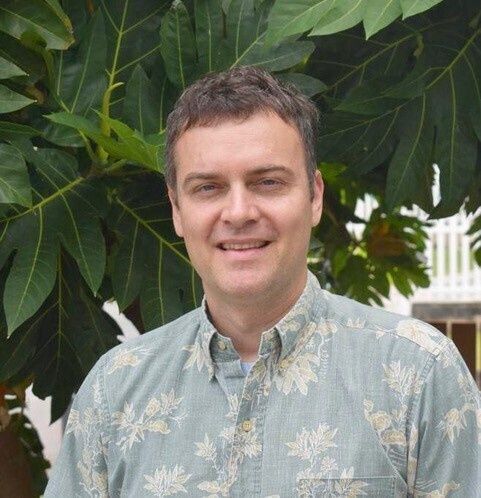
Join us for a talk by Micah R. Fisher, Assistant Professor, Matsunaga Institute for Peace and Conflict Resolution, School of Communication & Information at the University of Hawai'i at Mānoa
This Gatty Lecture will take place at the Kahin Center, 640 Stewart Ave. Lunch will be served. For questions, contact seap@cornell.edu.
Abstract
This presentation draws together critical agrarian studies and the geopolitics of knowledge production to examine how inheritance remains unsettled, both for those who inherit land in Southeast Asia and for those who inherit the work of studying it. The talk unfolds in three parts. The first establishes a conceptual foundation grounded in village-level land politics, bringing foundational theories of property, access, and exclusion into conversation with one another. The second draws on a decade of editorial experience with the journal Forest and Society, reflecting on efforts to decenter academic publishing and elevate a new generation of scholarship from the region. The third looks toward a future for area studies built on regional networks, using joint field schools as a model. This model has functioned as a mechanism for institutional parity with Southeast Asian universities, while also working to build equitable partnerships with local communities. I conclude with a framework for rethinking resource governance and collaborative pedagogy together in the study of contemporary Southeast Asia.
About the Speaker
Micah R. Fisher, Ph.D., is an Assistant Professor at the Matsunaga Institute for Peace & Conflict Resolution at the University of Hawaiʻi at Mānoa, and Senior Researcher with the Forest and Society Research Group at Hasanuddin University in Makassar, Indonesia. He studies how land, forests, and livelihoods are transformed across Indonesia and Southeast Asia through commodity booms, conservation policy, and shifting resource claims. This research is grounded in over two decades of long-term fieldwork in South Sulawesi, East Kalimantan, and Jakarta. He is co-Editor-in-Chief of Forest and Society, a leading journal in Southeast Asian forest governance, and serves as Conference Chair of the 2027 Biennial of the International Association for the Study of the Commons, to be hosted in Sulawesi, Indonesia. He also leads the Henry Luce Foundation–funded LuceSEA Transitions Field Schools, a partnership with Southeast Asian universities. He holds a Ph.D. in Geography and the Environment from the University of Hawaiʻi at Mānoa. His current book project, Inheritance, traces the aftermath of the first formal return of state forest lands to an Indigenous community in Indonesia.
Additional Information
Program
Einaudi Center for International Studies
Southeast Asia Program
The Urban Grotesque: Life and Debt in Jakarta
September 24, 2026
12:15 pm
Kahin Center
Gatty Lecture Series
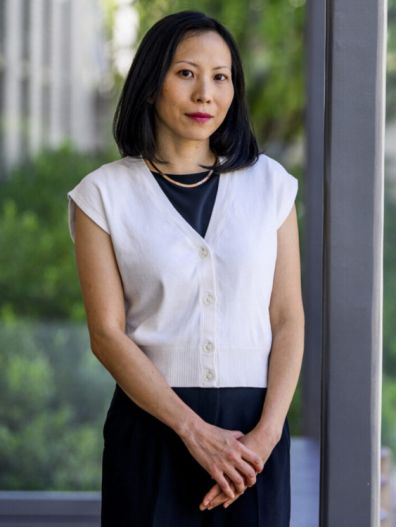
Join us for a talk by Doreen Lee, Professor of Anthropology, Director of Global Asian Studies, Department of Sociology and Anthropology, Northeastern University.
This Gatty Lecture will take place at the Kahin Center, 640 Stewart Ave. Lunch will be served. For questions, contact seap@cornell.edu.
Abstract
This talk distills the flows and values of life in Jakarta, Indonesia’s largest city and financial core, into a central idea: The Urban Grotesque. The urban grotesque is a name and framework for situating the dynamic, generous, predatory, and unpredictable textures of Jakarta’s financial lives. The talk presents the vantage points of individuals who experience the high social costs of living in the city, tracking their commonplace gestures of giving and taking to build a systematic analysis of how redistribution, circulation, and compliance dominate urban life. This talk will focus on the predatory aspects of debt and redistribution in the city. Combining ethnography and memoir, and playing with genre, the talk showcases the challenges of capturing the financial edge of urban life without romanticizing the fast-paced economic developments and collective forms of resilience that characterize this Global South city.
About the Speaker
Doreen Lee is Associate Professor of Anthropology at Northeastern University. She received her PhD in Sociocultural Anthropology from Cornell University with a concentration in Southeast Asian Studies and History. She directs the Global Asian Studies program at Northeastern University and serves as a councilor for the American Ethnological Society. Her first book Activist Archives: Youth Culture and the Political Past in Indonesia was published by Duke University Press in 2016 and won the Harry J. Benda Prize from the Association of Asian Studies in 2019. Her forthcoming book, The Urban Grotesque: Life and Debt in Jakarta (Duke University Press, 2026), depicts the urban conditions of debt and obligation in Jakarta.
Additional Information
Program
Einaudi Center for International Studies
Southeast Asia Program
Reimagining Aid: Foreign Donors, Women’s Health, and New Paths for Development in Cambodia
October 29, 2026
12:15 pm
Kahin Center
Gatty Lecture Series
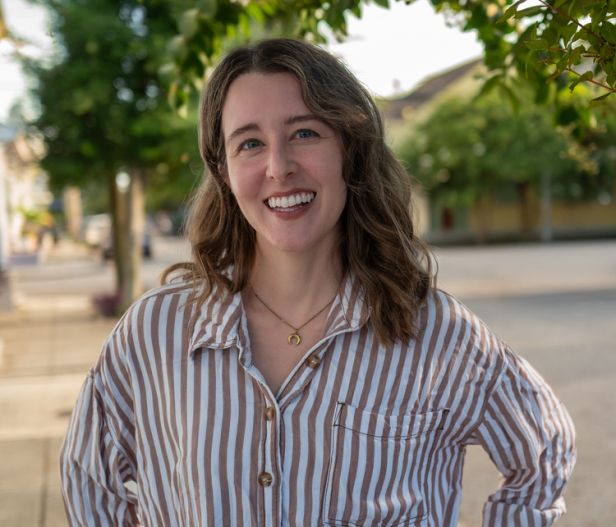
Join us for a talk by Mary-Collier Wilks, Assistant Professor of Sociology at the University of North Carolina Wilmington.
This Gatty Lecture will take place at the Kahin Center, 640 Stewart Ave. Lunch will be served. For questions, contact seap@cornell.edu.
Abstract
Through a multi-sited ethnography, Reimagining Aid analyzes international development organizations funded by the U.S. and Japan that advance women’s health in Cambodia. The book documents how foreign donors from the U.S. and Japan brought distinctive priorities that modified their women’s health programming, with the U.S. emphasizing market-based empowerment and Japan, state-based development. In response, development actors in Cambodia use donor differences to argue for two model paths to development: one they call a “Western” path, the other an “Asian” one. Combining elements of each, Cambodians construct their own hybrid visions of the role that the state, market, civil society, and gender should play in development. This research illustrates the on-the-ground processes through which contemporary notions of global development, long associated with traditional Western donors, are coming undone, and the important role that practitioners in recipient nations play in imagining new paths to advancement.
About the Speaker
Mary-Collier Wilks is an Assistant Professor of Sociology at the University of North Carolina Wilmington. Her research examines gender, foreign aid, international development, and global health in Cambodia.
Additional Information
Program
Einaudi Center for International Studies
Southeast Asia Program
Frontier Futures: Natures and Cultures of Capitalism in a Burmese Oilfield, 1880s-1940s

October 15, 2026
12:15 pm
Kahin Center
Gatty Lecture Series
Join us for a talk by Chao Ren, Visiting Assistant Professor of History at Hamilton College.
This Gatty Lecture will take place at the Kahin Center, 640 Stewart Ave. Lunch will be served. For questions, contact seap@cornell.edu.
Abstract
Around the turn of the twentieth century, Burma was once a prominent location in global histories of oil. The early oil industry in Burma attracted a substantial amount of global capital, which led to significant increase in oil property and a surge in litigation. Focusing on the early oil industry in colonial Burma from the 1880s to the 1940s, I examine the social life of global capitalism on the ground as it unfolded in the Burmese oilfields and argue that capitalism should be understood as a temporal orientation rather than solely a material system of production or circulation. In my reconstruction of the everyday economic life of ordinary people in the oilfields, I argue that capitalism took hold through a “future-oriented capitalist vision”: an anticipatory way of relating to value that emphasized speculative potential and imagined accumulation. Foregrounding lived experience and future-oriented consciousness, this project challenges diffusionist and materialist accounts of capitalism in Asia. It shows how ordinary actors shaped the making of global capitalism on the ground, and it shows how interior Southeast Asia was deeply embedded in global circuits of capital, law, and expertise.
About the Speaker
Chao Ren is a Visiting Assistant Professor of History at Hamilton College. He received his PhD from the University of Michigan, Ann Arbor in 2025. He works on the histories of capitalism, law, and the environment of South and Southeast Asia in global contexts.
Additional Information
Program
Einaudi Center for International Studies
Southeast Asia Program
Temporary Measures: Migrant Workers and the Developmental State in the Philippines and South Korea
October 1, 2026
12:15 pm
Sage Hall B05
Gatty Lecture Series
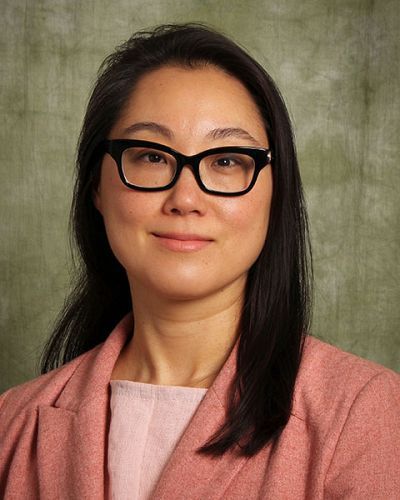
Join us for a talk by Suzy Lee, Associate Professor of Human Development at Binghamton University.
This Gatty Lecture will take place at Sage Hall B05 (114 Feeney Way, Ithaca, NY 14853). For questions, contact seap@cornell.edu.
Abstract
In many parts of the world, the Philippines is synonymous with labor migration. Whether to Europe, the Middle East, East Asia, North America, Philippine workers have come to dominate the immigration labor force. The narrative that often accompanies this mass migration is one of state failure and underdevelopment, of migration serving as a safety valve for a population in need of employment and resources that could not be obtained at home. While this account is not wrong, it is also not complete. The Philippine migration is also the product of explicit state policy to produce temporary, contract-based migration, for the purpose of supporting national industrial policy. Though the goal of industrialization was never achieved, the labor export policy did eventually become the lynchpin of a new economic model, one that has achieved relatively high rates of growth since the turn of the 21st century. This presentation examines this history, and offers an analysis for why and how the labor export policy emerged and evolved over the past half-century.
About the Speaker
Suzy Lee is a sociologist and legal scholar whose work focuses on international labor migration, the transformations in migration law and policy in the neoliberal era, and the implication of migration policy for the protection of migrants’ rights. Lee's primary line of research examines the development of sending state policy regimes, with a focus on contract migration programs in the Philippines and South Korea. Other projects include studies on the effect of neoliberal economic policy on migration regimes, immigration policy and human trafficking, and the formation of political identity in deindustrialized and rural regions of the U.S.
Additional Information
Program
Einaudi Center for International Studies
East Asia Program
Southeast Asia Program
Migrations Program
Malaysia, Decolonization, and Finding a New Language for Self-Determination
December 3, 2026
12:15 pm
Kahin Center
Gatty Lecture Series
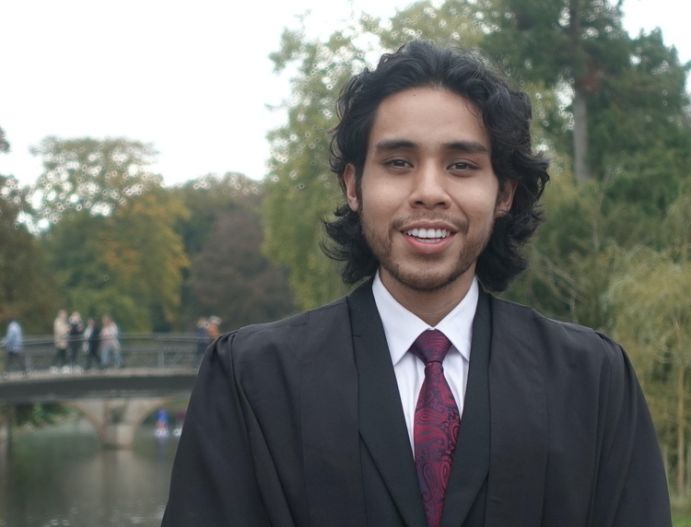
Join us for a talk by Muhammad Suhail Mohamed Yazid, Postdoctoral Fellow at the Asia Center at Harvard University.
This Gatty Lecture will take place at the Kahin Center, 640 Stewart Ave. Lunch will be served. For questions, contact seap@cornell.edu.
Abstract
How could an anti-racist, liberal project on the global stage reinforce an illiberal national regime? This talk explores the ways Malayan and Malaysian leaders negotiated simultaneous belonging across multiple ‘worlds’—namely the Commonwealth, the United Nations, and the Muslim World. Departing from conventional histories of Third World solidarity, it reveals how these Southeast Asian postcolonial statesmen mobilized the liberal grammar of self-determination to entrench privilege and power at home. In doing so, this talk exposes the deep paradoxes of global decolonization and the fragile foundations of the contemporary international system.
About the Speaker
Muhammad Suhail Mohamed Yazid is a Postdoctoral Fellow at the Harvard University Asia Center. A historian of global and international history, his research focuses on decolonization, the Global South, and the Malay World. His upcoming book project examines how Malaysian leaders sought to reshape post-war international organizations. Suhail earned his PhD in History from Trinity College, University of Cambridge in 2025. He is the author of He Who is Made Lord: Empire, Class, and Race in Postwar Singapore (ISEAS Publishing and University of Hawai’i Press).
Additional Information
Program
Southeast Asia Program
Einaudi Center for International Studies
Tigers and Their Prey: Assessing Impacts of the Collapse of Wild Pigs Due to African Swine Fever
November 12, 2026
12:15 pm
Kahin Center
Gatty Lecture Series
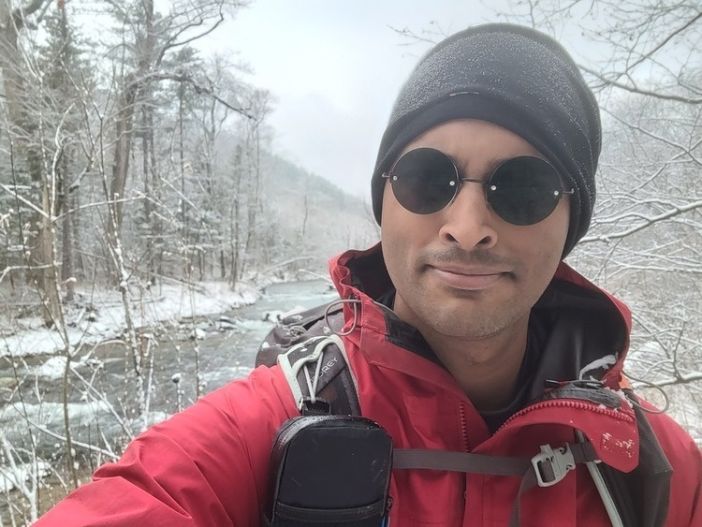
Join us for a talk by Karann Putrevu, Klarman Postdoctoral Fellow in the Departmentof Molecular Biology and Genetics at Cornell University.
This Gatty Lecture will take place at the Kahin Center, 640 Stewart Ave. Lunch will be served. For questions, contact seap@cornell.edu.
Abstract
The spread of African Swine Fever (ASF) across Asia presents an urgent conservation problem for endemic wild pig species, as well as the predators that prey on them. ASF has proven to be extremely lethal in Asia, with wild boar mortality rates approaching 100%. Of particular concern among the apex predator suite in Asia are tigers (Panthera tigris), who hunt wild boar more preferentially than sympatric predators, and who already face severe baseline threats to their persistence from poaching and habitat loss. This energetic pressure on tigers can have further propagating consequences, as hungry tigers may be driven into conflict situations with local communities. Karann will present his ongoing work to (1) highlight tiger populations most at risk for ASF-related declines, (2) apply analytical approaches to diagnose declines that may have already occurred, (3) conduct fieldwork to address critical data gaps in tiger and pig ecology, and (4) work with local stakeholders and NGOs on potential interventions.
About the Speaker
Karann Putrevu received his Ph.D. in Environment & Resources from the University of Wisconsin, Madison where he studied Amur tigers in Russia. As a Klarman Postdoctoral Fellow at Cornell, he is studying the ongoing prey depletion pressure facing tigers due to African Swine Fever (ASF). His geographic focus is on regions where wild pig species constitute a critical portion of available tiger prey, which includes the Russian Far East, peninsular Malaysia, and Sumatra.
Additional Information
Program
Southeast Asia Program
Einaudi Center for International Studies
Information Session: Laidlaw Leadership & Research Program
October 20, 2026
5:00 pm
The Laidlaw Leadership and Research Program promotes ethical leadership and international research around the world—starting with the passionate leaders and learners found on campuses like Cornell. Open to first- and second-year students, the two-year Laidlaw program provides generous support to carry out internationally focused research, develop leadership skills, engage with community projects overseas, and become part of a global network of like-minded scholars from twenty universities worldwide.
Register here. Can’t attend? Contact programs@einaudi.cornell.edu to learn more.
***
The Mario Einaudi Center for International Studies hosts info sessions for graduate and for undergraduate students to learn more about funding opportunities, international travel, research, and internships. View the full calendar of fall semester sessions.
Additional Information
Program
Einaudi Center for International Studies
Reppy Institute for Peace and Conflict Studies
East Asia Program
Southeast Asia Program
Latin American and Caribbean Studies
Institute for African Development
Institute for European Studies
South Asia Program
Migrations Program