
Einaudi Center for International Studies
Critics Slam Apple CEO Tim Cook for Laudatory Remarks in China

Eli Friedman, EAP
Eli Friedman, associate professor of global labor and work at Cornell University, said the past mutually beneficial relationship between Beijing and American companies is no longer playing a diplomatic role.
He wrote, "Throwing Apple some treats will not help stabilize the U.S.-China relationship, I promise."
Additional Information
Little-known Opposition Leader in Senegal Is Named the Next President

Oumar Ba, PACS/GPV
Oumar Ba, assistant professor of government, comments on Senegalese President Macky Sall's refusal to rule out a third term.
Additional Information
Why Kretek–"No Ordinary Cigarette"–Thrives in Indonesia

Marina Welker, SEAP
Though they’re banned in the United States and many other countries, clove-laced tobacco cigarettes called “kretek” (referencing the crackling sound of burning cloves) make up 95% of the Indonesian market.
“Causing harm and death when used as intended, the cigarette is no ordinary commodity,” Welker, associate professor of anthropology in the College of Arts and Sciences, writes in her new, open-access book, Kretek Capitalism: Making, Marketing, and Consuming Clove Cigarettes in Indonesia. “The kretek, in turn, is no ordinary cigarette.”
Additional Information
April 11: Don't miss the Lund debate!

Panelists Chart Different Paths to Climate Justice
Journalist Kate Aronoff and security expert Joshua Busby meet to discuss equity in our shared climate crisis. Attend in person or by livestream.
Additional Information
"Air-con chao ta already”: Migrant Domesticities, Citizen Futurities and the Sensuous Anxieties of Air-Conditioning in Singapore
April 11, 2024
12:20 pm
Kahin Center
Gatty Lecture Series
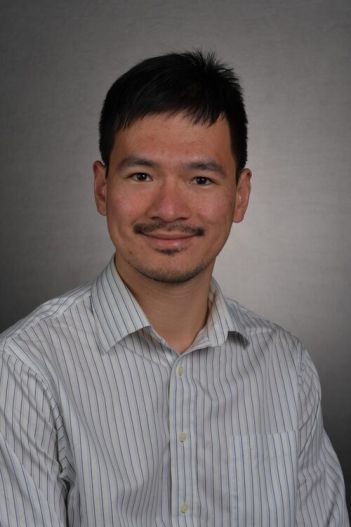
Join us for a talk by Xinyu Guan, (PhD Candidate, Anthropology, Cornell University), who will discuss air conditioning in Singapore.
This Gatty Lecture will take place at the The Kahin Center, 640 Stewart Ave. Lunch will be served. For questions, contact seapgatty@cornell.edu.
About the Talk
My talk explores citizenship as a form of landlordship and sensuous policing of noncitizen bodies in Singapore. Singapore’s much-lauded state-constructed housing program, under the Housing & Development Board (HDB), enables homeownership for more than 70% of the city-state’s citizenry. However, more than 360,000 people, mostly working-class migrants from surrounding countries, rent from Singapore citizens who are owners of HDB apartments, with little by way of tenants’ rights or protections. I discuss how these rental situations provide (often much needed) extra income for citizen-landlords, and house the migrants whose labor maintains the social and dietary infrastructures of HDB housing. The promise of egalitarian citizenship through mass homeownership in Singapore belies the vast power differential between citizen-landlords and migrant-tenants. Landlords dictate the daily routines of tenants to maximize rental extraction, reducing tenants’ bodies to abstracted quantities of space and time. I examine air-conditioning as an everyday site of discipline, contestation and “bordering” (de Genova 2017) of bodies and domesticities in these rental situations. I consider how the sensuous, atmospheric interfaces between citizens and noncitizens shift the stakes of citizenship and the right to the city in Singapore.
About the Speaker
Xinyu Guan is a PhD candidate in the Department of Anthropology at Cornell University, with graduate minors in the Southeast Asia Program and the Feminist, Gender and Sexuality Studies Program. His work examines the logics of citizenship by which queer and migrant communities are incorporated into state-constructed housing in Singapore. Xinyu’s research has been supported by the Wenner-Gren Foundation, the Hu Shih Fellowship, and the Global PhD Grant.
Additional Information
Program
Einaudi Center for International Studies
Southeast Asia Program
IIE-SRF Fellow Tawab Danish Speaks at SAP Event

Afghan Scholar Proposes Tactics to Address Minority Persecution
"We should use sanctions to force the Taliban to sit at the negotiation table. Otherwise, they have the power," said Tawab Danish at a March 25 event, Hazaras and Shias: Violence, Discrimination, and Exclusion Under Taliban Rule.
Tawab Danish is an Institute of International Education Scholar Rescue Fund (IIE-SRF) fellow and a second-year visiting scholar at Cornell Law School. His research focuses on constitutional law and human rights law.
At the event, Danish began by delving into Afghanistan's demographics, characterized by a diverse mix of ethnicities and religions. Hazaras are the third largest ethnic group in Afghanistan after Pashtuns and Tajiks, and Shia Muslims are the second largest religious community. Both communities have endured discrimination and violence under the Taliban, Danish said.
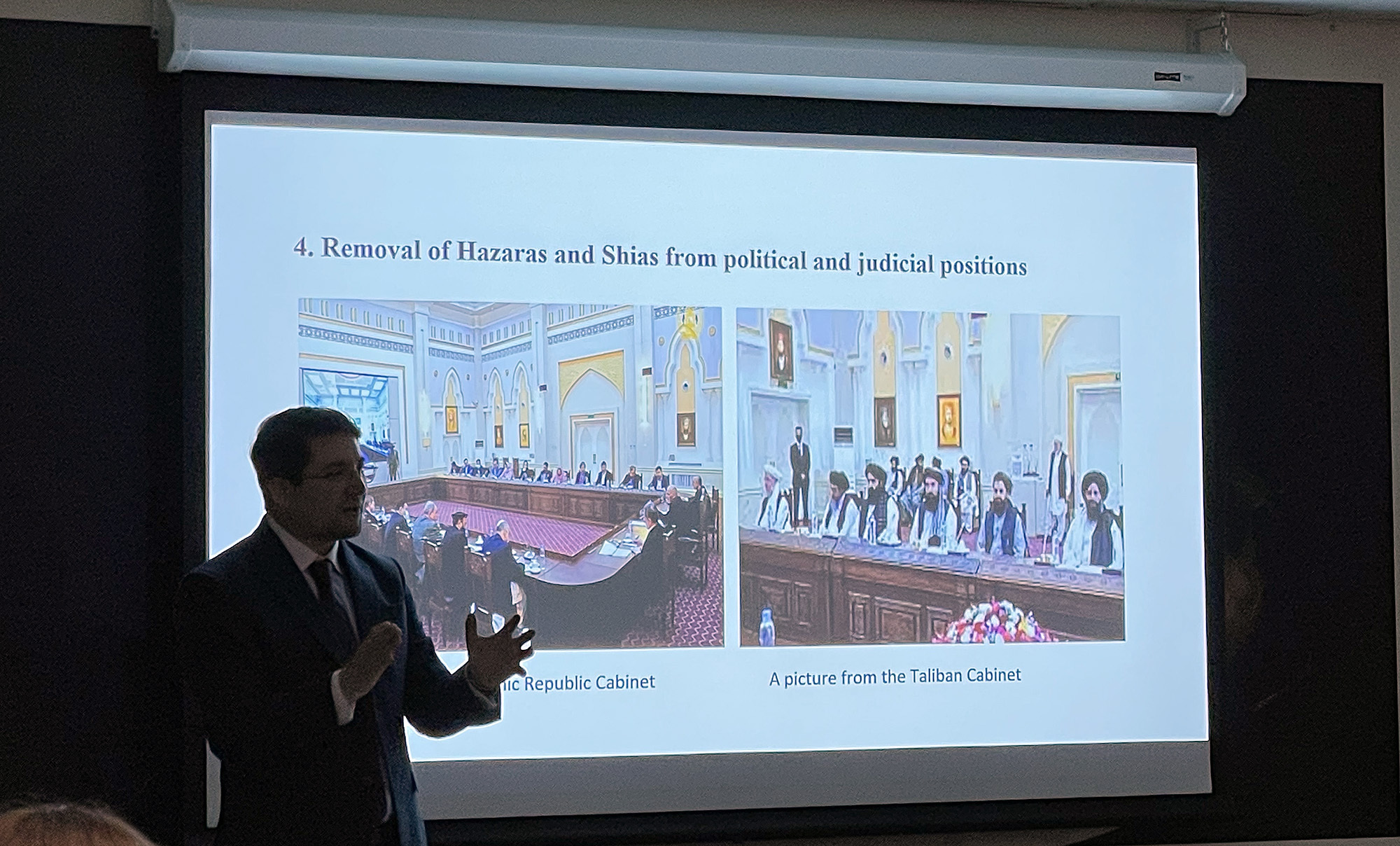
Danish described the period between the U.S. intervention and eventual withdrawal from Afghanistan (2001–21) as a golden age for Hazaras and Shias. For two decades, the nation shifted toward more inclusive governance, and Hazaras, Shias, and women increased their participation in the political, judicial, and ministerial spheres.
The Taliban's resurgence in 2021 saw a return to persecution for Hazaras and Shias.
"The Taliban's refusal to acknowledge sectarian differences and enforcement of Hanafi jurisprudence present serious dangers to religious and ethnic minority groups," Danish said. "This constitutes a breach of international human rights standards and fundamental Islamic tenets, potentially leading Afghanistan into ethnoreligious strife and undermining its stability and legal structure."
Looking forward, Danish underscored the necessity of combating the Taliban's extremist ideology on the global stage. He proposed a pragmatic initial approach for addressing the plight of Afghan minorities: initiating meaningful discussions with the Taliban while applying pressure to negotiate by imposing sanctions on travel and financial assets of Taliban leaders. He believes advocacy on social media platforms can help support the right to life and work for Hazaras, Shias, and other Afghan minority communities, including women.
The event was hosted by by the South Asia Program, part of the Mario Einaudi Center for International Studies. Learn more about how Cornell supports scholars under threat.
Manju Smriti, MPA ’23, is global operations program coordinator for Global Cornell.
Additional Information
IAD Spring Symposium: Imagining Just Environmental and Climate Futures in Africa

May 3, 2024
12:00 pm
Mann Library, 160
On May 3-4, 2024, the Institute for African Development, in collaboration with the Polson Institute for Global Development and the Einaudi Center for International Studies, Cornell University, will host a symposium on Imagining Just Environmental and Climate Futures in Africa.
Organized by the Institute for African Development, Polson Institute for Global Development, and the Einaudi Center for International Studies.
Additional Information
Program
Einaudi Center for International Studies
Institute for African Development
Learning About Labor Relations in Cambodia
By Alyssa Brundage '24
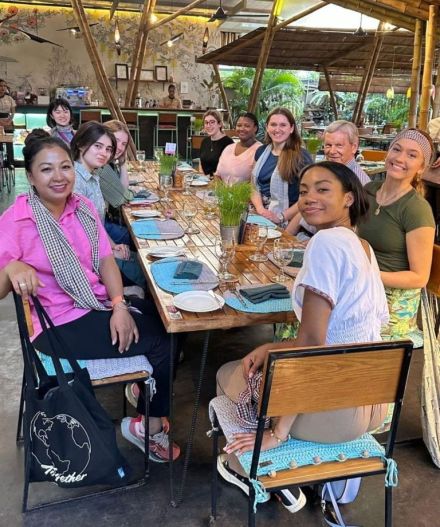
Einaudi's Southeast Asia Program sponsored a unique winter break study abroad opportunity. A participant describes the experience.
This past January, Cornell’s Southeast Asia Program (SEAP) collaborated with the School of Industrial and Labor Relations and the Center for Khmer Studies in Cambodia to host a unique study abroad opportunity. Students were brought to Cambodia for a two week in-country learning experience. Designed by Professor Vida Vanchan, Director of the Global Studies Institute and Professor of Geosciences at SUNY Buffalo State University, and co-taught by Scheinman Instructor and Institute Advisory Board member Richard Fincher, the course offered a comprehensive understanding of Cambodia, from past to present, focusing on labor, development, and society. This comprehensiveness is drawn from a prior version of the course, envisioned, designed, and co-taught by Professor Vanchan and ILR Professor Sarosh Kuruvilla in January of 2020.
Additional Information
From Chinese Exclusion to Muslim Ban & The Future
April 17, 2024
12:00 pm
Myron Taylor Hall, 390
A light lunch will be provided.
Register in advanced to attend.
About the Speaker
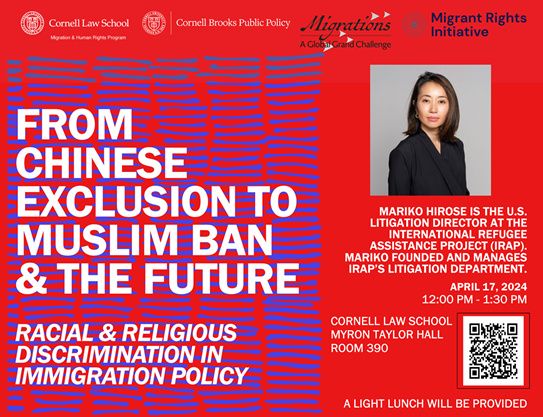
Mariko Hirose is the U.S. Litigation Director at IRAP. In this role, Mariko founded and manages IRAP’s litigation department.
Prior to joining IRAP, Mariko worked at the New York Civil Liberties Union where she litigated a broad range of cases and coordinated integrated advocacy efforts. Her previous experiences also include litigating civil rights cases at Outten & Golden LLP and at the American Civil Liberties Union; teaching as an Adjunct Professor of Law at the New York University School of Law and at the Fordham University School of Law; and clerking for the Honorable Stephen Reinhardt of the U.S. Court of Appeals for the Ninth Circuit.
Mariko is a graduate of Stanford Law School and Yale University. She grew up primarily in Japan and spent time in China before law school as a Yale-China Teaching Fellow.
Mariko is a member of the New York bar.
Host and Sponsors
This event is hosted by Cornell Law School. Cosponsored by the Migrations initiative, part of Global Cornell.
Additional Information
Program
Einaudi Center for International Studies
East Asia Program
Gilbert Levine (1927–2024)

Champion of International Collaboration Dies at 96
Einaudi honors our four-time interim director and advisor to generations of Cornell Fulbrighters. Read about Gil Levine's lifetime of service.