
Einaudi Center for International Studies
Putin's Hidden Weakness

Foreign Affairs Op-ed by Bryn Rosenfeld
Bryn Rosenfeld (IES) and her coauthors explain why Putin's approval ratings "are far from a reliable indicator of popular support for the war."
Additional Information
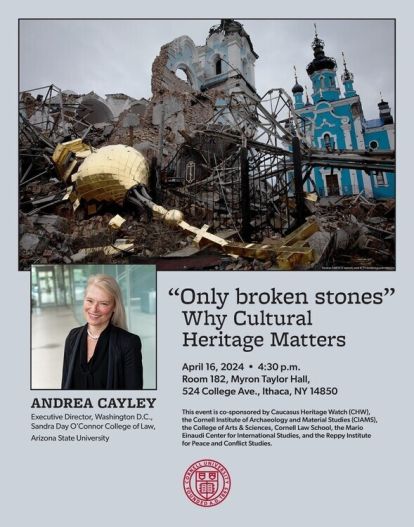
“Only broken stones” Why Cultural Heritage Matters
April 16, 2024
4:30 pm
Myron Taylor Hall, 182
Abstract
Andrea Cayley will discuss the importance of seeking accountability in international and national courts for the destruction of cultural heritage.When international prosecutors look to bring cases for the destruction of cultural heritage, they are faced with comments such as ‘how can you focus on buildings when so many people have died’ or as Prof. Cayley was told when working on the prosecution of Pavle Strugar for attacks on Dubrovnik, Croatia, a protected UNESCO world heritage site, these are “only broken stones.” In fact, the US Department of Defense has stated that the first indicator of a genocide risk is an attack on cultural heritage. Why is the destruction of cultural heritage an essential part of charge of crimes against humanity or genocide? What is the legal framework of prosecuting these crimes and what are the evidentiary challenges? What is the current situation in Ukraine and what is being done to prosecute these crimes?
About Andrea Cayley
Andrea Matačić Cayley, J.D. Ph.D., the Executive Director of the Sandra Day O’Connor College of Law’s Washington D.C. program, has 20 years of experience working as a war crimes prosecutor at the International Criminal Tribunal for the Former Yugoslavia and the Extraordinary Chambers in the Courts Cambodia. She worked with UNESCO to prepare the indictment and prosecution of the most significant case of cultural property destruction in Yugoslavia (Prosecutor v. Pavle Strugar IT-01-42-A) and worked on the prosecution of numerous Bosnian cases where the destruction of Bosnian Muslim heritage was found to be a crime against humanity. She has advised on universal jurisdiction cases brought against Liberian as well as Syrian and Ukrainian war criminals. She has been part of the NATO cultural property advisory since 2016 and is a coordinator of the Atrocity Crimes Advisory group for Ukraine, the official US/UK/EU response to war crimes occurring in Ukraine. She leads the cultural heritage advisory for ACA. In November 2023, Andrea co-founded the Heritage Warfare Consortium, a partnership between ASU, the University of Pennsylvania, and Copenhagen University. This consortium brings a multi-disciplinary approach to the protection of cultural heritage and to accountability for cultural destruction. Andrea holds a BA from Columbia University, an MA in Slavic Studies from the University of Zagreb, Croatia, a JD from Temple University, and a PhD in International Law from Leiden University.
This event is co-sponsored by Caucasus Heritage Watch (CHW), the Cornell Institute of Archaeology and Material Studies (CIAMS), the College of Arts & Sciences, Cornell Law School, the Mario Einaudi Center for International Studies, and the Reppy Institute for Peace and Conflict Studies.
Additional Information
Program
Einaudi Center for International Studies
Reppy Institute for Peace and Conflict Studies
This Mega-city Is Running Out of Water. What Will 22 Million People Do When the Taps Run Dry?

Victoria Beard, SEAP/GPV
Victoria Beard, professor of city and regional planning, says “Water sources are depleted around the world. Every year, more cities will face ‘Day Zero,’ with no water in their piped systems.”
Additional Information
Runoff Histories: Fertilized Fields and Contaminated Water in Northern Mexico
April 29, 2024
4:45 pm
Uris Hall, Conference Room, 153
Latin American and Caribbean Studies Program (LACS) Seminar Series
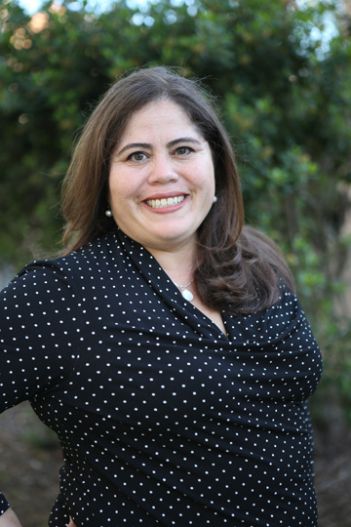
The mid-1960s ushered in an era of the belief in technological fixes for many social ills. Chief among these was a push to end global hunger using designer seeds that could yield more and thus feed more people. These seeds, developed in Mexican experiment stations, were disease resistant in addition to high-yielding. Yet to fully function these seeds needed fertilizer—lots of it. In the hurried quest to find a solution to end global hunger neither the social nor ecological impacts were considered. This talk examines how Mexico became a leading producer of wheat germplasm, how it was instrumental in finding a solution to end global hunger in the mid-twentieth century, and how the decades-long use of fertilizer to produce more food has had devastating consequences today, including contaminated groundwater and the health issues of local people.
Gabriela Soto Laveaga is Professor of the History of Science and Antonio Madero Professor for the Study of Mexico at Harvard University. Her current research interests interrogate knowledge production and circulation between Mexico and India; medical professionals and social movements; and science and development projects in the twentieth century. She is currently the 2023-2024 Dibner Distinguished Fellow in the History of Science and Technology at The Huntington.
Her first book, Jungle Laboratories: Mexican Peasants, National Projects and the Making of the Pill, won the Robert K. Merton Best Book prize in Science, Knowledge, and Technology Studies from the American Sociological Association. Her second monograph, Sanitizing Rebellion: Physician Strikes, Public Health and Repression in Twentieth Century Mexico, examines the role of healthcare providers as both critical actors in the formation of modern states and as social agitators. Her latest book project seeks to re-narrate histories of twentieth century agriculture development aid from the point of view of India and Mexico.'
Additional Information
Program
Einaudi Center for International Studies
Latin American and Caribbean Studies
Bringing India and Cornell Together

Video Highlights Fruitful Relationship
Einaudi faculty describe community-based research and shared goals that have united India and Cornell for more than a century.
Additional Information
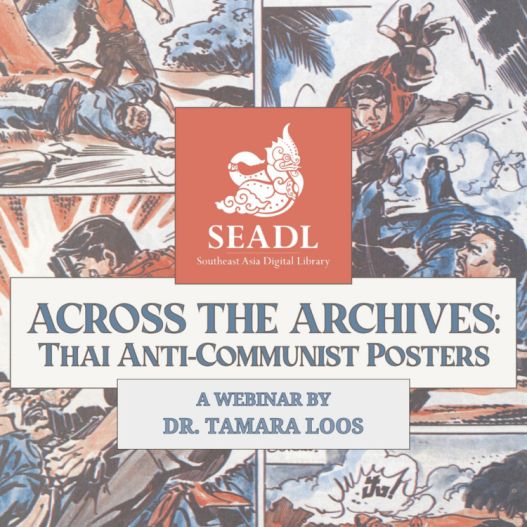
Across the Archives: Thai Anti-Communist Posters
April 26, 2024
3:00 pm
A SEADL webinar featuring: Dr. Tamara Loos, Professor of History, Cornell University.
Hosted by Emily Zinger, Southeast Asia Digital Librarian, Cornell University.
How to be an Anti-Communist: Information, Expertise, and Culture in Cold War Thailand
To be anti-communist in Thailand during the Cold War meant more than simply rejecting participation in a political ideology called communism—an ideology with which so few Thais were familiar that Bill Donovan, former head of the OSS and ambassador to Thailand, had the Communist Manifesto translated into Thai in 1952. US officials repeatedly worried that Thai leaders were not sufficiently concerned about the dangers of communism, so they helped construct an image of the communist enemy that would resonate with Thais. How to be an anti-communist meant learning to recognize and love the monarchy, to worship Buddhism, to participate in the heteronormative family, to appreciate private property even if one could not afford it, and to celebrate selected (reinvented) Thai traditions. All these meanings were heightened above other cultural traditions to become “the” norm during the Cold War era. And it was created by particular Thai and American “experts.” Tracing the development of this expertise and its unpredictable impacts reveals the limits of US funding and knowledge, on the one hand, and the empowerment of paternalistic cultural authority among Thai leaders, on the other. Despite the asymmetrical power relationship between the US and Thailand and the massive economic, military and police funding provided to Thailand, elite Thais fully participated in and led the shaping knowledge production, unlike rural Thais who became objects of USIS surveys and American anthropological studies. The talk will focus on the anti-communist posters that led me to this project.
About the Speaker
Tamara Loos is Professor of Southeast Asian history at Cornell University, is currently Chair of the History Department, and has served as Director of the Southeast Asia Program. Her first book, Subject Siam: Family, Law, and Colonial Modernity in Thailand, explores the implications of Siam's position as both a colonized and colonizing power in Southeast Asia. It is the first study that integrates the Malay Muslim south and the gendered core of law into Thai history. Her most recent book, Bones Around My Neck offers a critical history of Siam during the era of high colonialism through the dramatic and tragic life of a pariah prince, Prisdang Chumsai (1852–1935). Her teaching and articles focus on an array of topics including sex and politics, subversion and foreign policy, sexology, transnational sexualities, comparative law, sodomy, and gender in Asia. She has been interviewed by the BBC, The New York Times, The Washington Post, The Financial Times, and other global media outlets about political protests in Thailand. In this talk she will discuss her current book project, tentatively titled How to be an Anti-Communist: Information, Expertise, and Culture in Cold War Thailand.
Additional Information
Program
Einaudi Center for International Studies
Southeast Asia Program
Alain Elkann Talk: “On the Art of Writing and Donating My Papers to the Library”

March 26, 2024
4:00 pm
Carl A. Kroch Library 2B48
When internationally renowned Italian novelist and journalist Alain Elkann gave his papers to Cornell University Library in January, he opened up a trove of materials for scholars of contemporary Italian literature, as well as anyone interested in the art of fiction and journalism.
At this talk and presentation, Elkann will discuss his motivations for entrusting his papers to Cornell. He will also share insights about his historical novels that explore various facets of the Italian Jewish experience, and discuss his approach to interviewing prominent public figures ranging from artists to politicians.
After the talk, audience members will get a chance to view examples of Elkann’s books as well as his archival materials donated to the library’s Rare and Manuscript Collections, including handwritten drafts of novels and interview notebooks.
The event is free and open to the public. Seating is limited to the first 50 attendees. The talk will also be livestreamed.
Livestream Info:
https://cornell.zoom.us/j/95867329645?pwd=Y0Y4a3VyZ1h2bk50S0lGUTlnMHEwQ… (Passcode: 037605)
Or One tap mobile :
+16468769923,,95867329645# US (New York)
+16465189805,,95867329645# US (New York)
Webinar ID: 958 6732 9645
Additional Information
Program
Einaudi Center for International Studies
Institute for European Studies
The "Fascism Debate" and 2024 U.S. Politics

New Article from IES Director Mabel Berezin
"With the spring 2024 primary upon us, social scientists can draw lessons from Europe’s past. Our task is to figure out which lessons are meaningful in the current American moment," writes IES director Mabel Berezin in the Annals of the American Academy of Political and Social Science.
In 2020, historians and public intellectuals began to ask whether fascism had come to America, with many analysts arguing in the affirmative. Where European political culture is characterized by secular and religious solidarity rooted in national state institutions, American political culture lacks collectivism and solidarity and is susceptible to nativism, a distinctly American impulse that is unmoored from institutional arrangements. In the 2024 American election cycle, analysts should focus on factors that threaten democratic institutions and strategies that strengthen democracy. Comparisons that apply imperfectly to the American situation will not save democracy.
Additional Information
Panel on Transnational Repression

April 25, 2024
4:30 pm
Biotechnology Building, G10
Governments engage in transnational repression when they reach across borders to silence dissidents living abroad. Tactics for transnational repression include assassinations, abductions, threats, and direct action against dissidents’ families and friends living within the repressive government’s territory.
This panel will focus on this global phenomenon and its local consequences for students and faculty members at Cornell, U.S. campuses more broadly, and other communities around the world. It will include the voices of dissidents affected by transnational repression as well as scholars and experts working in the field.
This is a panel discussion following the April 24 documentary In Search of My Sister screening. The film chronicles Rushan Abbas's relentless pursuit of truth and justice.
About the Panelists
Rachel Denber, Deputy Director of the Europe and Central Asia Division, specializes in countries of the former Soviet Union. Previously, Denber directed Human Rights Watch's Moscow office and did field research and advocacy in Russia, Georgia, Armenia, Azerbaijan, Kazakhstan, Uzbekistan, Estonia, Ukraine, Kyrgyzstan and Tajikistan. She has authored reports on various human rights issues throughout the region. Denber earned a bachelor's degree in international relations from Rutgers University and a master's in political science from Columbia University, where she studied at the Harriman Institute. She speaks Russian and French.
Firoozeh Kashani-Sabet, Walter H. Annenberg Professor of History, Firoozeh Kashani-Sabet is a prominent scholar of Iranian and Middle Eastern history. Her research addresses issues of national and cultural formation and gender concerns in Iran, as well as historical relations between the U.S., Iran, and the Islamic world. She is the author of highly influential works, including Frontier Fictions: Shaping the Iranian Nation, 1804-1946, which analyzed land and border disputes between Iran and its neighboring countries. These debates were pivotal to national development and cultural production and have significantly informed the territorial disputes in the region today. Conceiving Citizens: Women and the Politics of Motherhood in Iran, a wide-ranging study of the politics of health, reproduction and maternalism in Iran from the mid-19th century to the modern-day Islamic Republic.
Rushan Abbas, founder and executive director of Campaign for Uyghurs. Rushan Abbas’s activism started in the mid-1980s as a student at Xinjiang University, co-organizing pro-democracy demonstrations in Urumchi in 1985 and 1988. Since she arrived in the United States in 1989, Ms. Abbas has been an ardent campaigner for the human rights of the Uyghur people. Ms. Abbas is the founder and executive director of Campaign for Uyghurs (CFU) and became one of the most prominent Uyghur voices in international activism for Uyghurs following her sister’s detainment by the Chinese government in 2018. Ms. Abbas has spearheaded numerous campaigns, including the “One Voice One Step” movement, which culminated in a simultaneous demonstration in 14 countries and 18 cities on March 15, 2018, to protest China’s detention of millions of Uyghurs in concentration camps.
Sean Roberts is an Associate Professor in the Practice of International Affairs and Director of the International Development Studies (IDS) MA program at The George Washington University’s Elliott School of International Affairs. He received his MA in Visual Anthropology (2001) and his PhD in Cultural Anthropology (2003) from the University of Southern California. While completing his Ph.D. and following graduation, he worked for 7 years for the United States Agency for International Development in Kazakhstan and Kyrgyzstan, managing democracy, governance, and human rights programs in the five Central Asian Republics. He also taught for two years as a Post-Doctoral Fellow at Georgetown University’s Center for Europe, Eurasian, and Russian Studies before coming to the Elliott School in 2008. Academically, he has written extensively on the Uyghur people of China and Central Asia, about whom he wrote his dissertation, and his 2020 book The War on the Uyghurs (Princeton University Press).
About the Moderator
Rebecca Slayton, Director of the Reppy Institute for Peace and Conflict Studies, is an associate professor of science and technology studies in the College of Arts and Sciences. Her research and teaching examine the relationships among risk, governance, and expertise, focusing on international security and cooperation since World War II. Her first book, Arguments that Count: Physics, Computing, and Missile Defense, 1949-2012 (MIT Press, 2013), shows how the rise of a new field of expertise in computing reshaped public policies and perceptions about the risks of missile defense in the United States. Her second book project, Shadowing Cybersecurity, examines the emergence of cybersecurity expertise through the interplay of innovation and repair. Slayton is also working on a third project that examines tensions intrinsic to creating a “smart” electrical power grid—i.e., a more sustainable, reliable, and secure grid.
Host
Judith Reppy Institute for Peace and Conflict Studies
Additional Information
Program
Einaudi Center for International Studies
Reppy Institute for Peace and Conflict Studies
East Asia Program
Institute for African Development
South Asia Program
Institute for European Studies
Southeast Asia Program
Video: Asian Migrations: Three Windows Through History

Eric Tagliacozzo, CMSP/SEAP
In this PBS video produced with Cornell's Migrations initiative, CMSP director Eric Tagliacozzo describes how trade, religion, and smuggling shaped migration trends and cultural exchange in Southeast Asia.