
Einaudi Center for International Studies
Financing the Transition to Safe, Equitable, and Resilient Water and Sanitation Services in Africa

March 28, 2024
2:30 pm
Uris Hall, G08
Globally, 2.2 billion people lack access to safely managed drinking water services, 3.5 billion lack access to safely managed sanitation services, and 1 billion people still practice open defecation. At the same time, climate change is threatening communities’ water supplies and the integrity of existing infrastructure. These realities converge to create a pressing need for new thinking about the planning, design, and financing of the next generation of water and sanitation infrastructure. This talk will examine the global challenge of providing universal access to resilient water and sanitation services with particular attention to Sub-Saharan Africa and how the global community can finance this transition.
Recent assessments of climate change impacts in Sub-Saharan Africa indicate that the continent is already experiencing impacts from rising temperatures, including water shortages, reduced food production, loss of lives and biodiversity loss. There are an increased number of extreme events, from drought, floods and tropical storms, and these events will worsen if global greenhouse gases are not significantly reduced. At the same time, Africa is one of the lowest contributors to greenhouse gas emissions, and many countries struggle to manage with the cost of climate change adaptation, while also paying high levels of debt. Alongside these climate challenges are ongoing extractive industries looking to Africa as a new or ongoing source of resources – including mining precious minerals to support renewable alternatives to fossil fuels. Despite this bleak picture, alternative models that are transformative and reparative are emerging as ways to imagine just climate futures in Africa. These alternatives include attention to multiple types of social inequities and building development strategies through dialogue and careful attention to power dynamics. Adaptation approaches that support decent livelihoods alongside biodiversity, ecosystems and indigenous knowledge are being tested and expanded. Recognition of power inequities at multiple scales and reparation of these inequities is part of such approaches.
Additional Information
Program
Einaudi Center for International Studies
Institute for African Development
Environmental Cognition and Small Holder Farmed Climate Adaptation

March 21, 2024
2:30 pm
Uris Hall, G08
Recent assessments of climate change impacts in Sub-Saharan Africa indicate that the continent is already experiencing impacts from rising temperatures, including water shortages, reduced food production, loss of lives and biodiversity loss. There are an increased number of extreme events, from drought, floods and tropical storms, and these events will worsen if global greenhouse gases are not significantly reduced. At the same time, Africa is one of the lowest contributors to greenhouse gas emissions, and many countries struggle to manage with the cost of climate change adaptation, while also paying high levels of debt. Alongside these climate challenges are ongoing extractive industries looking to Africa as a new or ongoing source of resources – including mining precious minerals to support renewable alternatives to fossil fuels. Despite this bleak picture, alternative models that are transformative and reparative are emerging as ways to imagine just climate futures in Africa. These alternatives include attention to multiple types of social inequities and building development strategies through dialogue and careful attention to power dynamics. Adaptation approaches that support decent livelihoods alongside biodiversity, ecosystems and indigenous knowledge are being tested and expanded. Recognition of power inequities at multiple scales and reparation of these inequities is part of such approaches.
Additional Information
Program
Einaudi Center for International Studies
Institute for African Development
Ants and Grasshopper documentary and discussion (Cornell Cinema)

March 6, 2024
7:00 pm
Cornell Cinema
Recent assessments of climate change impacts in Sub-Saharan Africa indicate that the continent is already experiencing impacts from rising temperatures, including water shortages, reduced food production, loss of lives and biodiversity loss. There are an increased number of extreme events, from drought, floods and tropical storms, and these events will worsen if global greenhouse gases are not significantly reduced. At the same time, Africa is one of the lowest contributors to greenhouse gas emissions, and many countries struggle to manage with the cost of climate change adaptation, while also paying high levels of debt. Alongside these climate challenges are ongoing extractive industries looking to Africa as a new or ongoing source of resources – including mining precious minerals to support renewable alternatives to fossil fuels. Despite this bleak picture, alternative models that are transformative and reparative are emerging as ways to imagine just climate futures in Africa. These alternatives include attention to multiple types of social inequities and building development strategies through dialogue and careful attention to power dynamics. Adaptation approaches that support decent livelihoods alongside biodiversity, ecosystems and indigenous knowledge are being tested and expanded. Recognition of power inequities at multiple scales and reparation of these inequities is part of such approaches.
Additional Information
Program
Einaudi Center for International Studies
Institute for African Development
Engaging Youth in Climate Action in Nigeria
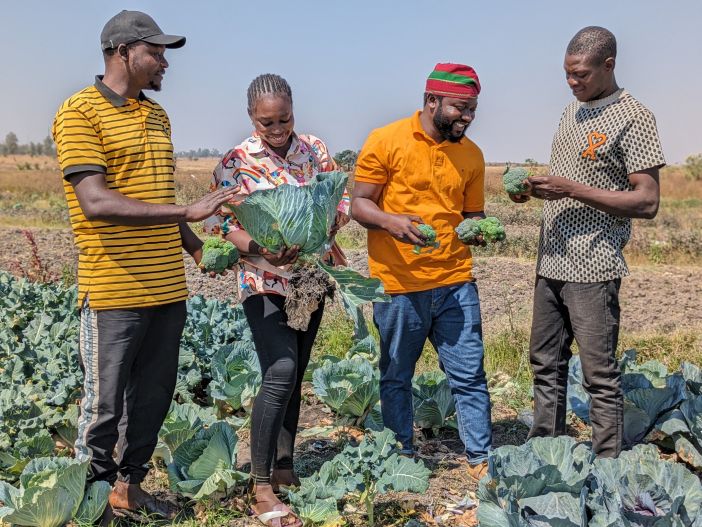
Mercy Abutsa, IAD Fellow
"Engaging with these farmers allowed me to explore the unique ecological indicators they employ to predict extreme weather events for farming."
Additional Information
Conversation with Prof. Sabbagh-Khoury about Her New Book on Israel/Palestine
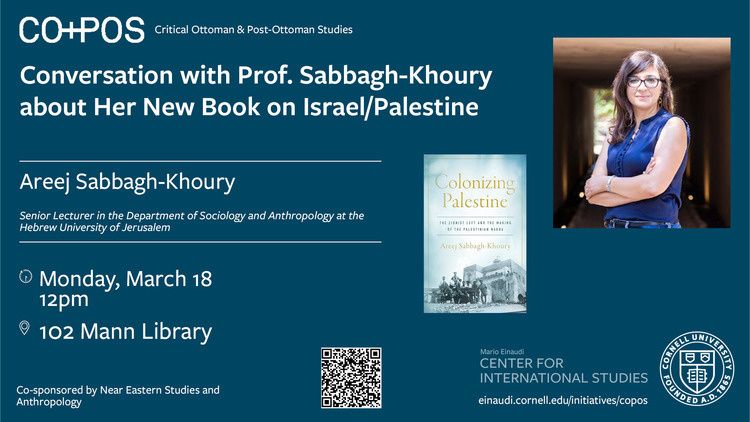
March 18, 2024
12:00 pm
Mann Library, 102
Among the most progressive of Zionist settlement movements, Hashomer Hatzair proclaimed a brotherly stance on Zionist-Palestinian relations. Until the tumultuous end of the British Mandate, movement settlers voiced support for a binational Jewish-Arab state and officially opposed mass displacement of Palestinians. But, Hashomer Hatzair colonies were also active participants in the process that ultimately transformed large portions of Palestine into sovereign Jewish territory. Areej Sabbagh-Khoury investigates this ostensible dissonance, tracing how three colonies gained control of land and their engagement with Palestinian inhabitants on the edges of the Jezreel Valley/Marj Ibn 'Amer.
Based on extensive empirical research in local colony and national archives, Colonizing Palestine offers a microhistory of frontier interactions between Zionist settlers and indigenous Palestinians within the British imperial field. Even as left-wing kibbutzim of Hashomer Hatzair helped lay the groundwork for settler colonial Jewish sovereignty, its settlers did not conceal the prior existence of the Palestinian villages and their displacement, which became the subject of enduring debate in the kibbutzim. Juxtaposing history and memory, examining events in their actual time and as they were later remembered, Sabbagh-Khoury demonstrates that the dispossession and replacement of the Palestinians in 1948 was not a singular catastrophe, but rather a protracted process instituted over decades. Colonizing Palestine traces social and political mechanisms by which forms of hierarchy, violence, and supremacy that endure into the present were gradually created.
Dr. Areej Sabbagh-Khoury is Senior Lecturer in the Department of Sociology and Anthropology at the Hebrew University of Jerusalem. Her research interests include political and historical sociology as it applies to colonialism, indigenous studies, and memory. She is the author of the just published Colonizing Palestine: The Zionist Left and the Making of the Palestinian Nakba (Stanford University Press, 2023), the first empirical study that carefully traces the process of the dispossession and displacement of rural Palestinians by kibbutz settlers in Northern Palestine’s Jezreel Valley before, during, and after 1948. Based on research in eight archives, Colonizing Palestine also examines the representation of colonial violence in the “socialist” discourse of kibbutzim. She has published widely on settler colonialism, political sociology, and the Palestinian citizens in Israel in Sociological Theory, Politics and Society, Theory and Society, Current Sociology, and The International Journal of Urban and Regional Research. She is the recipient of research grants and fellowships from the H.F. Guggenheim Foundation, Palestinian American Research Center, Fulbright, and the Council for Higher Education. Sabbagh-Khoury is a member of the General Assembly and Academic Research Committee of Mada al-Carmel—Arab Center for Applied Social Research, she is also a member of Academic for Equality and in May 2021 she co-founded the organization helpline. She received her doctorate in sociology from Tel Aviv University and subsequently held postdoctoral appointments at Columbia University, New York University, Brown University, and Tufts University.
You must register for free tickets before the event. A ticket and valid Cornell ID is required for entry to the event.
Additional Information
Program
Einaudi Center for International Studies
Reflections on Opportunities with, and Resistance to, the System of Rice Intensification
February 21, 2024
12:20 pm
Warren Hall, 175
Perspectives in Global Development: Spring 2024 Seminar Series
Abstract
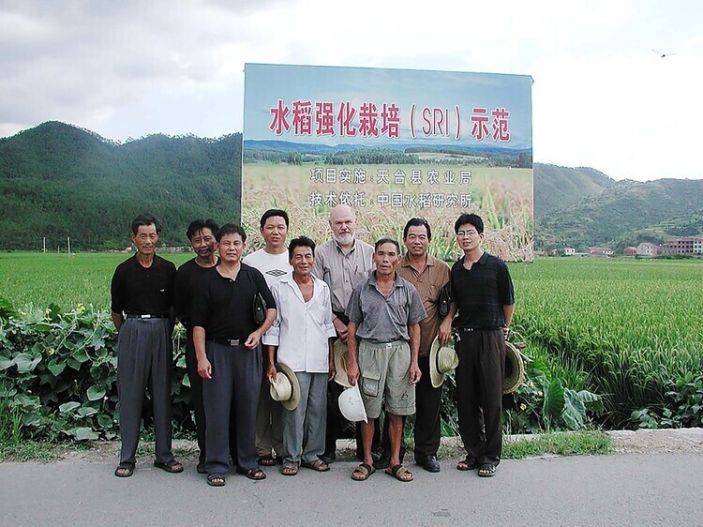
The System of Rice Intensification (SRI) is an agroecological methodology (not considered as a technology) that was developed in Madagascar some 40 years ago by a French Jesuit, Henri de Laulanié. Its evaluation and spread in other countries over the past 25 years was supported first by the former Cornell International Institute for Food, Agriculture and Development (CIIFAD) and then by the SRI-Rice Center now based in the Department of Global Development.
SRI was initially controversial within the scientific community, but disputation has waned as more and more research has been done and published, and as SRI practices have been validated in over 60 countries around the world. Tens of millions of farmers are now deriving multiple benefits from SRI methods.
Some of these methods are quite counter-intuitive, such as getting higher yield with fewer inputs and less cost, with less water and with much less seed and lower plant density, with less or no reliance upon inorganic fertilization, and even often with less labor.
SRI crops have proven to be less vulnerable to the stresses of climate change (drought, storm damage, flooding), and there is a net reduction in greenhouse gas emissions per hectare and per kg of produce, plus more gender equity and greater nutritional quality of grain.
Farmers have begun extrapolating SRI methods to improve their production of a number of other crops, such as wheat, finger millet, maize, sugarcane, mustard, teff, and some pulses and vegetables.
The presentation will highlight some of the significant research questions that are raised by SRI experience and performance, particularly understanding how more productive and robust phenotypes can be elicited from given phenotypes.
Speaker
Norman Uphoff, emeritus professor of Government and International Agriculture, joined the Cornell faculty in 1970 in Arts & Sciences, in the Dept. of Government and the Center for International Studies (now Einaudi Center). His appointment included forming and leading a multi-disciplinary Rural Development Committee in the Center that involved faculty and students from across the whole campus. He was director of the Committee’s large USAID-supported Rural Development Participation Project, 1978-82, and spent a sabbatical year in Sri Lanka at the Agrarian Research and Training Institute. This activity got him involved in the participatory management of irrigation systems in Sri Lanka and then Nepal. During the 1980s, he served on USAID’S Research Advisory Committee and on the South Asia Committee of the U.S. Social Science Research Council.
In 1990, Uphoff was appointed as first director of the Cornell International Institute for Food, and Development, and his faculty line was moved to CALS, where he served as CIIFAD director for the next 15 years, as well as director of the college’s International Agriculture Program. During this time, he became increasingly engaged with agroecology and with the System of Rice Intensification (SRI), which he learned about through CIIFAD’s program in Madagascar.
In 2005, after formally retiring from the faculty, he joined the core faculty of the Cornell Institute for Public Affairs (CIPA), now part of the Brooks School, and continued to teach courses on development administration until 2020, while expanding his work on SRI with colleagues in Asia, Africa and Latin America.
He has recently published a book co-edited with Janice Thies on BIOLOGICAL APPROACHES TO REGENERATIVE SOIL SYSTEMS (CRC Press, 2024). This is the 2nd edition of a book that he put together and published in 2006. He has just finished guest-editing a special issue of the journal AGRONOMY (13, 2024) which contains research and review articles on SRI.
Perspectives in Global Development
The Perspectives in Global Development seminars are held Wednesdays from 12:20-1:20 p.m. eastern time during the semester. The series is presented in a hybrid format. All seminars are shown in 175 Warren Hall. Students, faculty and the general public are welcome to attend. The series is co-sponsored by the Department of Global Development, the Department of Natural Resources and the Environment, the Charles H. Dyson School of Applied Economics and Management, and the School of Integrative Plant Science as part of courses GDEV 4961, AEM 4961, NTRES 4961, GDEV 6960, AEM 6960, and NTRES 6960.
Additional Information
Program
Einaudi Center for International Studies
South Asia Program
El Salvador’s Risky Tradeoff: Exchanging Democracy for Security
![U.S. Secretary of State Michael R. Pompeo participates in a signing ceremony for the CSL Lease Extension with Salvadoran President Nayib Bukele, in San Salvador, El Salvador, July 21, 2019. [State Department photo by Ron Przysucha/ Public Domain]](/sites/default/files/styles/extra_large/public/2024-02/48342167582_934208f597_c.jpg?itok=agDW4R-B)
Gustavo Flores-Macías, LACS
Gustavo Flores-Macías, professor of government, says Ecuador is “almost like a second laboratory for Bukele’s policies. People are so desperate that they buy into the need for these iron-fist policies to bring down crime.”
Additional Information
Indonesian Markets Cheer as Prabowo's Likely Victory Removes Uncertainty
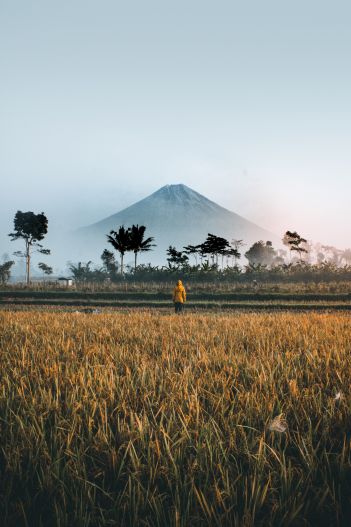
Thomas Pepinsky, SEAP
Tom Pepinsky, professor of government and director of the Southeast Asia Program, says “But as always with Prabowo, one must be wary of how he would respond to disappointing or negative economic news, and his dominating performance will mean that he will assume office with a relatively free hand.”
Additional Information
A Florida Immigration Law Is Turning Farm Towns Into ‘Ghost Towns’

Mary Jo Dudley, LACS
Mary Jo Dudley, the director of the Cornell Farmworker Program, shares the agricultural risks that come with governmental mandates regarding immigration.
Additional Information
One Health: Understanding Threats to Wildlife and Human Health in Asia

March 7, 2024
1:00 pm
eCornell Keynote
From the river valleys and grasslands of Nepal to the high mountains of Central Asia, from tigers to leopards to vultures to Asiatic wild dogs (or dholes) — and from canine distemper to wildlife poisonings to the infectious diseases impacting wild sheep and goats as well as their domestic cousins — there is no shortage of threats to the health of these magnificent species and ecosystems, with some of these very same threats being of importance to agriculture and public health.
Join us as Dr. Martin Gilbert from the Cornell K. Lisa Yang Center for Wildlife Health and some of its students and team members share their fieldwork experiences and help illustrate how the health of wildlife and our own health and well-being are inextricably linked.
The Cornell K. Lisa Yang Center for Wildlife Health, with programs around the globe, strives to sustain a healthier world by developing and implementing proactive, science-based solutions to challenges at the interface of wildlife health, domestic animal health, human health and livelihoods, and the environment that supports us all. With its focus on Asia, the Cornell Wild Carnivore Health Program promotes the health and long-term sustainability of wildlife populations by advancing scientific tools and sharing knowledge to protect and improve the health of wild carnivores and their prey, all while seeking to mitigate human-wildlife conflict.
Register for the event here.
WHAT YOU'LL LEARN
How securing the health of our wildlife is key to conservationThe ways in which our health and the health of wildlife are inextricably linkedHow the field of wildlife health often yields surprisesHow wildlife resources are incredibly important to rural livelihoods and national economies
Additional Information
Program
Southeast Asia Program
South Asia Program
Einaudi Center for International Studies