
Einaudi Center for International Studies
How to Navigate AAS
March 6, 2024
8:00 pm
Are you a first-time attendee of the Association for Asian Studies annual meeting? A PhD student or early career researcher with questions about how AAS works, how to navigate such a large event, and how to build community with people who share your interests?
Join the GETSEA consortium for an informal discussion with Tom Pepinsky (Cornell), Trude Jacobsen Gidaszewski (NIU), and Nida Sanglimsuwan (UCLA) about the ins-and-outs of the AAS for students and scholars of Southeast Asia.
Additional Information
Program
Einaudi Center for International Studies
Southeast Asia Program
Unmasking the CCP Lecture Series, "China Under Mao: A Revolution Derailed"

March 7, 2024
4:45 pm
Physical Sciences Building, 120
Talk Description: China Under Mao: A Revolution Derailed
China’s Communist Party seized power in 1949 after a long period of guerrilla insurgency followed by full-scale war, but the Chinese revolution was just beginning. What were the distinctive accomplishments and failures of that revolutionary period, and what drove Mao Zedong’s motivations in launching the Great Leap Forward and the attack on his own party-state during the Cultural Revolution? In his talk, Professor Walder will examine the rise and fall of the Maoist revolutionary state from 1949 to 1976―an epoch of startling accomplishments and disastrous failures, steered by many forces but dominated above all by Mao.
Register Now, to Join Remotely:
https://ecornell.cornell.edu/keynotes/overview/K030724a/
Speaker Bio: Professor Andrew G. Walder
Andrew G. Walder is a renowned sociologist and the Denise O'Leary and Kent Thiry Professor at Stanford University, where he is also a senior fellow in the Freeman Spogli Institute for International Studies. With a career marked by significant contributions to the understanding of communist regimes and their successor states, Walder has been a leading voice in examining the sources of conflict, stability, and change in these systems. Walder's academic journey includes a Ph.D. in sociology from the University of Michigan, followed by teaching positions at Columbia University, Harvard, and the Hong Kong University of Science and Technology. Joining Stanford's faculty in 1997, his research has spanned from the socio-economic organization of early Mao-era China to the political mobilization of the late 1960s, and the subsequent collapse and rebuilding of the Chinese party-state. His focus also extends to post-Mao China, analyzing patterns of stratification, social mobility, and inequality. His distinguished career is marked by fellowships and grants from prestigious institutions, including the Guggenheim Foundation and the National Science Foundation. Walder's scholarly work has been recognized with awards from various academic associations, and he is a member of the American Academy of Arts and Sciences and a Guggenheim fellow. His recent publications, such as "Fractured Rebellion: The Beijing Red Guard Movement," "China Under Mao: A Revolution Derailed," and "Civil War in Guangxi: The Cultural Revolution on China’s Southern Periphery," reflect his deep engagement with the complexities of China's political and social history.
This lecture series is proudly sponsored by The Einaudi Center; The East Asia Program; The Department of History; Charles H. Dyson School of Applied Economics and Management; The Society for Humanities; Cornell External Education, eCornell; Cornell IT; The Department of Government; The Department of Asian Studies.
Additional Information
Program
Einaudi Center for International Studies
East Asia Program
Cigarette Girl and Commodity Nationalism

March 1, 2024
4:00 pm
Kahin Center
Keynote address of the 26th SEAP Graduate Student Conference.
With its recent hit series Cigarette Girl, Netflix is shoring up its market position in Indonesia, the world’s fourth most populous country. Based on a novel by Ratih Kumala, Cigarette Girl weaves a tale of romantic family and business intrigue against a historical backdrop of postcolonial nationalism, political violence, and tobacco industry growth. Examining what Cigarette Girl reveals and conceals about the past, I argue that the series reproduces commodity nationalist aesthetics, fantasies, and ideologies that frame the clove cigarette (kretek) as indigenous cultural heritage. By centering the hand-rolled kretek and Javanese business rivalries, Cigarette Girl obscures how machine-rolled kretek and Chinese Indonesian families actually dominate the market. As the series grapples with other unresolved historical issues, including class and gender inequalities, the 1965/6 massacres, the military occupation of West Papua, and Indonesia’s tobacco-related disease epidemic, it also arrives at politically conservative conclusions.
Marina Welker is an associate professor in the Department of Anthropology at Cornell University. She is the author of Enacting the Corporation: An American Mining Firm in Postauthoritarian Indonesia (University of California Press, 2014) and Kretek Capitalism: Making, Marketing, and Consuming Clove Cigarettes in Indonesia (University of California Press, 2024).
Additional Information
Program
Einaudi Center for International Studies
Southeast Asia Program
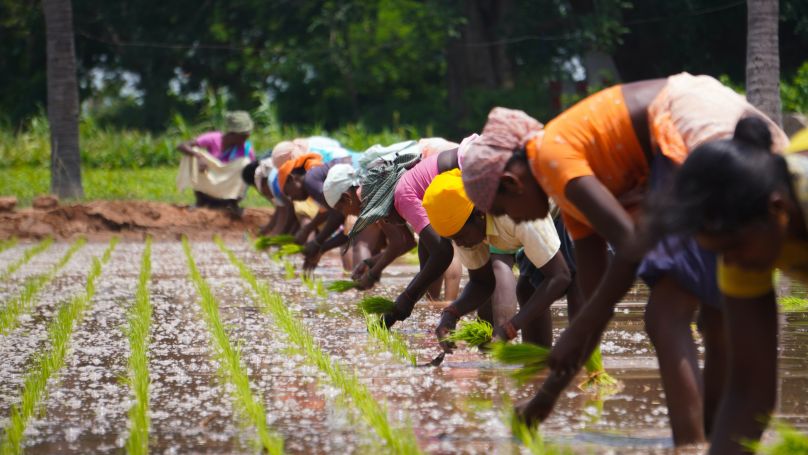
Agrarian Studio Expands
Sarah Besky Builds Grad Community
South Asia Program director Sarah Besky is training a crop of agrarian studies graduate students with support from a Future of Work grant.
Additional Information
Betty Maina: Imagining Just Environmental and Climate Futures in Africa

February 22, 2024
2:30 pm
G-08 Uris Hall
Ms. Betty Maina is a Kenyan politician who is currently Cabinet Secretary for Industrialization, Trade and Enterprise Development in the cabinet of Kenya. Ms. Betty Maina was the former P.S. for Environment and Cabinet Minister for Trade and Industrialization. She also was the CEO of the Kenya Association of Manufacturers (KAM) where her role/portfolio entailed working with the private sector on many environmental/energy/climate change related issues. Prior to taking up her position in the cabinet in 2020 she held roles at the Kenya Association of Manufacturers (KAM), where her role/portfolio entailed working with the private sector on many environmental/energy/climate change related issues, and the United Nations and as the Principal Secretary of the department for Industrialization, Trade and Enterprise Development.
Additional Information
Program
Einaudi Center for International Studies
Institute for African Development
Amazon Tries to Disrupt the American Labor Movement Image

Robert Hockett, CRADLE
Robert Hockett, professor of law, discusses Amazon's strengthened union-busting push.
Additional Information
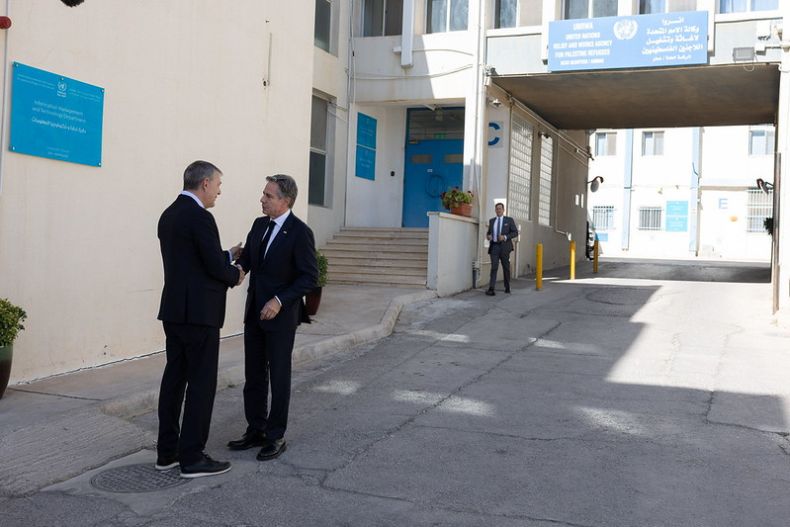
UNRWA Fears are a Normal Trade-off in International Aid. Funding Must Resume Now
Alexandra Blackman and Richard Clark, GPV
Alexandra Blackman and Richard Clark, both assistant professors of government, discuss the risks of withdrawing funding from UNRWA.
Additional Information
Once Banned From the U.S., This Fiery Ex-army General is Poised to Lead Indonesia. What to Expect

Tom Pepinsky, SEAP
“Prabowo had a reputation in the military for fighting and for his short temper. While he might not have the same crassness or brashness of politicians like Rodrigo Duterte, Javier Milei or Trump, his politics replace concern for law and order with a preference for order over the law,” says Tom Pepinsky, professor of government and director of the Southeast Asia Program.
Additional Information
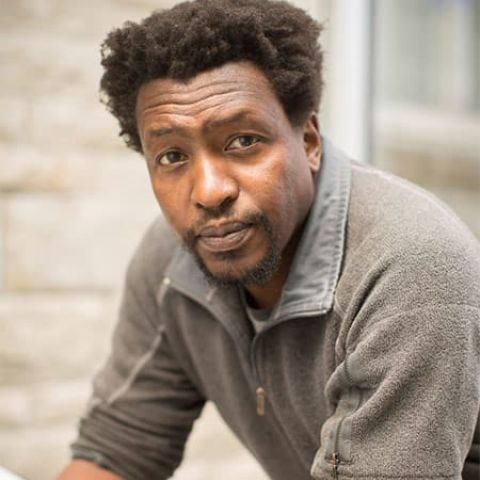
Ngugi wa Thiongo's Son Mukoma wa Ngugi Follows in his Father's Footsteps
Mukoma Wa Ngugi, IAD
Mukoma, associate professor of literatures in English, visited Murang’a University five years after his father Prof Ngugi wa Thiong’o launched his Gikuyu book Kenda Muiyuru (Perfect Nine) at the institution.
Additional Information
Beyond the Crisis: Rethinking Migration Narratives
March 4, 2024
12:30 pm
Uris Hall, 153
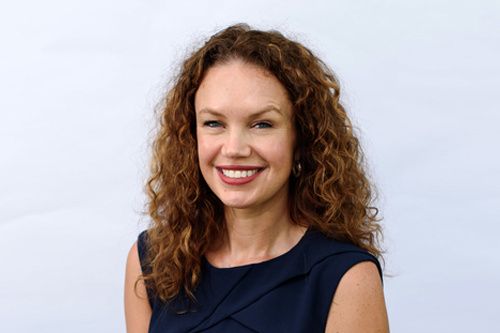
With reporting on the “migration crises” and the “migration surge at the border” once again taking center stage in the media, those advocating for migrant rights are frequently faced with the question of how to most effectively represent migrants and migrant issues.
In this conversation with researcher Moira O’Neil, students will have the opportunity to take a step back and critically interrogate some of the most common negative and positive migration discourses, to learn what impact they have on society's understanding of migration, and to think about effective ways of writing and speaking about migration that can drive lasting and meaningful social change.
About the Speaker
Moira O'Neil is the Senior Vice President of Research Interpretation at the FrameWorks Institute where she conducts research and advises social movement organizations on how to more effectively frame social issues to drive lasting social change. She holds a PhD in sociology from the University of California at Santa Barbara and has worked on a variety of issues ranging from immigration, child mental health, housing, and homelessness.
Host and Sponsors
This event is hosted by the Migrations initiative, part of Global Cornell.
A light lunch will be served.
Additional Information
Program
Einaudi Center for International Studies