
Einaudi Center for International Studies
Pandemic Archives: Media, Geopolitics, and Temporalities of Crisis
May 4, 2024
10:00 am
Physical Sciences Building, 401
Day 2: Pandemic Archives: Media, Geopolitics, and Temporalities of Crisis
About this workshop:
As the world enters its fourth year living with COVID-19, this workshop critically examines our conceptual tools for capturing this chronic crisis and its seismic impact on global geopolitics and humanistic inquiry. Departing from existing discussions, we focus on how the diverse media practices that flourished during the pandemic are now transforming into historical and aesthetic archives enabling re-readings of overshadowed affects, stories, and relationalities within a larger picture. With a special interest in transregional, diasporic, global, and/or other innovative frameworks of analysis, we seek to address the controversial yet indispensable role of China and Chineseness in constituting the global political ecology of this crisis period. Discussion topics include but are not limited to (post-)pandemic global politics and sociality, crisis temporalities, media forms and platforms, ordinary agency, archive, transregional world-making, soundscapes, ecocriticism, and ongoing changes in Chinese/Sinophone/Asian/Asian American studies.
We invite all interested to join us for this get-together for creative and convivial thinking.
10:00-10:10 Welcome Remarks
10:10-11:50 Panel 1: ARCHIVE
Fanyi Faye Ma (Duke University): Can Digital Wailing Crumble the Zero-COVID Great Wall?: The Political Lives of Mediated Female VoiceNick Admussen (Cornell University): The Postpandemic, the Postsocialist, and Jile Disike (Disco Elysium)Lilian Kong (University of Chicago): Calibrating the Self: Approaching East Asian Healing Vlogs as Digital Pandemic ArchiveShana Ye (University of Toronto): The Pandemic Steel(Still): Materiality, Memory and the Many Lives of Chinese Cargo Containers1:30-3:10 Panel 2: REWORLDING
Yanting-Leah Li (Cornell University): From Immunity to Superabundance: Radical Possibilities of Communitarian EcologyShiqi Lin (Cornell University) and Hans Yi Su (Pennsylvania State University): Pandemic Clubbing: Fugitive Cohabitation in a Shifting Global OrderChristopher T. Fan (University of California, Irvine): Park My Car: Ambiguity and the Auteur in the Films of Chung Mong-hongLily Wong (American University): Transpacific Alliance: Asian/American Coalitional World-Making in and beyond the Pandemic3:20-4:50 Hybrid Roundtable: RECALIBRATION
A special discussion bringing back scholars who have written about COVID-19 since 2020
Michael Berry (UCLA), Jenny Chio (University of Southern California), Belinda Kong (Bowdoin College), Carlos Rojas (Duke University), Kaiyang Xu (University of Southern California)Moderators: Nick Admussen and Shiqi Lin5:00-5:30 Concluding Discussion
Cosponsors include the East Asia Program Graduate Student Steering Committee, EastAsia+ Initiative, Society for the Humanities, Department of Asian Studies, Asian American Studies Program, Department of Comparative Literature, and the Klarman Fellowship Program.
Read about Day 1's book talk here.
Additional Information
Program
Einaudi Center for International Studies
East Asia Program
Pandemic Archives: Media, Geopolitics, and Temporalities of Crisis

May 3, 2024
4:45 pm
Goldwin Smith Hall, 64
Day 1: Book Talk – SARS Stories: Affect and Archive of the 2003 Pandemic
Speaker: Belinda Kong (Asian Studies and English, Bowdoin College)
In SARS Stories, Belinda Kong delves into the cultural archive of the 2003 SARS pandemic, examining Chinese-language creative works and social practices at the epicenters of the outbreak in China and Hong Kong. As the COVID-19 pandemic has highlighted issues of anti-Asian racism and sinophobia, Kong traces how Chinese people navigated the SARS pandemic and created meaning amid crisis through cultures of epidemic expression. From sentimental romances and Cantopop songs to raunchy sex comedies and crowdsourced ghost tales, unexpected and minor genres and creators of Chinese popular culture highlight the resilience and humanity of those living through the pandemic. Rather than narrating pandemic life in terms of crisis and catastrophe, Kong argues that these works highlight Chinese practices of community, care, and love amid disease. She also highlights the persistence of orientalism in anglophone accounts of SARS index patients and global reporting on COVID-era China. Kong shows how the Chinese experiences of living with SARS can reshape global feelings toward pandemic social life and foster greater fellowship in the face of pandemics.
Belinda Kong is Professor of Asian Studies and English at Bowdoin College. She is a scholar of global Asian literature and culture whose research focuses on global Chinese-ness.
Book discount: save 30% when you order SARS Stories from dukeupress.edu with coupon code E24BKONG.
Day 1's book talk is part of a two-day workshop. Read about Day 2 here.
Cosponsors include the East Asia Program Graduate Student Steering Committee, EastAsia+ Initiative, Society for the Humanities, Department of Asian Studies, Asian American Studies Program, Department of Comparative Literature, and the Klarman Fellowship Program.
Conveners:
Shiqi Lin (Asian Studies, Cornell University)
Nick Admussen (Asian Studies, Cornell University)
Participants:
Michael Berry (Asian Languages and Cultures, UCLA)
Jenny Chio (East Asian Languages and Cultures and Anthropology, USC)
Christopher T. Fan (English, UC Irvine)
Belinda Kong (Asian Studies and English, Bowdoin College)
Lilian Kong (Cinema and Media Studies and East Asian Languages and Civilizations, University of Chicago)
Yanting-Leah Li (Asian Studies, Cornell University)
Fanyi Faye Ma (Ethnomusicology, Duke University)
Carlos Rojas (Asian and Middle Eastern Studies, Duke University)
Hans Yi Su (Comparative Literature, Pennsylvania State University)
Lily Wong (Literature, American University)
Kaiyang Xu (East Asian Languages and Cultures, USC)
Shana Ye (Women and Gender Studies, University of Toronto)
Additional Information
Program
Einaudi Center for International Studies
East Asia Program
Destroying Democracy by Law
May 2, 2024
5:00 pm
Physical Sciences Building, 120
Institute for European Studies Luigi Einaudi Distinguished Lecture
Until 2005, the number of democracies in the world kept increasing, but after that date, the number has declined. Even robust democracies are now showing signs of weakness and some have turned into hybrid regimes suspended between democracy and autocracy. What is killing off the world’s democracies - and what can be done about it?
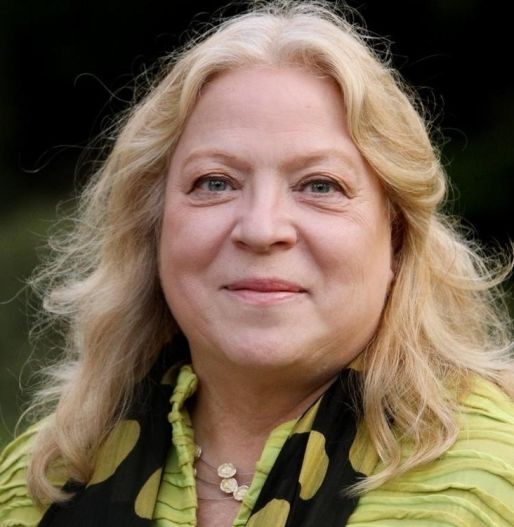
In her forthcoming book Destroying Democracy by Law, Kim Lane Scheppele explores the countries in which aspirational autocrats have undermined democracies. With examples from Hungary, Poland, Venezuela, Ecuador, Turkey, Russia, the United Kingdom, the United States and beyond, Scheppele shows how democracies no longer die with tanks in the streets. Instead, democracies die when aspirational autocrats come to power through elections and then use legal methods to undermine constraints on their power. With law as their weapon, aspirational autocrats damage the institutions that provide checks and balances, compromise the independence of the judiciary, stifle civil society, muzzle the press and use the power of the state against those who might challenge their monopoly on power. Scheppele explains how the new legal tools work, how they circulate from one budding autocracy to another and why international observers have been slow to recognize the problem. She also provides some ideas for reversing these processes through law wielded by new democratic movements.
Kim Lane Scheppele is the Laurance S. Rockefeller Professor of Sociology and International Affairs at the Princeton School of Public and International Affairs and the University Center for Human Values at Princeton University. She is also a faculty fellow at the University of Pennsylvania Law School. Her primary field is the sociology of law, and she specializes in ethnographic and archival research on courts and public institutions. She also works in sociological theory, comparative/historical sociology, political sociology, sociology of knowledge, and human rights.
Additional Information
Program
Einaudi Center for International Studies
Institute for European Studies
Anthropology Colloquium: Karlie Fox Knudtsen
April 26, 2024
3:00 pm
McGraw Hall, 165
“ The Care and Feeding of Names: The Ritual Labor of Bejuni Priestesses and Cosmological Life in Autochthonous India”
Talk abstract:
Bejuni are female ritual specialists whose rites repair and regenerate ecological, social, and cosmological relationships crucial for life in the densely jungled Niyam Donger mountains of present-day Southern Odisha state in India. Often elderly and widowed, bejuni women play key roles in a cosmologically expansive process that recycles the dead back into life. During ethnographic research, I came to understand that bejuni labor is built around the ethical and material maintenance and repair of name-lines, capacious forms of personhood that move across conventional boundaries between lives and deaths and carry with them rights in swidden gardens and in persons. Their practices enact forms of social reproduction beyond sexual conjugality, situating personhood's temporalities outside biological regimes of life. Rupina, life cycle rites for name-lines, are managed by bejuni to create stability across the vagaries of life and death, and to reproduce togetherness and solidarity between living humans, ancestral kin, and spirit beings who abide throughout the landscape. Cosmological lifeworlds centered on female bejuni priestesses face displacement due to ecological demands accompanying regional mountaintop bauxite mining and its severe impacts on water supply and flow. This talk expands directions in black and indigenous feminist theory (Tuck 2009; Lorde 1984) and feminist anthropology of religion (Apffel-Marglin 1983; Mahmood 2004; Ramberg 2013) to elaborate the implications of bejuni praxis within a cosmological framework of social reproduction. Bejuni modes of cosmo-social reproduction offer a deeper reckoning of what is lost when mountains are torn down for capitalist natural resource extraction, raising critical questions about what counts as environmental justice and who are its intended beneficiaries.
Scholar Bio:
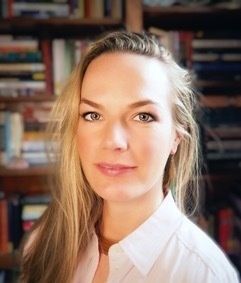
I am a sociocultural anthropologist and ethnographic fieldworker, having recently completed my Ph.D. in sociocultural anthropology at Cornell University (Dec ’23). As a social scientist, I am interested in forging connections between complex global issues and locally situated experiences to render macro-level issues comprehensible in human-scale terms. My research sheds light on the shrouded social and ecological implications of the green energy economy by closely examining how communities in mountainous eastern India, affected by multinational corporate aluminum mining, endeavor to regenerate their social and ecological environments amidst climate change. I am interested in drawing upon ethnographic data and multi-species, ontological, and indigenous feminist analytic frameworks to ask: 1) what counts as environmental justice and for what types of lives and bodies; and 2) how do conventional distinctions between religion and secularism unevenly distribute the impacts of climate change, often concentrating the ecological effects of elite global consumerism within autochthonous communities at the peripheries of world economies. Based on long-term immersive ethnographic research conducted in Odia and Kui/Kubi languages and supported by Fulbright-Hays, my dissertation research explores the intricate material economies and multifaceted social and environmental displacements that Jharnia (“Dongria Kondho”) interlocutors experience to accompany regional natural resource development. Entitled “Keepers of Water: Religion, Ecology, and Ethics as Materiality along a Green Energy Frontier in Tribal Odisha, India,” my dissertation is set amidst India’s geologically ancient Eastern Ghats mountains, along the rapidly expanding aluminum-bauxite natural resource frontier. There, mountainous landscapes revered by Jharnia indigenous interlocutors as their originary ancestor, a sovereign deity, and a living landscape are also coveted by mining companies for the potential natural resource wealth hidden beneath their jungled surfaces in the form of bauxite. Bauxite ore is strip-mined, refined into alumina powder, and then smelted into lightweight, strong, and flexible aluminum metals to feed the global proliferation of aluminum-dependent electric vehicles, fuel cells, military drones, inter-stellar reusable rockets, and recyclable soda-pop cans. Amidst unprecedented ecological challenges characterized by droughts, flooding, and the persistent impacts of metallic dust and water pollution, my dissertation, supported by a grant from the Charlotte Newcombe Foundation, utilizes indigenous Jharnia water management practices to demonstrate that Jharnia social life, colonial categories of knowledge about religion, and the materialities of natural resources are intricately interconnected and entangled along the bauxite frontier in indigenous India.
Additional Information
Program
Einaudi Center for International Studies
South Asia Program
Researching Afro-Andean Histories on the Coasts, in the Highlands, and in the Transatlantic and Transpacific
April 25, 2024
4:45 pm
Goldwin Smith Hall, G22
Latin American and Caribbean Studies Program (LACS) Seminar Series.
Co-sponsored: Department of History, Department of History of Art & Visual Studies
New colonial histories are being researched and written for the 1500s and 1600s to document the presence of people of the African Diaspora and explore their varied experiences in Iberia, the Peruvian highlands, and crossing the early Spanish Transpacific. Even where they were a minority of the local population or marginalized in the historical record, evidence of their actions and sometimes even their motivations can be located and analyzed.
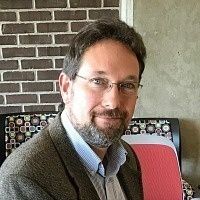
Leo Garofalo is a History Professor at Connecticut College whose research draws attention to the central roles of Native Andeans, Afro-Peruvians, and enslaved and free Asians in shaping daily life within colonial cities. He uses the archives of the Spanish Inquisition in Madrid, Spain’s imperial bureaucracy in Seville, Rome’s Jesuit Archives, the local Church in Peru, and notaries and secular courts in Lima and Cuzco to uncover traces of the passage of the tens of thousands of West and Central Africans and hundreds of Asians forced into slavery and brought to the Andes in the 1500s and 1600s. His publications cover taverns, drinking, markets, seafaring and soldiering, the Afro-Iberian roots of Andean witchcraft, and the Atlantic, European, early trans-Pacific routes of the African and Asian Diasporas to the 16th- and 17th-century Andes. To support this research, he was recently awarded an Andrew W. Mellon Foundation Fellowship for Library Company of Philadelphia and a NEH Research Fellowship at the Center for Medieval & Renaissance Studies of St. Louis University.
Additional Information
Program
Einaudi Center for International Studies
Latin American and Caribbean Studies
In Search of My Sister
April 24, 2024
7:00 pm
Willard Straight Theatre
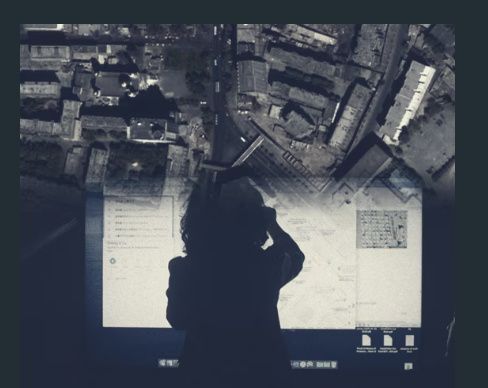
"In September 2018, Dr. Gulshan Abbas, sister of Rushan Abbas, was abducted by Chinese authorities shortly after Rushan's speech condemning the Uyghur genocide. The documentary "In Search of My Sister" chronicles Rushan's relentless pursuit of truth and justice, spanning multiple countries. The film also exposes the CCP's harrowing crimes against humanity through the personal story of Rushan and other Uyghurs in the diaspora. "In Search of My Sister" has been screened worldwide, shedding light on these atrocities."
This screening is followed by a Q&A Session with Rushan Abbas.
About the Speaker
Rushan Abbas’s activism started in the mid-1980s as a student at Xinjiang University, co-organizing pro-democracy demonstrations in Urumchi in 1985 and 1988. Since her arrival in the United States in 1989, Ms. Abbas has been an ardent campaigner for the human rights of the Uyghur people. Ms. Abbas is the founder and executive director of Campaign for Uyghurs (CFU) and became one of the most prominent Uyghur voices in international activism for Uyghurs following her sister’s detainment by the Chinese government in 2018. Ms. Abbas has spearheaded numerous campaigns, including the “One Voice One Step” movement, which culminated in a simultaneous demonstration in 14 countries and 18 cities on March 15, 2018, to protest China’s detention of millions of Uyghurs in concentration camps.
Ms. Abbas frequently briefs global lawmakers and officials on the Uyghur genocide and provides testimonies at legislative bodies worldwide, such as the U.S. Congress, and other parliaments. She advocates for raising awareness and engaging in discussions on policy options to address the challenges posed by the Chinese Communist Party and halt the ongoing Uyghur genocide. She also serves as the Chairperson for the Advisory Board of the Axel Springer Freedom Foundation and as a board member of the Task Force on Human Trafficking within the Parliamentary Intelligence-Security Forum.
In 2019, Ms. Abbas received the Freedom Fighter Award, and her work was recognized at the National Prayer Breakfast in February 2020. Under her leadership, CFU published the 'Genocide in East Turkistan' report in July 2020, leading to the organization receiving the World Democracy Courage Tribute in 2021 and a Nobel Peace Prize nomination in 2022.
Tickets
Order your free tickets
Host
Judith Reppy Institute for Peace and Conflict Studies
Co-Host
Cornell Cinema
Additional Information
Program
Einaudi Center for International Studies
Reppy Institute for Peace and Conflict Studies
East Asia Program
South Asia Program
Annual Armenian Genocide Commemoration Lecture by Ümit Kurt

April 24, 2024
4:30 pm
White Hall, 106
The Ottoman Eichmann: Mustafa Reşat (Mimaroğlu) and The Technocracy of Genocide
Notorious SS officer Adolf Eichmann took the order he was given to send millions of Jews to death camps and applied it to the letter. Eichmann made sure that every single Jew reached the respective concentration and death camps. In his stunning biography of Eichmann, historian David Cesarani describes him as a critical cog in the Nazi mass murder machine, along with Hitler, Himmler, and Heydrich. The personal, social, political, and ideological dynamics that shaped the character and mindset of genocide technocrats such as Eichmann, their formation, and acquisitions, play a key role here. Concurrently, these dynamics provide us with important clues and data on how they made decisions and choices at certain stages and episodes of their careers, and how these choices determined the direction of their lives. The historical actor who must be addressed in the context of the Armenian genocide is Mustafa Reşat (Mimaroğlu). As a young bureaucrat, he was the head of the Second Department of General Security (also known as the Department of Political Affairs or Kısmı Siyasi), a section of the Ministry of the Interior. Along with other officers in the same unit, Mustafa Reşat played an active role in the planning, organization, and implementation of the 24 April 1915 mass arrests in Istanbul that sparked the Armenian Genocide. As such, he facilitated the work of political decision-makers. Building on his memoirs published in two volumes titled Gördüklerim ve Geçirdiklerimden, in this talk, I focus on the course of Mustafa Reşat’s life, his actions and ‘jobs’ and explain how he turned into a genocide technocrat. My main goal is to trace the career of the major protagonist and his decisions at critical junctions and to explore him as an outstanding representative of a category of perpetrators who prepare the propitious infrastructure, ground, and climate for such large-scale violence.
About the Speaker- Ümit Kurt is a historian of the modern Middle East, with a research focus on the collapse of the Ottoman Empire. He is currently Assistant Professor in the School of Humanities, Creative Industry, and Social Sciences (History) and an affiliate of the Centre for the Study of Violence at the University of Newcastle, Australia. A Fellow of the Royal Historical Society, he is the author of award-winning book, The Armenians of Aintab: The Economics of Genocide in an Ottoman Province (Harvard University Press, 2021) and the co-author of The Spirit of the Laws: The Plunder of Wealth in the Armenian Genocide (Berghahn, 2017). He is now working on his third book manuscript project on the global patterns of mass violence in the Ottoman borderlands in 1860s-1920s.
This event is hosted by Critical Ottoman and Post-Ottoman Studies with support from the Comparative Muslim Societies Program.
Additional Information
Program
Einaudi Center for International Studies
Revenge of the Nation-State: Borders, Sovereignty, and Cyberspace

April 18, 2024
4:30 pm
Physical Sciences Building, 120
Conventional wisdom holds that cyberspace is borderless. That assertion is wrong. Borders exist everywhere in cyberspace, generated by firewalls, network interconnections, or other control points. However, those borders do not line up with the physical boundaries of nation-states and information often flows across those borders with ease. Yet, as cyberspace has become critical to almost every aspect of modern life, nation-states have begun to try to assert control over this domain. Many countries claim that, like land, water, or air, some portion of cyberspace represents their sovereign territory. The tension between a global Internet and nation-state imperatives generates many of the cybersecurity problems we face today.
Michael Daniel, President & CEO of the Cyber Threat Alliance (CTA), will explore the implications of nation-state sovereignty in cyberspace, including the potential effects on cybersecurity, crime, and national security.
About the Speaker
Michael serves as the President & CEO of the Cyber Threat Alliance (CTA), a non-profit organization that improves the cybersecurity of the global digital ecosystem by enabling high-quality cyber threat information sharing among cybersecurity providers. CTA’s mission is to better protect end-users, enable the disruption of cyber adversaries, and elevate overall cybersecurity. CTA’s members include more than 36 cybersecurity firms headquartered in 12 countries around the world.
Prior to CTA, Michael served as Special Assistant to the President and Cybersecurity Coordinator on the National Security Council Staff. In this role, he led the development and implementation of national cybersecurity strategy and policy, focusing on improving cyber defenses in the public and private sectors; deterring and disrupting malicious cyber activity aimed at the U.S. or its allies; and, improving the US’s ability to respond to and recover from cyber incidents. Michael also helped craft the government’s response to significant cyber incidents, such the attack on Sony Pictures Entertainment, the intrusion into the Office of Personnel Management, and the Russian efforts to meddle in our electoral process.
Before joining the National Security Council Staff, Michael served for 17 years in the Office of Management and Budget (OMB), including 11 years as the Chief of the Intelligence Branch in the National Security Division, overseeing the Intelligence Community and other classified Department of Defense programs. Originally from Atlanta, Michael holds a Bachelor’s in Public Policy from Princeton University, a Master’s in Public Policy from Harvard, and a Master of Science in National Resource Strategy from the National Defense University’s Industrial College of the Armed Forces. In his free time, he enjoys running and martial arts.
Host
Judith Reppy Institute for Peace and Conflict Studies
Additional Information
Program
Einaudi Center for International Studies
Reppy Institute for Peace and Conflict Studies
All that Breathes
April 15, 2024
7:00 pm
Willard Straight Theatre
Film screening and Q&A with Shaunak Sen (Director)
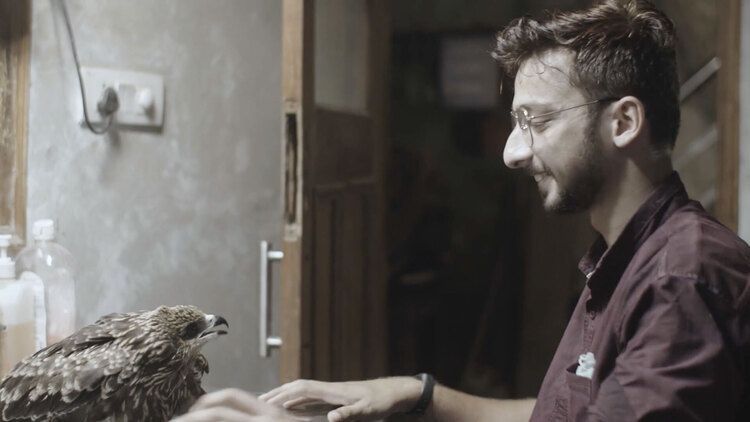
In one of the world’s most populated cities, two brothers — Nadeem and Saud — devote their lives to the quixotic effort of protecting the black kite, a majestic bird of prey essential to the ecosystem of New Delhi that has been falling from the sky at alarming rates. Amid environmental toxicity and social unrest, the ‘kite brothers’ spend day and night caring for the creatures in their makeshift avian basement hospital. Director Shaunak Sen (Cities of Sleep and All that Breathes) explores the connection between the kites and the brothers who help them return to the skies, offering a mesmerizing chronicle of inter-species coexistence. All That Breathes was nominated for Best Documentary Feature Academy Award in 2023.
Shaunak Sen is a filmmaker and film scholar based in New Delhi, India. Cities of Sleep (2016), his first feature-length documentary, was shown at various major international film festivals (including DOK Leipzig, DMZ Docs, and the Taiwan International Documentary Festival, among others) and won 6 international awards. Shaunak received the IDFA Bertha Fund (2019), the Sundance Documentary Grant (2019), the Catapult Film Fund (2020), the Charles Wallace Grant, the Sarai CSDS Digital Media fellowship (2014), and the Films Division of India fellowship (2013). He was also a visiting scholar at Cambridge University (2018) and has published academic articles in Bioscope, Widescreen, and other journals.
Additional Information
Program
Einaudi Center for International Studies
South Asia Program
Beverley Manley Uncensored Film Screening and Discussion
April 15, 2024
4:45 pm
Mc Graw Hall, MCG165
A Latin American and Caribbean Studies Program (LACS) Public Issues Forum funded by the US Department of Education's Title VI UISFL grant.
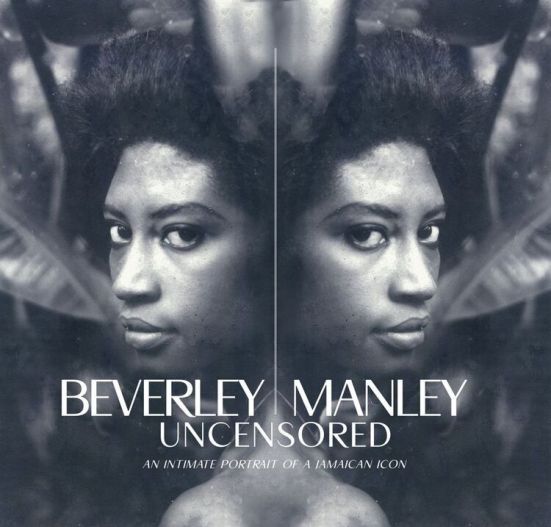
As the wife of Jamaica's former Prime Minister, Beverley Manley Duncan conversed with global players such as Fidel Castro, Winnie Mandela, and Pierre Trudeau. In this no-stone-unturned documentary, Beverley forces herself to confront her complicated past. What was it like to be a Black woman seated at the table? Does she play a pivotal or supporting role? As a Black nationalist, she wore large Afros and head turbans in corridors of power where they were typically not welcomed. She is controversial in her outspoken views of women's sexuality, infidelity, and domestic abuse. She is a powerful voice with wisdom to teach the ages. She is a critical link to where we have come from and a seer of where we might be going. The film Beverley Manley Uncensored lies at the complex intersection of race, class, gender, politics, and global power in a post-colonial society. Join us for a riveting film screening in McGraw Hall and live discussion with Beverley Manley and the filmmaker Joelle Simone Powe, both of whom will join us virtually.
Beverley Manley Duncan is the former first lady of Jamaica’s most famous Prime Minister, Michael Manley. As a champion for Women’s Rights and Black Nationalism, Mrs. Manley implemented changes that radically transformed Jamaican society in the 1970s by founding the Jamaican Women’s Movement, introducing paid maternity leave and equal pay for equal work statutes. She is a keen eyewitness of the most tumultuous decade in Jamaican political history. In 2012, she published her autobiography, the Manley Memoirs, to great discussion and acclaim. The book created shock waves across the Caribbean and diaspora. The four-part docu-series Beverley Manley Uncensored, on Beverley’s life and work, garnered half a million views and sparked a national debate with its intimate interviews and historical reflections.
"The entire country has been waiting to hear from the former wife of late Prime Minister Michael Manley. Beverley Manley Duncan has much to say about sex, politics, classism, imperialism, and political violence"
-The Jamaica Gleaner 2022
Joelle Simone Powe is an accomplished documentary film director, writer, and researcher from Jamaica. Her work explores controversial personalities and topics in Caribbean history and culture. Her debut documentary, "Out There Without Fear," explores Jamaica’s Dancehall dance. Her subsequent work, "Beverley Manley Uncensored," a four-part docu-series on the former First Lady of Jamaica, created a national storm with its exploration of a very vexing time in Jamaican history. Joelle is the founder of Out There Without Fear Dialogues, an educational platform that illuminates Caribbean stories through film, performance, and discussion with regional voices. Her events showcase diverse points of view and challenge academics and students to participate in a robust discussion on issues of race, culture, gender, politics, and international relations.
Please see the link to RSVP
https://www.outtherewithoutfear.org/event-details-registration/beverley…
Additional Information
Program
Latin American and Caribbean Studies
Einaudi Center for International Studies