
Einaudi Center for International Studies
“Beyond Sympathy and Antisemitism: The International Community and the Creation of the State of Israel, 1947-1949"

September 24, 2024
5:00 pm
Biotechnology Building, G10
In his talk, Derek Penslar, the William Lee Frost Professor of Jewish History at Harvard University, will compare the emotions and perceptions that the public on three different continents—the Middle East/south Asia, France/Germany, and several Latin American states—brought to the Palestine question and the 1948 Arab-Israeli war. He’ll discuss how 1948 marked the beginning of the world‘s abiding interest in the region, for reasons that go beyond events in Palestine in and of themselves
The talk is scheduled for 5 p.m. in Room G10 of the Biotechnology Building. Register here to watch the event on eCornell.
Penslar’s research has engaged with a variety of approaches and methods, including the history of science and technology, economic history, military history, biography, post-colonial theory and the history of emotions. His most recent book is “Zionism: An Emotional State,” and he is currently writing a book about worldwide reactions to the 1948 Palestine War.
Sponsored by: Office of the Provost; College of Arts & Sciences; Department of Near Eastern Studies; Jewish Studies Program; Religious Studies Program; Center for Racial Justice and Equitable Futures; Clarke Initiative for Law and Development in the Middle East at the Cornell Law School; Mario Einaudi Center for International Studies; Society for the Humanities.
For more information, visit https://as.cornell.edu/public-engagement/antisemitism-and-islamophobia-….
We strive to host inclusive, accessible events that enable all individuals, including individuals with disabilities, to engage fully. To request an accommodation or for inquiries about accessibility, please email Lori Sonken at ljs269@cornell.edu.
Additional Information
Program
Einaudi Center for International Studies
“Out of Time: On the Rise and Resilience of Anti-Muslim Bigotry Today"
March 18, 2024
5:00 pm
Warren Hall, 401
Moustafa Bayoumi, journalist and professor of English, Brooklyn College, City University of New York shares his views on the rise of Islamophobia.
The talk is scheduled for 5 p.m. in 401 Warren Hall. Register here to watch the event on eCornell.
Bayoumi is the author of “How Does It Feel To Be a Problem?: Being Young and Arab in America” and “This Muslim American Life: Dispatches from the War on Terror.” He is a columnist for The Guardian as well as a regular contributor to The Nation, and his writing has also appeared in The New York Times, New York Magazine, The Daily Beast, CNN, The London Review of Books, The National, The Chronicle of Higher Education and The Progressive.
Sponsored by: Office of the Provost; College of Arts & Sciences; Department of Near Eastern Studies; Jewish Studies Program; Religious Studies Program; Center for Racial Justice and Equitable Futures; Clarke Initiative for Law and Development in the Middle East at the Cornell Law School; Comparative Muslim Societies; Critical Ottoman + Post-Ottoman Studies; Einhorn Center for Community Engagement; Mario Einaudi Center for International Studies; Society for the Humanities.
For more information, visit https://as.cornell.edu/public-engagement/antisemitism-and-islamophobia-….
We strive to host inclusive, accessible events that enable all individuals, including individuals with disabilities, to engage fully. To request an accommodation or for inquiries about accessibility, please email Lori Sonken at ljs269@cornell.edu.
Additional Information
Program
Einaudi Center for International Studies
“Antisemitism, the Israel-Hamas War, and Distorting the Law of Genocide: A Perfect Storm"
February 12, 2024
5:00 pm
Warren Hall, 401
Menachem Z. Rosensaft, adjunct professor of law at Cornell Law School and General Counsel Emeritus, World Jewish Congress shares his views on antisemitism, the Israel-Hamas War and the law of genocide.
Born in 1948 in the Displaced Persons camp of Bergen-Belsen in Germany, the son of two survivors of the Nazi death and concentration camps of Auschwitz and Bergen-Belsen, Rosensaft is also general counsel emeritus of the World Jewish Congress, and a past president of Park Avenue Synagogue in New York City. He has taught about the law of genocide at Cornell Law School since 2008 and at Columbia Law School since 2011; beginning this semester, he is teaching separate courses on antisemitism in the courts and in jurisprudence to Cornell law students and to undergraduates. He is the author of "Poems Born in Bergen-Belsen" (Kelsay Books, 2021) and editor of "God, Faith & Identity from the Ashes: Reflections of Children and Grandchildren of Holocaust Survivors" (Jewish Lights Publishing, 2015).
This talk will take place at 5 p.m. in 401 Warren Hall.
All the talks are open to the public and will be livestreamed on eCornell. To view this first talk, register at this eCornell site: https://ecornell.cornell.edu/keynotes/overview/K021224/
Sponsored by: Office of the Provost; College of Arts & Sciences; Department of Near Eastern Studies; Jewish Studies Program; Religious Studies Program; Center for Racial Justice and Equitable Futures; Clarke Initiative for Law and Development in the Middle East at the Cornell Law School; Comparative Muslim Societies; Critical Ottoman + Post-Ottoman Studies; Einhorn Center for Community Engagement; Mario Einaudi Center for International Studies; Society for the Humanities.
For more information, visit https://as.cornell.edu/public-engagement/antisemitism-and-islamophobia-….
We strive to host inclusive, accessible events that enable all individuals, including individuals with disabilities, to engage fully. To request an accommodation or for inquiries about accessibility, please email Lori Sonken at ljs269@cornell.edu.
Additional Information
Program
Einaudi Center for International Studies
Barring Trump from Ballot Could Backfire

Op-ed by Gustavo Flores-Macías
Gustavo Flores-Macías (LACS) shares lessons from Latin America in an op-ed in The Hill: "Barring candidates is unlikely to bring stability to the political system."
Additional Information
Assembling the Illegality Regime: Vagrancy Laws, Indentured Labor, and the Making of Migration Control in Germany

March 15, 2024
11:30 am
White Hall, 106
Today, illegality is the major frame through which societies discuss migration. While the existing literature has situated the emergence of the figure of the illegal migrant in the post-1945 era, I show that people were already criminalized as illegal in 1920s Germany. To target Jewish migrants fleeing the pogroms in present-day Poland and Ukraine, the German government built its first immigration detention camps and attempted to control its external borders and deport those that had been categorized as ‘nuisance foreigners’ – the poor, those without a job or a permanent abode, and those who had been found guilty of a crime. Through a historical case study of Germany, this paper therefore asks how states first came to render people on the move as illegal. Drawing on one year of archival research, I show how the making of migrant illegality is as much rooted in the domestic control of vagrants and Roma people as it was influenced by the transnational efforts to manage colonized labor. I argue that the entanglements of these local-subnational and global-colonial histories of mobility controls equipped the German state with the legal, bureaucratic, and enforcement capacities to define and categorize who can be excluded as an illegal migrant and to detain and deport those targeted.
About the Speaker
Sabrina Axster is a postdoctoral fellow at Cornell University’s Migration Initiative and hold a PhD in Political Science from Johns Hopkins University.
This event is part of the Department of Government's Politics, Sandwiches, and Comments workshop series.
Additional Information
Program
Einaudi Center for International Studies
Institute for European Studies
Institute for African Development Seminar: Could a Sustainable African Rural Future be the Antidote to Climate Change?
February 8, 2024
2:30 pm
Uris Hall, G08
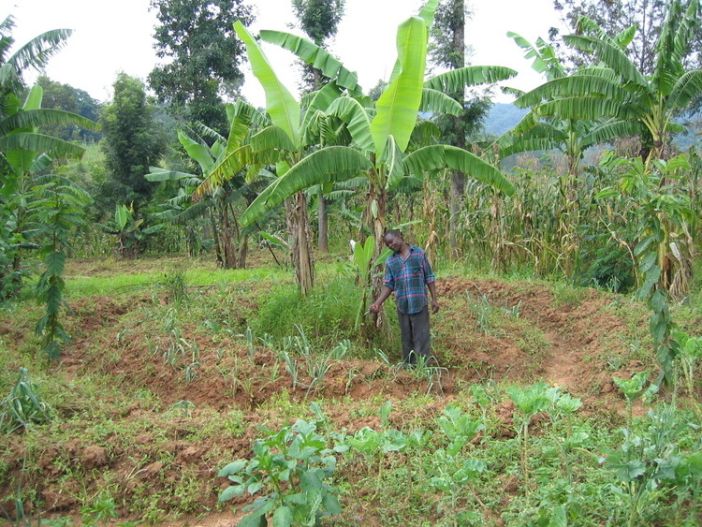
Recent assessments of climate change impacts in Sub-Saharan Africa indicate that the continent is already experiencing impacts from rising temperatures, including water shortages, reduced food production, loss of lives and biodiversity loss. There are an increased number of extreme events, from drought, floods and tropical storms, and these events will worsen if global greenhouse gases are not significantly reduced. At the same time, Africa is one of the lowest contributors to greenhouse gas emissions, and many countries struggle to manage with the cost of climate change adaptation, while also paying high levels of debt. Alongside these climate challenges are ongoing extractive industries looking to Africa as a new or ongoing source of resources – including mining precious minerals to support renewable alternatives to fossil fuels. Despite this bleak picture, alternative models that are transformative and reparative are emerging as ways to imagine just climate futures in Africa. These alternatives include attention to multiple types of social inequities and building development strategies through dialogue and careful attention to power dynamics. Adaptation approaches that support decent livelihoods alongside biodiversity, ecosystems and indigenous knowledge are being tested and expanded. Recognition of power inequities at multiple scales and reparation of these inequities is part of such approaches.
Additional Information
Program
Einaudi Center for International Studies
Institute for African Development
Information Session: Southeast Asia Program Undergraduate Opportunities

March 11, 2024
12:30 pm
Uris Hall, 153
The Southeast Asia Program (SEAP) gives students multiple ways to engage with Southeast Asia. Affiliate with our program to be informed of all SEAP events and activities. Undergraduates who minor in Southeast Asian Studies are advised by SEAP Program Faculty advisors who collaborate with them to construct a course of study based upon their area of interest. SEAP also runs the CU in Cambodia program for students interested in international travel.
Can’t attend? Contact seap@cornell.edu.
***
The Mario Einaudi Center for International Studies hosts info sessions for graduate and for undergraduate students. To learn more about funding opportunities, international travel, research, and internships, view the full calendar for spring semester sessions.
Additional Information
Program
Einaudi Center for International Studies
Reppy Institute for Peace and Conflict Studies
East Asia Program
Southeast Asia Program
Latin American and Caribbean Studies
Institute for African Development
Institute for European Studies
South Asia Program
Conference: Research Frontiers in Democratic Threats and Resilience

March 23, 2024
9:00 am
Africana Studies and Research Center
This conference brings together scholars undertaking new research on questions of democratic resistance and sources of resilience in response to global evidence of democratic backsliding.
We will work together to analyze domestic and international factors, including institutions, civil society, political parties, voters, media, and foreign policy. In an era marked by threats to democracy from within nominally democratic institutions, by elected officials, and with varying degrees of support from the voting public, we seek to understand the interactive nature of democratic threats and resistance strategies.
As democracy can be conceived of as a continued contestation over rights, responsibilities, and rules, we aim to use this critical historical moment of contestation to expand our comparative conceptions of democratic practice, strategies of endurance and deepening or weakening of democratic regimes, and the social, economic, technological, and institutional factors that contribute to varied outcomes worldwide.
Hosted by the Mario Einaudi Center for International Studies, the conference is part of Einaudi's work on democratic threats and resilience.
Register to attend the conference
***
March 22 Panels
Panel 1: Concepts and Measurement: Democracy 2.0
This panel will push beyond the measurement debates to address conceptual and ontological questions about how to measure democracy, and definitional questions at the heart of democracy’s weaknesses and promise in contemporary practice. Does the practice of a minimal definition of democracy contribute to public disenchantment, and is such practice durable?
Panel 2: Resilience Factors, Resistance Strategies, and Opposition Tactics
This panel will examine the social and economic bases of democratic resiliency, as well as various strategies, actors, and institutions that can fortify and even enhance democratic practice.
Panel 3: Stabilizing Forces? Historical Patterns and Contemporary Challenges
This panel will dissect the factors that have historically stabilized advanced industrial democracies—including party systems, modes of political representation, and patterns of capitalist development-- and their potential applicability to contemporary patterns of democratic backsliding and resistance.
March 23 Panel
Panel 4: International Actors and Regional Organizations
This panel will explore the ways in which authoritarian or democratic leaders and regimes exert influence on the regime types of other countries and the influence of regional organizations on participating countries’ regime trajectories.
Additional Information
Program
Einaudi Center for International Studies
Reppy Institute for Peace and Conflict Studies
East Asia Program
Southeast Asia Program
Latin American and Caribbean Studies
Institute for African Development
Institute for European Studies
South Asia Program
Institute for African Development Seminar: Climate Change Mitigation, Carbon Markets, and Rural Livelihoods: Rise of Green Extractivism

February 1, 2024
2:30 pm
Uris Hall, G08
Recent assessments of climate change impacts in Sub-Saharan Africa indicate that the continent is already experiencing impacts from rising temperatures, including water shortages, reduced food production, loss of lives and biodiversity loss. There are an increased number of extreme events, from drought, floods and tropical storms, and these events will worsen if global greenhouse gases are not significantly reduced. At the same time, Africa is one of the lowest contributors to greenhouse gas emissions, and many countries struggle to manage with the cost of climate change adaptation, while also paying high levels of debt. Alongside these climate challenges are ongoing extractive industries looking to Africa as a new or ongoing source of resources – including mining precious minerals to support renewable alternatives to fossil fuels. Despite this bleak picture, alternative models that are transformative and reparative are emerging as ways to imagine just climate futures in Africa. These alternatives include attention to multiple types of social inequities and building development strategies through dialogue and careful attention to power dynamics. Adaptation approaches that support decent livelihoods alongside biodiversity, ecosystems and indigenous knowledge are being tested and expanded. Recognition of power inequities at multiple scales and reparation of these inequities is part of such approaches.
Additional Information
Program
Einaudi Center for International Studies
Institute for African Development
Return to Seoul with filmmaker Davy Chou in person!

February 9, 2024
7:00 pm
Willard Straight Hall Theatre
After an impulsive travel decision to visit friends, Freddie, 25, returns to South Korea for the first time, where she was born before being adopted and raised in France. Freddie suddenly finds herself embarking on an unexpected journey in a country she knows so little about, taking her life in new and unexpected directions.
Filmmaker Davy Chou will join in-person for a post-screening conversation.
Supported by Albertine Cinematheque, a program of FACE Foundation and Villa Albertine, with support from the CNC / Centre National du Cinema, and SACEM / Fonds Culturel Franco-Amricain
Additional Information
Program
Einaudi Center for International Studies