
Einaudi Center for International Studies
Hideo Kojima and Progressive Game Design
March 11, 2024
4:45 pm
Goldwin Smith Hall, 64
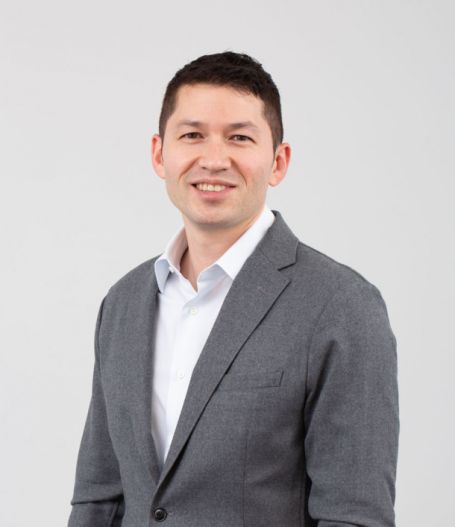
Bryan Hikari Hartzheim, Waseda University.
As the architect of the Metal Gear Solid franchise, video game director Hideo Kojima is synonymous with the “stealth game” genre, where tension and excitement is created from players avoiding enemies rather than confronting them. Through the franchise, Kojima also helped to bridge the gap between video games and other forms of media. In this talk, Bryan Hikari Hartzheim draws from his recently published book to explain the core tenets of Kojima’s game design. Despite working for a commercial game studio for most of his career, Kojima designed and directed games that were both industrially disruptive and socially relevant. Focusing on developer disclosures from Japanese game periodicals, Hartzheim argues that Kojima advocates for a “progressive game design” that expands the boundaries of both game industry conventions and sociocultural discourses in Japan.
Bryan Hikari Hartzheim is Associate Professor of New Media at Waseda University in Tokyo, Japan. He teaches and researches on game studies, media industries, and Japanese popular culture in the School of International Liberal Studies and Graduate School of International Culture and Communication Studies. He is the author of Hideo Kojima: Progressive Game Design from Metal Gear to Death Stranding (2023) and co-editor of The Franchise Era: Managing Media in the Digital Economy (2019).
Introduced by Andrea Mariucci, graduate student, Asian Studies. This event is created by the EAP Graduate Student Steering Committee.
Watch an interview with Bryan Hikari Hartzheim and Andrea Mariucci here! (2 min.)
Additional Information
Program
Einaudi Center for International Studies
East Asia Program
Information Session: Fulbright U.S. Student Program for Undergraduates

March 13, 2024
4:45 pm
The Fulbright U.S. Student Program supports U.S. citizens to study, conduct research in any field, or teach English in more than 150 countries. Students who wish to begin the program immediately after graduation are encouraged to start the process in their junior year. Recent graduates are welcome to apply through Cornell.
The Fulbright program at Cornell is administered by the Mario Einaudi Center for International studies. Applicants are supported through all stages of the application and are encouraged to start early by contacting fulbright@einaudi.cornell.edu.
Register for the information session. Can’t attend? Contact fulbright@einaudi.cornell.edu.
***
The Mario Einaudi Center for International Studies hosts info sessions for graduate and for undergraduate students. To learn more about funding opportunities, international travel, research, and internships, view the full calendar for spring semester sessions.
Additional Information
Program
Einaudi Center for International Studies
Reppy Institute for Peace and Conflict Studies
East Asia Program
Southeast Asia Program
Latin American and Caribbean Studies
Institute for African Development
Institute for European Studies
South Asia Program
Information Session: Fulbright U.S. Student Program for Undergraduates

February 12, 2024
4:45 pm
The Fulbright U.S. Student Program supports U.S. citizens to study, conduct research in any field, or teach English in more than 150 countries. Students who wish to begin the program immediately after graduation are encouraged to start the process in their junior year. Recent graduates are welcome to apply through Cornell.
The Fulbright program at Cornell is administered by the Mario Einaudi Center for International studies. Applicants are supported through all stages of the application and are encouraged to start early by contacting fulbright@einaudi.cornell.edu.
Register for the information session. Can’t attend? Contact fulbright@einaudi.cornell.edu.
***
The Mario Einaudi Center for International Studies hosts info sessions for graduate and for undergraduate students. To learn more about funding opportunities, international travel, research, and internships, view the full calendar for spring semester sessions.
Additional Information
Program
Einaudi Center for International Studies
Reppy Institute for Peace and Conflict Studies
East Asia Program
Southeast Asia Program
Latin American and Caribbean Studies
Institute for African Development
Institute for European Studies
South Asia Program
Information Session: Fulbright Opportunities for Graduate Students

February 5, 2024
4:45 pm
The Fulbright U.S. Student Program provides full funding for graduate and professional students conducting research in any field or teaching in more than 150 countries. Open to U.S. citizens only.
The Fulbright-Hays Doctoral Dissertation Research Abroad Program supports doctoral students conducting research in modern languages or area studies for six to 12 months. Open to U.S. citizens and permanent residents of the United States. Travel to Western European countries is not eligible.
Register for the information session. Can’t attend? Contact fulbright@einaudi.cornell.edu.
***
The Mario Einaudi Center for International Studies hosts info sessions for graduate and for undergraduate students. To learn more about funding opportunities, international travel, research, and internships, view the full calendar for spring semester sessions.
Additional Information
Program
Einaudi Center for International Studies
Reppy Institute for Peace and Conflict Studies
East Asia Program
Southeast Asia Program
Latin American and Caribbean Studies
Institute for African Development
Institute for European Studies
South Asia Program
Conservatives Against the Tide: The Rise of the Argentine PRO Party in Comparative Perspective

April 16, 2024
12:20 pm
Uris Hall, G08
Latin American and Caribbean Studies Program (LACS) Seminar Series.
Co-sponsored by Einaudi's Democratic Threats and Resilience Initiative
In this talk, Gabriel Vommaro will present his new Elements, "Conservatives Against the Tide. The Rise of the Argentine PRO in Comparative Perspective" (Cambridge University Press, 2023). The volume addresses the success of conservative parties in non-authoritarian contexts in contemporary Latin America. It places the core case of Argentina's Republican Proposal (PRO) party in comparative perspective with Argentina's Recrear and with Colombia's Democratic Center party and the Bolivia's Social Democratic Movement in an effort to understand their differing degrees of success in adverse circumstances. Based on long-term research using a variety of methods, this Element shows that success has been driven by three factors: programmatic innovation by personalistic leaders; organizational mobilization of both core and noncore constituencies; and elite fear of the 'Venezuela model.'
After the talk, Professors at ILR Santiago Anria and Candelaria Garay will briefly reflect on Vommaro’s book in light of the rise of an even more radical right-wing alternative in Argentina.
Gabriel Vommaro is Professor of Political Sociology at the EIDAES, Universidad de San Martín and Researcher at the Argentinian National Research Council, CONICET. He received his PhD from the Ecole des Hautes Etudes en Sciences Sociales. He has published on political activism and political parties, political clientelism and the state, and political communication. His books include Conservatives against the Tide (Cambridge University Press, 2023), Diminished Parties. Democratic Representation in Contemporary Latin America (Cambridge University Press, 2021; with JP Luna, R. Piñeiro & F. Rosenblatt); La larga marcha de Cambiemos (Siglo XXI, 2017) and Sociologie du clientélisme (La découverte, 2015; with H. Combes). His research has been published by Actes de la Recherche en Sciences Sociales, Party Politics, LAPS and JLAS.
Additional Information
Program
Einaudi Center for International Studies
Latin American and Caribbean Studies
CANCELED: Wireless Broadcasting in Eastern Bengal: Sound, Nation, Modernity, 1939-1979
February 19, 2024
12:15 pm
Uris Hall, G08
Talk by Mahruba Mowtushi (English and Humanities, BRAC University, Bangladesh)
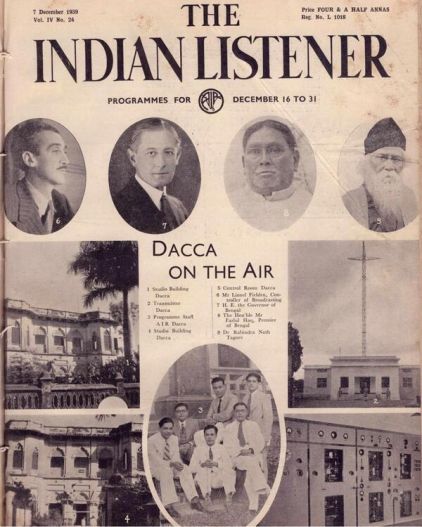
'Wireless Broadcasting in Eastern Bengal: Sound, Nation, Modernity 1939-1979’ tells the story of forty years of expanding wireless soundscape in the eastern regions of Bengal. The wireless has been instrumental in Bengal in exploring modernist ideas about nation and identity. The wireless’ remarkable reach across the airspace of Bengal was responsible for creating an ‘imagined community’ among Bengalis, especially during and after the partitions of 1947 and 1971. This project, the first of its kind in examining radio culture in eastern Bengal, brings together original archival research on wireless to bear on the expanding scholarly interest in the history of broadcasting, its connection to nationalist imaginaries, and the semiotics of sound. The project is being reworked into a book that is divided into six chapters that are somewhat chronologically arranged: each chapter surveys a particular facet of radio culture in East Bengal involving a myriad moving and moveable elements — of people, equipment, ideas, practices, and sound — that created a new kind of awareness to mediated sound and the art of listening among Bengalis.
Mahruba Mowtushi completed her BA (2007-10) and MA (2010-11) in English literature from Queen Mary, University of London, and PhD in comparative literature from King’s College, University of London (2017). She writes for the Journal of Commonwealth Literature (JCL), Research in African Literature (RAL), and South Asian Review (SAR). In recent years, Mowthushi has published articles and book chapters on Bengali cinema, street art in Dhaka, South Asian Muslim food culture, and ‘transnational’ African writers of Bengali descent. She works in English and Bengali, and her research and writing interests cut across South Asian and African literature and cultural history. Her first monograph, Africa in the Bengali Literary Imagination: From Calcutta to Kampala, 1928-1973, is coming out in 2024 from Routledge. Dr. Mowtushi is currently working on two book-length projects on wireless broadcasting in Bengal and the rise of modern nation-states in South Asia.
Additional Information
Program
Einaudi Center for International Studies
South Asia Program
What Branch of Government Is ‘Really’ Responsible for the Crisis at the Border?

Stephen Yale-Loehr, Migrations
“Each of the three branches of government has a role to play in immigration law and policy, and each has failed,” says Stephen Yale-Loehr, professor of immigration law. “The result: a quagmire, where nothing gets resolved and matters get worse every day. Every branch of government is to blame.”
Additional Information
Nearly Two Years After Invasion, West Still Seeking a Way to Steer Frozen Russian Assets to Ukraine

Nicholas Mulder, IES
Nicholas Mulder, professor of history, discusses Russia's frozen assets.
Additional Information
Ecuador’s Attorney General Took on Drug Gangs. Then Chaos Broke Out.
Gustavo Flores-Macías, LACS
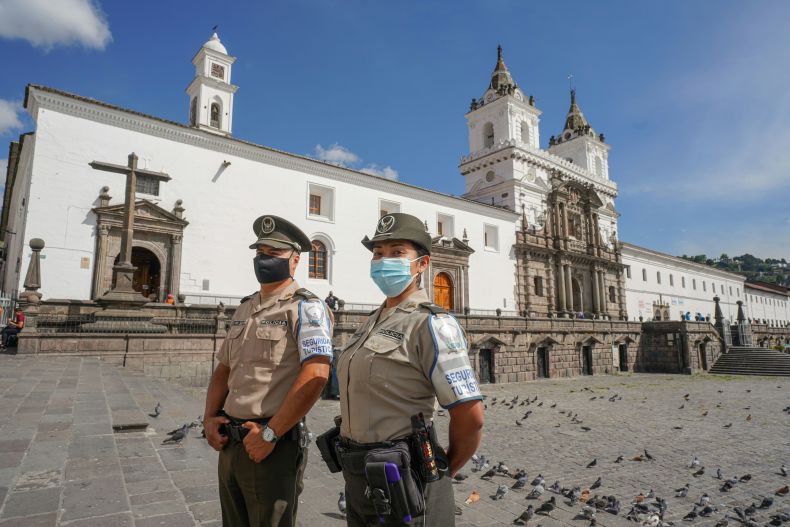
“The Metastasis operation is like kicking the hornet’s nest,” says Gustavo Flores-Macías, professor of government.
Additional Information
Democratic Backsliding, Resilience, and Resistance

By Our Faculty
Paper
Additional Information
Type
- Paper
Publication Details
Publication Year: 2024