
Einaudi Center for International Studies
14th Annual Tagore Lecture: Sex, Sedition & Storytelling
April 12, 2024
4:30 pm
Kahin Center
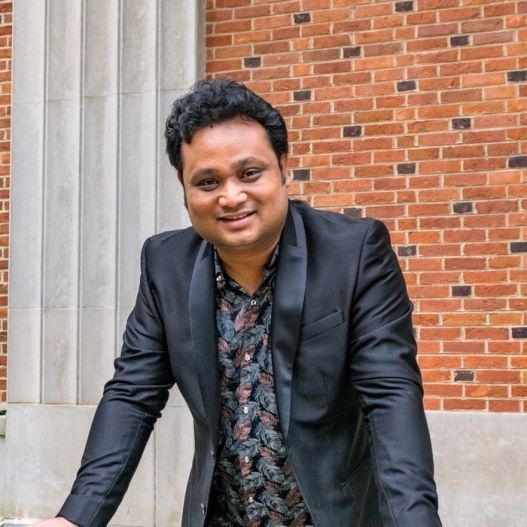
Lecture by Aruni Kashyap (English and Creative Writing, University of Georgia)
Aruni Kashyap’s career as a writer, editor, translator, and academic has articulated the tension between the state and the individual, the public and the private, the fragility of democracy, and how storytelling is a politically charged engagement with society. Stories are at the heart of human rights work. By reading reports, fiction, poems, and essays about others, we are moved to take democratic action. This talk will discuss Kashyap’s journey as a writer from Assam and share how growing up under the duress of state violence has shaped the literature of his home state. By drawing on the works of internationally renowned and critically acclaimed writers such as Indira Goswami and much lesser-known writers, assassinated writers, and incarcerated writers, Kashyap will discuss how insurgency and state violence have shaped not only Assamese literature but also South Asian Literature and is re-shaping global perceptions about Indian Literature.
Aruni Kashyap is the author of His Father’s Disease: Stories and the novel The House With a Thousand Stories. Along with editing a collection of stories called How to Tell the Story of an Insurgency, he has also translated two novels from Assamese to English, published by Zubaan Books and Penguin Random House. Recipient of a National Endowment for the Arts Fellowship, the Faculty Research Grants in the Humanities and Arts Program, Arts Lab Faculty Fellowship, and the Charles Wallace India Trust Scholarship for Creative Writing to the University of Edinburgh, his poetry collection, There is No Good Time for Bad News was nominated for the 58th Georgia Author of the Year Awards 2022, a finalist for the Marsh Hawk Press Poetry Prize and Four Way Books Levis Award in Poetry. His short stories, poems, and essays have appeared in Catapult, Bitch Media, The Boston Review, Electric Literature, The Oxford Anthology of Writings from Northeast, The Kenyon Review, The New York Times, The Guardian UK, and others.
The Rabindranath Tagore Lecture Series in Modern Indian Literature is made possible by a gift from the late Cornell Professor Emeritus Narahari Umanath Prabhu and his wife, Sumi Prabhu. Inspired by Rabindranath Tagore’s expansive imagination, unbounded by geopolitical boundaries, the series has regularly featured prominent writers from across South Asia and its diasporas.
Cosponsored by the Departments of Comparative Literature and Literatures in English.
Additional Information
Program
Einaudi Center for International Studies
South Asia Program
Rights of Nature in Ecuador
March 26, 2024
12:20 pm
Uris Hall, G08
Latin American and Caribbean Studies Program (LACS) Seminar Series.
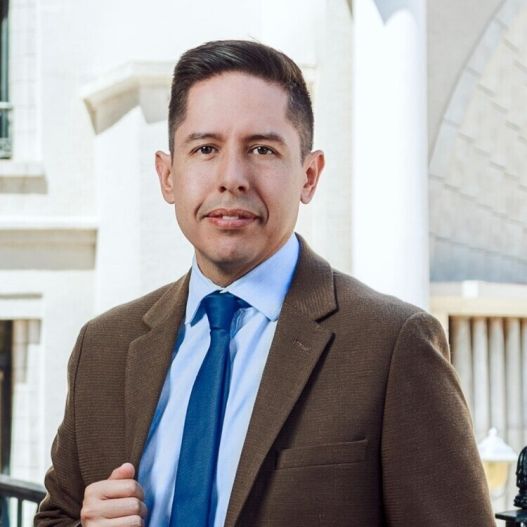
In 2008, Ecuador emerged at the forefront of the movement to recognize Nature as a subject of law, becoming the first, and to date the only, country to recognize and protect the rights of Nature at the Constitutional level. At the time of writing, several recent judgements of the Ecuadorian Constitutional Court, the highest body of constitutional interpretation, have significantly developed the content of the rights of Nature provisions recognized within the Constitutional text. However, these cases have not received extensive consideration by English-speaking academia. Pursuant to this, the primary purpose of this talk is to offer a critical evaluation of the main judgements that have developed the content of the rights of nature in Ecuador, focusing in particular on the judgements concerning the violation of the rights of Nature of forests, mangroves, rivers, and wild animals.
Andrés Martínez Moscoso is Associate Professor in Law, Director of the Institute of Legal Research of the College of Jurisprudence and Executive Secretary of ICON•S, International Society of Public Law. His main lines of research are Water Law; Environmental law; and Public Management. He is national and international consultant on issues related to water management and environmental law and participated to international research projects with the PNUD, Cornell University and European universities (such as the Antwerp University and the KULeuven) on topics of circular economy, waters, ecosystem of urban life and food supply chain. He is also a member of the World Commission on Environmental Law (CMDA) of the International Union for Conservation of Nature.
Co. Sponsor by by Dept. Of City & Regional Planning & Dept of Global Dev.
Additional Information
Program
Einaudi Center for International Studies
Latin American and Caribbean Studies
Democratic Decline a Global Phenomenon

"Democracy has to be continually practiced and improved,” says Einaudi director Rachel Riedl in an article recently published in the peer-reviewed journal World Politics. Read coverage of findings from our democratic threats team.
Additional Information
Who Has the Right to Free Speech? Immigration, Civil Liberty, and Freedom of Expression
March 5, 2024
3:00 pm
Biotechnology Building, G10
Free expression is a human right and cornerstone of a democratic society.
The U.S. Constitution enshrines the right to free expression, but not all those who reside within the country’s borders have equal protection. Some migrants to the U.S. are leaving situations where their rights were threatened, and they embrace the principle of free expression. Those same migrants may find their rights circumscribed when they arrive in the United States.
What can be done to counter threats to free expression for immigrants? How can we protect civil liberties and the law while also protecting human rights and building a diverse, inclusive, and safe society? When is it appropriate to deny visa applications because of a person’s political views?
Our panel of experts will explore these questions in a discussion moderated by Stephen Yale-Loehr (Cornell Law School). This event is hosted by Global Cornell and its Migrations initiative. Learn more about how Global Cornell supports global freedom of expression and Scholars Under Threat.
Panelists
Cecillia Wang, Deputy Legal Director, American Civil Liberties Union (ACLU) Austin Kocher, Research Assistant Professor, Syracuse UniversityBeth Lyon, Associate Dean for Experiential Education, Clinical Professor of Law, and Clinical Program Director, Cornell Law School Gautam Hans, Associate Clinical Professor of Law, Cornell Law School
Additional Information
Program
East Asia Program
Southeast Asia Program
Latin American and Caribbean Studies
South Asia Program
Einaudi Center for International Studies
Reppy Institute for Peace and Conflict Studies
Institute for African Development
Institute for European Studies
Empire of Refugees: North Caucasian Muslims and the Late Ottoman State
March 27, 2024
4:30 pm
White Hall, 106
Description
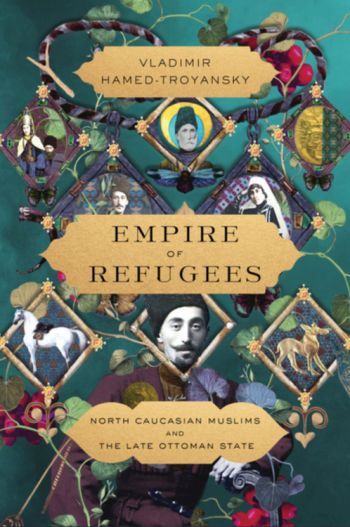
Dr. Vladimir Hamed-Troyansky will present his book, Empire of Refugees: North Caucasian Muslims and the Late Ottoman State (Stanford University Press, 2024), which reveals the origins of refugee resettlement in the modern Middle East. The book demonstrates that, in the late nineteenth century, the Ottoman Empire created a refugee regime, predating refugee protections set up by the League of Nations and the United Nations. Grounded in archival research in ten countries, this book examines the migration of about a million Muslim refugees from Russia to the Ottoman Empire and rewrites the history of Muslim migration in the nineteenth and early twentieth centuries.
Bio
Dr. Vladimir Hamed-Troyansky is Assistant Professor of Global Studies at the University of California, Santa Barbara. He is a historian of migration and displacement in the modern Middle East and the Caucasus.
Additional Information
Program
Einaudi Center for International Studies
Antisemitism and Islamophobia Examined

April 8, 2024
5:00 pm
Warren Hall, 401
A series of lectures this spring will feature four visiting academics sharing their research related to antisemitism and Islamophobia.
The series, sponsored by the Office of the Provost and the College of Arts & Sciences, kicks off Feb. 12 with “Antisemitism, the Israel-Hamas War, and Distorting the Law of Genocide: A Perfect Storm,” a talk by Menachem Rosensaft, adjunct professor of law at Cornell Law School and lecturer in law at Columbia Law School. That talk will take place at 5 p.m. in 401 Warren Hall. All of the talks are open to the public and will be livestreamed on eCornell. To view this first talk, register at this eCornell site: https://ecornell.cornell.edu/keynotes/overview/K021224/
Other talks will include:
March 18: “Out of Time: On the Rise and Resilience of Anti-Muslim Bigotry Today," a talk by Moustafa Bayoumi, journalist and author of author of “How Does It Feel To Be a Problem?: Being Young and Arab in America,” 5 p.m., 401 Warren Hall. eCornell link coming soon.
March 28: "Racializing Religion: Islamophobia, Antisemitism and Palestine," a talk by Sahar Aziz, professor of law, Middle East Legal Studies Scholar and Chancellor’s Social justice Scholar at Rutgers University Law School, 5 p.m., Room G10, Biotech Building. eCornell link coming soon.
April 8: “Beyond Sympathy and Antisemitism: The International Community and the Creation of the State of Israel, 1947-1949," a talk by Derek Penslar, William Lee Frost Professor of Jewish History, Department of History at Harvard University , 5 p.m., Room G10, Biotech Building. eCornell link coming soon.
Sponsored by: Office of the Provost; College of Arts & Sciences; Department of Near Eastern Studies; Jewish Studies Program; Religious Studies Program; Center for Racial Justice and Equitable Futures; Clarke Initiative for Law and Development in the Middle East at the Cornell Law School; Comparative Muslim Societies; Critical Ottoman + Post-Ottoman Studies; Einhorn Center for Community Engagement; Mario Einaudi Center for International Studies; Society for the Humanities
We strive to host inclusive, accessible events that enable all individuals, including individuals with disabilities, to engage fully. To request an accommodation or for inquiries about accessibility, please email Lori Sonken at ljs269@cornell.edu.
Additional Information
Program
Einaudi Center for International Studies
Fragile coalitions: Anti-populism at work in Ecuador
March 19, 2024
12:20 pm
Latin American and Caribbean Studies Program (LACS) Seminar Series.
Co-sponsored by Einaudi's Democratic Threats and Resilience Initiative
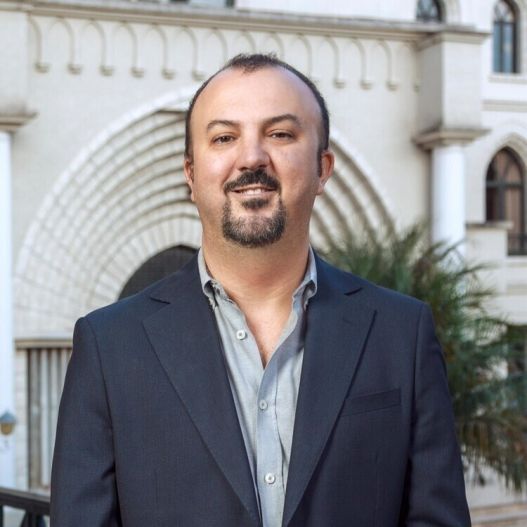
After being governed by left-wing populism for most of the 21st century, Ecuador elected right-wing Guillermo Lasso as its new president in 2021. This presentation explains the juncture that brought Lasso to power, thanks to the formation of an anti-populist coalition that agglomerated various heterogeneous sectors. It also analyzes the strengths and weaknesses of this anti-populist coalition, both in the electoral contest and in the exercise of power.
Paolo Moncagatta is Associate Professor of Political Science at Universidad San Francisco de Quito, in Quito, Ecuador, where he also serves as Dean of the School of Social Sciences and Humanities. He obtained his PhD in Political and Social Sciences from Universitat Pompeu Fabra, in Barcelona. He also collaborates as a Research Fellow at the Research and Expertise Centre for Survey Methodology (RECSM) of Universitat Pompeu Fabra. His research focuses on Latin American politics, citizen attitudes toward democracy, democratization, ideology (and ideological polarization), and electoral behavior.
Additional Information
Program
Einaudi Center for International Studies
Latin American and Caribbean Studies
From North End to Pañatown: How Free Port, Tourism, and Migration, Transformed the Island of San Andrés, Colombia
March 12, 2024
12:20 pm
Uris Hall, G08
Latin American and Caribbean Studies Program (LACS) Seminar Series.
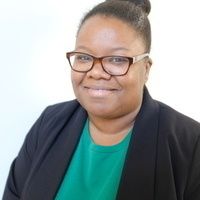
For generations, the Afro-Caribbean islanders from the Archipelago of San Andrés and Providencia had regularly migrated to and from Central America and other islands in the Caribbean Sea. By the middle of the twentieth century, waves of migrants from mostly new locales in mainland Colombia and even as far as the Middle East transformed the tiny Colombian-administered islands' economy, society, and culture. Drawn to newfound opportunities due to the opening of the free port and promotion of tourism in San Andrés, these international and national migrants served as unintentional yet willing partners to state efforts to integrate the islands administratively, economically, and socially within Colombia. Drawing on ethnographic studies from the period, Colombian newspaper articles, and oral histories available in the collections at the Banco de la República Casa Cultura in San Andres Island, I trace how the rise of new aviation technologies and the creation of the free port facilitated an uneven integration of the island into the Colombian nation. While the free port strengthened administrative ties and contact between mainland Colombians and islanders, it failed to integrate the majority of native islanders who retained an oppositional stance against Colombian authorities and national projects. Unlike other studies on this topic, this paper gives equal attention to the experiences of migrants and native islanders.
Dr. Sharika Crawford is the inaugural Speedwell Professor of International Studies and Professor of History at the United States Naval Academy in Annapolis. Her primary research focuses on modern Latin America, specifically, Colombia and the interstitial places in the circum-Caribbean. In 2021, the Association of Caribbean Historians commended her first monograph The Last Turtlemen of the Caribbean: Waterscapes of Labor, Conservation, and Boundary Making, published by the University of North Carolina Press, an Honorable Mention from its Elsa Goveia Prize in the Caribbean History. Additionally, she has published articles and essays in the Global South, Historia Crítica, International Journal of Maritime History, Middle Atlantic Review of Latin American Studies, Latin American Research Review, and the New West Indian Guide/Nieuwe West-Indische Gids. Some of her current projects include a co-edited volume titled Understanding and Teaching Modern Latin American History, which is under contract with the Harvey Goldberg Series at the University of Wisconsin Press, and a second monograph-in-progress examining the social, political, and environmental histories of twentieth-century the Colombian islands of San Andrés and Providencia.
Additional Information
Program
Einaudi Center for International Studies
Latin American and Caribbean Studies
Most of the Land Humans Need to Thrive Is Unprotected
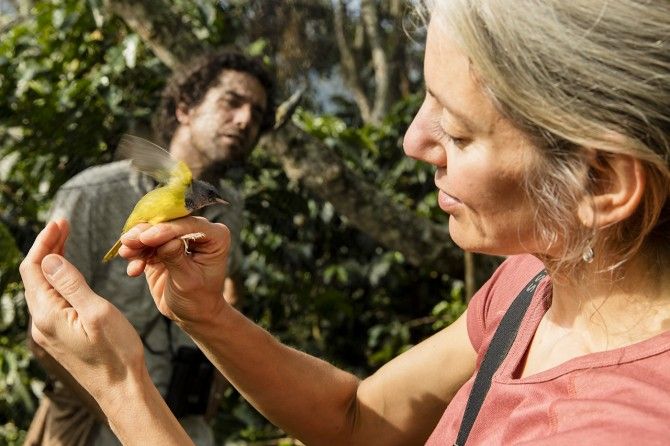
Amanda Rodewald, LACS
“We face enormous challenges,” said senior author Amanda Rodewald, the Garvin Professor and Senior Director of the Center for Avian Population Studies at the Cornell Lab. “With limited resources available to address climate change, biodiversity loss, poverty and water insecurity, we must be strategic and find ways to tackle more than one challenge at a time.”
Additional Information
Transmedia Ecologies of Korean "New Retro"
March 7, 2024
5:00 pm
A.D. White House, Guerlac Room
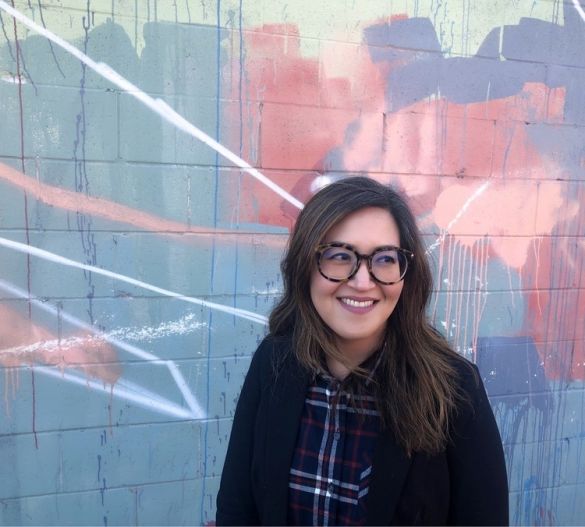
Michelle Cho, University of Toronto.
Retro trends in popular media are a common feature of contemporary cultures across the globe. Nowhere is the nostalgia for 20th century vibes more prominent than South Korea. This talk will discuss “new retro”(aka “newtro/뉴트로)” aesthetics in South Korea, focusing on the television drama Reply 1988 and the recent revival of City Pop on digital platforms like YouTube and Spotify. My presentation probes newtro’s multiple genealogies, to situate nostalgia-tinged portrayals of late ‘80s and ‘90s youth culture as Korean media’s self-reflexive portrayal of the impact of commercial popular media on the social transformations of the post-authoritarian period. Connecting newtro to the transmedia domains of City Pop and related genres of music and media production driven by digital distribution and platform engagement, I’ll argue that the aesthetics and sensoria of new retro illuminate the social impacts and ideological effects of contemporary parasocial engagement, to suggest that the trendiness of retro aesthetics today serves as a visible trace of global media entanglements of human and algorithmic agency.
Michelle Cho is Assistant Professor of East Asian Popular Cultures and Cinema Studies at the University of Toronto. Her published work explores contemporary South Korean genre cinemas, Korean television, K-Pop's politicization on digital platforms, and histories of race and racialization in K-Pop and its fandoms. She is co-editor of two forthcoming volumes: Mediating Gender in Post-Authoritarian South Korea with Jesook Song (University of Michigan, April 2024, Perspectives on Contemporary Korea series) and Bangtan Remixed: A Critical BTS Reader (Duke UP, August 2024) and author of the forthcoming monograph Genre Worlds: Global Forms and Millennial South Korean Cinema (Duke UP, 2025). Her public-facing writing appears in such venues as The Los Angeles Review of Books, and she's a frequent commentator on Asian media in outlets ranging from NPR to the CBC, CNN, Al Jazeera, and the Washington Post. She once hosted a public conversation between hallyu stars and BFFs Lee Jung Jae and Jung Woo Sung at the Toronto International Film Festival.
Introduced by Andrea Bachner, Comparative Literature, Cornell University. This event is part of the East Asia+ Initiative.
The lecture is followed by a reception.
Additional Information
Program
Einaudi Center for International Studies
East Asia Program