
Einaudi Center for International Studies
Speaking across the Ocean: Vakkom Mohammed Maulavi and the Idea of a Public Sphere

March 11, 2024
12:15 pm
Uris Hall, G08
Talk by Dilip Menon (Department of International Relations, Director, Centre for Indian Studies in Africa, University of Witwatersrand)
This is a preliminary paper on the remarkable figure of Vakkom Mohd. Maulavi (1873-1932) of Travancore, on the south-western coast of India, through his writings in the journal Deepika, that he edited. The articles spoke to the reforms of Islamic modernism that were ongoing in Egypt (reported in the widely circulated Al Manar), and imagined a space of Indian Ocean Islam. Vakkom Maulavi was also concerned with the question of people’s rights under the rule of the autocratic Maharaja of Travancore. As publisher of the newspaper Svadeshabhimani edited by the redoubtable and intemperate journalist Ramakrishna Pillai, the duo waged a war of words on the questions of ethical governance and popular representation. There has been a tendency in South Asia to study the history of Muslims separately from their conjoined lives with Hindus and those of other religions. This paper thus speaks to the emerging literature on Indian Ocean Islam (Nile Green, Wilson Chacko Jacob, Seema Alavi, Mahmood Kooria et al) while at the same time arguing for the role of Muslim intellectuals in defining a democratic and secular public sphere.
Dilip M. Menon is the Mellon Chair of Indian Studies and the Director of the Centre for Indian Studies in Africa at the University of Witwatersrand, South Africa. He was educated at the Universities of Delhi, Oxford and Cambridge and earned his PhD from Cambridge. His research for the past decade has engaged with issues of caste, socialism and equality in modern India. He is the author of Caste, nationalism and communism in south India: Malabar, 1900-1948 (Cambridge 1994), The blindness of insight: Essays on caste in modern India (Navayana 2006), The cultural history of Modern India (editor, Social Sciences Press and Berghahn 2006), Capitalisms: Towards a Global History (co-editor, Oxford, 2020), and the translator of Potheri Kunhambu's 1893 Malayalam novel Saraswativijayam (Book Review Literary Trust 2002)
Cosponsored with the South Asia Program
Additional Information
Program
Einaudi Center for International Studies
South Asia Program
Pro-immigration Right-Wing Authoritarian Populism: Political Incorporation, Autocratization, and Desecularization in Turkey

February 28, 2024
4:30 pm
Uris Hall, G08
Talk by Yunus Sozen (Political Science Department, LeMoyne College)
In the last decade, Turkey has not only become the largest refugee recipient country but also one of the major immigrant destination countries in the world. All this happened during the rule of the right-wing populist Justice and Development Party which also took the lead in the breakdown of Turkey’s defective democracy and the establishment of an electoral authoritarian regime in its place. In this paper, I critically evaluate the immigration and right-wing populism literature based on an exploration of how the right-wing populist government in Turkey conceptualizes the Turkish nation and citizenship. I argue that the conceptual frameworks utilized in this literature lead to interpretive frameworks that misunderstand the particular conception of the nation by Turkey’s right-wing authoritarian populist rulers and their pro-immigration and citizenship policies.
Co-sponsored with COPOS
Additional Information
Program
Einaudi Center for International Studies
The Architecture of Religious Freedom in China: Notes on the Nationwide Campaign to Sinicize Chinese Mosques

February 12, 2024
4:30 pm
Uris Hall, G08
Talk by Ruslan Yusupov (Postdoctoral Fellow, Cornell Society for the Humanities)
Hundreds of mosques in China have since 2018 witnessed their domes and minarets amputated. The effort is part of a larger nationwide campaign to “Sinicize” Chinese Islam. This talk contextualizes the campaign within the politics of religious freedom in the totalizing state. This is because the so-called “Arabic” features of these mosques were previously approved by the very authorities that now go after them. In many cases discussed, the implementation of the campaign by the local authorities results paradoxically in architectural alterations that serve the needs of the Muslim communities. The story of how these communities adapt to the repressive policies of the state and turn them into benefits, therefore, reveals the precarious status of Islam in China.
Additional Information
Program
Einaudi Center for International Studies
Fractured Timelines: Strategic lessons from Latin American revolts to neofascism and back
February 14, 2024
6:00 pm
Autumn Leaves
Latin American and Caribbean Studies Program (LACS) Seminar Series
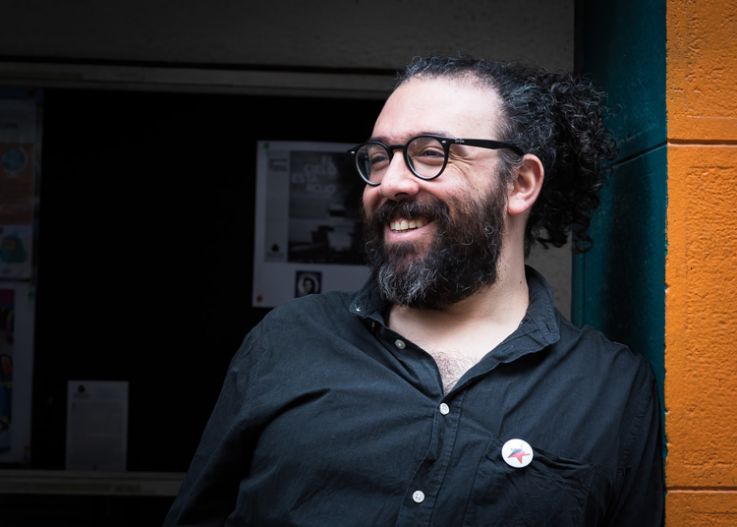
Due to storm-related travel delays, Pablo Abufom’s talk has been rescheduled. It will now take place in conjunction with his previously scheduled talk at Autumn Leaves (115 E. State St.) at 6pm on Wednesday, February 14. (Previously, it had been scheduled to take place at 12:20 pm in Uris G08).
This talk will attempt to explain larger political and social phenomena on a global scale from the Latin American experience, considering there was a wave of revolts between 2018 and 2020, and then a deep dive into the rise of neofascism everywhere (Argentina is the most recent case), and how to find strategic lessons out of that situation and back to a new international antifascist movement.
Pablo Abufom is a philosopher, translator, director of Alternativa, Institute for Anticapitalist Studies and member of Movimiento Solidaridad, biology student and anarcho-communist in anarcho-capitalist times.
Additional Information
Program
Einaudi Center for International Studies
Latin American and Caribbean Studies
Covering Muslims: American Newspapers in Comparative Perspective

January 29, 2024
4:30 pm
Uris Hall, G08
Talk by Erik Bleich (Charles Dana Professor of Political Science, Middlebury College)
What can we see about American newspaper coverage of Muslims using a systematic, large-scale analysis? By comparing the tone and nature of coverage over time, we demonstrate how negative American newspapers have been in their treatment of Muslims across the two-decade period between 1996 and 2016, both in an absolute sense and compared to a range of other groups as diverse as Catholics, Jews, Hindus, African Americans, Latinos, Mormons, and atheists. The striking negativity also holds in countries such as Australia, Canada, and the UK. While 9/11 did not make coverage more negative in the long run, it did dramatically increase the prevalence of references to terrorism and extremism. Our comprehensive overview shows how distinctive coverage of Muslims has been in the United States and beyond.
Additional Information
Program
Einaudi Center for International Studies
Roses, in the Mouth of a Lion
February 28, 2024
4:30 pm
A. D. White House
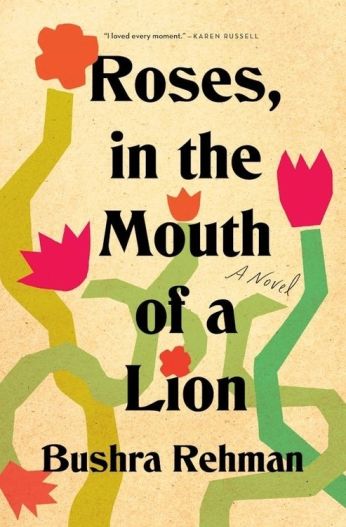
Reading by Bushra Rehman, followed by Q&A, moderated by Prachi Patankar
Razia Mirza grows up amid the wild grape vines and backyard sunflowers of Corona, Queens, with her best friend, Saima, by her side. When a family rift drives the girls apart, Razia’s heart is broken. She finds solace in Taslima, a new girl in her close-knit Pakistani-American community. They embark on a series of small rebellions: listening to scandalous music, wearing miniskirts, and cutting school to explore the city. When Razia is accepted to Stuyvesant, a prestigious high school in Manhattan, the gulf between the person she is and the daughter her parents want her to be, widens. At Stuyvesant, Razia meets Angela and is attracted to her in a way that blossoms into a new understanding. When their relationship is discovered by an Aunty in the community, Razia must choose between her family and her own future.
Punctuated by both joy and loss, full of ’80s music and beloved novels, Roses, in the Mouth of a Lion is a new classic: a fiercely compassionate coming-of-age story of a girl struggling to reconcile her heritage and faith with her desire to be true to herself. Roses, In The Mouth of a Lion was long listed for a Lambda Literary Ward and chosen as a Best Book and Editor’s Choice by The New York Times, The New Yorker, The Washington Post, Los Angeles Times, People Magazine, Good Morning America, Goodreads, The Chicago Review, BuzzFeed, Lit Hub, Lambda Literary, BookRiot, PopSugar, The AV Club, E! News, Ms. Magazine and more.
Bushra Rehman grew up in Corona, Queens. She is co-editor of Colonize This! Young Women of Color on Today’s Feminism, and author of the poetry collection Marianna’s Beauty Salon and the dark comedy Corona, one of the New York Public Library’s favorite books about NYC.
Prachi Patankar is an anti-caste and feminist writer and activist who was born in rural Maharashtra, India. Over two decades in New York, she has been involved in social movements that link the local and the global, police brutality and war, migration and militarization, race and caste, women of color feminism, and global gender justice. Her work has been published by Al Jazeera, the Guardian, Jadaliyya, The Jacobin, and several other publications.
Books will be available for sale and signing from Buffalo Street Books after the reading.
Cosponsored by the Department of Literatures in English, Asian American Studies Program, Feminist, Gender & Sexuality Studies Program, and Society for the Humanities.
Additional Information
Program
Einaudi Center for International Studies
South Asia Program
Local Women, Global Histories? Gendering Economic Life, Law, and Islam in Transregional India
January 29, 2024
12:15 pm
Uris Hall, G08
Talk by Du Fei (History, Cornell University)
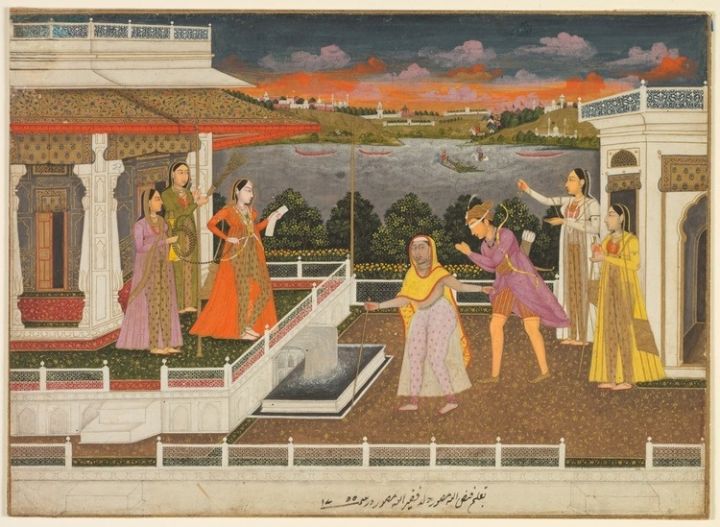
How would India’s connected histories look like if viewed from a gendered perspective? This presentation examines Muslim women’s participation in the local and transregional economic exchanges of the Persianate and Indian Ocean worlds that converged in India from the height of Mughal rule in the seventeenth century to the consolidation of the British colonial state in the nineteenth century. Based on a wide array of archives in Persian, Arabic, Urdu, English, and Dutch, this presentation will show that Muslim women from merchant and landholding families played constitutive roles in sustaining an economy of mobility and a culture of circulation often seen as dominated by men. Muslim women’s negotiation with male kins, jurists, judges, and officials in seemingly mundane areas of Islamic law, especially inheritance and agency, thus defies any easy conceptions of the idea of patriarchy in Islam. Situated at the intersection of history, gender and sexuality studies, and Islamic studies, this project challenges existing gender-blind narratives of how trade and travel contributed to the making of global Islam in and beyond South Asia.
Du Fei is a Ph.D. candidate in the Department of History at Cornell University—his research centers on gender in South Asia’s global connections across the colonial divide. More broadly, his research interests include post-classical Islamic law, the history of capitalism, transnational feminism, digitization, and community archives. For 2023-25, Fei is a Junior Fellow in the Mellon Society of Fellows in Critical Bibliography at the Rare Book School. His published and forthcoming works can be found in Modern Asian Studies and Past & Present.
Additional Information
Program
Einaudi Center for International Studies
South Asia Program
The Good Seed and Why It Matters

February 12, 2024
12:15 pm
Uris Hall, G08
Talk by Ashawari Chaudhuri (Science & Technology Studies, Cornell University)
The introduction of genetically modified (GM) Bt cotton in India in 2002 invoked fierce debates and discussions about the future of agriculture in the country. Towards the beginning of its cultivation, some farmers received higher yields. However, over the years, concerns over the cost of cultivating GM cotton, pests developing resistance to the technology, environmental impacts, and corporate control over agriculture have taken center stage in discussions around agricultural biotechnology. Although most of these discussions have been centered on GM seeds, the seed itself remains unexplored. Based on ethnographic and archival research among communities on opposite ends of the agrarian political economy, like farmers and breeders/biotechnologists, I explore the meaning of Bt cotton for these communities. In opening the GM seed through practice, time emerges as a powerful yet understudied phenomenon. Different registers of time, like breeding time, generational time, seasonal time, and market time, are braided in ways that determine the meaning of the seed for these communities. I use braided time to critique GM seed as a commodity. I also suggest that recognizing the significance of time further enables responsibility towards human and agrarian lives and non-human ecological formations.
Ashawari Chaudhuri is an anthropologist of the environment, science, and medicine. Chaudhuri’s current book manuscript is a historically grounded ethnography of agricultural biotechnology in India. Along with asking what a good seed is for farmers and biotechnologists, Chaudhuri traces how knowledge about objects like genetically modified seeds is formed at intersections of practice, people, and time. Chaudhuri’s next project is an inquiry into the long relation between environmental heat and the body in South Asia. Chaudhuri finds historically emerging meanings of words and concepts powerful. Her teaching is often grounded in questions of ethics and creative negotiations with power around practices, technologies, and ideas that acquire palimpsests of meanings over time and across places. Chaudhuri has lived in India, Singapore, and the U.S. and knows Bengali, Hindi, and English. She has also been learning Mughal Persian for the past few years. Chaudhuri’s research and teaching are infused with my senses of self, belonging, and identity. When Chaudhuri is not teaching or researching, she is interested in healing plants, stars, and cultural interpretations of dreams.
Additional Information
Program
Einaudi Center for International Studies
South Asia Program
Stormy Seas: Taiwan's Democracy under the Shadow of China

April 29, 2024
4:45 pm
Goldwin Smith Hall, 64
Speaker: Thunghong Lin, Institute of Sociology, Academia Sinica. Introduced by Eli Friedman (ILR).
In an era where democratic nations globally face the risk of regression, the question arises: How can a small democratic country survive the political and economic pressures imposed by authoritarian great powers? The concept of "democratic resilience" has recently emerged in political science circles. Lin's new book, "Stormy Seas: Taiwan's Democracy under the Shadow of China in the 21st Century," uses Taiwan as a case study to analyze China's authoritarian influence. This influence is sometimes referred to as "Sharp power," an international relations strategy that impacts Taiwan's election outcomes. In this lecture, Lin explores China's strategies of authoritarian expansion toward Taiwan, including United Front tactics, economic interests, propaganda, and the influence of military intimidation. These strategies interact with three major political cleavages in Taiwan: ethnic and national identity, economic disparities, and generational differences. The dynamics of Taiwan's elections are shaped by the interplay between these strategies and political cleavages.
Lin is a research fellow at the Institute of Sociology, Academia Sinica, and the former director of the Center for Contemporary China at Tsinghua University (Taiwan). His research interests include social stratification, political sociology, and sociology of disasters. He received the Golden Tripod Award (National Book Award in Taiwan 2012), the Wu Ta-You Memorial Award (National Young Scholar Award in Taiwan 2015), and the Fulbright Scholarship for 2023-24. He is the Stanford-Taiwan Social Science fellow for 2023-24.
Additional Information
Program
Einaudi Center for International Studies
East Asia Program
CANCELED - Why Don’t Indian Voters Hold Politicians Accountable For Air Pollution?

May 6, 2024
12:15 pm
Uris Hall, G08
Talk by Tariq Thachil (Political Science, University of Pennsylvania)
Urban citizens in low-income democracies rarely hold elected officials accountable for toxic air. To understand why, we fielded a large citizen survey in Delhi, India, a highly polluted megacity where voters rarely prioritize air pollution at the polls. We find no evidence of conventional explanations for accountability failures: residents are aware of pollution’s adverse impacts, do not privilege development over curbing emissions, and are not fractured along class or ethnic lines on this issue. Instead, we find partisanship and sensitivity to the potential private costs of mitigation policies reduce accountability pressures. On the other hand, a simple randomized intervention (sharing indoor air quality information) that personalizes the costs of air pollution increases its electoral salience. We reveal key opportunities and constraints for mobilizing public opinion to reduce air pollution in developing democracies.
Tariq Thachil is Professor of Political Science, Director of the Center for Advanced Study of India (CASI), and Madan Lal Sobti Professor for the Study of Contemporary India at the University of Pennsylvania. His recent book (coauthored with Adam Auerbach), Migrants and Machine Politics, focuses on the political lives of poor migrants in Indian cities. His first book, Elite Parties, Poor Voters examines how elite parties can use social services to win mass support, through a study of Hindu nationalism in India. He received his PhD in Government from Cornell University in 2009.
Additional Information
Program
Einaudi Center for International Studies
South Asia Program