
Einaudi Center for International Studies
Performing Phi: Feminized Divinity and Animist Sovereignty in Northern Thai Ricelihood

February 29, 2024
12:20 pm
Kahin Center
Gatty Lecture Series
Join us for a talk by Sirithorn Siriwan, (Ph.D. Candidate, Department of Asian Studies, Cornell University), who will discuss Feminized Divinity and Animist Sovereignty in Northern Thai Ricelihood.
This Gatty Lecture will take place at the The Kahin Center, 640 Stewart Ave. Lunch will be served. For questions, contact seapgatty@cornell.edu.
About the Talk
The prevalent scholarly interpretation of Thai religiosity as a congenial form of religious syncretism permits animism to exist alongside Theravada Buddhism and Hindu-Brahmanism. In fact, animism or sasana phi is often considered a mere set of beliefs, not a religion. This study reconceptualizes the ontology of northern Thai rice beings, human and non-human, or what I call ricelihood. I probe the rice narratives produced by the Thai Sangha that erase animist sovereignty and subdue agrarian deities. Drawing from stories of rice farmers and rice tales in archival documents, converting the non-demarcated rice deity into a feminized body suggests two forms of religious and gender subjugation. The first is the transformation of khwan khao (the rice spirit) into a feminized deity secondary to the Buddha. This genderization and religious constitution devise new, yet deviated conceptions of khwan khao, and strip away its personhood and governing power in the rice realm. The second is the subdual of the pre-existing phi under the male-dominant Sangha and its laity, not only making phi less potent, but also constituting these entities as other-than-Buddhist remnants. This talk includes the investigation of rice narratives from oral traditions and local rituals that are less popular and often neglected, but at the same time, less censored and pasteurized by centralized narratives. Through phi performances, women in rice communities subtly subvert religious subdual through rice rituals and divination rites in which animist entities manifest in corporeal and immaterial forms. In these ritualistic spaces, phi, rice deity, and Theravada Buddhism negotiate and reclaim their governing sovereignty.
About the Speaker
Sirithorn (Ing) Siriwan is a Ph.D. candidate in Asian Studies at Cornell University. Previously, she was a member of Crescent Moon Theater and a lecturer at Chiang Mai University. Sirithorn is currently completing her dissertation research on the livingness, residuality, and seedness of ritual, performance, and culture in northern Thai ricelihood through ethnographic studies and creative research approaches. Recently, she has co-authored a book chapter, “Thai Theatre and the Interplay of Perfection and Imperfection” (2022).
Additional Information
Program
Einaudi Center for International Studies
Southeast Asia Program
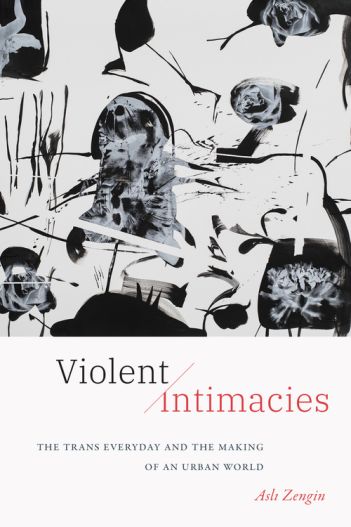
Violent Intimacies: The Trans Everyday and the Making of an Urban World by Aslı Zengin
February 21, 2024
4:30 pm
White Hall, 106
This book talk draws from creative and constructive tensions between violent efforts to define and disambiguate sex/gender transgression, on the one hand, and trans people’s incessant everyday negotiations with these efforts, on the other. As much as trans people are shaped by the cisheteronormative powers of the state, the family and religion, they also act on these powers to transform them. The book argues that everyday troubles with sex/gender transgression in personal, social and institutional life shape trans lives and deaths, as well as state power, family and kinship, regimes of sexuality and gender, urban geography, and feminist and LGBTI+ activism in Turkey. In order to understand this entangled world of the trans everyday, the book offers a novel concept, violent intimacies, and shows how transness in Turkey theoretically makes us rethink the notions of violence and intimacy and the relationship between them. Violent Intimacies exposes the connective tissue of a cisheteronormative social order which is intertwined with neoliberal governmentality, biopolitical and necropolitical order, and authoritarian management of social difference.
About the Speaker- Aslı Zengin is an Assistant Professor in the Department of Women’s, Gender and Sexuality Studies at Rutgers University-New Brunswick. Before joining Rutgers, she held postdoctoral and teaching positions at Brown, Harvard, and Brandeis Universities. Her first book, Intimacy of Power: Women Prostitutes, Sex Work and Violence in İstanbul (Iktidarin Mahremiyeti: Istanbul’da Hayat Kadinlari, Seks Isciligi ve Siddet), was published in Turkish. Her new book, Violent Intimacies: The Trans Everyday and the Making of an Urban World is recently published by Duke University Press in February 2024. Her research lies at the intersection of ethnography of sex/gender non-conforming lives and deaths; medico-legal regimes of sex, gender and sexuality; critical studies of violence and sovereignty; as well as transnational feminist and LGBTQ movements in the Middle East with a special focus on Turkey.
This event is hosted by Critical Ottoman and Post-Ottoman Studies and co-sponsored by Feminist, Gender, and Sexuality Studies.
Additional Information
Program
Einaudi Center for International Studies
The suspicious suicide: Toxicity, masculinity, and the political economy of GM cotton in central India
April 29, 2024
12:15 pm
Uris Hall, G08
Talk by Aarti Sethi (Anthropology, University of California Berkeley)
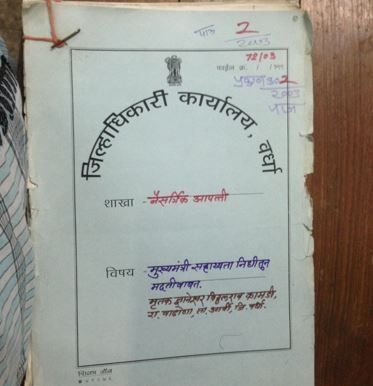
Since 1997, over 250,000 farmers have taken their own lives in central India, an agrarian region where farmers have grown cotton for centuries. Today, farmers are mono-cropping genetically modified hybrid cotton seeds, which have trebled the input costs of cotton cultivation. Pushed into downward debt spirals to moneylenders and banks and unable to recoup costs, over a quarter million farmers have taken their own lives. This talk examines a paradoxical set of conversations around suicide deaths in the village. Whereas media, scholarly, and civil society discourses narrate the deaths of farmers as a debt-induced tragedy, amongst themselves, farmers describe suicide as an individual failing, usually on account of alcohol addiction and domestic strife. In this talk, I describe a structure of feeling I term ‘empathy without sympathy’ in which people may place themselves in the position of those who have died but have no sympathy for them. This disavowal arises from the individuation of risk as a structural precondition of farming. Since everyone is trapped in transgenic cotton cultivation, the inclination to isolate death in individual failure, rather than structural compulsion, is an attempt by the living to recover space for sovereign action, as they, too, must farm within this mode of debt-driven cultivation. Empathy without sympathy has rendered the speech of men ‘socially empty’. Even when someone says that they will commit suicide, no one believes them. I argue that toxicity is productive. By consuming pesticides, the body performs the communicative function to supplement for the failure of masculine speech.
Aarti Sethi is an assistant professor at the Department of Anthropology at UC Berkeley. She is a socio-cultural anthropologist with primary interests in agrarian anthropology, political economy, and the study of South Asia. Her research interests broadly focus on the transformation of rural life-worlds and agrarian capitalism. She is currently working on two projects. The first is a book that examines cash-crop agricultural economies to understand how monetary debt undertaken for transgenic cotton cultivation transforms intimate, social, and productive relations in rural society. She is particularly concerned with understanding the specificity of neoliberal agrarian change as a process in which peasant producers worldwide have become the subaltern franchisees of international bio-capital. Her second project, Republic of Readers, explores the relationship between reading literacy and libraries as sites of postcolonial democracy and citizenship. Alongside her research in agrarian anthropology, she is interested in the social life of technology, the politics of knowledge and literacy, the anthropology of religion, the history of anthropological thought, multi-species ethnography, and bringing archives and ethnography together. She has published in urban ethnography, cinematic, media, and visual cultures. Sethi holds degrees in political science and cinema and cultural studies from Delhi University and Jawaharlal Nehru University, New Delhi, and received her Ph.D. in anthropology from Columbia University. Before joining UC Berkeley, she held postdoctoral fellowships at Brown and Harvard University. Sethi’s work has appeared in South Asia: Journal of South Asian Studies, The Journal of Peasant Studies, American Ethnologist, and Hau: Journal of Ethnographic Theory, among other venues.
Additional Information
Program
Einaudi Center for International Studies
South Asia Program
Peace Pedagogies in a Divided Society

February 29, 2024
12:00 pm
From local to global perspectives
This lecture aims to illustrate different modalities of teaching, curriculum, educational partnerships and pedagogies within the fields of comparative, intercultural and peace education, which comprise the collection of interdisciplinary perspectives on educating for peace in Bosnia and Herzegovina recently published in a co-edited book volume Peace Pedagogies in Bosnia and Herzegovina: Theory and Practice in Formal Education (Kasumagic-Kafedzic, L. & Clarke- Habibi, S., Editors, Springer, 2023). The book explores a range of theories, contexts, pedagogies and practices within formal education settings and draws attention to the multiple roles that educators and education institutions play in fostering socially transformative learning.
The lecture will invite for a critical exploration of peace pedagogies within the post-war educational politics and divided societies, institutional and curricular constraints, and the lived experiences and identities of teachers and students in socially and historically situated communities. Insights and recommendations on how peace pedagogies can be systematically integrated at all levels of the education system taking into account the structural uniqueness of the contexts will be explored. The lecture reflections will invite for connections to the global challenges faced by educational institutions of today in the context of raging conflicts, deep social fragmentations, political divisions, marginalization of humanities, technocratic approaches to learning and teaching, and the rise of ethnonationalist politics where the “third mission” of education institutions to remain dedicated to peace, humanity and solidarity still poses a big challenge.
Register in advance for this meeting
About the Speakers
Professor Larisa Kasumagić- Kafedžić was a 2003-04 Cornell University Hubert Humphrey Fellow Alumni and a 2022-23 Cornell University Fulbright Visiting Scholar Alumni. For the past 25 years, Larisa has been actively involved in peaceful actions, community youth development programs, the philosophy of nonviolence, teacher development, and intercultural pedagogy in language education. She is an associate professor at the Faculty of Philosophy of the University of Sarajevo. Her research interests are intercultural education, peace pedagogy, language education, teacher training, reflective pedagogies, and action research in teacher development. She is also the founder and a president of the Peace Education Hub. Her latest co-edited book volume Peace Pedagogies in Bosnia and Herzegovina: Theory and Practice in Formal Education (Springer, 2023) focuses on the importance of institutionalizing peace pedagogy in formal education and teacher training in Bosnia and Herzegovina.
Dr. Sara Clarke-Habibi has worked in the field of peacebuilding through education for over 20 years as a practitioner, researcher, curriculum developer, and trainer. She currently works in the Division for Peace at the United Nations Institute for Training and Research (UNITAR) in Geneva. Her research and teaching explore peacebuilding in relation to collective memory, trauma and healing; educational policy, curricula and textbooks; teacher education, identity and agency; formal and nonformal educational practices; and the role of youth as critical peace actors. She has published scientific articles and professional manuals on topics of intercultural dialogue and peacebuilding; peace psychology and trauma-sensitivity; dealing with the past and intergroup reconciliation. Her co-edited volume on Peace Pedagogies in Bosnia and Herzegovina: Theory and Practice in Formal Education was published by Springer in 2023.Host
Judith Reppy Institute for Peace and Conflict Studies
Co-host
Institute for European Studies
Additional Information
Program
Einaudi Center for International Studies
Reppy Institute for Peace and Conflict Studies
Institute for European Studies
Summer Program in India Info Session
November 14, 2024
5:30 pm
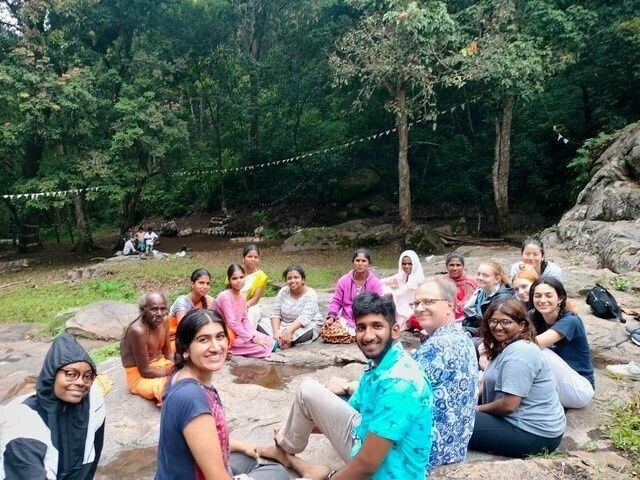
Are you interested in the intersection of mental health and culture, global health, and community engagement? Do you want to gain field research skills and learn about indigenous communities in South India’s beautiful and fragile Nilgiris Biosphere Reserve? If so, the Cornell-Keystone Nilgiris Field Learning Program might be for you!
Additional Information
Program
Einaudi Center for International Studies
South Asia Program
Language Resource Center Speaker Series - Dan Nickolai - iSpraak: A Platform for Second Language Pronunciation Instruction, Assessment, and Research
April 16, 2024
4:30 pm
Stimson Hall, G25
"iSpraak: A Platform for Second Language Pronunciation Instruction, Assessment, and Research"
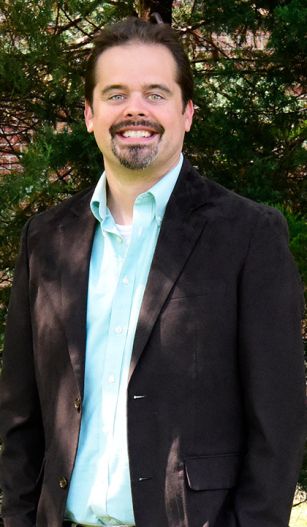
Dan Nickolai
Associate Professor of French and Director of the Language Resource Center, Saint Louis University
This presentation will showcase the latest feature developments to the iSpraak platform. This free online tool incorporates multilingual Automatic Speech Recognition and Text-to-Speech technologies to both model and assess pronunciation in 36 different languages. Now generously funded by the National Endowment for the Humanities, iSpraak has significantly expanded on its previous feature set and has adopted new tools for learners, teachers, and researchers.
Bio: Dr. Dan Nickolai is an Associate Professor of French and the Director of the Language Resource Center at Saint Louis University. He has a professional and educational background in the fields of Computer Science, French, and Second Language Acquisition. His current work focuses on developing web-based applications that support language learning, assessment, and research. In addition to his roles at Saint Louis University, Dr. Nickolai serves as the President of the International Association for Language Learning Technology.
This event will be held in person in G25 Stimson and will also be streamed live over Zoom (registration required). Join us at the LRC or on Zoom.
The event is free and open to the public. Campus visitors and members of the public must adhere to Cornell's public health requirements for events.
Additional Information
Program
Einaudi Center for International Studies
Latin American and Caribbean Studies
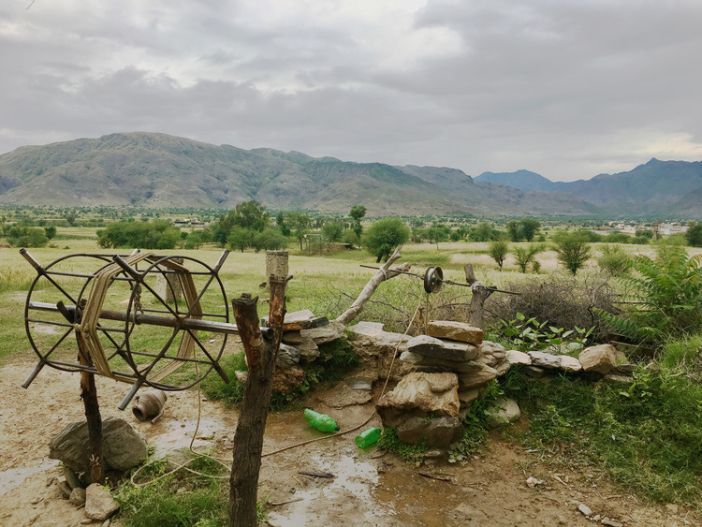
Caste and Honor in North-West Pakistan
February 5, 2024
12:15 pm
Uris Hall, G08
Talk by Hadia Akhtar Khan (Global Labor & Work, ILR School, Cornell University)
Anthropologists of Pukhtuns have written extensively about the Pukhtuns as an acephalous segmentary lineage group, whose honor “code” or Pukhtunwali differentiates them from neighboring ethnicities. In particular, they glorify Pukhtuns for their egalitarian ethic, which abhors hierarchies within and between tribes and between men. Colonial authorities held a similar view of Pukhtuns as a proud people reluctant to subordinate themselves to the state. This view has continued to inform how imperialist forces and their local allies, like the Pakistani army, understood and navigated the complex map of power relations in Afghanistan and Pakistan during the War on Terror. In contrast to these views, this talk historicizes the code of Pukhtunwali as a product of an alliance between colonial settlement officers and male elites from dominant lineages in the late 19th century. I argue that anthropologists have exaggerated the egalitarian ethic by downplaying the centrality of caste hierarchies, which makes the “egalitarian” ethic between upper-caste Pukhtun men possible.
Hadia Akhtar Khan is a socio-cultural anthropologist. Khan's research is on how migration is changing family, class, caste, and gender relations in rural Khyber Pakhtunkhwa, Pakistan. Her research interests include political economy, gender and sexuality, and the anthropology of kinship, with a focus on South Asia. Her research has been funded by the Wenner-Gren Foundation, Social Sciences and Humanities Research Council, Jackman Humanities Institute, and the Centre for Ethnography (UTSC). She is also an editor for Jamhoor.org.
Additional Information
Program
Einaudi Center for International Studies
South Asia Program
Selective Solidarity? ‘Othering’, Islam, and Refugees from Ukraine

April 29, 2024
4:30 pm
Uris Hall, G08
Talk by Violeta Moreno-Lax (Professor of Law, Queen Mary University of London and the University of Barcelona)
This paper takes issue with the exclusionary understanding of solidarity underpinning the European Union (EU)’s response to the Ukrainian refugee crisis. Through a detailed examination of the Temporary Protection scheme deployed since the beginning of the Russian invasion and its surrounding context, including the EU’s response to non-Ukrainian forced migrants fleeing the conflict, I will show how solidarity has been employed as an ‘othering’ device to discriminate or, at least, stratify access to international protection. Whereas up to 6 million (white/Christian) Ukrainian refugees have been granted access to asylum in the EU since the beginning of the war, benefiting from a series of facilitation mechanisms built on the basis of (proclamations of) ‘solidarity with Ukraine’, other (brown/predominantly Muslim) forcibly displaced populations fleeing the conflict have been met with suspicion, containment, and rejection at the border. What this comparison will unveil is, therefore, the lack of a unified approach to the understanding of solidarity in this domain that has had the (indirect/unintended?) effect of institutionalizing Islamophobia – or at least a highly securitized understanding of Islam – vis-à-vis those in need (and entitled to) international protection in the EU. In this situation, reliance on a conceptualization of solidarity as an exclusion/othering tool that impedes, rather than facilitates, access to international protection for the vast majority of (non-white/non-Christian) refugees is not only at odds with the 1951 Refugee Convention, but is also contrary to the general principle of non-discrimination on grounds of race, making the whole scheme deeply problematic and incompatible with key international legal standards.
Co-sponsored with the Institute for European Studies
Additional Information
Program
Einaudi Center for International Studies
Institute for European Studies
Evicting the Living God: Trans-imperial Islam and the Soviet Union on the Eve of Partition

April 10, 2024
4:30 pm
Uris Hall, G08
Talk by Till Mostowlansky (Research Professor in Anthropology, Geneva Graduate Institute, Switzerland)
The establishment of Soviet rule in the southern parts of Central Asia bordering the British Empire has largely been researched through the lens of geopolitical competition. Virtually nothing is known about how the region’s Muslim populations experienced this period of revolution and war leading up to the 1947 partition of India. Using Persian, Russian and Urdu sources, this talk explores the Muslim networks that linked Central Asia with South Asia at the time. It further discusses how the study of these trans-imperial connections contributes to a nuanced understanding of attempts at re-engagement, as well as persistent disconnection, in the present.
Additional Information
Program
Einaudi Center for International Studies
South Asia Program
Rare Islamic Books in the Olin Library Collection

March 27, 2024
3:00 pm
Golden Smith Hall, 348
Talk by Ali Houissa, (Curator, Middle Eastern and Islamic Studies, Cornell University Library)
Our CMS seminar today will be led by the curator of the Middle Eastern Collection in Olin Library, who will be hosting us to see precious objects in the library's collection about Islam. We have many world-class books, some of them centuries old, which show the history and evolution of Islam over a long period, and across many cultures. This is a wonderful opportunity to see some of the treasures of Cornell’s collection that are rarely seen, and which span centuries of time and thousands of miles of geography in Islamic lands, from Morocco to Indonesia.
Additional Information
Program
Einaudi Center for International Studies
Southeast Asia Program