
Einaudi Center for International Studies
Cornell Concert Series presents: DoosTrio

February 18, 2024
7:30 pm
Bailey Hall
Three masters and old friends join together in a new collaboration. Kayhan Kalhor, Wu Man, and Sandeep Das are established soloists in their individual traditions. Their new trio highlights the ancient traditions of Iran, China, and India in a 21stcentury program. Three-time GRAMMY-nominee Kayhan Kalhor is an internationally acclaimed virtuoso on the kamancheh, who through his many musical collaborations has been instrumental in popularizing Persian music in the West. Recognized as the world’s premier pipa virtuoso and leading ambassador of Chinese music, Wu Man has carved out a career as a soloist, educator, and composer giving her lute-like instrument a new role in both traditional and contemporary music. A Guggenheim Fellow and GRAMMY-winning musician, Sandeep Das is one of the leading tabla virtuosos in the world today.
Please visit cornellconcertseries.com for details about the masterclasses, lectures, meet-and-greets, and other events of this residency.
“You can get lost in [Kayhan Kalhor’s] music in a wonderful way. It roams through far-flung provenances and ages…mystically tinted, mysterious sounds, which echo in the inclined listener for a long time.” – JazzThing
“Vibrant pipa master Wu Man. A one-woman force of nature.” – Gramophone Magazine
“When [Sandeep] plays the tabla, he is a creator of myths, a master communicator, and an orchestra, all in one.” – Yo-Yo Ma
This event is presented as part of Cornell’s Freedom of Expression Theme Year.
The rich musical traditions these musicans perform continue to exist under various political situations in their home countries. Both the musical content and musicians’ ability to travel freely to perform impacts their freedom of expression. As such, this concert serves to increase appreciation across the Cornell community for the history, importance, and challenges of free expression and academic freedom.
Additional Information
Program
Einaudi Center for International Studies
East Asia Program
South Asia Program
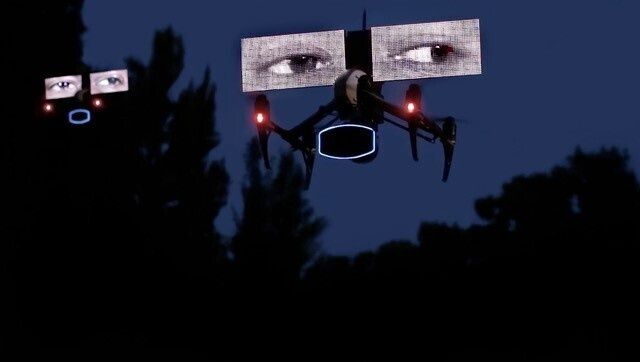
Krzysztof Wodiczko: The Art of Un-War
March 28, 2024
7:30 pm
Willard Straight Theatre
Krzysztof Wodiczko: The Art of Un-War, a film directed and produced by Maria Niro, explores the life and work of renowned artist Krzysztof Wodiczko. It delves into Wodiczko's powerful artistic interventions created as responses to the inequities and horrors of war and injustice. The artist’s interventions throughout the narrative become powerful examples of how art can be a catalyst for social change and healing.
The screening is followed by a Q&A session with Krzysztof Wodiczko and director Maria Niro, who will also participate in the discussion via Zoom.
About the Film
"The Art of Un-War" takes viewers on a captivating journey through the life and artistic interventions of renowned artist Krzysztof Wodiczko. For over 50 years Wodiczko has explored the profound impact of violence on humanity and the transformative power of art as a medium for public discourse. The film explores Wodiczko's monumental slide and video projections on architectural facades and monuments, which serve as powerful vehicles for addressing themes such as war trauma, displacement, history, memory, and public communication.
About the Artist
Krzysztof Wodiczko is renowned for his large-scale slide and video projections on architectural facades and monuments. He has realized more than 90 such public projections in Australia, Austria, Belgium, Canada, England, Germany, Holland, Northern Ireland, Israel, Italy, Japan, Mexico, Poland, Spain, Switzerland, and the United States. Since the late 1980s, his projections have involved the active participation of marginalized and estranged city residents. Simultaneously, and also internationally, he has been designing and implementing a series of nomadic instruments, vehicles and other cultural equipment with the homeless, immigrants, alienated youth, war veterans and other operators for their survival, communication and expression in the public space.
He received the Hiroshima Art Prize "for his contribution as an international artist to the world peace", and represented Poland and Canada in Venice Biennale (Canadian Pavillion and Polish Pavilions). He is also recipient of Skowhegan Medal for Sculpture, the Georgy Kepes Award, MIT, the Katarzyna Kobro Prize, and "Gloria Artis" Golden Medal from Polish Ministry of Culture. Krzysztof Wodiczko is a Professor of Art, Design, and the Public Domain, Emeritus at Harvard’s Graduate School of Design, Visiting professor at the Media Art department at the Academy of Fine Arts in Warsaw, and a Distinguished Visiting Professor at the University of Pennsylvania in Philadelphia.
About the Film Director
Maria Niro is a New York City-based artist and filmmaker who creates films that engage and inspire viewers to create social change. Her moving image work includes long-form documentaries and short art films. Her award-winning documentary, Krzysztof Wodiczko: The Art of Un-War (2023), which chronicles the life and political work of the internationally acclaimed artist Krzysztof Wodiczko, has been broadcast on TV Ontario (TVO) and screened at festivals and museums worldwide, including the New York Jewish Film Festival at the Walter Reade Theatre at Lincoln Center, Artecinema Teatro San Carlo, National Gallery of Art in DC, MIT, and Harvard Art Museums, among others. Niro’s short art films have been shown at the Whitechapel Gallery, Microscope Gallery, Queens Museum, and Anthology Film Archives, among other venues. Niro is a member of New Day Films, a filmmaker-owned and run distribution company providing social issue documentaries to educators since 1971.
Tickets
Order your free tickets
Host
Judith Reppy Institute for Peace and Conflict Studies
Co-Hosts
Cornell Cinema
Co-Sponsors
Johnson Museum of Art
Institute for European Studies
Department of History of Art & Visual Studies
Department of Science & Technology Studies
Department of Romance Studies, Polish Language Program
Department of Performing and Media Arts
Additional Information
Program
Einaudi Center for International Studies
Reppy Institute for Peace and Conflict Studies
Institute for European Studies
Migrations Leaders Win NAM Catalyst Prize

Team to Design Health Tools for Pregnant Refugees
Einaudi Migrations fellows Gunisha Kaur (Weill Cornell Medicine) and Stephen Yale-Loehr (Cornell Law) are partnering on the new project.
Additional Information
How Kabariwalas Persist: The Changing Nature of Labor in High-value Recycling Markets in Urban India

April 22, 2024
12:15 pm
Uris Hall, G08
Talk by Aman Luthra (Geography, George Washington University)
Similar to many countries around the world, recycling in Indian cities is sustained by a large population of informal workers who collect, transport, and trade in recyclable materials to eke out a meager living. One group of workers in this sector—waste-pickers who extract low-value recyclables from waste along its journey from source to sink—has garnered policy and scholarly attention. Another group--variously referred to as kabariwalas and raddiwalas who buy high-value recyclables from waste generators—has largely eluded the attention of scholars and policymakers alike. As a result, while there are policy safeguards in place for certain categories of waste-pickers, kabariwalas have been left vulnerable to market forces and have largely been ignored by policymakers. For instance, over the past decade, a number of new startup firms using online, mobile platforms are providing the same kinds of recycling collection services that kabariwalas have traditionally delivered. This talk will present the findings of five months of field research conducted as a Fulbright-Nehru Senior Scholar in Delhi in 2023, which describes and analyzes how kabariwalas are navigating the fast-changing and complex landscape of the urban recycling sector. Unlike waste-pickers who have been able to organize and carve a space for their inclusion in official waste management policies, kabariwalas remain largely unorganized. Without collective organizations asking for state intervention aimed at protecting their livelihoods, kabadiwalas might be forced to compete against new corporate actors with vastly different amounts of resources and capacities at their disposal.
Aman Luthra is Assistant Professor of Geography at the George Washington University. He teaches courses in political ecology, development geography, and the geography of South Asia. Dr. Luthra received his Ph.D. from the Department of Geography and Environmental Engineering at Johns Hopkins University in Baltimore, MD in 2015. He also holds an M.A. in Geography and an M.P.A. from Syracuse University. His research focuses on the changing landscape of labor and capital in the waste management sector in urban India, with a particular emphasis on informal workers in this industry. In addition to research on urban waste management, Dr. Luthra is also involved in an interdisciplinary collaborative project using citizen science to understand changing patterns of pollinator diversity and abundance in and around apple orchards in Uttarakhand, India. His research has been funded by Fulbright, the National Science Foundation, the Social Science Research Council, and the Wenner-Gren Foundation. Dr. Luthra has published articles in several journals in geography including Antipode, Geographical Review, Geoforum, Progress in Environmental Geography, and Environment and Planning A: Economy and Space and E: Nature and Space.
Additional Information
Program
Einaudi Center for International Studies
South Asia Program
Rebel Taxation
March 21, 2024
12:00 pm
Uris Hall, G08
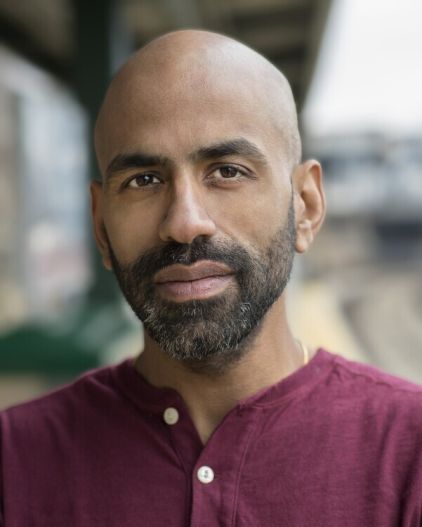
Payments made to non-state armed groups are often treated as predation. But rebels deploy multiple logics when constructing their taxation systems, many of which cannot be reduced to extortion. Rebels also use taxation as a “technology of governance” to resolve a number of social and political challenges related to constructing a wartime order. Drawing on field work in three different countries (Colombia, India, South Sudan), Zachariah Mampilly, Marxe School of Public and International Affairs, CUNY, looks at the distinct taxation systems established by armed groups in each.
In Colombia, the author focuses on the FARC-EP’s taxation of coca to reveal the ideological and political factors that shaped their taxation system. In India, he examines how the NSCN-IM implemented distinct taxation regimes across four distinct subnational areas of control. And finally, in South Sudan, he explores the role of external actors in shaping the nature of the rebel taxation system.
About the Speaker
Zachariah Mampilly is the Marxe Endowed Chair of International Affairs at the Marxe School of Public and International Affairs, CUNY and a member of the doctoral faculty in the Department of Political Science at the Graduate Center, CUNY. He is the Co-Founder of the Program on African Social Research. He is the author of Rebel Rulers: Insurgent Governance and Civilian Life during War and with Adam Branch, Africa Uprising: Popular Protest and Political Change. His writing has also appeared in Foreign Affairs, Jacobin, The Hindu, Africa's a Country, N+1, Dissent, Al Jazeera, The New York Times, The Washington Post and elsewhere.
HostJudith Reppy Institute for Peace and Conflict Studies
Additional Information
Program
Einaudi Center for International Studies
Reppy Institute for Peace and Conflict Studies
Latin American and Caribbean Studies
Institute for African Development
South Asia Program
Future Fish Wars

February 8, 2024
12:00 pm
Uris Hall, G08
The macro and micro-scale impacts of climate change in Pacific Island Countries and Territories
The Pacific Islands are exemplary locations for the Anthropocene: stronger tropical storms, coral bleaching, and catastrophic sea level rise are visceral images and realities of the climate crisis. However, these are merely the environmental and ecological impacts. Less attention has been given to the social and political consequences of climate change for Pacific Island Countries & Territories.
This seminar will set the stage for a conversation around the macro and micro impacts of climate change, namely the geopolitical games resulting from fisheries redistribution and the food security and nutrient supplies for island communities, and how these intersect with local, regional, and global conservation goals.
About the Speaker
Dr. Steven Mana‘oakamai Johnson (he/him/‘o ia) is a Kānaka Maoli (Native Hawaiian) scientist, born and raised on the island of Saipan, located in Micronesia. Currently, he is an assistant professor in Natural Resources and the Environment at Cornell University. His research questions are informed by his heritage and upbringing, focusing on the impacts of climate change, colonialism, and conservation on coastal communities, primarily in the Pacific Islands. He uses social, environmental, and climate data to develop equitable and cooperative solutions for coastal communities. This work is a direct practice of his kuleana (responsibility) to use his knowledge and skills to improve the social and environmental spaces he is a part of.
Host
Judith Reppy Institute for Peace and Conflict Studies
Additional Information
Program
Einaudi Center for International Studies
Reppy Institute for Peace and Conflict Studies
Art and Architecture of Migration and Discrimination: Turkey, Pakistan, and their European Diasporas

By Our Faculty
This book brings together essays by established and emerging scholars that discuss Pakistan, Turkey, and their diasporas in Europe. Together, the contributions show the scope of diverse artistic media, including architecture, painting, postcards, film, music, and literature, responding to the partitions of the twentieth century and the Muslim diasporas in Europe.
Book
52.95
Additional Information
Program
Type
- Book
Publication Details
Publication Year: 2023
ISBN: 9781003410010
Climate Change, Disasters, and Armed Conflicts
March 14, 2024
12:00 pm
Disasters like droughts, earthquakes, floods, and storms are becoming more frequent and intense, among others due to climate change. Consequentially, both decision makers and scholars are increasingly concerned about the security implications of disasters. At the same time, the number of armed conflicts globally is on a historical height. However, as of yet, little is known on how disaster impacts the dynamics of such conflicts. In other words: How do conflict parties react if a disaster strikes a civil war zone?
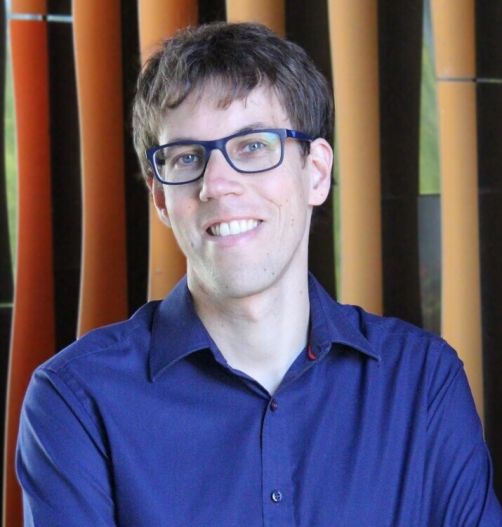
Tobias Ide presents insights from his recent book on this question, drawing on quantitative and qualitative data from 31 civil wars in 21 countries. Among others, he finds that disasters open opportunities for rebel groups, that disasters can also facilitate conflict de-escalation and diplomacy, that situational (rather than structural) factors shape the responses of conflict parties, and that gender is a mediating variable between disasters and conflict dynamics.
About the Speaker
Tobias Ide is a Senior Lecturer in Politics and International Relations at Murdoch University Perth and a Specially Appointed Professor at Hiroshima University. Holding PhDs in Political Science and Earth Science, he has worked intensively on the intersections of climate change, the environment, peace, and conflict. Tobias has published over 60 journals articles since 2014, including in International Security, Journal of Peace Research, and Nature Climate Change. In 2023, he received the ISA Emerging Peace Studies Scholar Award and the International Science Prize for Peace and Ecology in the Anthropocene.
Recent publications:
Catastrophes, Confrontations, and Constraints: How Disasters Shape the Dynamics of Armed Conflicts. MIT Press (2023)
Rise or Recede? How Climate Disasters Affect Armed Conflict Intensity. International Security 47(4), 50-79 (2023).
The Future of Environmental Peace and Conflict Research. Environmental Politics 32 (6), 1077-1103 (2023).
Climate, Women, and Conflict. Global Studies Quarterly 3 (3), ksad039 (2023).
Climate Change and Australia's National Security. Australian Journal of International Affairs 77 (1), 26-44 (2023).
Register to attend the seminar here
Host
Judith Reppy Institute for Peace and Conflict Studies
Additional Information
Program
Einaudi Center for International Studies
Reppy Institute for Peace and Conflict Studies
Synchronized Sixth Sense
February 22, 2024
12:00 pm
How disparate humanitarian agents leverage AI tools to cultivate collaborative, anticipatory, and timely aid responses during conflicts.
This empirical study examines an overlooked yet deeply disconcerting dilemma facing humanitarian organizations operating in conflict zones. As complex conflicts evolve into new and numerous demands on humanitarian agents, they are often met with specialized, independent, organized efforts. But these well-meaning efforts often devolve into piecemeal, un-coordinative, post-hoc responses that are characterised by effort duplication, and even inadvertent violations of the 'leave no one behind' humanitarian principle. The elusive 'holy grail' in humanitarian work is to find a way to transform such uncoordinated and post-hoc efforts into an anticipatory, coordinative template of interpretation and action (i.e. collaborative praxis).
This multi-site digital ethnography examines one such transformative process - a Human AI (HAI) assemblage consisting of various human agents (NGOs, Transnational humanitarian agents, governments), and machine intelligences (NLP and predictive analytics tools) that collaboratively develop shared interpretation and anticipatory action trajectories for two ongoing humanitarian conflicts zone (Sudan and Gaza). This study finds that human and machine interactions here are distinguished by opposite mechanisms of sensemaking convergence (i.e. converging interpretations over 'temporal flow' of crises, agreements over institutional factors that exacerbate crisis, etc) and institutional divergence (i.e. Intentionally maintaining unique institutional subject positions, 'baking in' different normative understandings into models etc). The insights from our grounded, processual model contribute to literatures on AI coordination, Humanitarian organizations, and sensemaking analysis.
About the Speakers
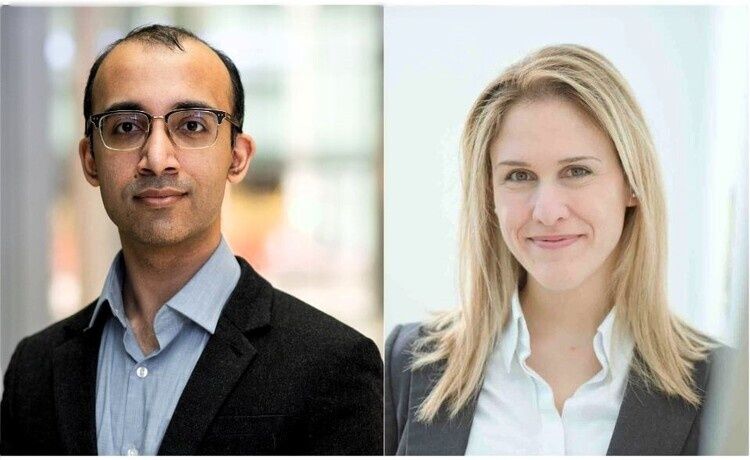
Shivaang Sharma is a PhD candidate on Collective Intelligence Systems and Adjunct lecturer on Social Innovation at UCL School of Management, UK. He is currently working alongside a cluster of INGOs to monitor and respond to ongoing armed conflicts in Africa and the Middle East. He has 11 years of experience of working in conflict zones for organizations including UN-OCHA (Office for the Coordination of Humanitarian Affairs), IMMAP, WWF (World Wide Fund for Nature). He is leading an initiative to build a collaborative community around the use of AI tools across humanitarian sectors.
Angela Aristidou specialises in strategy and entrepreneurship at University College London's School of Management and she is a Fellow (Faculty Affiliate) at Stanford University's Digital Economy Lab, in the Human-centred AI Centre. Angela is an international award-winning academic (among other: Fulbright; Stanford University's CASBS), she is solo grant-holder for a UK Research Innovation Future Leader Fellowship (approx. £1.7 UK million pounds; 2020-2028) and she currently leads a team of researchers examining digital innovations in the UK, USA, China and Canada. Angela is an expert in how private tech companies, governments and public sector organisations, nonprofits and communities collaborate to innovate for public good.
Register to attend the seminar here
Host
Judith Reppy Institute for Peace and Conflict Studies
Additional Information
Program
Einaudi Center for International Studies
Reppy Institute for Peace and Conflict Studies
Margaret Price

Manager of Academic Engagement Programs