
Einaudi Center for International Studies
Melanie Markusic

Department Administrator
Additional Information
Un-Checked, Un-Balanced: Constitutional & Political Crisis in Ecuador
March 5, 2024
12:20 pm
Uris Hall, G08
"Constitutions include systems of checks and balances to distribute power between government branches and guarantee accountability mechanisms for higher public officials. They also create relief valves in times of political conflict. The Ecuadorian Constitution of 2008 includes the classical impeachment process and what has been called "muerte cruzada" which allows the president to dissolve the National Assembly (the national legislative body) and call for new elections. The Assembly holds the same capacity but a limited version of it.
Politicians employed these mechanisms in 2022 and 2023. The Assembly tried to apply "muerte cruzada" against the president after the violent repression of protesting citizens in 2022 and initiated an impeachment process on corruption charges in 2023. President Lasso's response was the dissolution of the Assembly. By the end of 2023, Ecuadorians elected a new president and representatives.
Instead of enhancing power control and accountability, politicians are weaponizing the Ecuadorian Constitution against political rivals or to elude legal responsibility for corruption accounts. Amid the recent political conflict, the Constitutional Court was called to police the branches of state and the respect of the Constitution. Still, it could not stop the political and constitutional dispute that has put Ecuador in a severe economic and social crisis. Is the 2022 -2023 phenomena a sight of the future on how politicians will handle their conflicts? Or does the Constitution provide elements to prevent the abuse of the checks and balances mechanisms?"
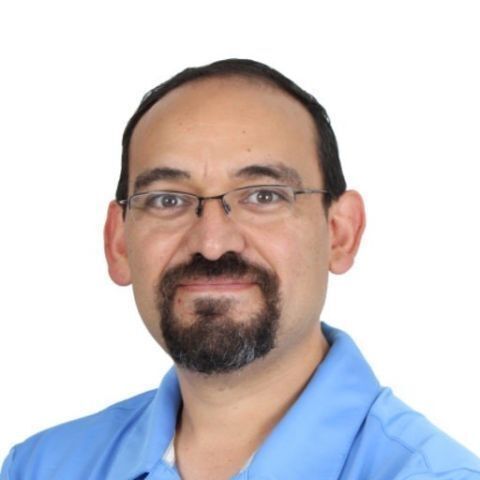
David Cordero-Heredia, J.S.D. ’18 is an Associate Professor of Law, at Universidad Católica del Ecuador currently visiting Cornell University as Visiting Fellow of the Latin American and Caribbean Studies Program. He is a Visiting Professor at the Andean University Simón Bolívar (UASB).
Additional Information
Program
Einaudi Center for International Studies
Latin American and Caribbean Studies
LACS RESEARCH SYMPOSIUM
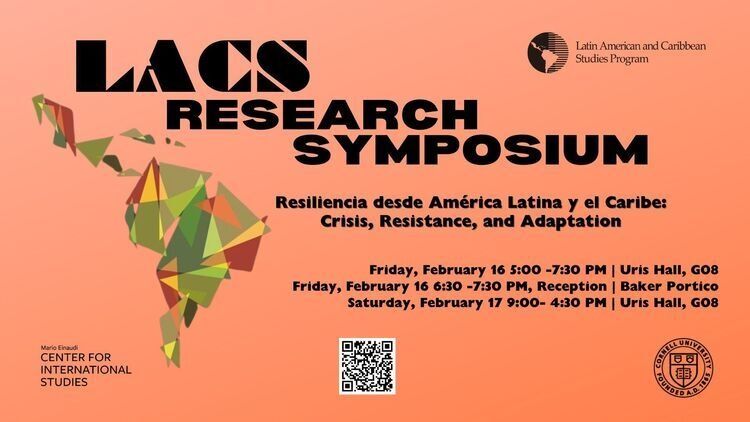
February 17, 2024
9:00 am
Uris Hall, G08
Resiliencia desde América Latina y el Caribe:
Crisis, Resistance, and Adaptation
Confronted by the ongoing consequences of colonialism, mercantilism, and imperial extraction, and more recently by the failed promises of global liberal democracy and political revolution, Latin American and Caribbean communities have created variegated landscapes and movements of crisis, resistance, and adaptation. Actors across Latin America and the Caribbean continue to act creatively to envision, enact, and experiment with a panoply of solutions, resistance strategies, and pre-figurative alternatives. Throughout history, and through alternative practices of community and kinship, art and performance, climate justice, technology, and a myriad of other examples, the friction generated during social, cultural, and economic predicaments have fueled healing processes for reconstruction and rebirth.
This symposium creates more spaces to discuss these pivotal and continuing cycles of crisis and adaptation. Above all, narratives and histories of Latin American and Caribbean resilience underscore the significant global role that these regions have had protecting and advocating for the health and well-being of their communities and shared ecosphere in the afterglow of crises relating to our rapidly changing climate, economies, and politics, among others. Forms of resistance and adaptation, broadly construed, are denoted by the effort to transform fundamentally the material and ideological conditions of quotidian existence. In an effort to rethink through our current moment as connecting with our past and future, we invite the Cornell community to think through some of the most salient practices and theories that index forms of resistance and adaptation during times of crisis in Latin America and the Caribbean.
Resiliencia desde América Latina y el Caribe:
Crisis, Resistencia y Adaptacion.
Frentes a las consecuencias actuales del colonialismo, el mercantilismo y la extracción imperial, y más recientemente a las promesas fallidas de una democracia liberal global y una revolución política, las comunidades latinoamericanas y caribeñas han creado paisajes y movimientos variados de crisis, resistencia y adaptación. Los actores de América Latina y el Caribe continúan trabajando creativamente para imaginar, implementar y experimentar con un abanico de soluciones, estrategias de resistencia y alternativas prefigurativas. A lo largo de la historia, y a través de prácticas alternativas de comunidad y solidaridad, arte y performance, justicia climática, tecnología y una infinidad de otros ejemplos, la fricción generada durante las dificultades sociales, culturales y económicas ha impulsado procesos de reconstrucción y renacimiento.
Este simposio crea más espacios para discutir estos ciclos fundamentales y continuos de crisis y adaptación. Las narrativas e historias de la resiliencia de América Latina y el Caribe subrayan el importante papel global que estas regiones han tenido en la protección y defensa de la salud y el bienestar de sus comunidades y la ecosfera compartida en el período posterior a las crisis relacionadas con el rápido cambio climático, económico, político, entre otros. Las formas de resistencia y adaptación, interpretadas en sentido amplio, se denotan por el esfuerzo por transformar fundamentalmente las condiciones materiales e ideológicas de la existencia cotidiana. En un esfuerzo por repensar nuestro momento actual como conexión con nuestro pasado y futuro, invitamos a la comunidad de Cornell a reflexionar sobre algunas de las prácticas y teorías más destacadas que demuestran formas de resistencia y adaptación durante tiempos de crisis en América Latina y el Caribe.
See Schedule here
Additional Information
Program
Einaudi Center for International Studies
Latin American and Caribbean Studies
The Micro-Foundations of Norm Entrepreneurship

March 7, 2024
12:00 pm
Uris Hall, G08
Bohuslav Ečer and the Crime of Aggression
Finnemore and Sikkink’s 1998 ‘norm life cycle’ model has inspired a substantial literature investigating norms’ emergence and staying power. However, because their model hinges on Sunstein’s ‘tipping point’ theory, Adam Lerner, Associate Professor at UMass Lowell, argues it biases scholarship towards powerful actors with resources to spread norms, often overlooking the micro-foundations of norm entrepreneurship—intellectual work involved in reshaping ideas and communicating them to relevant audiences. To remedy this gap, the research team argues for a distinction within their model between norm entrepreneurs and norm popularizers and demonstrates how research into the former can promote a fruitful partnership between IR and work in the history of political thought (HPT) tracing inflection points in norms’ life cycles.
This presentation will illustrate this argument with multi-archival research (conducted in the US, UK, and Czechia) into Bohuslav Ečer, Czechoslovakia’s representative at the 1943-1948 UN War Crimes Commission. Though much of his memory has been lost to history due to both communist repression and the American bias of existing scholarship, the presentation will demonstrate Ečer was a pivotal norm entrepreneur with regards to the criminality of aggressive war. Drawing on previously uncited evidence, we show how Ečer’s ideas developed and spread, shaping US wartime policy and, ultimately, the foundational 1945 Nuremberg Charter. Appreciation of Ečer’s role both contributes to our understanding of a pivotal norm in international criminal law’s emergence and enriches our theoretical understanding of norms’ life cycles.
About the Speaker
Adam B. Lerner is Associate Professor of Political Science and Director of the Bachelor of Liberal Arts Program at UMass Lowell. His research focuses on international political theory, and he is particularly interested in the legacy of mass violence in the international system and tools for global repair and reconciliation. His first book, From the Ashes of History: Collective Trauma and the Making of International Politics (OUP, 2022) received the Peter Katzenstein Book Award from Cornell, the Edgar S. Furniss Award from Ohio State, the ISA International Ethics Book Award, and was runner up for the ISA Theory Book Prize and the ECPR Hedley Bell Book Prize. His refereed articles have appeared in International Studies Quarterly, European Journal of International Relations, Perspectives on Politics, International Affairs, International History Review, and International Theory, among other outlets. He received a BA from Cornell University and an MPhil and PhD from the University of Cambridge.
Host
Judith Reppy Institute for Peace and Conflict Studies
Co-sponsor
Institute for European Studies
Additional Information
Program
Einaudi Center for International Studies
Reppy Institute for Peace and Conflict Studies
Institute for European Studies
Abbott Slated to Sign Law Allowing Arrest of Anyone Crossing Texas Border without Papers

Stephen Yale-Loehr, Migrations
“Part of the reason for passing this law is to send a message to the Biden administration that Texas is going to go as far as it dares, and they don’t care whether they lose in court, they’re making a political statement,” says Stephen Yale-Loehr, professor of immigration law,
Additional Information
China Expert, Present at Xi Visit to US, Aims to Cool Tensions
Jessica Chen Weiss, EAP
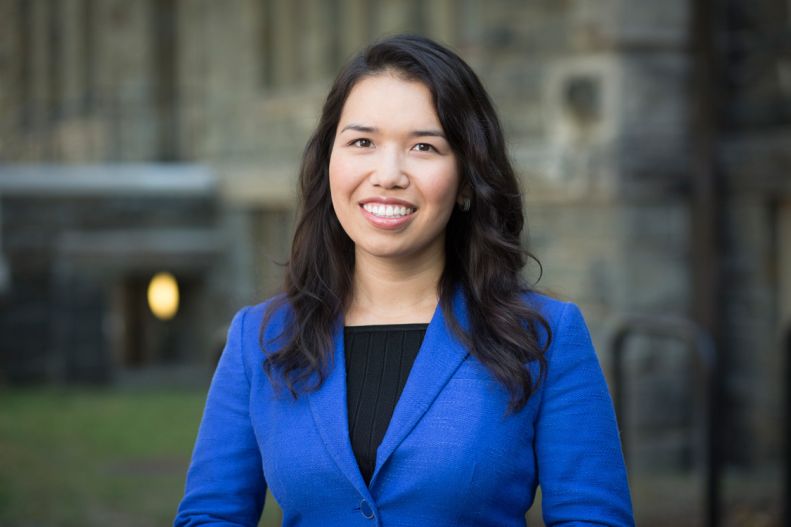
Professor Jessica Chen Weiss, an expert on U.S.-China relations, was among the attendees of the dinner following President Joe Biden and Chinese President Xi Jinping’s historic summit on Nov. 15 in San Francisco.
Additional Information
Eswar Prasad on Argentina's Milei Dollarization Ambition

Eswar Prasad, SAP
Eswar Prasad, professor of international trade policy and economics, joins Wall Street Week Daily to discuss Javier Milei's dollarization ambition.
Additional Information
ChatGPT's One-Year Anniversary

Sarah Kreps, PACS
Sarah Kreps, professor of government, joins Bloomberg Technology to talk about the AI landscape.
Additional Information
People Like Me: A Student Panel about Navigating Identity Abroad

March 13, 2024
5:00 pm
Statler Hall, 165
Planning for study abroad? No matter how you identify or where you're studying, early planning is the key to a successful study abroad experience.
Join us for a facilitated discussion with fellow students about navigating your intersectional identities while studying abroad. A panel of returned study abroad students will share their experiences, knowledge, and advice for expressing your whole self in a different culture. This is a great opportunity to ask questions and think about your identity in a new context—outside the norms of Cornell, your hometown, or your home country.
This global freedom of expression event is an opportunity to explore critical issues related to free expression of your identity and how you encounter the world. As a student abroad, you have a deeply personal chance to experience cultural exchange, collaborate productively in a global context, and have challenging conversations while staying true to yourself—all vital skills for successful participation in democracy.
The Office of Global Learning is here to help as you think about your identity in a global context, learn about new norms and ways of life, and find the support you need.
In-Person Event
Attend the panel in Statler Hall 165
Additional Information
Program
Einaudi Center for International Studies
Reppy Institute for Peace and Conflict Studies
East Asia Program
Southeast Asia Program
Latin American and Caribbean Studies
Institute for African Development
Institute for European Studies
South Asia Program
Cold War on Five Continents

February 15, 2024
12:00 pm
Uris Hall, G08
The Geopolitics of Empire and Espionage
Alfred "Al" William McCoy, the Fred Harvey Harrington Professor of History at the University of Wisconsin, will focus on the interplay between geopolitics and individual historical actors, explaining how geopolitical ruptures in hegemonic control during the Cold War created a momentary void in the world order that allowed a latter-day “man on the spot” the autonomy to put his fingerprints on the crime scenes of this global conflict.
Instead of the gentlemen adventurers like James Brooke and T.E. Lawrence of the British imperial age for whom the term was coined, our Cold War analogues are usually covert operatives. Like Africa, Southeast Asia during postwar decolonization abounds in these characters, so my talk will present the general thesis and some case studies from Southeast Asia—the region where the most famous, and notorious, of these figures first appeared.”
This seminar is part of the Gatty Lecture Series.
About the speaker
Alfred "Al" William McCoy is an American historian and educator. He is the Fred Harvey Harrington Professor of History at the University of Wisconsin–Madison. He specializes in the history of the Philippines, foreign policy of the United States, European colonization of Southeast Asia, illegal drug trade, and Central Intelligence Agency covert operations. He is the author of In the Shadows of the American Century: The Rise and Decline of U.S. Global Power. His newest book is To Govern the Globe: World Orders and Catastrophic Change (Dispatch Books).
Host
Judith Reppy Institute for Peace and Conflict Studies
Co-Host
Southeast Asia Program
Additional Information
Program
Einaudi Center for International Studies
Reppy Institute for Peace and Conflict Studies
Southeast Asia Program