Einaudi Center for International Studies
Mandela Washington Fellows
25 African Leaders Find Inspiration at Cornell
Cohosted by Einaudi, Cornell's 25 Mandela fellows honed their skills as public officials and managers in six weeks on campus this summer.
Additional Information
Mandela Fellows at Cornell (video)
Cohosted by Einaudi and the Brooks School, Cornell's 25 Mandela fellows represent countries from all over sub-Saharan Africa. Learn more about their six weeks on campus.
Additional Information
Community College Impact
Title VI–funded Programs Partner with MCC
Our programs work with community colleges across NY, including Monroe Community College in Rochester, to bring the world to our state's classrooms.
Additional Information
Weaponizing Geography
September 7, 2023
12:00 pm
An Environmental and Technological History of Cold War Mega-Projects in Latin America
Weaponizing Geography demonstrates the consequences of unbuilt mega-projects. Sebastian Diaz Angel will discuss the untold story of how a series of high modernist Cold War projects came into being and what their proponents hoped to achieve, as well as the successes, failures, and consequences of their actions. It examines the so-called “South American Great Lakes System” (SAGLS), a geographical and environmental engineering project (1964-1973) proposed by the Hudson Institute of New York, a think tank related to the U.S. Department of Defense. With the support of influential Latin American elite members, engineers, and war strategists, this think tank sought to transform the major rivers of the continent into a series of massive interlocked, channelized, and navigable artificial reservoirs. Much like the North American Great Lakes, these waterways would provide (in theory) inexpensive riverine transportation, inexhaustible sources of hydropower, and a landscape facilitating large-scale agroindustry, mining, and counterinsurgency operations in allegedly “unexploited and unexplored” tropical regions.
Please join us for this virtual conversation. Register here.
About the speaker
Before starting his Ph.D. at Cornell’s History Department, Dr. Sebastian Diaz Angel had an M.A. in Geography, a B.A. in History, and a B.A. in Political Sciences. He worked as the Digital Map Curator at the National Library of Colombia, lectured at Externado University, and led Razón Cartográfica, an academic network promoting research on the history of geography and cartography in Colombia and Latin America. Sebastian specializes in maps studies and has a profound interest in environmental history, science and technology studies, geopolitics, public history, and the digital humanities.
Host
Judith Reppy Institute for Peace and Conflict Studies
Additional Information
Program
Einaudi Center for International Studies
Reppy Institute for Peace and Conflict Studies
Latin American and Caribbean Studies
More than Red and Blue: Political Parties and American Democracy
By Our Faculty
Report
Additional Information
Type
- Report
Publication Details
Publication Year: 2023
Masahiko Kinoshita: The Stealth Activist Japanese Supreme Court
October 2, 2023
4:45 pm
Myron Taylor Hall, 390 Moot Court
The Supreme Court of Japan (SCJ) has been described as the most conservative and passive constitutional court in the world. The small number of times the Japanese Supreme Court has struck down statutes as unconstitutional is an argument for such a statement. However, the SCJ has provided important decisions to control legislative and executive power in fields related to the democratic political process, such as the right to vote and freedom of expression.
Masahiko Kinoshita, Graduate School of Law, University of Kobe, Japan gives this talk.
In Japan, the Liberal Democratic Party (LDP) has been in power for a long time. Nevertheless, the fact that Japan has been able to maintain democracy without falling into authoritarianism is largely dependent on the SCJ's accumulation of precedents. This talk will discuss the active aspects of the SCJ in the democratic political process, which have not received much attention so far.
Faculty host and moderator: Yun-chien Chang, the Cornell Law School Jack G. Clarke Professor in East Asian Law
Discussant: Mitchell Lasser, Jack G. Clarke Professor of Law
This event is co-sponsored by the East Asia program and the Cornell Law School Clarke East Asia Law Program.
Additional Information
Program
Einaudi Center for International Studies
East Asia Program
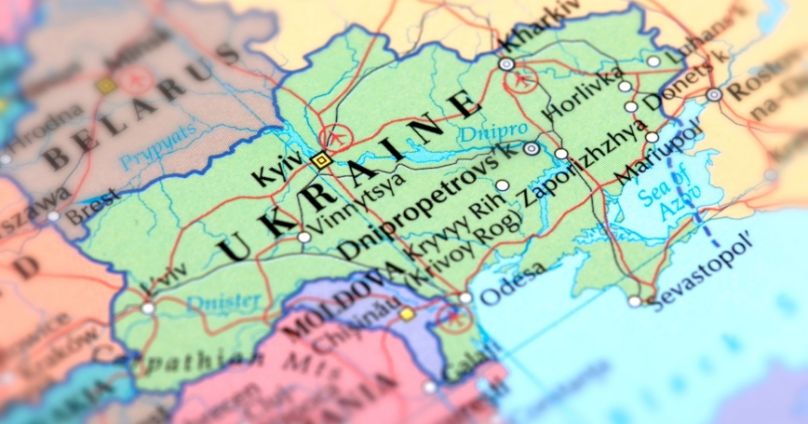
"Your Past is My Present": The Case of Ukraine
October 5, 2023
12:00 pm
Uris Hall, G08
Does evoking historical parallels change public opinion regarding foreign policy?
Seeking international support to counter Russia’s February 2022 invasion, Ukrainian President Volodymyr Zelensky has publicly addressed foreign politicians and public in several democratic nations. Media coverage paid special attention to his explicit comparison of Ukraine’s current situation to salient historical events in the audiences' countries.
Since public opinion can influence foreign policy decisions in democracies, we investigate whether evoking the past of the audience's country effectively increases popular support for aiding Ukraine.
Anil Menon and colleagues conducted survey experiments simultaneously in four countries where Zelensky delivered speeches rich in historical parallels – Germany and Israel (Holocaust), United Kingdom (WWII), and the United States (Pearl Harbor and 9/11). Exposure to excerpts from Zelensky's speeches triggered distinctive emotional reactions in all countries consistent with the content tailored for each country.
Only in Israel did exposure increase public support for bolstering Ukraine’s war efforts. Thus, while rhetoric emphasizing past-present commonalities might evoke emotional reactions, its persuasive potential appears limited.
About the Speaker
Anil Menon is an Assistant Professor of Political Science at the University of California, Merced. Previously, he was a Klarman Postdoctoral Fellow in the Department of Government at Cornell University and a Visiting Research Fellow at the Center for the Resolution of Intractable Conflict at Harris Manchester College, Oxford University. He earned his Ph.D. in Political Science at the University of Michigan – Ann Arbor.
His research is motivated by three broad questions. How do traumatic experiences – ranging from interstate wars and forced migration to public health crises – shape short- and long-term political attitudes, behaviors, and institutions? What are the historical roots of contemporary patterns of economic and political development? Are rhetorical appeals to the past persuasive?
Cohosts
Institute for European Studies
Judith Reppy Institute for Peace and Conflict Studies
Additional Information
Program
Einaudi Center for International Studies
Reppy Institute for Peace and Conflict Studies
Institute for European Studies
Language Resource Center Speaker Series - Américo Mendoza-Mori - Language Revitalization, Cultural Reclamation, and Global Indigeneity
August 29, 2023
3:30 pm
Stimson Hall, G25
"Language Revitalization, Cultural Reclamation, and Global Indigeneity"
Américo Mendoza-Mori
Lecturer and Faculty Director for the Latinx Studies Working Group, Harvard University
In recent decades, revitalization and reclamation programs for Indigenous languages have emerged at universities, both promoting the language and fostering community empowerment, particularly among youth. We will explore strategies to incorporate Indigenous cultures and languages of the Americas within the Humanities and Social Sciences as relevant and complex curricular components.
For this presentation, we will discuss opportunities for building up academic and cultural programming to challenge and expand traditional notions of Indigeneity as a "thing of the past" into relevant and pressing issues, and to reflect on how colleges and language departments can support more diverse spaces for the representation and visibility of Indigenous cultures, scholarship, and voices, in connection with curricular goals. We will specifically explore the case of Quechua-language initiatives in the global advance of the language. Quechua is the most spoken Indigenous language family of the Americas, with 8-10 million speakers in South America.
Bio: Américo Mendoza-Mori teaches and researches on Indigenous and Latinx Studies at Harvard University where he is a Lecturer and Faculty Director for the Latinx Studies Working Group. Dr. Mendoza-Mori is involved with different research and community-oriented projects to raise awareness of the relevance of Quechua languages and literatures, Latinx and Latin American cultures, and Indigenous systems of knowledge. His work has appeared in a variety of academic publications, a TEDx Talk, and he has been featured at major institutions such as the United Nations and in international media (The New York Times, BBC, NPR, The Guardian).
This event will be held in person in G25 Stimson and will also be streamed live over Zoom (registration required). Join us at the LRC or on Zoom.
The event is free and open to the public. Campus visitors and members of the public must adhere to Cornell's public health requirements for events.
Co-sponsored by the Language Resource Center and the Latin American and Caribbean Studies Program through its Undergraduate International Studies and Foreign Language (UISFL) grant from the U.S. Department of Education.
Additional Information
Program
Einaudi Center for International Studies
Latin American and Caribbean Studies
Unending Capitalism: How Consumerism Negated China’s Communist Revolution
September 12, 2023
4:45 pm
Goldwin Smith Hall, GSH64 Kaufman Auditorium
Karl Gerth, History, UC San Diego
What forces shaped the twentieth-century world? Capitalism and communism are usually seen as engaged in a fight-to-the-death during the Cold War. With the establishment of the People’s Republic of China in 1949, the Chinese Communist Party aimed to end capitalism.
Gerth argues that despite the socialist rhetoric of class warfare and egalitarianism, Communist Party policies developed a variety of capitalism and expanded consumerism. This negated the goals of the Communist Revolution across the Mao era (1949-1976) down to the present.
Through topics related to state attempts to manage what people began to desire – wristwatches and bicycles, films and fashion, leisure travel and Mao badges – Gerth challenges fundamental assumptions about capitalism, communism, and countries conventionally labeled as socialist. In so doing, his provocative history of China suggests how larger forces related to the desire for mass-produced consumer goods reshaped the twentieth-century world and remade people’s lives.
Additional Information
Program
Einaudi Center for International Studies
East Asia Program
Ariel Rubinstein: Economics with No Prices and No Games
September 8, 2023
11:30 am
Goldwin Smith Hall, G76
CRADLE Law & Economics Lecture
Ariel Rubinstein is a professor of economics at Tel Aviv University and New York University. He received his B.Sc. in Mathematics, Economics, and Statistics from the Hebrew University in 1974 and his Ph.D. in Economics from the Hebrew University in 1979. His research work focuses on economic theory, bounded rationality, game theory, experimental economics, and choice theory.
Welcome and introductory remarks will be given by Kaushik Basu, Professor of Economics and Carl Marks Professor of International Studies, Rachel Beatty Riedl, director of the Mario Einaudi Center for International Studies and John S. Knight Professor of International Studies, and Robert C. Hockett, Edward Cornell Professor of Law.
Additional Information
Program
Einaudi Center for International Studies