
Einaudi Center for International Studies
Trump Eyes Radical Immigration Shift If Elected in 2024, Promising Mass Deportations and iIdeological Screenings

Stephen Yale-Loehr, Migrations
"It would be a significant change," says professor of immigration law Stephen Yale-Loehr of the possibility of Trump's 2024 campaign promises being implemented. "But there's only so much you can do through executive action."
Additional Information
US and UK Jockey for Leadership Role in Regulating AI

Sarah Kreps, PACS
Sarah Kreps, professor of government, says, “There’s almost an AI regulation arms race. Different actors want to be seen as the most active and ambitious on this issue, so they’re trying to one-up each other, both in timing and expansiveness."
Additional Information
NYC Manhole Covers: History and How They're Made

Natasha Raheja, SAP
Natasha Raheja, assistant professor of anthropology, discusses the history of New York City's manhole covers.
Additional Information
FLIP Presents: Tools for Teaching a World Language with Angelika Kraemer
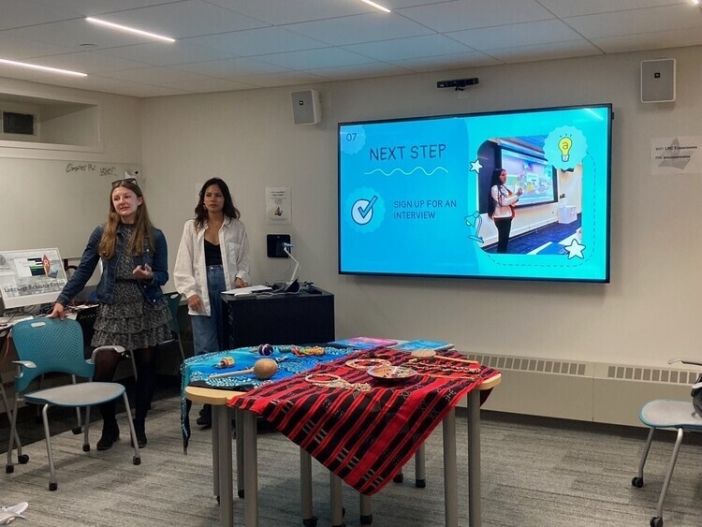
November 14, 2023
6:00 pm
Cornell University Language Resource Center, G27
Discuss how to engage young language learners and how to work with students of different age groups. We will cover lesson planning tips, general teaching guidelines, and how to maximize target language use during short lessons. Dinner will be served!
Additional Information
Program
Einaudi Center for International Studies
Cornell Awarded IIE Centennial Medal
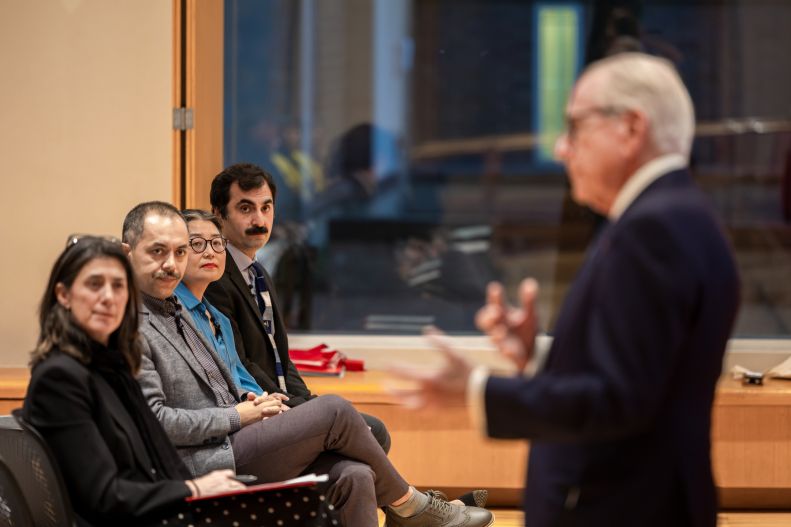
Scholars Under Threat Find Home at Einaudi
IIE CEO Allan Goodman: "In crisis after crisis, this university has opened its doors to scholars and made them feel that they belong."
Additional Information
Francis Akutey-Baffoe: Teaching Twi as a Second Language Using Progressive Learning

November 9, 2023
5:00 pm
Stimson Hall, G25
"An Approach To Teaching Twi As A Second Language Using Progressive Learning"
Francis Akutey-Baffoe
African Language Program Preceptor, Harvard University
People are becoming increasingly dependent on languages other than their native tongues because of globalization. Because of this, the need for learning second languages has significantly increased over the past few decades as research has established that it broadens the mind (Archibald, 2004). In recent times, the teaching of African languages as second language in tertiary institutions in the United States has taken a significant boost, and one of such languages is Twi, a richly cultural Akan dialect. In this talk, a progressive learning approach will be explored for teaching Twi as a second language. However, teaching Twi as a second language, when learners come from different backgrounds and cultures, pedagogy becomes more challenging. A major focus of this talk will be progressive learning, which encompasses several key strategies, such as understanding learners' needs, establishing a solid foundation, encouraging communication, and the integration of technology. With the strategies outlined, it is more important to determine how they can be implemented practically and effectively. This talk examines a typical syllabus as an example for teaching Twi as a second language through a progressive learning approach.
Bio: Francis Akutey-Baffoe is from Kumasi in Ghana. He is a Preceptor of African Languages in the Department of African and African American Studies at Harvard University. He holds a bachelor’s degree in Twi and Sociology and a master’s degree in Ghanaian Languages (Twi) from the University of Cape Coast. He was a Teaching Assistant and later a Demonstrator in the Department of Ghanaian Languages and Linguistics at the University of Cape Coast between 2012 and 2018. He has also been a language instructor for non-Twi-speaking foreigners at the University of Cape Coast-Ghana. During the 2017/2018 academic year, Francis taught as a part-time lecturer for the University of Cape Coast’s Institute of Education Sandwich program. He was also an assistant examiner for the Institute of Education, University of Cape Coast, between 2016 and 2018. Mr. Akutey-Baffoe has an interest in Akan literature, Akan cultural studies, Akan language and linguistics, and translations from English to Twi and Twi to English. He has worked with the Bible Society of Ghana as a reviewer and a translator. He has also transcribed and translated many research data from Twi to English.
This event will be held in person in G25 Stimson Hall.
The event is free and open to the public. Campus visitors and members of the public must adhere to Cornell's public health requirements for events.
Co-sponsored by the Language Resource Center.
Additional Information
Program
Einaudi Center for International Studies
Latin American and Caribbean Studies
Institute for African Development
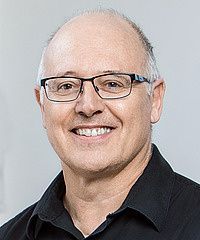
The Qing Conquest as "Just War": Manchu Arguments and European Reception
November 15, 2023
4:45 pm
Goldwin Smith Hall, 64
Nicola Di Cosmo, East Asian Studies, Institute for Advanced Study
Among the many facets of the Manchu conquest of China, a relatively unexplored one is that of Manchu ideology and propaganda. This talk examines the early justification of the anti-Ming war articulated by the Manchu ruler Nurhaci (Qing Taizu, 1559-1626) and its reception in Europe, in particular in the work of Martino Martini, De Bello Tartarico. While there have been a few studies on Nurhaci's manifesto, known as the “Seven Great Grievances,” this talk draws special attention to his reasons to justify the war against the Ming, and to explicitly stake his claim to rule All Under Heaven in light of the “just war theory”. Nurhaci's unprecedented pronouncement, moreover, not only underpinned the Manchu war effort for the following decades but also influenced the reception of the Qing conquest in Europe and the arguments made by Jesuits in favor of transferring their loyalty to the new dynasty.
Additional Information
Program
Einaudi Center for International Studies
East Asia Program
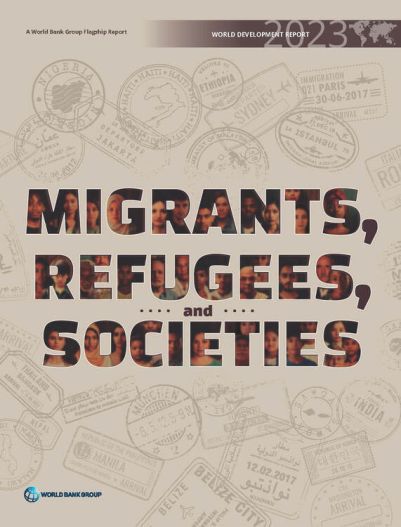
World Development Report 2023: Migration
November 6, 2023
1:30 pm
B73 Warren Hall
Join us for a presentation by the co-director of the 2023 World Development Report, Çağlar Özden. The focus of the report this year is migration, refugees, and societies. Dr. Özden’s presentation will be followed by remarks from a panel of Cornell experts who work in different areas of migration studies and policy.
Can't make it in person? Register to attend over Zoom.
Speaker:
Çağlar Özden, Lead Economist, Development Research Group of the World Bank
Moderator:
Chuan Liao, Assistant Professor of Global Development, College of Agriculture and Life Sciences
Panel of Cornell faculty:
Stephen Yale-Loehr, Professor of Immigration Law PracticeShannon Gleeson, Edmund Ezra Day Professor and Chair, Department of Labor Relations, Law, & HistoryNancy Chau, Professor of EconomicsAbout the Speaker
Çağlar Özden is a Lead Economist in the Development Research Group of the World Bank and co-director of the 2023 World Development Report on International Migration. A Turkish national and a professional migrant, Çağlar received his undergraduate degrees in economics and industrial engineering from Cornell University and Ph.D. in economics from Stanford University. He is a fellow of IZA, CreAM and ERF. His research explores the nexus of globalization of product and labor markets, government policies and economic development. He has edited three books and published numerous papers in leading academic journals such as the American Economic Review and the Economic Journal. He is the lead author of the flagship report Moving for Prosperity: Global Migration and Labor Markets. His current research projects explore the determinants and patterns of global labor mobility, impacts of migrants on the destination labor market outcomes, medical brain drain, linkages between migration, trade, and foreign direct investment flows.
Hosts and Sponsors
Event hosted by the Migrations initiative, co-sponsored by the Department of Global Development, College of Agriculture and Life Science, and the Cornell Population Center, Brooks School of Public Policy, and the Development Economics Workshop in the Department of Economics at the College of Arts & Sciences and the S.C. Johnson College of Business.
Additional Information
Program
Einaudi Center for International Studies
Boren Awards Info Session

November 13, 2023
4:45 pm
276 Caldwell Hall
Learn about the prestigious Boren Scholarships that fund study abroad outside Western Europe, Canada, Australia, or New Zealand. Boren Awards focus on developing linguistic and cultural knowledge among aspiring federal government employees. Boren Awards are funded by the federal government and are open to U.S. citizens who are currently matriculated students. Maximum undergraduate awards are determined by duration of study: up to $25,000 for 25-22 weeks and up to $8,000 for 8-11 weeks (STEM majors only).
Additional Information
Program
Einaudi Center for International Studies
East Asia Program
Southeast Asia Program
Latin American and Caribbean Studies
Institute for African Development
Institute for European Studies
South Asia Program
China’s Ex-Premier Li Keqiang, a Reformer Sidelined by Xi, Dies

Eswar Prasad, SAP
Eswar Prasad, professor of international trade policy and economics, says, “He seemed well attuned to the many challenges and hidden dangers the economy faced and did his part to keep growth on an even course.”