
Einaudi Center for International Studies
Experts Envision Afghanistan’s Future

Next Generation’s Initiative Conference
“If you block peaceful politics, then you make room for unpeaceful politics,” said a presenter at the Sept. 9 conference at Cornell.
By Phoebe Wagner
The Next Generation's Initiative: Learning from the Past to Build the Future of Afghanistan – a conference held on Cornell campus on Saturday, Sept. 9 – brought together Afghan scholars and experts in politics and law to analyze Afghanistan’s recent past for clues about how to build a brighter future. The event was hosted by the South Asia Program (SAP), part of the Mario Einaudi Center for International Studies, and the Clarke Initiative for Law and Development in the Middle East and North Africa at Cornell Law School.
The nine presenters engaged in discussions about the future of Afghanistan on governance and constitutionality, the public sphere, rule of law, and public perspectives. The conference opened with a welcome from SAP visiting scholar Sharif Hozoori, an Institute of International Education Scholar Rescue Fund fellow and an expert on Afghanistan politics.
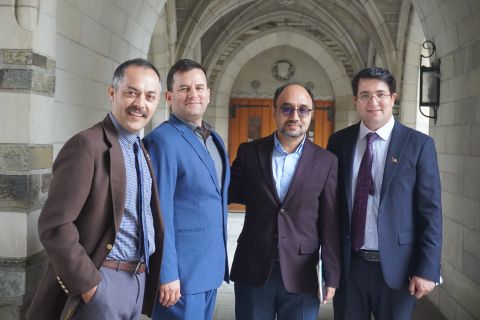
The first presenter, Farid Tookhy, a senior fellow at the Institute for Peace and Diplomacy, centered questions of how Afghans can work together to create the future of Afghanistan. Zinab Attai, a PhD student in comparative politics at Cornell, emphasized how “Afghanistan’s history is punctuated by recurrent instances of foreign intervention.”
Mirwais Balkhi, a fellow at the Wilson Center, spoke to the need to redefine Afghanistan as a nation state, and to “develop a country for ourselves.” How the new generation addresses this issue is crucial, he said. When Afghans come together and learn about the history of the country and talk about a shared destiny for their country, people can envision a homeland for themselves.
Another major issue is the system of governance, panelists argued. Anything could be possible in the current situation – even the collapse of the country or the fragmentation of Afghanistan into different local zones – which Afghanistan as a nation state could not easily recover from in the future.
A global development undergraduate asked, “How did the executive branch influence the legislative branch to exercise its power? Was it because of a constitutional flaw, or because the constitution wasn’t used at all?”
Shamshad Pasarlay of University of Chicago Law School responded, “Constitutions alone cannot be blamed on the failure of a state.” In the U.S., he said, it’s a document that works – even though it’s imperfect. It can be used as a focal point in the executive branch and legal system.
“If you block peaceful politics, he continued, “then you make room for unpeaceful politics.”
By creating a space for thoughtful discussions, there was room for respectful disagreement. Participants engaged with and challenged presenters, and the panels’ common themes created a rich dialogue. The discussion demonstrated the diversity of thought that is needed for envisioning new futures and generating change.
In his closing remarks, Tawab Danish of Cornell Law highlighted the conference’s breadth of topics, from nation-building to identity. When discussing Afghanistan and Afghans’ rights, he said, it’s important to have the people suggesting solutions to be of the place – and this insider perspective was part of what made the day’s conversation so productive.
“International scholars have often written about and presented on Afghanistan, but Afghan scholars know the country though their direct lived experiences,” said Danish.
The conference was cosponsored by the Einaudi Center's Comparative Muslim Societies Program and Reppy Institute for Peace and Conflict Studies and the Department of Near Eastern Studies, Department of Government, and Religious Studies Program in the College of Arts and Sciences.
Phoebe Wagner is an MPS student in the Department of Global Development (CALS) and a FLAS fellow in Hindi at the South Asia Program.
Additional Information
From Climate Coloniality to Climate Revolutions
September 13, 2023
12:20 pm
Emerson Hall, 135
Perspectives in Global Development: Fall 2023 Seminar Series
Abstract
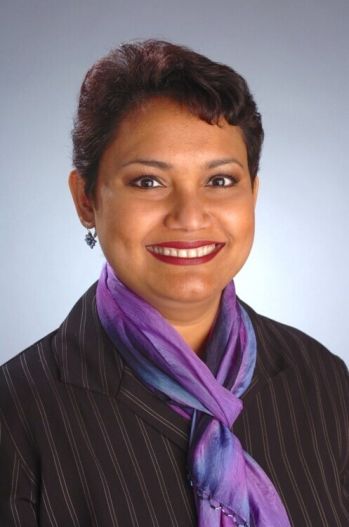
The extremely uneven and inequitable impacts of climate change creates differential vulnerabilities, experiences, responses, and coping mechanisms across the world. Climate coloniality clarifies how to understand this in more nuanced ways. The coloniality of climate seeps through everyday life across space and time, weighing down and curtailing opportunities and possibilities through global racial capitalism, colonial dispossessions, and climate debts. Decolonizing climate needs to address the complexities of colonialism, imperialism, capitalism, international development, and geopolitics that contribute to the reproduction of ongoing colonialities through existing global governance structures, discursive framings, imagined solutions, and interventions. This requires addressing both epistemic violences and material outcomes to foster care-full resplendent climate revolutions. By weaving through such mediations, Farhana Sultana offers an understanding of climate coloniality and climate revolutions that are theorized and grounded in lived experiences.
About the speaker
Farhana Sultana is Professor in the Department of Geography and Environment in the Maxwell School of Citizenship and Public Affairs at Syracuse University, where she is also the Research Director for Environmental Collaboration and Conflicts at the Program for the Advancement of Research on Conflicts and Collaboration (PARCC). Dr. Sultana is an internationally recognized and award-winning interdisciplinary scholar of political ecology, water governance, climate justice, post‐colonial development, social and environmental justice, decolonizing knowledge, and transnational feminisms. Author of several dozen publications, her research and scholar-activism draw from her experiences of having lived and worked on three continents as well as from her backgrounds in the natural sciences, social sciences, and policy experience. Prior to joining Syracuse, she taught at King’s College London and worked at the United Nations Development Programme (UNDP). Dr. Sultana graduated Cum Laude from Princeton University (in Geosciences and Environmental Studies) and obtained her Masters and PhD (in Geography) from the University of Minnesota, where she was a John D. and Catherine T. MacArthur Foundation Fellow. She was awarded the Glenda Laws Award from the American Association of Geographers for “outstanding contributions to geographic research on social issues” in 2019.
Perspectives in Global Development
The Perspectives in Global Development seminars are held Wednesdays from 12:20-1:20 p.m. eastern time during the semester. The series is presented in a hybrid format with some speakers on campus and others appearing via Zoom. All seminars are shown in Emerson Hall 135. Students, faculty and the general public are welcome to attend. The series is co-sponsored by the Department of Global Development, the Department of Natural Resources and the Environment, the Charles H. Dyson School of Applied Economics and Management, and the School of Integrative Plant Science as part of courses GDEV 4961, AEM 4961, NTRES 4961, GDEV 6960, AEM 6960, and NTRES 6960.
Additional Information
Program
Einaudi Center for International Studies
South Asia Program
Innovation for People and Planet: Reimagining Capitalism
October 4, 2023
12:20 pm
Emerson Hall, 135
Perspectives in Global Development: Fall 2023 Seminar Series
Abstract
Around the globe, 800m people spend more than 10% of their household budget on health care, and nearly 100m of these are pushed into extreme poverty every year by out-of-pocket health expenses. A big hairy question facing us is: How can we make healthcare more affordable, and improve access to quality healthcare resources, for the people bordering the poverty line? Poverty remains our number one enemy, but increasingly and excitingly, we see opportunities to flip the situation and create mass prosperity. However, this requires a focus on agricultural innovations and allied livelihoods. So, the big question also morphs into: How can we improve productivity, reduce risk, increase income, and enhance access to essential goods and services for the poor? Global efforts to curb emissions and transition into a low-carbon economy can counterintuitively compromise economic progress in the Global South, leading to increased poverty and inequity. Another hairy question, then, is: How do we develop and deploy solutions to converge our development priorities with the overall emission reduction mission? The list is endless.
Low and middle-income countries need breakthrough technologies to address some of these complex problems, but an innovation ecosystem is required to address market failure and support entrepreneurial risk-taking. Social Alpha has created a Multi-Stage Innovation Curation & Venture Development platform in India that supports high-impact innovations by making them deployment-ready and investible through a full-stack lab-to-market de-risking model. It has demonstrated that some of the most challenging problems in health, climate and livelihoods can be solved to achieve sustainable development goals. However, this requires a convergence of science and technology, public policy, markets, and communities. In this talk, Manoj Kumar will focus on addressing market failure by de-risking innovations, creating blended capital pools, and attracting mainstream business interest in the development sector. It will also highlight that aligning the incentives of society, state, and markets is necessary to attract entrepreneurial and investment risk-taking, the two most critical ingredients of the innovation economy
About the speaker
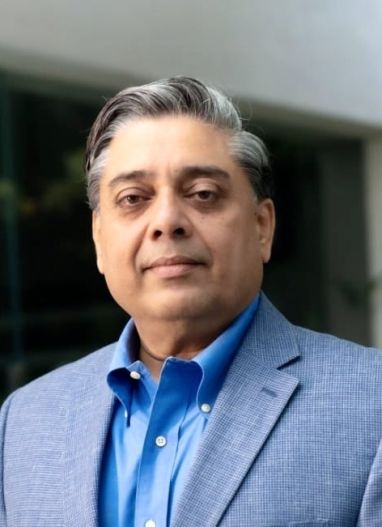
Manoj Kumar is the Founder of Social Alpha, a multistage innovation curation and venture development platform for science and technology start-ups that aim to solve the most critical social, economic and environmental challenges.
Social Alpha supports entrepreneurs through a network of innovation labs, venture accelerators, blended capital pools and market access mechanisms. Selected start-ups get access to R&D infrastructure, sandboxes for pilots and validations, product management guidance, technical, business and regulatory expertise, early-stage risk capital and entrepreneurial mentoring. Since its inception in 2016, Social Alpha has supported over 250 start-ups, including 60+ seed investments and 100+ innovation grants.
Before founding Social Alpha, Manoj was an entrepreneur and an early-stage venture investor. Manoj serves on the boards of several companies, non-profits and research institutions. Manoj is also a Trustee of the Tata Institute for Genetics and Society and a Senior Advisor to Tata Trusts.
Perspectives in Global Development
The Perspectives in Global Development seminars are held Wednesdays from 12:20-1:20 p.m. eastern time during the semester. The series is presented in a hybrid format with some speakers on campus and others appearing via Zoom. All seminars are shown in Emerson Hall 135. Students, faculty and the general public are welcome to attend. The series is co-sponsored by the Department of Global Development, the Department of Natural Resources and the Environment, the Charles H. Dyson School of Applied Economics and Management, and the School of Integrative Plant Science as part of courses GDEV 4961, AEM 4961, NTRES 4961, GDEV 6960, AEM 6960, and NTRES 6960.
Additional Information
Program
Einaudi Center for International Studies
South Asia Program
Food Security in India: Issues and Concerns
September 27, 2023
12:20 pm
Emerson Hall, 135
Perspectives in Global Development: Fall 2023 Seminar Series
Abstract
The paradox of food security in the Indian subcontinent is of massive expansion in the production of food grain resulting in large food stocks of almost 60 million tonnes, on the one hand, and of mass chronic hunger, on the other hand. More than 70 per cent of the Indian population cannot afford what the FAO terms a healthy diet. This talk gives an overview of policies of food security in India, from the 1960s to the present, covering policies on the production and consumption front. It then discusses some present concerns and challenges to ensuring food security in rural India.
About the speaker
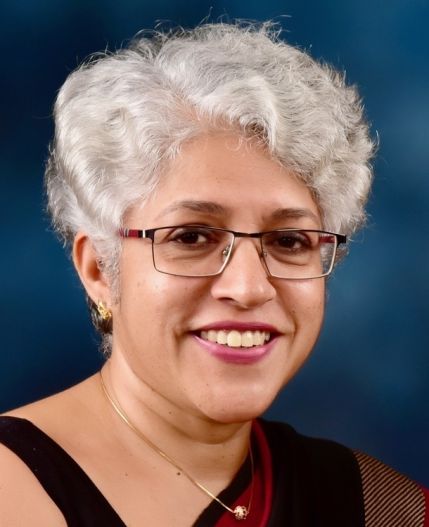
Madhura Swaminathan is Professor of Economics at the Indian Statistical Institute, Bengaluru, with a doctorate in Economics from the University of Oxford. She has worked on issues of food security, agriculture, poverty and inequality for over 30 years, has guided over 20 doctoral students, and authored over ten books. Her most recent edited volume is titled Women and Work in Rural India (Tulika Books 2020). She was a member of the Government of India’s High Level Panel on Long Term Food Security, and of the Committee of Development Policy of the United Nations, New York.
Perspectives in Global Development
The Perspectives in Global Development seminars are held Wednesdays from 12:20-1:20 p.m. eastern time during the semester. The series is presented in a hybrid format with some speakers on campus and others appearing via Zoom. All seminars are shown in Emerson Hall 135. Students, faculty and the general public are welcome to attend. The series is co-sponsored by the Department of Global Development, the Department of Natural Resources and the Environment, the Charles H. Dyson School of Applied Economics and Management, and the School of Integrative Plant Science as part of courses GDEV 4961, AEM 4961, NTRES 4961, GDEV 6960, AEM 6960, and NTRES 6960.
Additional Information
Program
Einaudi Center for International Studies
South Asia Program
Dreams Anew - Empowering Afghan Women's Health
September 23, 2023
12:00 pm
245 Feeney Way, 120 Physical Sciences Building
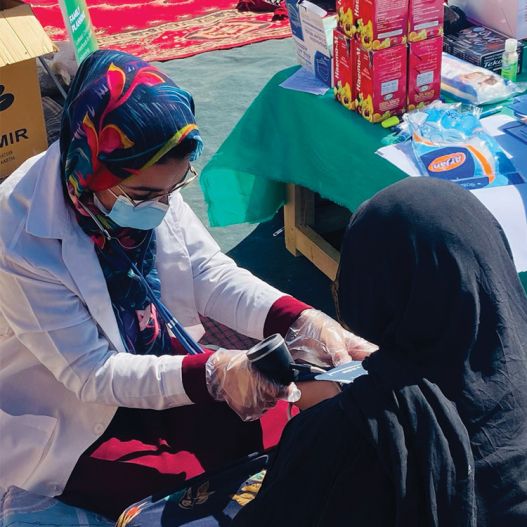
Dreams Anew - Pioneering Change for Afghan Women's Health at AMIW will be hosted and run by students from Afghanistan, offering a comprehensive exploration of Afghan women's health from various perspectives. From tracing the country's history of peace and women's fundamental rights before the war to the impact of conflict on women's health, we will journey through the last two decades of health sector development and the current state of women's reproductive health. Central to our event is the discussion surrounding our collaborative efforts to establish a research center in Afghanistan dedicated to women's reproductive health and the profound impact it will have.
Additional Information
Program
Einaudi Center for International Studies
South Asia Program
IAD seminar: Chinese Investment and African Industrialization: from Farms to Factories

September 13, 2023
2:30 pm
Uris Hall, G-08
Register
The seminar series for fall 2023 explores the future of African land, agriculture and food, digging into the contestations, conflicting and converging visions from a wide range of perspectives. How might land be used, valued and lived in, across cities, rural communities, forests, deserts and grasslands on the continent in the future? Who is proposing different visions of land futures in Africa, what are the histories, politics, socio-cultural, environmental and economic implications of these potential visions? In one of the regions with the most youthful populations, how are young people considering possible futures? What are ways that land, agriculture and food systems could be resilient, healthy, ecological, thriving and just?
Additional Information
Program
Einaudi Center for International Studies
East Asia Program
Institute for African Development
Towards Culturally Aware Artificial Intelligence

November 13, 2023
12:15 pm
Uris Hall, G08
Talk by Aditya Vashistha (Computing & Information Science, Cornell University)
AI technologies are becoming increasingly pervasive in our daily lives, impacting diverse areas such as healthcare diagnosis and online content moderation. However, these technologies often overlook the voices and viewpoints of historically marginalized communities in South Asian settings. Instead of promoting inclusivity, current AI systems unintentionally reinforce power imbalances, prioritize Western norms, and neglect minoritized expressions. Through concrete examples from our work across various domains, including content moderation, addressing ableism, countering misinformation, and advancing frontline healthcare, I will illustrate how current AI technologies fall short in representing the cultural, socioeconomic, and linguistic diversity found in South Asia. Furthermore, I will propose essential steps that we must take to develop Culturally Aware AI so that its benefits are derived equitably by everyone in the world.
Aditya Vashistha is an Assistant Professor of Computing and Information Science at Cornell University. He also holds faculty fellow positions at Cornell Atkinson Center for Sustainability, the Digital Life Initiative, Cornell Center for Health Equity, Cornell Center for Social Sciences, and the Mario Einaudi Center for International Studies. His research focuses on designing and evaluating technologies that contribute to the socioeconomic development of underserved communities in low-resource environments. His current work aims to (1) combat misinformation and hate speech in low-income communities and (2) design responsible AI systems for high-stakes settings. He has co-authored over 60 peer-reviewed publications, including several best paper awards at premier venues. Vashistha's work has received numerous awards, including a USAID Seed Grant, Facebook Access Innovation Prize, Facebook Fellowship, UW College of Engineering Award, and Google and Microsoft Faculty Research Awards. He earned a Ph.D. in Computer Science and Engineering from the University of Washington, where his dissertation received recognition through the William Chan Memorial Dissertation Award and the WAGS/ProQuest Innovation in Technology Award.
Additional Information
Program
Einaudi Center for International Studies
South Asia Program
Playing with Time: The Temporalities of Agrarian Change and Climate Instability in Rural India
November 10, 2023
3:00 pm
Warren Hall, B73
Seminar in Critical Development Studies co-hosted by Cornell Global Development and the Graduate Field of Development Studies
Abstract:
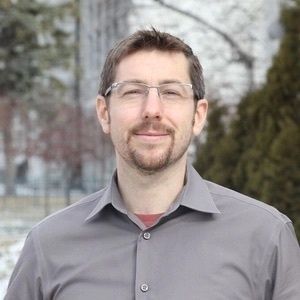
Agricultural practices across rural India have changed markedly over the last two decades as smallholder farmers have variously embraced, resisted or simply been swept up in processes of commercialisation, financialisation and intensification. As the recent literature shows, such trends are interlaced with new forms of social polarisation, the recrafting of rural hierarchies, and patterns of environmental change. What has been less closely examined is how the experience of time has been reshaped within these settings. In this seminar, Marcus Taylor draws on fieldwork conducted across three villages in rural Maharashtra to elaborate how the diverse yet interlocking temporalities of agrarian life have grown in complexity and importance. Alongside the increasingly unreliable seasonal patterns of weather, farmers proactively seek to manage the changing cyclical rhythms of commodity markets; the pressing obligations of expansive credit and debt relations; the ebb and flow of labour availability and absence; the shifting cycles of pests and other agroecological processes; and the ever-present calendars of culturally vital festivals and social events. Success or failure as an agriculturalist increasingly depends on the strategies smallholder farmers employ to manage these temporalities and ensure that they do not fall out of synch. Yet the relative ability of farmers to ‘play with time’ is limited by the power relationships that shape key determinants of rural life such as access to land, labour, credit, water and knowledge. Pointedly, the failure of recent policy initiatives – including a major World Bank sponsored climate resilient agriculture initiative in the region – to acknowledge these temporal determinants of agrarian life has led to a range of unanticipated and profoundly troubling outcomes that policymakers are keen to silence.
About the speaker:
Marcus Taylor is a Professor and Head of the Department of Global Development Studies at Queen’s University, Kingston, Canada. He researches and teaches on agriculture, rural development and livelihoods. His books include The Political Ecology of Climate Change Adaptation (Routledge 2015) and Global Labour Studies (Polity Press, 2018) and he is currently completing a volume on Climate Smart Agriculture: A Critical Perspective that includes case studies of new agricultural technologies and management practices across the Indian states of Telangana, Karnataka and Maharashtra. He is a contributing author to a chapter of the IPCC AR6 Working Group 2 on climate-resilient development and his written policy briefs for organisations including the OECD and NORAD.
Additional Information
Program
Einaudi Center for International Studies
South Asia Program
Information Session: Dissertation Proposal Development Program

October 23, 2023
4:45 pm
The Einaudi Dissertation Proposal Development Program (DPD) supports 12 PhD students annually by offering seminars, workshops, mentoring sessions, and up to $5,000 for summer research. Applicants’ research projects must focus on global issues, but the proposed research setting may be international or domestic.
In this session, you'll learn more about the details of the program and advice on the application process.
Register for event here.
***
The Mario Einaudi Center for International Studies hosts info sessions for graduate and for undergraduate students to learn more about funding opportunities, international travel, research, and internships. View the full calendar of fall semester sessions.
Additional Information
Program
Einaudi Center for International Studies
Reppy Institute for Peace and Conflict Studies
East Asia Program
Southeast Asia Program
Latin American and Caribbean Studies
Institute for African Development
Institute for European Studies
South Asia Program
Information Session: Fulbright for Undergraduates

October 26, 2023
4:45 pm
The Fulbright U.S. Student Program supports U.S. citizens to study, conduct research in any field, or teach English in more than 150 countries. Students who wish to begin the program immediately after graduation are encouraged to start the process in their junior year. Recent graduates are welcome to apply through Cornell.
The Fulbright program at Cornell is administered by the Mario Einaudi Center for International studies. Applicants are supported through all stages of the application and are encouraged to start early by contacting fulbright@einaudi.cornell.edu.
Register for the info session.
***
The Mario Einaudi Center for International Studies hosts info sessions for graduate and for undergraduate students to learn more about funding opportunities, international travel, research, and internships. View the full calendar of fall semester sessions.
Additional Information
Program
Einaudi Center for International Studies
Reppy Institute for Peace and Conflict Studies
East Asia Program
Southeast Asia Program
Latin American and Caribbean Studies
Institute for African Development
Institute for European Studies
South Asia Program