Einaudi Center for International Studies
BIOPHOBIA Symposium: Plenary
May 10, 2023
7:00 pm
Savage Hall, 200
May 10: Plenary from 7:00-9:00 p.m. Savage Hall Rm. 200 Hybrid
May 11: Roundtable from 10:30 a.m. to 4:30 p.m. Savage Hall Rm. 200 Hybrid
Are you attending in person? If so, you must rsvp here by Tuesday, May 9 end of the business day. Space is limited.
We encourage in-person participation. For those who are unable to make it, please see virtual participation registration below. This is a fragrance-free event. Please be considerate.
First Keynote
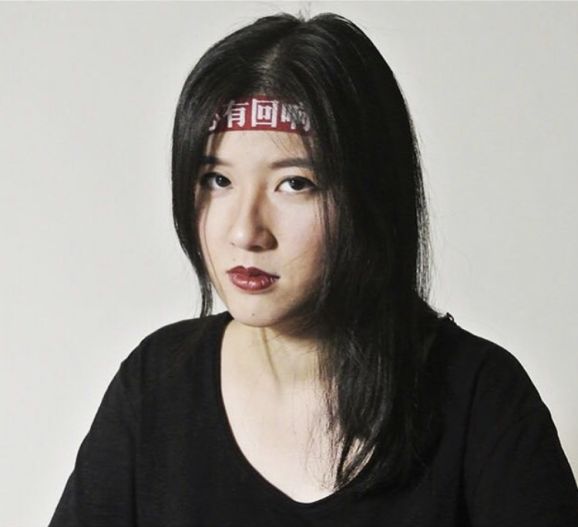
May 10, Wed. 7pm: Jinhee Chohan
Voices against the Hatred and Discrimination against Sick Bodies: The Civic Theater Project, We Are Not Sorry for Being Sick
Neoliberalism turned “good health” into something to beef up one’s resume and a booty that one should work hard to attain. In South Korean society, the conditions of teeth and skin have long worked to stratify people into different social classes. The bodies that don’t meet the criteria for the “standard body” or “normal, healthy body” have often been subject to hatred, reproach, and shaming. On the other hand, the lived experiences of people with diseases and disabilities are often not told anywhere but subsumed to the discourse of “cure,” which is circumscribed by the power dynamic of medical institutions; the cure discourse doesn’t really engage with the issues of the social discriminations and hatred against the sick bodies.
Jinhee Chohan started the civic theater project We Are Not Sorry for Being Sick, first, to tackle the problems in how medical personnel and experts interpellate, control, and substitute the lives of disabled people and, second, to divert the leading framework from “the colonized bodies” to “the bodies that speak for themselves.” Moreover, this project seeks to create “the language within the world of disease” as a language of resistance against the society that hates, discriminates against, and excludes the bodies with diseases, and to secure “the right to be sick justly.” In this presentation, Chohan will explain the theater project’s production process, effects, and potential to challenge the discriminatory social structures against people with diseases and disabilities.
Bio:
Jinhee Chohan is a Korean peace and feminist activist and a founder of Damom Action, a nonprofit organization to work for the “right to be sick justly.” Chohan has worked for and with numerous activist groups, such as Palestine Peace & Solidarity in South Korea, Solidarity against Disability Discrimination, and Korean WomenLink. Chohan also has published multiple books and op-eds. Recently she published The World That Care Work Maintains as an edited volume. Finally, Chohan directed and produced 2020 theater project We Are Not Sorry for Being Sick and many documentary films, such as From Parent to Parent (2013) and Disability Discrimination Act. It’s Time to Start Over (2011).
About the Biophobia symposium:
This symposium proposes biophobia (aversion to bodily matter) as a critical framework to unravel the complex relation between negative emotions and post/colonial body politics in Korean and transnational contexts. Aversion to certain groups or statuses of body is not just an emotion but a richly social, cultural, and political phenomenon, as it, by invoking bodily responses, functions to patrol social boundaries and norms, such as righteousness and cleanliness. The feeling’s immediacy to the body is a basis of its social power.
In The Cultural Politics of Emotion (2014), Sara Ahmed situates disgust (“bad taste”) in the colonial context where the colonized bodies were subject to the imperialist politics of “what gets eaten,” and are, at the same time, regarded to stoke the “fear of contamination” to the European white bodies. Ahmed’s politicizing of negative emotions still holds strong relevance, especially regarding the recently exacerbating hate crimes based on gender, race, ethnicity, religion, health condition, and political orientation, which often tag along a profound sense of disgust and essentialist rhetoric on body types. Notably, the #IAmNotVirus campaigns against the anti-Asian hate crimes since the recent pandemic exemplifies how the feelings of terror and disgust effectively turned Asian bodies into a composite of a submicroscopic agent, the “origin” of the disease, and the repugnant bodies.
Biophobia, as a composite word, embodies an acute connectivity between body issues and the public anxiety that is often symptomatic of a given society’s constraints over the notions of the healthy and the normal, which has proved to be a global phenomenon.
Additional Information
Program
East Asia Program
Einaudi Center for International Studies
Private Sovereignties: ZEDEs, Puertopias, and Seasteads in Central America and the Caribbean: A Panel
May 8, 2023
4:30 pm
Uris Hall, G-08
A Latin American and Caribbean Studies Program Public Issues Forum Panel.
About the Panelists and the Moderator:
Beth Geglia is a public anthropologist focused on processes of privatization in urban and rural settings, tech capitalism, and social movements. Her research examines the development of Economic Development and Employment Zones (ZEDEs) in Honduras and how global visions for private "startup cities" and ideologies of the decentralized finance movement interact with different political projects, land disputes, and territorial realities in Honduras. Beth holds a PhD in Anthropology from American University, and is currently working on a book manuscript as a Hunt Postdoctoral Fellow with the Wenner-Gren Foundation.
Atossa Araxia Abrahamian is a journalist who writes about the unexpected aspects of globalization. Her first book, The Cosmopolites, investigated the global market for citizenship, revealing how the sale of second and third passports to the ultrarich intersects with growing wealth inequality and a crisis of statelessness. She is working on The Hidden Globe, a non-fiction book about unusual and extraterritorial jurisdictions from art freeports to outer space. Atossa is a recipient of the 2022 Whiting Creative Nonfiction grant and a 2021 Silvers grant for works-in-progress. She lives in Brooklyn with her family.
Rafael Cox Alomar is a professor of law at the David A. Clarke School of Law of the University of the District of Columbia in Washington, D.C., and has been a Visiting Professor of Law at Harvard Law School (Winter 2022). He is the author of The Puerto Rico Constitution (Oxford University Press 2022) and Revisiting the Transatlantic Triangle: The Constitutional Decolonization of the Eastern Caribbean (Ian Randle 2009). Professor Cox Alomar received a BA magna cum laude from Cornell University; a DPhil in history from the University of Oxford (Trinity College), where he was a Marshall Scholar; and a JD from Harvard Law School.
Moderator: Ray Craib is Marie Underhill Noll Professor of History at Cornell and the author, most recently, of Adventure Capitalism: A history of libertarian exit, from the era of decolonization to the digital age (PM Press/Spectre, 2022).
Additional Information
Program
Einaudi Center for International Studies
Latin American and Caribbean Studies
International Graduation Reception
May 2, 2023
6:00 pm
Biotechnology Building, G10
The Office of Global Learning invites graduating international students to this year's graduation reception to celebrate the international Class of 2023! We're so proud of all you've achieved.
Join us for refreshments and celebratory remarks from Cornell's leadership and winners of our Global Citizen Awards.
RSVP by Sunday, April 16!
Additional Information
Program
Einaudi Center for International Studies
Corruption Plots: Stories, Ethics, and Publics of the Late Capitalist City
April 28, 2023
3:00 pm
Warren Hall, B73
The millennial city of the global South is a charged setting for allegations of corruption, with skyscrapers, land grabs, and slum evictions invoking outrage at deepening economic polarization. This talk, based on a newly published book Corruption Plots: Stories, Ethics, and Publics of the Late Capitalist City, rethinks commonsense notions that equate corruption with bribery. It illuminates instead how corruption is fundamental to a global storytelling practice about how states and elites abuse entrusted power both inside and outside the law. Drawing on ethnography in Bengaluru and Mumbai and a cross-section of literary and cinematic stories of corruption from cities around the world, Malini Ranganathan and coauthors David L. Pike and Sapana Doshi pay close attention to the racial, caste, class, and gender location of the narrators, spaces, and publics imagined to be harmed by corruption. Corruption Plots demonstrates how, in this moment of late capitalism and rightwing populism, corruption talk is leveraged to make sense of the unequal stakes of rapid urban change; it is equally used opportunistically by those who are themselves implicated in wrongdoing. Offering a wide-ranging analysis of urban worlds, the authors reveal the ethical, spatial, and political stakes of storytelling and how vital it is to examine the “corruption plot” in all its contradictions.
About the speaker:
Malini Ranganathan is Associate Professor in the School of International Service and a faculty affiliate of the Department of Critical Race, Gender, and Culture Studies at American University. An urban geographer and political ecologist by training, her research in India and the U.S. studies land, labor, and environmental injustices animating urban social movements, as well as global histories of anticaste, abolitionist, and anticolonial thought. Her coauthored book, Corruption Plots: Stories, Ethics and Publics of the Late Capitalist City, will be out with Cornell University Press in April 2023. She is co-editor of Rethinking Difference in India through Racialization and has authored several journal articles, including in the journals Antipode, Ethnic and Racial Studies, and the Annals of the American Association of Geographers. Dr. Ranganathan is a 2017-2019 recipient of an Andrew Mellon-American Council of Learned Societies fellowship and a 2021 faculty awardee for outstanding contributions to Diversity, Equity and Inclusion at American University.
Critical Development Studies Seminar Series:
The series is organized by faculty and Ph.D. students in the Department of Global Development and the Graduate Field of Development Studies. You are encouraged to take part in these invigorating discussions in-person in Warren Hall B73 or via Zoom.
This seminar is co-sponsored by Cornell Global Development, the Polson Institute for Global Development, the Department of City and Regional Planning, and the Graduate Field of Development Studies.
Additional Information
Program
Einaudi Center for International Studies
South Asia Program
Democracy and Its Opposites: Challenges in a Global World
April 24, 2023
5:00 pm
Alice Statler Auditorium
Lund Critical Debate
Democracies worldwide—even many wealthy democracies long considered safely consolidated—are at risk today. Governments, policymakers, and voters face new conflicts over democratic institutions, checks and balances, which citizens can compete for office or deserve representation, and what rules of accountability apply.
This year's Lund debate from the Mario Einaudi Center for International Studies examines the threats democracies around the world are confronting, both from external forces and from within—and what governments and citizens can do to fight back.
Join Thomas Garrett of the Community of Democracies and Damon Wilson of the National Endowment for Democracy for a conversation on democratic backsliding, strategies for resilience, and the conditions and practices that undermine democracy: democracy ... and its opposites.
A reception with refreshments will follow the conversation.
Lund Debate: 5:00–6:30 p.m. | Alice Statler AuditoriumFree ticket required for in-person attendance. Reserve your ticket today! Join the lecture virtually by registering at Cornell.
Reception to follow.
***
Panelists
Thomas E. Garrett is secretary general of the Community of Democracies, a global intergovernmental coalition comprised of the Governing Council member states that support adherence to the Warsaw Declaration's common democratic values and standards. Garrett previously worked for the International Republican Institute for 12 years overseas in Ukraine, Mongolia, and Indonesia, returning to Washington, DC, in 2005 as director of Middle East programs and then as vice president for global programs.
Damon Wilson is president and CEO of the National Endowment for Democracy (NED), a nonprofit grant-making foundation supporting freedom around the world. Prior to joining NED, he helped transform the Atlantic Council into a leading global think tank as its executive vice president. He previously served as special assistant to the president and senior director for European affairs at the National Security Council. Wilson also served at the U.S. Embassy in Baghdad as the executive secretary and chief of staff, where he helped manage one of the largest U.S. embassies during a time of conflict.
Moderator
Rachel Beatty Riedl has served as the Einaudi Center's director since 2019. She is the Einaudi Center's John S. Knight Professor of International Studies and professor in the Department of Government and Cornell Jeb E. Brooks School of Public Policy. Her research interests include institutional development in new democracies, local governance and decentralization, and authoritarian regime legacies in Africa.
***
About the Debate
The Lund Critical Debate is a signature event of the Mario Einaudi Center for International Studies. This year's dialogue is part of Einaudi's work on democratic threats and resilience. Established in 2008, Einaudi's Lund Critical Debate series is made possible by the generosity of Judith Lund Biggs '57.
Additional Information
Program
Einaudi Center for International Studies
Reppy Institute for Peace and Conflict Studies
East Asia Program
Southeast Asia Program
Latin American and Caribbean Studies
Institute for African Development
Institute for European Studies
South Asia Program
How to Prevent a Cold War with China
Jessica Chen Weiss, EAP
Jessica Chen Weiss, professor of government and public policy, discusses U.S.-China relations on PBS News Amanpour & Company.
Additional Information
Russia Turns to China’s Yuan in Effort to Ditch the Dollar
Eswar Prasad, SAP/Einaudi
Eswar Prasad, professor of economics and international trade policy, says that it will take a while to build the financial infrastructure to sidestep the dollar-based financial system that has been built up over decades.
Additional Information
Some Democrats Worry about Heated Rhetoric on China
Jessica Chen Weiss, EAP
This newsletter on some Democrats’ concerns about how China is being discussed in political circles notes that Rep. Ro Khanna wants to bring in critics of how the committee is speaking about China, including Jessica Chen Weiss, professor of government and public policy.
Additional Information
In Rare Victory, Immigrants Prevail in Suit Over Meat Plant Raid
Stephen Yale-Loehr, Migrations/Einaudi
“It is very hard to win a settlement from the U.S. government and agents in immigration enforcement cases. The outcome is particularly important because federal agents were held accountable for overreaching and racial profiling,” says Stephen Yale-Loehr, professor of immigration law.
Additional Information
"Morning Dew" Symposium: Borders, Visibility, and Invisibility
March 25, 2023
2:00 pm
Johnson Museum of Art, Wing lecture room
Featuring performance and video artist Soni Kum and her collaborators Hiroki Yamamoto and Kazuya Takagawa, this symposium will address themes of borders, visibility, and invisibility in relation to the Johnson Museum’s current exhibition Morning Dew: The Stigma of Being “Brainwashed,” Kum’s inaugural installation in the United States.
The artists’ video works, based on interviews with Zainichi Koreans who were repatriated to North Korea but later defected, bring visibility to the entangled borders they have crossed and recrossed, and their hidden lives in Japan today. Having returned to Japan, they are now compelled to hide the fact that they left, or fled from, North Korea, threatened with discrimination and other troubling consequences. Facing these fears of her interviewees, Kum’s installation weaves together archival images, text, and silences to artistically evoke their hidden stories. In their video work, Yamamoto and Takagawa delve into the dream of one “ex-returnee.” The first part of the symposium will feature the artists discussing their own work in conversation with symposium moderator Brett de Bary.
In the second part, panelists Iftikhar Dadi (Cornell), Rebecca Jennison (Seika University, Kyoto), Soyi Kim (LB Korean Studies Research Scholar, Cornell) and discussant Naoki Sakai (Cornell) will consider the way modern borders, underlain by layered histories of violence, forcefully produce both the visibility, but also the invisibility, of social groups. How have contemporary artists engaged this dialectic of visibility and invisibility in their own work? Drawing on a broad and varied range of materials, how do such “material” media evoke silence and invisibility?
Seating at this symposium is free but limited. Please use this link to register for the symposium.
Cosponsored by the Johnson Museum of Art; the POLA Art Foundation, Japan; the East Asia Program and the Mario Einaudi Center for International Studies; Cornell Migrations Initiative; and the Cornell Council for the Arts.
Additional Information
Program
East Asia Program
Einaudi Center for International Studies