
Einaudi Center for International Studies
A Generation’s Questioning: Notions of Diaspora in the Caribbean

October 18, 2023
4:45 pm
Uris Hall, G08
Latin American and Caribbean Studies Program (LACS) Public Issues Forum.
In 1979, the Caribbean island of Grenada became the first and so far only nation in the history of the English-speaking world to declare itself revolutionary, oust its elected government, and adopt socialist approaches. Visits from Brazilian educationalist Paulo Freire, African-American activist Angela Davis, Kenyan novelist Ngũgĩ wa Thiong'o, and support from the then Cuban government, signalled that this was not just a "small island" affair but a major international one, reverberating throughout Latin America and the African Diaspora.
On the 40th anniversary of the revolution's 1983 collapse and the US invasion that swiftly followed, the distinguished Grenadian novelist Merle Collins reflects on how the revolution encouraged participants like herself to think in global terms and how it influenced her own life and writing. The talk comes as she publishes her latest novel, Ocean Stirrings, about Louise Langdon, the Grenadian activist who was also the mother of Malcolm X.
Merle Collins is Professor Emerita, University of Maryland, where she taught for several years in the Department of English and the Comparative Literature Program. During the period of the Grenada Revolution, she served as a coordinator for research on Latin America and the Caribbean for the Government of Grenada. She left Grenada in 1983. The author of three novels, a collection of short stories and three collections of poetry, she also served as Director of University of Maryland's Latin American Studies Center (now Latin American and Caribbean Studies Center).
A Latin American and Caribbean Studies Program (LACS) Public Issues Forum funded by the US Department of Education's Title VI UISFL grant, co-sponsored by English Literatures Department, Society for the Humanities, and the American Studies Program.
Additional Information
Program
Einaudi Center for International Studies
Latin American and Caribbean Studies
Above and Below the Ground
October 16, 2023
6:00 pm
Rockefeller Hall, 115
A GETSEA Simulcast Film Screening
Join us to watch the film Above and Below the Ground, followed by a discussion with audiences across over 20 North American universities.
This is event is hosted by the GETSEA consortium, and co-sponsored by the Asian American Studies Program and the Southeast Asia Program.
About the Film
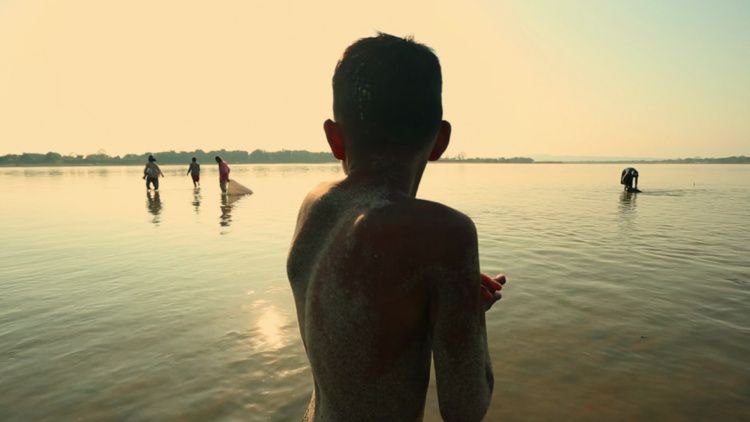
Above and Below the Ground depicts the Indigenous women activists and punk rock pastors leading Myanmar’s first country-wide environmental movement. When the Myanmar army and a Chinese corporate giant force Indigenous Kachin people off their ancestral land to build the massive Myitsone Dam, grandmother Lu Ra stands her ground. We see her struggle to save the sacred confluence and build a movement, mentoring young female law student Hkawn Mai. A Kachin punk rock band made of pastors, BLAST, also takes action, transforming their love songs into protest anthems. Our film follows these individuals through their journey of activism, from their underground beginnings during Myanmar’s military junta rule, to supposed “democratic” reforms and a sudden military coup. During such periods of fledgling democracy and dictatorship–in Myanmar and globally–our film asks how ordinary people can use the power of music, community organizing and women’s leadership to challenge authoritarianism.
Additional Information
Program
Einaudi Center for International Studies
Southeast Asia Program
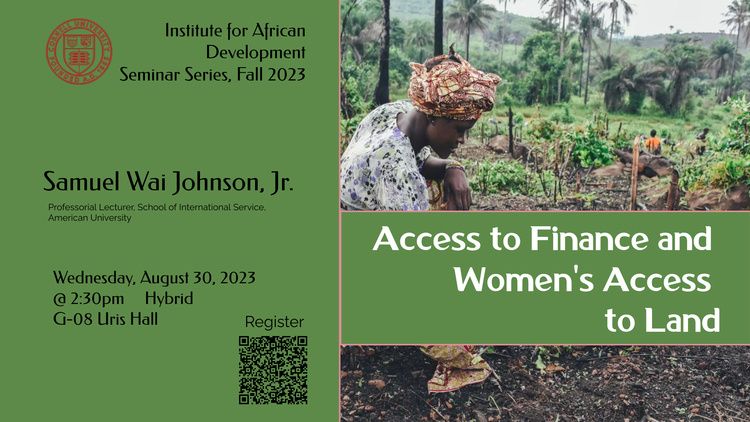
Institute for African Development Seminar: Access to Finance and Women's Access to Land
August 30, 2023
2:30 pm
Uris Hall, G-08
Register
The seminar series theme for fall 2023 ( Envisioning Land, Agriculture, and Food Futures in Africa) explores the future of African land, agriculture and food, digging into the contestations, conflicting and converging visions from a wide range of perspectives. How might land be used, valued and lived in, across cities, rural communities, forests, deserts and grasslands on the continent in the future? Who is proposing different visions of land futures in Africa, what are the histories, politics, socio-cultural, environmental and economic implications of these potential visions? In one of the regions with the most youthful populations, how are young people considering possible futures? What are ways that land, agriculture and food systems could be resilient, healthy, ecological, thriving and just? Can there be a decolonial agriculture and food future in Africa that celebrates Indigenous and local foodways?
Additional Information
Program
Einaudi Center for International Studies
Institute for African Development
Meet Our New Program Directors
New Directors Take Helm at SAP, IAD, PACS
New and returning directors Sarah Besky, Rachel Bezner Kerr, and Rebecca Slayton share their programs' plans for this academic year.
Additional Information
La Langue, Colonial Legacies, and Area Studies: Comparative Modernities
September 23, 2023
10:00 am
Physical Sciences Building, 401
A Conference Sponsored by the Department of Asian Studies and the Institute for Comparative Modernities, Cornell University, Ithaca
Friday, September 22 | Saturday, September 23, 2023
DAY 2 –– Saturday, September 23, 2023 | Physical Sciences Building 401
10:00 – 11:30 a.m. PANEL TWO – Questioning Areal Lexicons: Colonialism, Decolonization, Communism, Fascism
Moderator: T. Joshua Young (Cornell University, Ithaca)
Panelists:
Arnika Fuhrmann (Cornell University, Ithaca): Southeast Asia as Question: Thinking Region from Bangkok
Peter Button (Independent Scholar, New York): Settler Democracy, Anti-communism and the Area Studies
Lisa Yoneyama (University of Toronto, Toronto): Sensing Violence: On the Use of the Concept of Fascism
Discussant: Gavin Walker (Cornell University, Ithaca)
LUNCH BREAK
1:30 – 3:30 p.m. PANEL THREE – Area and the Authorization of Language
Moderator: Andrew Campana (Cornell University, Ithaca)
Panelists:
Natalie Melas (Cornell University, Ithaca): Modern Lyric and Racial Time: Langue in and against Empire
Naminata Diabate (Cornell University, Ithaca): Whither Fieldwork or Homework? Naming a Methodology in Comparative Literature
Takashi Fujitani (University of Toronto, Toronto): Is Clint Eastwood a Japanese Director? Some Thoughts on Language and Subtitling in Letters from Iwo Jima
Olúfẹ́mi Táíwò (Cornell University, Ithaca): No Game is Fun if Only One Side Keeps Winning
Discussant: Grant Farred (Cornell University, Ithaca)
COFFEE BREAK
4:00 – 5:30 p.m. PANEL FOUR – Language, Nation, Area
Moderator: Viranjini Munasinghe (Cornell University, Ithaca)
Panelists:
Jon Solomon (Université Jean Moulin Lyon 3, Lyon): The Ideological Inscription of Capitalist Hegemony in Language: On the Unity of Language and the Mode of Address
Setsu Shigematsu (University of California, Riverside): Yellow Skin, White Masks, and the Force of AntiBlackness: The Structuring Epistemic-Ontology of Japan Studies
Hideto Tsuboi (Waseda University, Tokyo): Resist Fluency
Discussant: Naoki Sakai (Cornell University, Ithaca)
5:30 – 6:00 p.m. Concluding Roundtable with Brett de Bary (Cornell University, Ithaca)
Friday, September 22 conference schedule (Goldwin Smith G64, 15:00-18:00)
La Langue, Colonial Legacies, and Area Studies: Comparative Modernities
The conference proposes that what is taken for granted today as national or ethnic language, in the sense of “la langue,” came into existence in the world in modernity, that is, the world as it was gradually organized according to the basic schema of internationality instituted in Europe from the 16th to 19th centuries. Initially this understanding of an “international world” was limited to a special region called Europe, but as the territorial states in Europe moved into non-European regions and conquered their lands, the Eurocentric structure of the international world gained global dominance. Gradually, all the land surface of the earth came to be organized by the bipolarity of Europe (also called “the West” since the end of the 19th century) and the Rest. Thanks to the pioneering work of Cécile Canut (Provincialiser la langue, Edition Amsterdam, 2021), Jon Solomon (Spectral Translation), and Naoki Sakai (Voices of the Past) we now understand that the notion of la langue is closely associated with the colonial internationality of the modern world. Our attempts to seek national languages everywhere as the sign of indigenous cultural and political autonomy is, in fact, a continuation of the colonial imposition of the Eurocentric norm on colonial populations. Hence, Canut’s appeal for ‘provincializing Europe’ challenges the established modality of knowledge production about the Rest, particularly in area studies.
The conference will therefore consider the formation of national language to be closely affiliated with knowledge production in the modern human and social sciences, on the one hand, and with the creation of the new “imagined community” called “the nation,” on the other. We seek to discuss how broader problems of knowledge production are implicated in the international structure of Eurocentric modernity with a particular emphasis on the intimate connections between the formation of the area and the constitution of la langue.
Participants:
Brett de Bary (Cornell University)
Naoki Sakai (Cornell University)
Jon Solomon (Université Jean Moulin Lyon 3, Lyon)
Cécile Canut (Université Paris Cité and Université Sorbonne Nouvelle, Paris)
Peter Osborne (Kingston University, London)
Hideto Tsuboi (Waseda University, Tokyo)
Chul Kim (Yonsei University, Seoul)
Peter Button (Independent Scholar, New York)
Setsu Shigematsu (University of California, Riverside)
Lisa Yoneyama (University of Toronto)
Takashi Fujitani (University of Toronto)
Natalie Melas (Cornell University)
Arnika Fuhrmann (Cornell University)
Naminata Diabate (Cornell University)
Gavin Walker (Cornell University)
Mukoma wa Ngugi (Cornell University)
Olúfẹ́mi Táíwò (Cornell University)
Grant Farred (Cornell University)
Additional Information
Program
Einaudi Center for International Studies
East Asia Program
La Langue, Colonial Legacies, and Area Studies: Comparative Modernities
September 22, 2023
3:00 pm
Goldwin Smith Hall, G64 (Kaufmann Auditorium)
A Conference Sponsored by the Department of Asian Studies and the Institute for Comparative Modernities, Cornell University, Ithaca
Friday, September 22 | Saturday, September 23, 2023
DAY 1 –– Friday, September 22, 2023 | Goldwin Smith Hall 64, Kaufmann Auditorium
3:00 – 3:15 p.m. Welcome Introduction – Brett de Bary and Naoki Sakai
3:30 – 5:30 p.m. PANEL ONE – Colonialism and the Invention of the National Language
Moderator: Esra Akcan (Cornell University, Ithaca)
Panelists:
Cécile Canut (Université Paris Cité and Université Sorbonne Nouvelle, Paris): L’ordre-de-la-langue: The Myth of French as a Universal Language
Chul Kim (Yonsei University, Seoul): Construction of Colonial Internationality: Centered on the Production of National Language in Korea
Mukoma wa Ngugi (Cornell University, Ithaca): African Literary Criticism in Crisis: Politics of Language, Periodization, and Citizenship
Discussant: Peter Osborne (Kingston University, London)
Saturday, September 23 conference schedule (PSB 401 10:00-17:00)
The conference proposes that what is taken for granted today as national or ethnic language, in the sense of “la langue,” came into existence in the world in modernity, that is, the world as it was gradually organized according to the basic schema of internationality instituted in Europe from the 16th to 19th centuries. Initially this understanding of an “international world” was limited to a special region called Europe, but as the territorial states in Europe moved into non-European regions and conquered their lands, the Eurocentric structure of the international world gained global dominance. Gradually, all the land surface of the earth came to be organized by the bipolarity of Europe (also called “the West” since the end of the 19th century) and the Rest. Thanks to the pioneering work of Cécile Canut (Provincialiser la langue, Edition Amsterdam, 2021), Jon Solomon (Spectral Translation), and Naoki Sakai (Voices of the Past) we now understand that the notion of la langue is closely associated with the colonial internationality of the modern world. Our attempts to seek national languages everywhere as the sign of indigenous cultural and political autonomy is, in fact, a continuation of the colonial imposition of the Eurocentric norm on colonial populations. Hence, Canut’s appeal for ‘provincializing Europe’ challenges the established modality of knowledge production about the Rest, particularly in area studies.
The conference will therefore consider the formation of national language to be closely affiliated with knowledge production in the modern human and social sciences, on the one hand, and with the creation of the new “imagined community” called “the nation,” on the other. We seek to discuss how broader problems of knowledge production are implicated in the international structure of Eurocentric modernity with a particular emphasis on the intimate connections between the formation of the area and the constitution of la langue.
Participants:
Brett de Bary (Cornell University)
Naoki Sakai (Cornell University)
Jon Solomon (Université Jean Moulin Lyon 3, Lyon)
Cécile Canut (Université Paris Cité and Université Sorbonne Nouvelle, Paris)
Peter Osborne (Kingston University, London)
Hideto Tsuboi (Waseda University, Tokyo)
Chul Kim (Yonsei University, Seoul)
Peter Button (Independent Scholar, New York)
Setsu Shigematsu (University of California, Riverside)
Lisa Yoneyama (University of Toronto)
Takashi Fujitani (University of Toronto)
Natalie Melas (Cornell University)
Arnika Fuhrmann (Cornell University)
Naminata Diabate (Cornell University)
Gavin Walker (Cornell University)
Mukoma wa Ngugi (Cornell University)
Olúfẹ́mi Táíwò (Cornell University)
Grant Farred (Cornell University)
Additional Information
Program
Einaudi Center for International Studies
East Asia Program
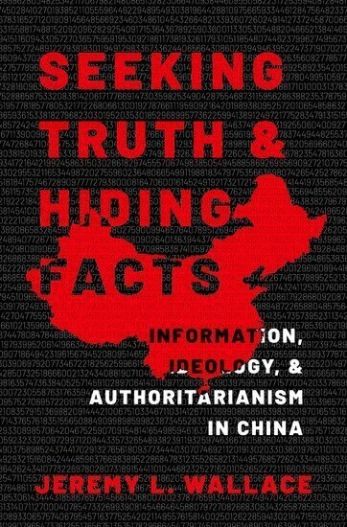
Seeking Truth and Hiding Facts: Information, Ideology, and Authoritarianism in China
September 6, 2023
4:30 pm
Olin Library, 107
In a live, hybrid (in-person and livestreamed) Chats in the Stacks book talk Jeremy Wallace, professor of government, will discuss his latest book Seeking Truth and Hiding Facts: Information, Ideology, and Authoritarianism in China (Oxford University Press, 2023). Synthesizing and interpreting the past 40 years of China’s political economy, Seeking Truth and Hiding Facts reveals the consequences of relying on quantifiable indicators such as GDP and fiscal revenue for dictatorships, arguing that while quantification can help convince a populace of a leader’s right to rule, it also comes with its own perils.
This talk is hosted by Olin Library. Light refreshments will be served
Additional Information
Program
Einaudi Center for International Studies
East Asia Program
Hubs Collaborations Bring Synergy, Discovery

New Grant Cycle Open Now
Alex Flecker and LACS grad student Ethan Duvall are studying biogeochemical cycling in the Amazon with partners at the Ecuador Hub.
Additional Information
CANCELLED - Trading and Raiding in the Philippines Archipelago in the 7th-18th Centuries: History and Archaeology of Muslim and Spanish Encounters
September 28, 2023
4:30 pm
Uris Hall, G08
Talk by Laura Lee Junker
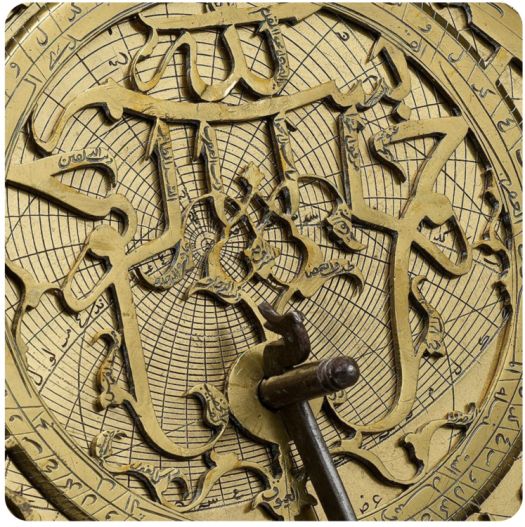
The history of the Philippines is unique in Southeast Asia's islands in that the country has 14 massive islands, 7000+ smaller islands, and 200+ languages. Strangely, among the historical entities in these thousands of equatorial islands, none of the area's languages were written down. Both historical and archaeological evidence shows us that Chinese, Japanese, Indonesians, Vietnamese, Cambodians, and Indic populations all powered trade well before the 10th century. Area ports sent commerce and numerous missions to the Chinese court. Islamic groups in the Philippines, particularly in what would become Manila, as well as from the southernmost island of Mindanao prior to the influx of Spanish colonizers in the 16th century, also participated in diplomacy and trade. The extensive diversity of various groups on the rugged Filipino landscape, including small bands of Ata and tribal peoples (Bukidnon) living in the mountainous cores of massive islands, supplied equatorial products that connected chains of manufacture sailing from the west and north, down to the tropical belt. In this presentation, Archaeology melds with "material histories" (such as archaeology) and "written histories" (from many viewpoints) in telling this complex story.
Additional Information
Program
Einaudi Center for International Studies
Southeast Asia Program
Dreaming Sufism in the Sokoto Caliphate: Dreams and Knowledge between Natural Philosophy, Theology, and Sufism in the works of Shaykh Dan Tafa
September 14, 2023
4:30 pm
Uris Hall, G08
Talk by Oludamini Ogunnaike
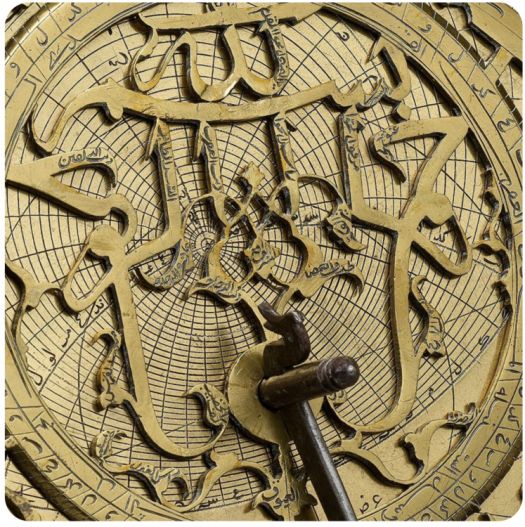
This talk explores four remarkable works (currently in unpublished manuscript form) by ‘abd al-Qādir ibn Muṣtafā (known as “Dan Tafa”) (1804-1864), a 19th-century West African Sufi scholar of the Sokoto Caliphate, to examine the ways in which dreams were theorized in the unique synthesis of Sufi, occult, philosophical/medical, theological, and exegetical disciplines that characterized discourse about dreams and dream interpretation in Muslim West Africa on the eve of colonial conquest, and what this can tell us about the distinct conceptions and practices of the human self and knowledge current in the region. The talk will conclude with a brief discussion of the importance and onto-epistemological status of dreams in contemporary West African Sufi communities and attempt to consider why dreams have been and remain so important in these traditions, but not in others.
Additional Information
Program
Einaudi Center for International Studies
Institute for African Development